
They Were Nurses in Puerto Rico, Now They Are Learning New Trades to Build Their Financial Futures
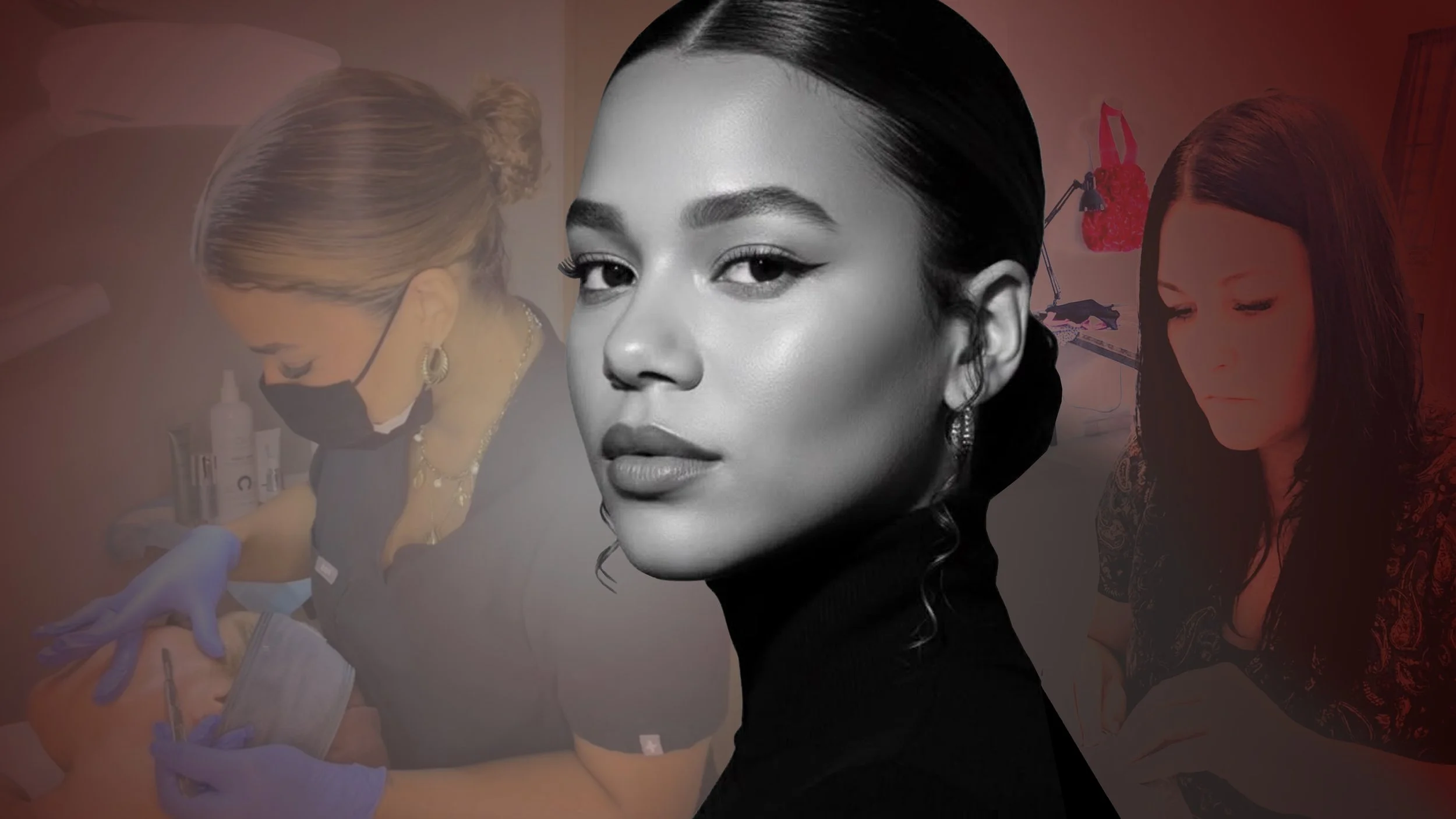
Natalia Figueroa (left and center) and Madeline Gómez (right). Illustration by Acento Story Tank.
Madeline Gómez and Natalia Figueroa don’t know each other, but they have several things in common: they both left nursing to learn new jobs. Far from the capital and with the support of non-profit organizations, they tell of how they got here and the challenges they face
Clic aquí para leer en español.
By Mariela Santos-Muñiz, @mellamomariela
PUERTO RICO - Located on a small plot of land, with a baseball park on the other side of the street, is a former elementary school that now houses community-based organizations in the southern town of Peñuelas. It was here that palabra met Madeline Gómez, a nurse by trade who is not currently practicing.
Gómez is a community leader in the town of Ponce, which borders Peñuelas. She was interested in sewing as a child and received her first machine when she was 10 years old. But she admitted that she didn’t see a professional future when she finished school. Now, decades later, sitting in what was once a classroom on the first floor of a school building, Gómez talks about how she’s planning to start her own sewing business.
subscribe to palabra’s newsletter
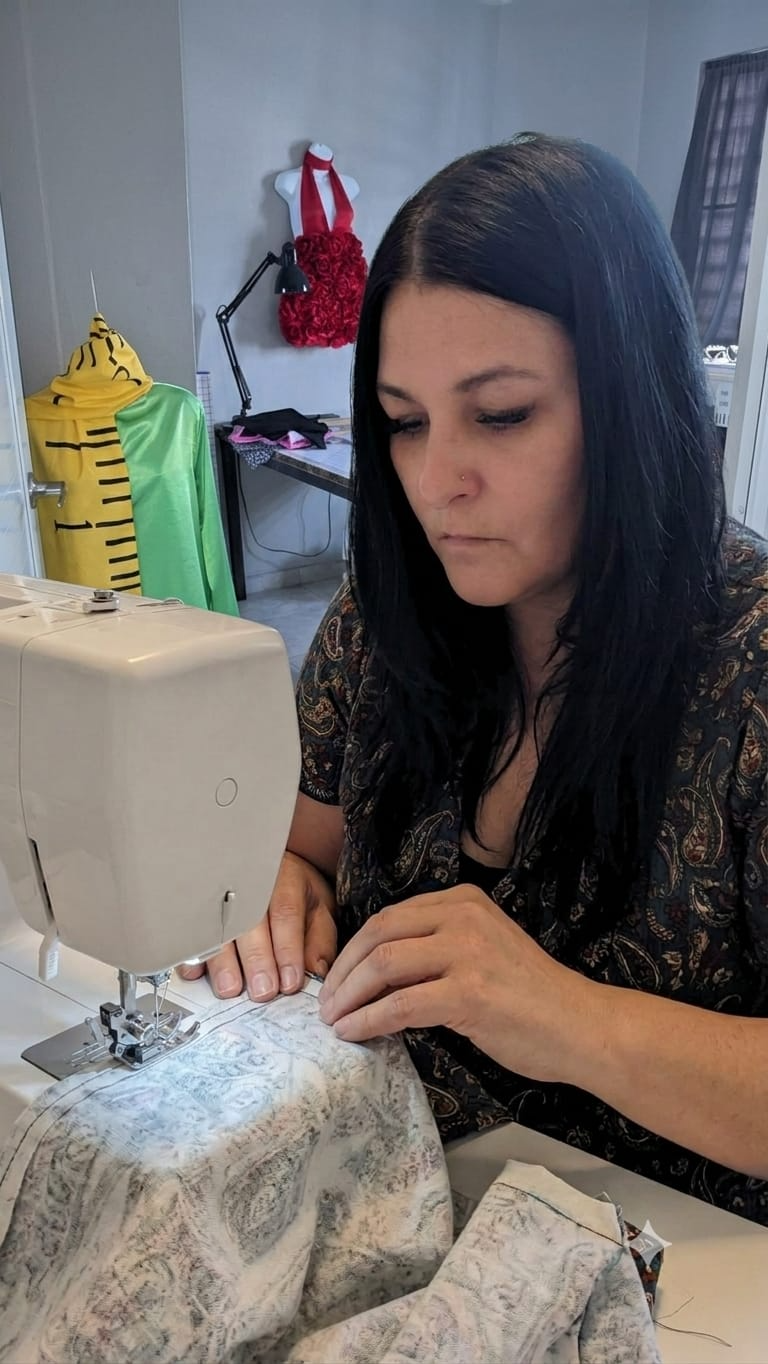
Madeline Gómez wants to own her own home thanks to her entrepreneurial efforts. Photo courtesy of Madeline Gómez.
She said that she lives in an apartment that’s public housing, known in Puerto Rico as “Section 8,” and is receiving government assistance. There, she has created a workshop to work from, and with emotion in her voice, tells of her dream to have her own house through her entrepreneurial efforts. Right now, Gómez is looking for a new location for her business, even though people around her tell her she might fail.
But Gómez isn’t thinking about failure and commented that “just with receiving help and being prepared,” she understood that God was already opening doors for her.
Approximately 55 miles (65 kilometers) to the west of the town of Peñuelas, we visited another nurse, Natalia Figueroa, and she told us her story. She also decided to bet on entrepreneurship to move forward. Figueroa opened her business, Skin Wellness by Nurse Natalia, in the coastal western town of Mayagüez, in October 2025. In the office where she carries out skin treatments, rented inside a dental office, she spoke with palabra.
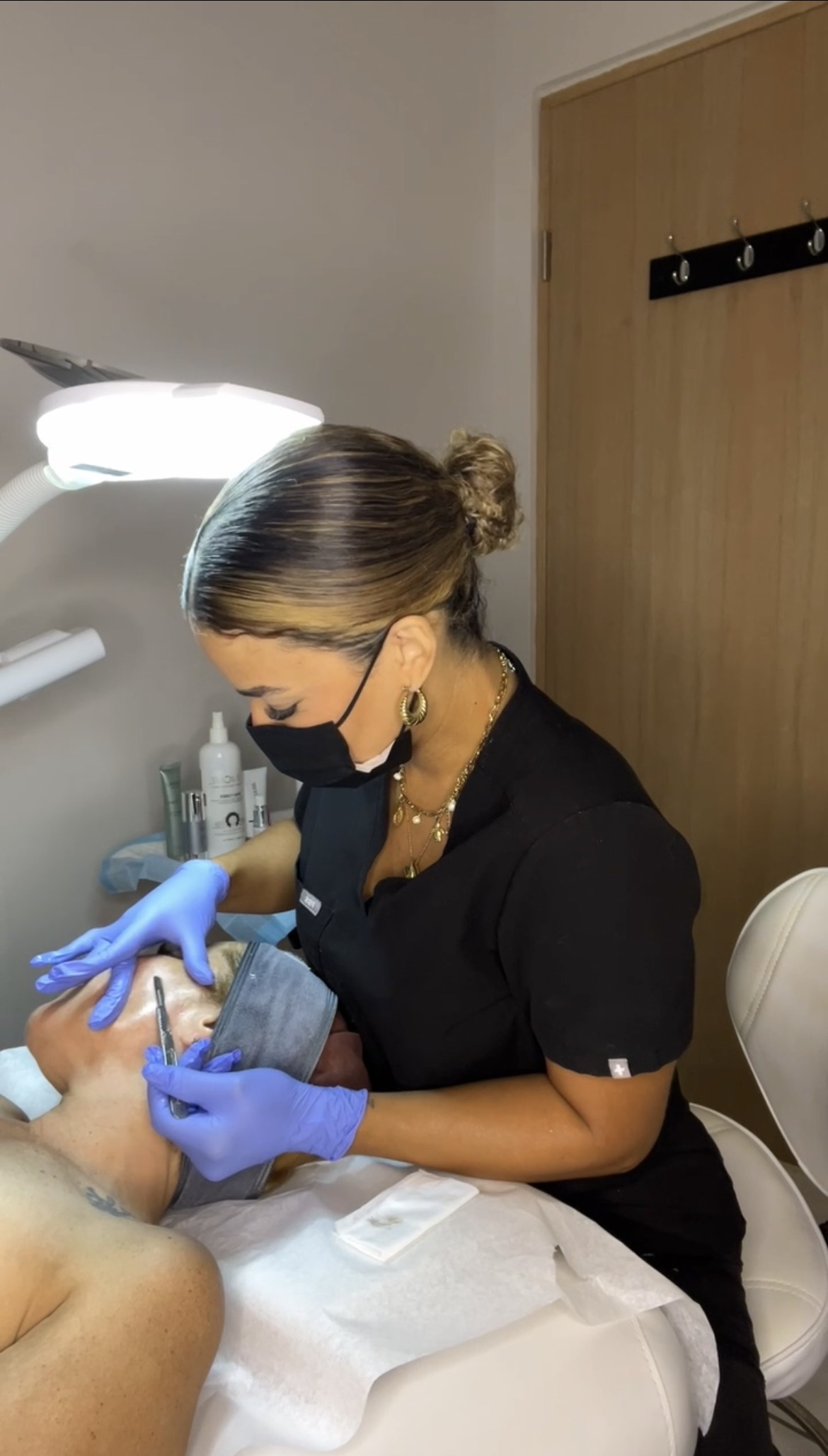
Natalia Figueroa at her business. Photo courtesy of Natalia Figueroa.
She doesn’t dedicate herself to her business full-time because she has to keep a second, part-time job as a waitress. “This has been one of the jobs that has permitted me to sustain my home, and in addition to that, it’s helped me to be able to save to invest in the business.”
For Figueroa, entrepreneurship signifies an opportunity “for independence, personal and professional growth, and purpose.”
Gómez and Figueroa, both nurses professionally, are looking for stability in a moment in which health professionals are facing different challenges related to their jobs. This includes the need for better pay for nurses.
In a public government hearing in October 2025, it was reported that the salaries of public nurses were less than $36,000 per year. Other factors that affect them include a lack of support for their physical and emotional well-being.
Workshops and aid open the way
In 2025, Gómez had the opportunity to learn how to sew when Ponce Neighborhood Housing Services (PNHS), a non-profit organization, provided sewing workshops to her community. In collaboration with different organizations, PNHS gave free workshops to participants in four municipalities, Jomarys Maldonado Piña said, supervisor of the Community Development Program. This program was specifically for women at social and economic risk, she stated.
Gómez has come a long way because, as she explained it, she had no prior knowledge of sewing and learned it with a lot of effort, to the point that she can create complete pieces of clothing and use patterns. People from her community have approached her to request sewing jobs.
She said she dreams about the clothes she’ll make, to later wake up and make them. According to her, the work that she’s doing “reminds her of when God makes things.”
For her part, Figueroa arrived at the Centro Empresarial Para la Mujer the day after losing her job. She worked in hospitals for three years and got her start in the world of aesthetics at a MedSpa, where she worked for six years. She described that experience as “a university, a little school” where she discovered her passion for skin care. It was there that she started to dream of having her own business.
Support the voices of independent journalists.
|
She went to an orientation and eventually started in one of the programs of this organization, which is part of the Centro Para Puerto Rico de la Fundación Sila María Calderón, also a non-profit. While she participated in the program, she worked in restaurants.
For Figueroa, what helped her the most were the financial training and administrative organization workshops. “You have to move forward,” she pointed out. “And no one knows what you go through, but if you have the will, you can do it. It’s a matter of continuing, putting your mind to it and manifesting things.”
She still remembers how difficult it is not to have a job. “A person that ends up without a job, throws themselves on a bed or can fall into a depression. A lot of things can happen, a lot of things,” Figueroa commented.
“You have to move forward,” she pointed out. “And no one knows what you go through, but if you have the will, you can do it. It’s a matter of continuing, putting your mind to it and manifesting things.”
— Natalia Figueroa, entrepreneur
According to Eileen M. Soler Feneque, director of the center located in Mayagüez, the organization primarily focuses on working “with women that are under the level of poverty, women that have been victims or survivors of gendered violence, women that have low levels of education or that reside in special or vulnerable communities.” In the beginning, they served 17 municipalities in Puerto Rico, and now they serve 27.
In Puerto Rico, 41.7% of women live under the poverty level, while 21.6% of women live in extreme poverty, per a study published in 2025 by the consulting firm Estudios Técnicos. In Ponce, where Gómez lives, the Census reported that 49.7% of residents lived in poverty. The “median family income was $19,877 between 2020 and 2024 (in 2024 dollars).”
In Mayagüez, where Figueroa decided to establish her business, 53.3% of residents lived in poverty in 2024, and the “median family income was $18,295 between 2020 and 2024 (in 2024 dollars).”
Gómez and Figueroa, however, are part of a more optimistic statistic: the majority of entrepreneurs in Puerto Rico are women and young people, as reported by El Nuevo Día in 2025, with data from the Reporte Interactivo del Estado de la Comunidad Empresarial in Puerto Rico.
At both PNHS and the Centro Empresarial Para la Mujer, participants like Gómez and Figueroa have the doors open to continue to receive orientation while they grow and work to achieve their dreams. Starting their own businesses is just the beginning.
—
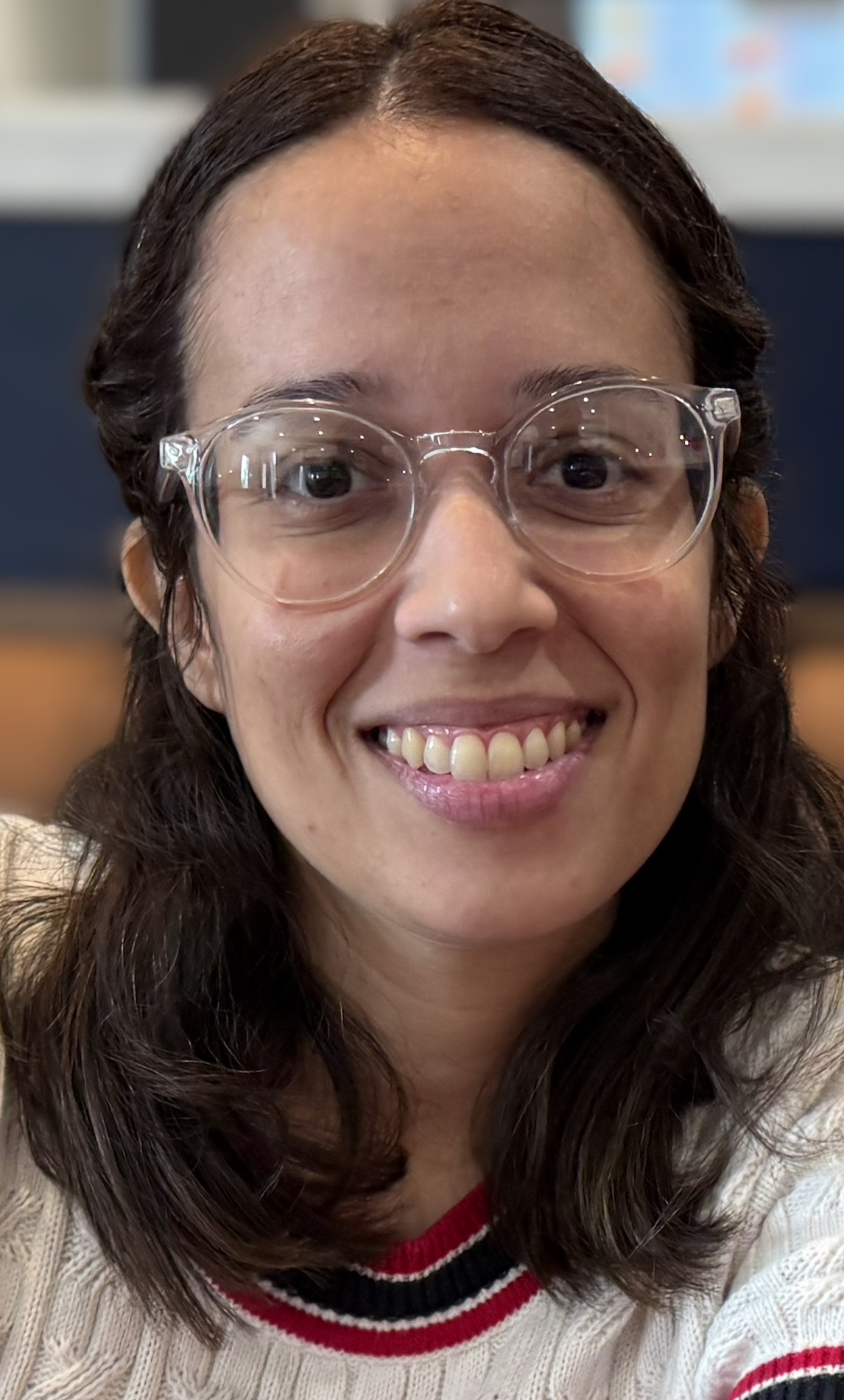
Mariela Santos-Muñiz is a freelance journalist based in Puerto Rico whose work has been published by NBC News Latino, Prism, palabra and more. She has an M.A. in International Relations and International Communications from Boston University and a B.A. in Socio-Humanistic Studies from the Ana G. Méndez University, Gurabo Campus. Currently a master's degree student in Information Science at the University of Puerto Rico, Rio Piedras Campus, she has native fluency in English and Spanish, and mostly focuses her work on Latine communities in the US and Puerto Rico. @mellamomariela