
Inside Japan’s Underground Cult To Latin Music
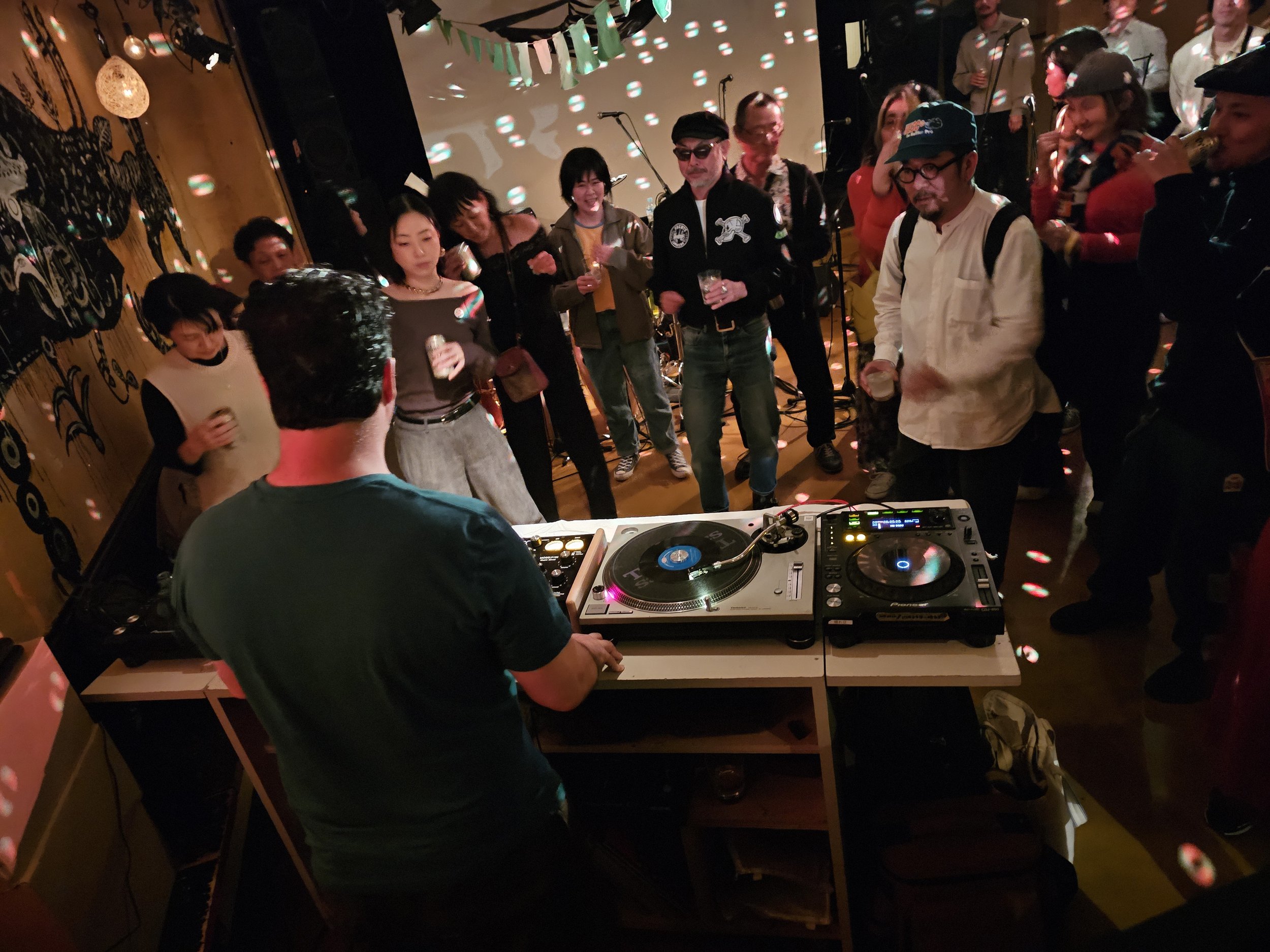
Dj Beto from California plays his selection of rare and cool tropical beats as a guest at a party in Tokyo.
MUSIC TRANSCENDS BOUNDARIES, AND SOMETIMES OCEANS. AND IN JAPAN, SALSA, CUMBIA, AND REGGAETON HAVE FOUND A SECOND HOME.
Haz clic para leer en español.
Words and photos by Rodrigo Cervantes, @RODCERVANTES
TOKYO — Behind either bright or decaying building facades in Tokyo, hide thousands of small bars with their own secrets and surprises.
Among them is one hippie divey bar called Roots, in the bustling Shibuya district, which sometimes hosts the Mucho Mucho Mambo parties.
There’s a pop-up store with Mexican goods. At the bar, tacos that seem to come straight from Mexico City are served from Octa, a local taquería. And while salsa comes with the dish, it also comes from the dj's, who play old-school tropical beats straight from rare, vintage vinyls.
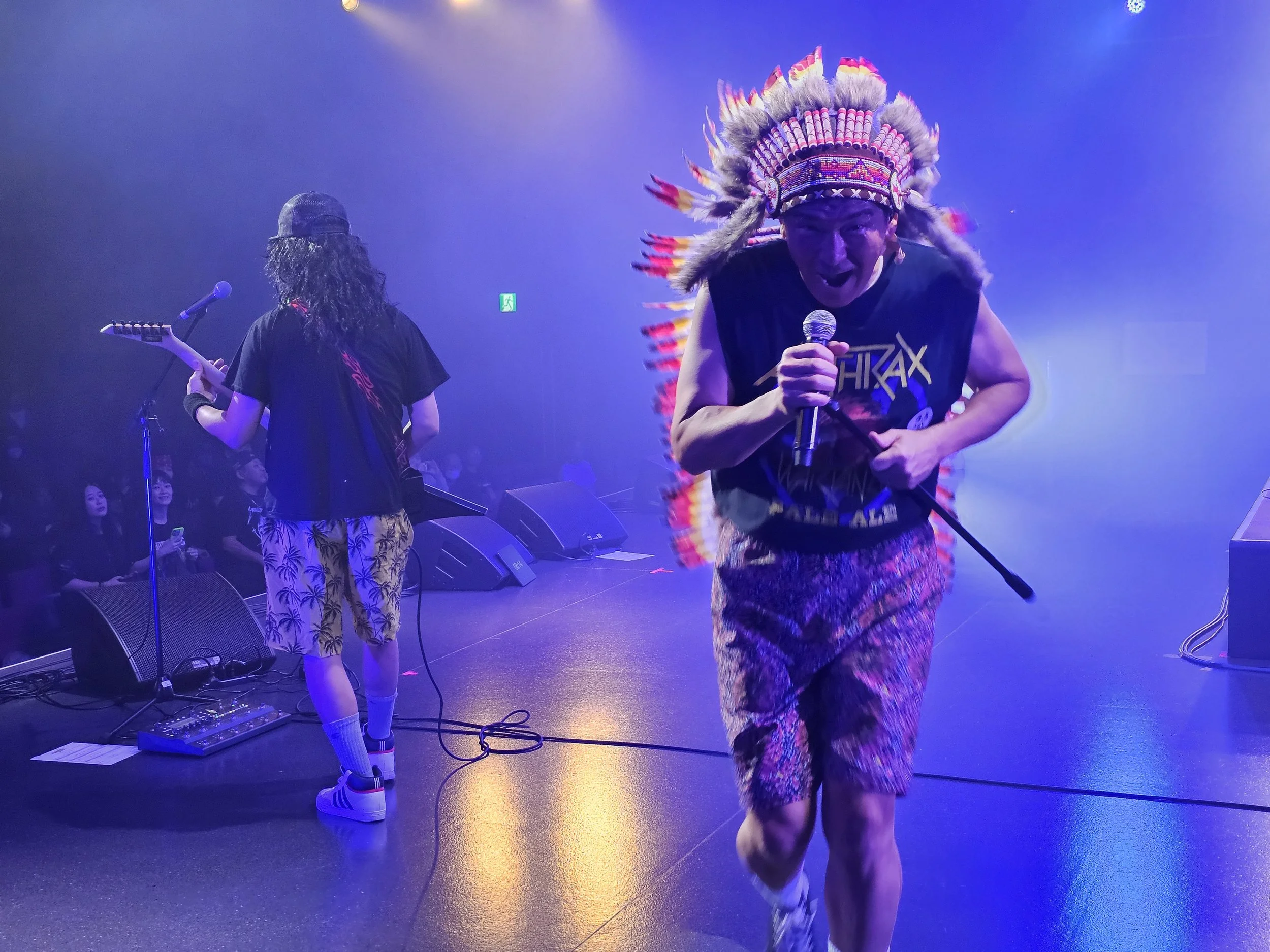
Salarymen by Day,
Metal Gods by Night
“Japanese bars and clubs are not like in America, I think. Music bars in Tokyo are playing a lot of vinyl records,” tells me Masaki Narahara, a.k.a. Dj Masaki69. A music expert in many genres, but with a special taste for Latin music, he has played in Mucho Mucho Mambo and other Latino-infused music parties and bars for more than 20 years.
His vinyl collection – which he says includes more than 4,000 records – is heavy on classic tropical hits from Latin America and even includes oddities, like vinyls from Ricky Martin’s former boy band.
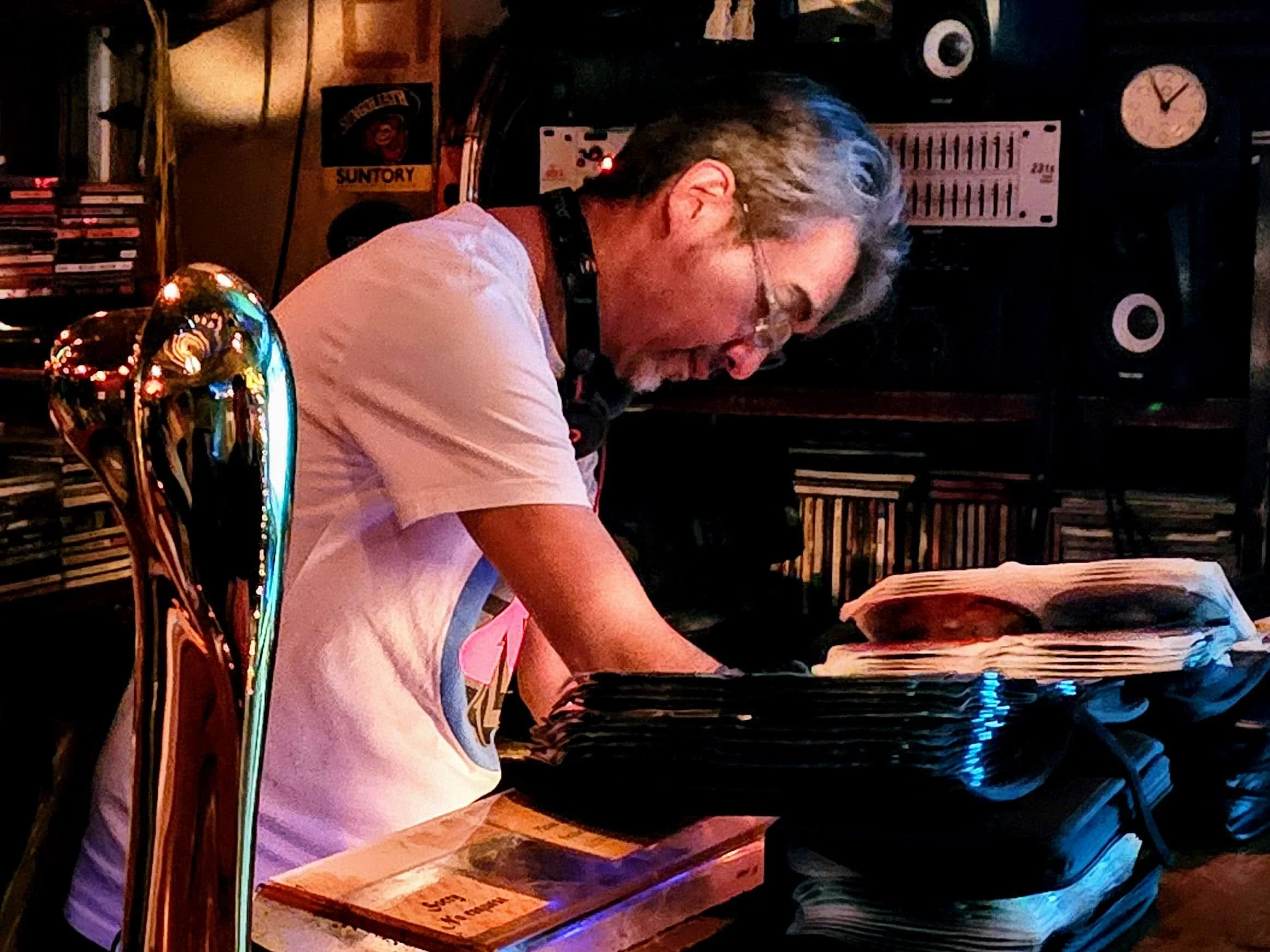
DJ Masaki69 (Masaki Narahara) is a music collector and DJ from Tokyo.
“Do you know Menudo?” he asks as he chuckles, “I have a lot of Menudo records. I don’t know why I keep them!”
Masaki is part of an underground movement that has been taking over some bars and live music venues across Japan, in which old school salsa and son, or new Latin hip-hop, cumbia, and reggaeton are finding appreciative Japanese audiences. Even more local and international musicians play in live music venues or events like the Japan Cumbia Festival.
The love for Latin music in Japan comes from the “Golden Age” of Tropical Music in the mid-20th century, Masaki explains. He says he heard Latin music for the first time from his father.
“After World War II, in the 1950s and 1960s, Latin music was very popular in Japan. My father had Pérez Prado and Tito Puente vinyl records,” he recalls.
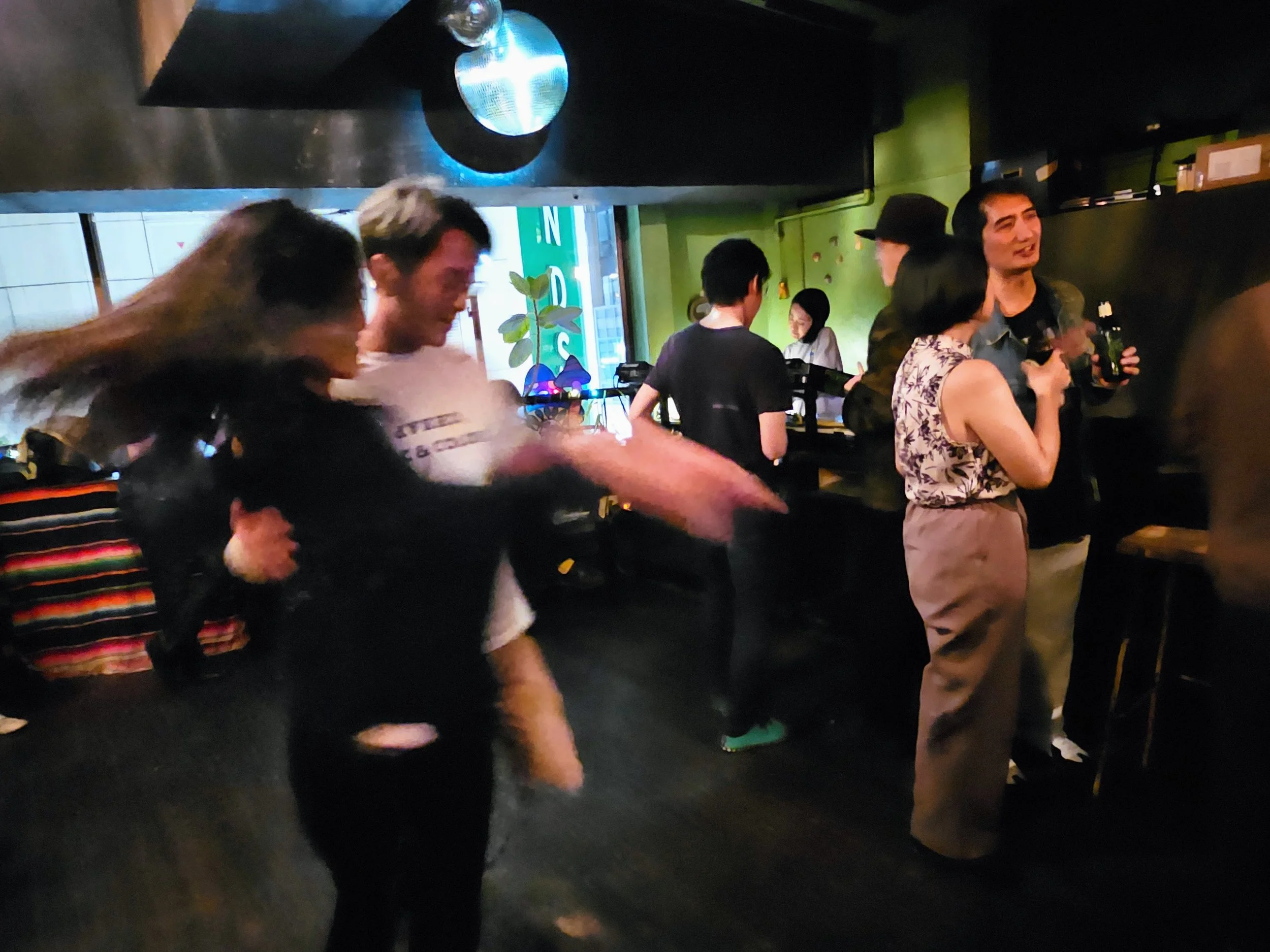
People dance salsa, son cubano, and cumbia at the Mucho Mucho Mambo parties in Tokyo, Japan.
Mexican trio Los Panchos was noticeably popular in Japan back then, while local artists played and sang mambo, chachachá, and bolero with a Japanese touch.
One of the most famous singers at the time, Chiemi Eri, covered tropical songs that were already popular in English or Spanish, such as “Papa Wa Mambo Ga Osuki” (Perry Como’s “Papa Loves Mambo”) or Osvaldo Farrés’s ¨キサス・キサス・キサス¨ (“Quizás, quizás, quizás”).
In the 80s, Japan surprised Latin America with La Orquesta de la Luz, led by vocalist Nora Suzuki. The band toured all over the world with their take on salsa and many other Latin rhythms, and are mostly remembered for their 1990 single: “Salsa caliente del Japón”.
Masaki says some Japanese connect with these rhythms partly because they help them forget stress and their culture’s strict social rules.
“Japanese people are always thinking about what other Japanese people think,” he said. “Japanese people cannot behave like Latino people. They want to, but they are a little bit shy and hide.”
From East LA to West Tokyo

DJ Pancho is part of the Latin music scene in Tokyo and Kanagawa.
DJ Pancho usually spins Latin music in Kanagawa, on the outskirts of Tokyo, where he says there’s “mucho barrio.”
“¡Soy un Dj lunático! ¡Pero un gran Dj pa’ que lo bailes, pa’ que lo goces, pa´que lo pases bien!¨ he excitedly tells me in Spanish.
Dj Pancho is half Dominican, half Japanese, but his style and looks could be 100% from East Los Angeles: baggy Dickies pants, flat brim cap, tattoos, and sunglasses. Then there’s his music taste, in which cumbia prevails: Los Ángeles Azules, Grupo 5, and Selena.
SUBSCRIBE TO PALABRA’S NEWSLETTER
Chicano culture also has a growing fandom in the Land of the Rising Sun, particularly in the cities of Osaka and Nagoya, hubs of the “Japanese Cholo-style.” MoNa a.k.a. Sad Girl is among the current hip-hop artists who are part of this group.
Shin Miyata went to East LA College four decades ago to do Chicano Studies and now runs a record label and Chicano parties in Tokyo.
He says there’s a distinction between Japanese following traditional Latin music and those who pursue the Chicano style and fashion.
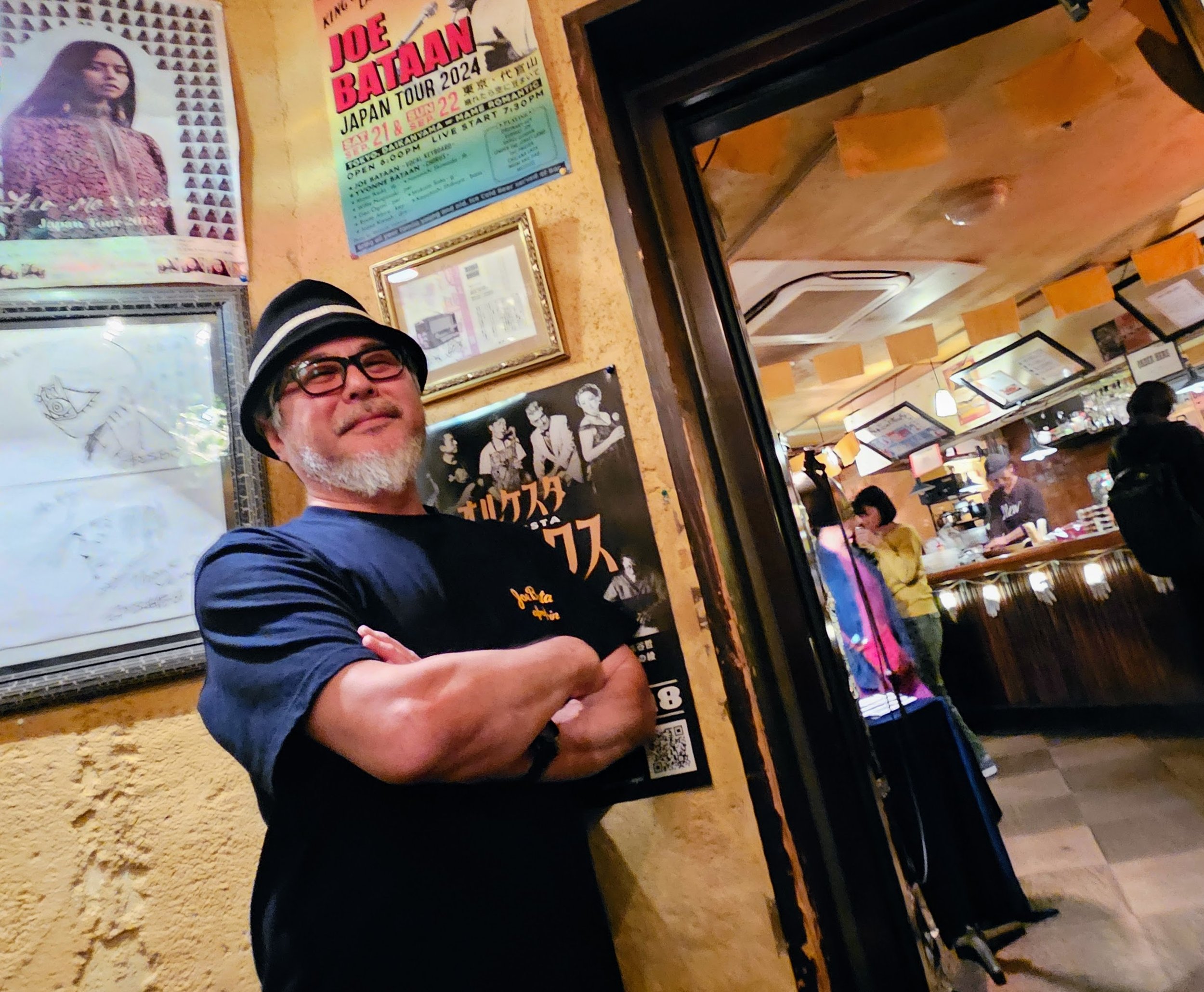
Shin Miyata went to LA to learn about Chicano culture four decades ago and now runs a record label.
Support the voices of independent journalists.
|
“People took ideas through the hip-hop movies and videos in the 90s, or from the 60s, from Pachuco to the Chicano soul,” he says, “so sometimes it’s different here, the cumbia market with the Chicano soul people.”
Miyata says Mexican American, Chicano, and cholo styles arrived to Japan in the early 90s through movies like Blood In Blood Out and hip-hop bands like Cypress Hill.
“There's always been common things between the Japanese and the Mexicanos, you know?” Miyata says. He cites a shared sense of family and romanticism, but says he would like Japanese people to learn more about the social and political struggles of the Chicanos rather than just liking the looks and music.
“We, the Japanese, always pick up the surface, but I want people to go more into the deep side,” he says.
The band Mumbia y Los Candelosos play in a live house bar in Daikanyamacho, Tokyo.
Japan-infused cumbia
Ayumi Nobe, a.k.a. DJPope, is from Osaka and plays her vinyl record collection in many bars in Shimokitazawa, Shibuya, and other areas in Tokyo. She has a heavy collection of vintage tropical records, but also electro cumbia and new chicha, and has toured Latin America and the U.S.
She says the appetite for Latin music in Japan has been growing, and now there are more and more local Japanese musicians playing their own take on Latin rhythms. Among those artists are: Los Tequila Cokes, Rojo Regalo, Mumbia y sus Candelosos, Mochilero, and the internationally acclaimed band Minyō Crusaders, which appears in the recently launched documentary Bring Minyō Back!
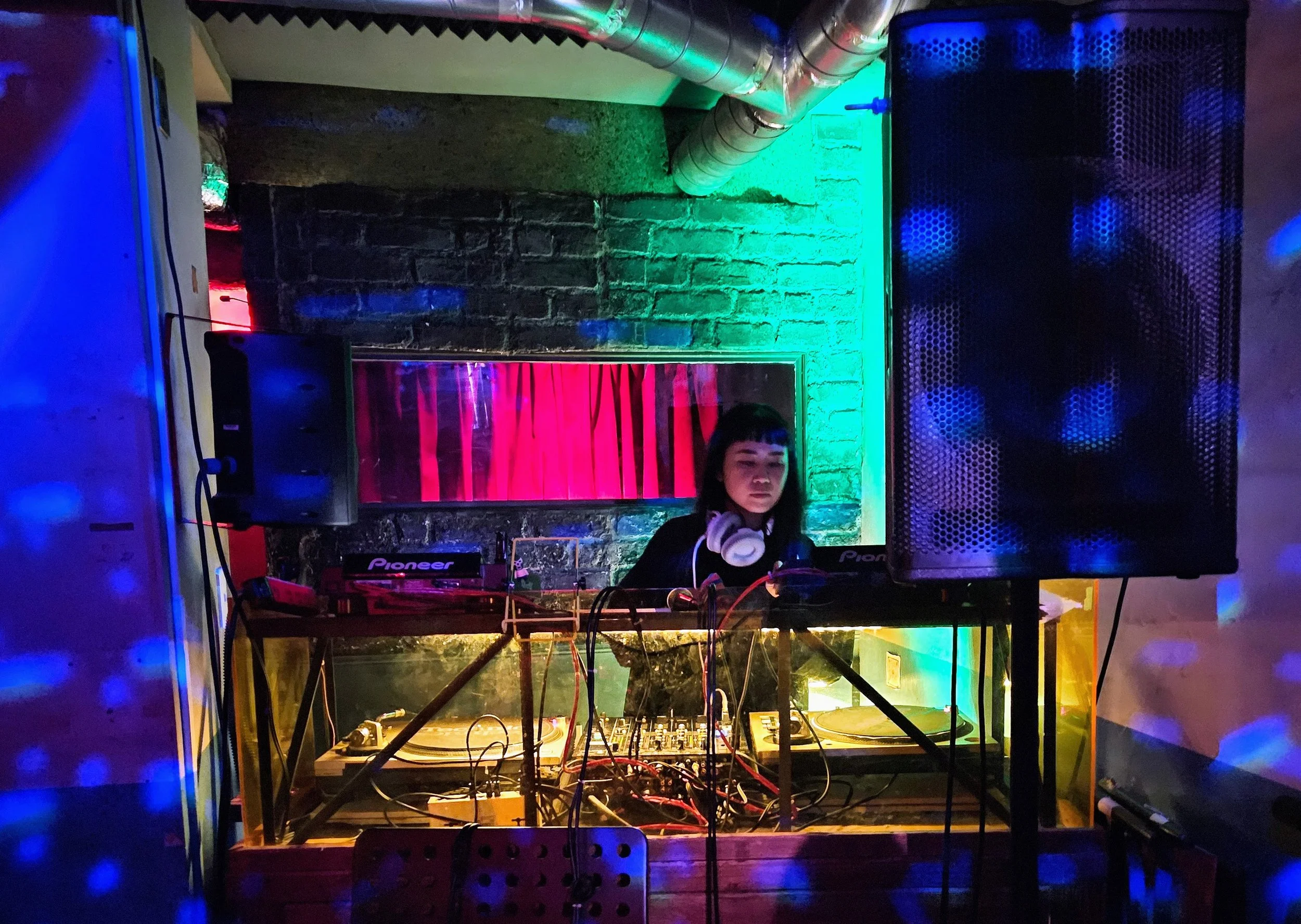
DJ Pope spins vintage and electro cumbia in a bar in Shibuya, Tokyo.
“Minyō Crusaders combine minyō, a very traditional music style from Japan, with Latin music. It's really original,” Pope says.
And the ties between Latin America and Japan through music keep evolving. Just in March 2026, reggaeton’s top artist, Bad Bunny, chose Tokyo as the city to play a secret show, now streamed on Spotify. And one of the musicians during his Super Bowl performance, Willie Calderón, has turned famous Japanese city pop hits from the 80s into salsa, like Miki Matsubara’s “Mayonaka no Door (Stay With Me)”.
Pope says the Latin music community in Japan may not be too big, but it’s unique and welcoming.
“So if you have a chance to come to Japan, we can share with you, and maybe we can party with you!,” Pope says.
—
Listen to some artists who’ve given Japanese music a Latin flavor here.
This story originally aired on KCRW.

Rodrigo Cervantes Rodrigo Cervantes is an award-winning bilingual journalist and communications strategist with extensive experience in the U.S., Mexico, and internationally. He has contributed to outlets such as NPR, CNN, The Los Angeles Times, and the BBC. Cervantes led KJZZ’s Mexico City bureau, where he launched the first overseas bureau for a U.S. public radio station. He also served as Business Editor-in-Chief for El Norte, part of Grupo Reforma, Mexico’s leading newspaper company. In Georgia, he led the newsroom of MundoHispánico, then the state’s oldest and largest Latino publication, under The Atlanta Journal-Constitution. His work has been recognized with RTDNA Murrow Awards and José Martí Awards from the National Association of Hispanic Publications (NAHP). He is the former Secretary of the National Association of Hispanic Journalists (NAHJ) and currently serves as co-managing editor of palabra, and as a clinical assistant professor at Arizona State University’s W. Cronkite School of Journalism and Mass Communication. @RODCERVANTES