
¡Wepa! The Unsung Heroes of Boricua Comics Take the Big Stage
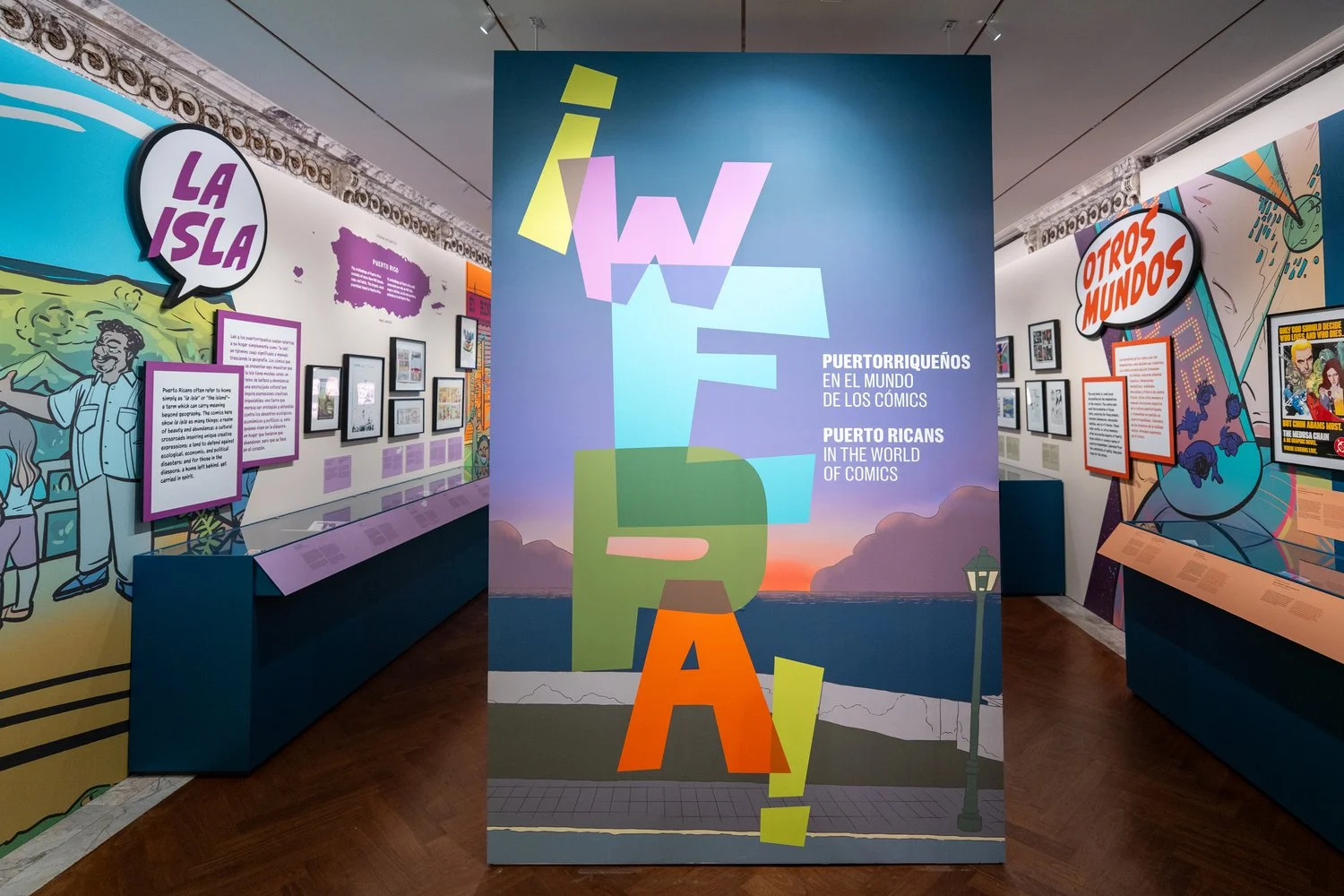
The exhibition “¡Wepa! Puerto Ricans in the World of Comics” at the New York Public Library. It is divided into four parts, including “La Isla,” and “Otros Mundos.” New York Public Library/Jonathan Blanc
A landmark New York Public Library exhibition celebrates Puerto Rican comics — from a Wonder Woman reboot to underground LGBTQ+ stories.
Words by Rich Tenorio, @rbtenorio
Edited by Patricia Guadalupe, @PatriciagDC
University of Puerto Rico graduate Stephany Moyano Ayala found a way to combine two very different fields of study: Drawing and Culinary Arts. She created comic books based on her experiences in the food service industry. Sometimes, working in restaurants was decidedly unsavory – a swarm of cockroaches, a directive to prepare rotten fish. Yet she found solace in a new job: Making pastelillos, or stuffed turnovers, in the coastal island town of Luquillo. In a comic book named after the Luquillo ZIP code of 00773, Moyano Ayala created whimsical, wordless art – pastelillos that take on human characteristics, smiling at the reader.
Moyano Ayala and her work are part of a new exhibition at the New York Public Library that sheds light on the history and impact of Puerto Rican comic book creators. “¡Wepa! Puerto Ricans in the World of Comics” is on display until March 8. Based on a massive and comprehensive archival donation of around 1,500 pieces, the bilingual exhibition goes back decades. Spanning 63 pieces in a 600-square-foot gallery, it traverses the themes of time and space as they unfold in comic-book worlds in Puerto Rico, New York, and even in science fiction.
“I wanted it to be a celebration, a celebration of all the legacies of contributions of the artists, some of them not very well acknowledged … and [to] bring those voices and contributions to the forefront,” said co-curator Paloma Celis Carbajal, who organized the exhibition with colleague Charles Cuykendall Carter.
There’s a groundbreaking comic book aimed at LGBTQ+ readers, Tales of the Closet by Iván Vélez, Jr., which debuted amid the AIDS crisis of the mid-1980s. Also represented is the late Bronx-born artist and writer George Pérez, who had his own achievements in the ‘80s: He was tasked by DC Comics with reinventing Wonder Woman. The new-look superheroine’s origin story was changed, as her magical island birthplace transitioned into a more recognizable locale for boricuas. And there are more recent contributions, including from Iván Plaza, whose character Coquí debuted in a 2021 comic book. The superhero was named after the beloved Puerto Rican frog with a distinctive call. Throughout the exhibition, creators address the island’s indigenous Taíno heritage, the legacies of Spanish and U.S. colonialism, the impact of natural disasters such as the San Ciriaco hurricane of 1899 and Hurricane María in 2017, and the Puerto Rican diaspora – one place in particular.
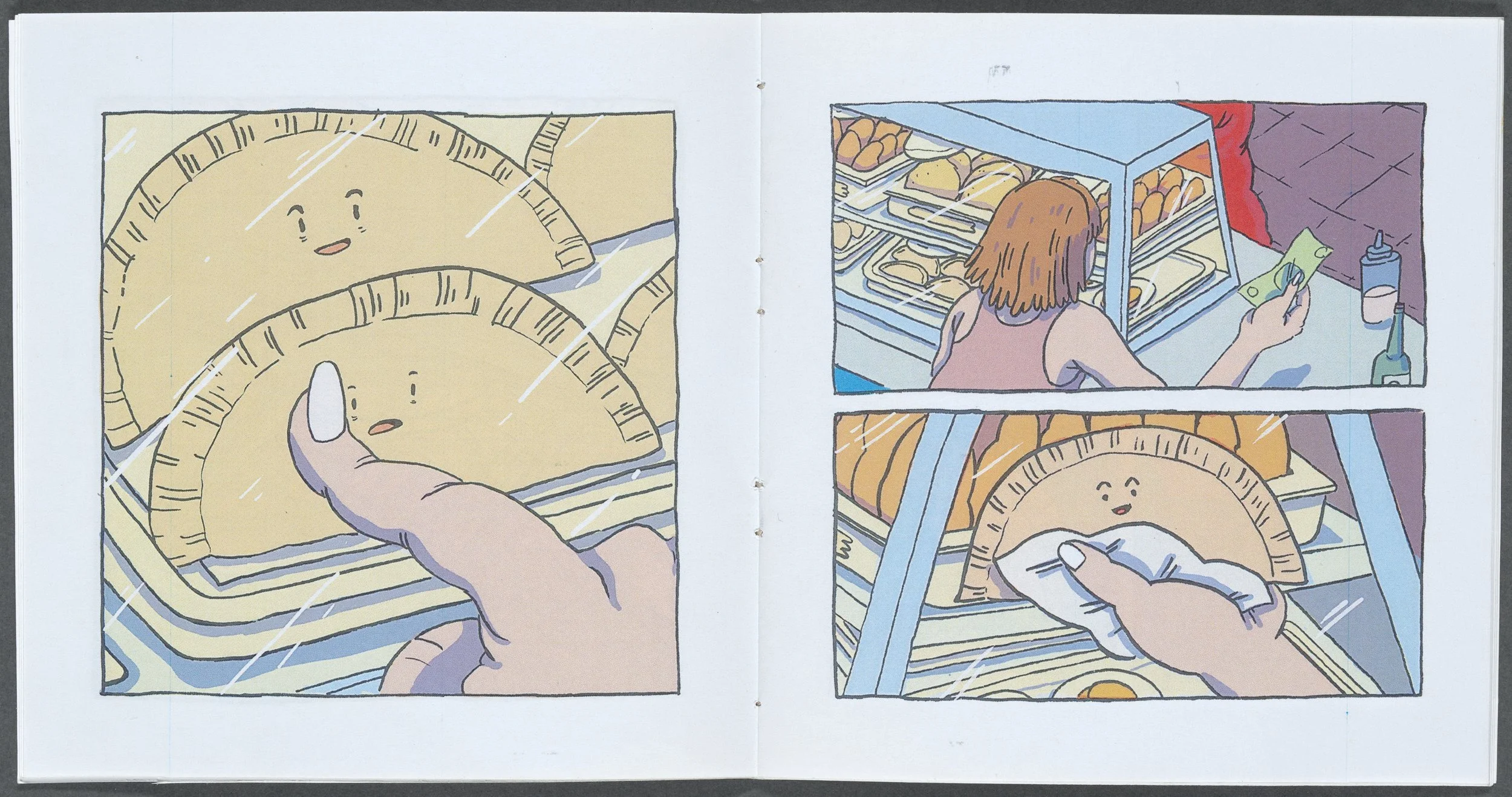
Stephany Moyano Ayala/00773: Luquillo, Puerto Rico/Fajardo, Puerto Rico: (self-published), 2020/© Stephany Moyano Ayala
As Carter points out, “Another very important island in terms of Puerto Rican history and culture was, of course, Nueva York.”
The seed for the exhibition was a donation by Manuel Martínez Nazario, a librarian in the Puerto Rican capital of San Juan. He had started to amass the collection in the 1990s, and in 2022, it arrived at the New York Public Library. Celis Carbajal, curator for Latin American, Iberian, and U.S. Latino collections, began thinking about putting some selections on display as an exhibition. She enlisted the services of Carter, an assistant curator in the Carl H. Pforzheimer Collection of Shelley and His Circle, in part due to his passion for comics and expertise in videography. Eight video interviews with Puerto Rican comics creators became part of the exhibition. They are available online, along with a ninth interview, this one with Martínez Nazario.
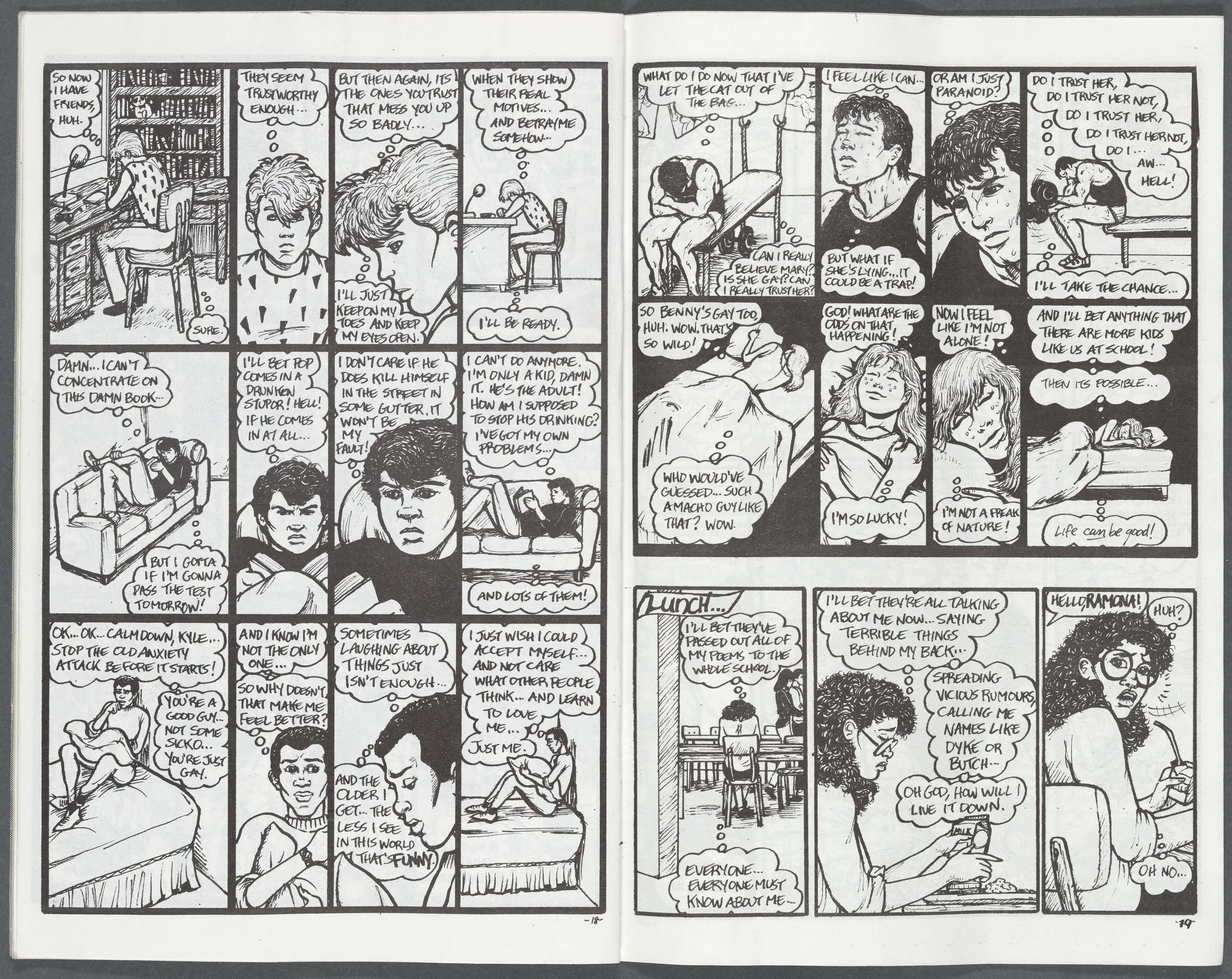
Iván Velez, Jr./Tales of the Closet #1/New York: Hetrick-Martin Institute, 1987/© Iván Vélez, Jr.
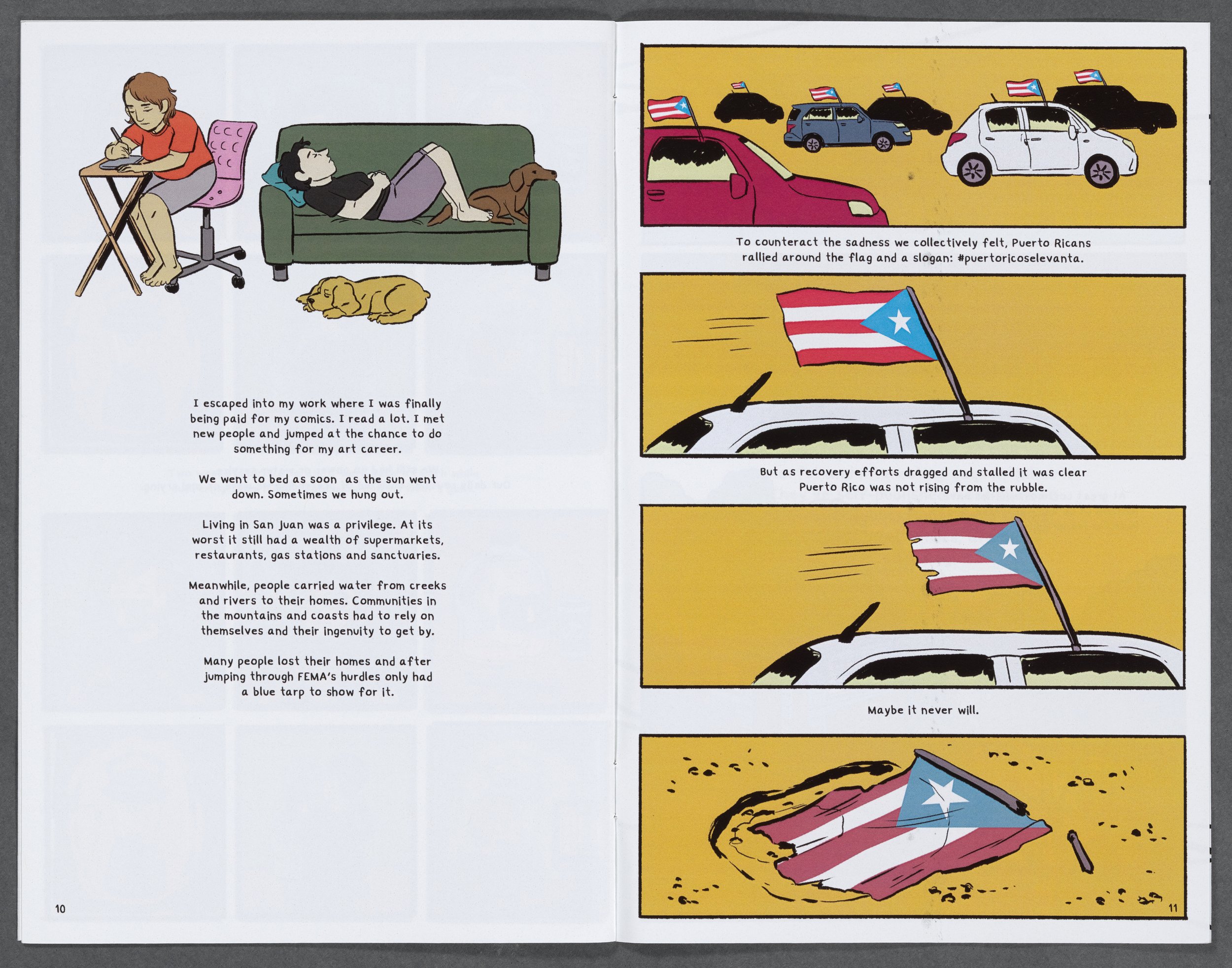
Rosa Colón Guerra/María/San Juan: Soda Pop Comics, 2018/© Soda Pop Comics
“Right now, we underscore the contributions of Latinos, in this case, in the field of the comic book industry. It’s very important in a moment [in which] we hear that Latinos are being deported… The constant presence of Spanish in the gallery, and also in the videos, is something we wanted to underscore,” as well as the fact that many comic book creators highlighted are people of color.
Celis Carbajal — co-curator
Support the voices of independent journalists.
|
As Vélez explains in his video interview, he is the son of Puerto Rican parents. He himself grew up in The Bronx and became a cartoonist. Tales of the Closet was distributed to New York City public schools as a way to promote safe sex. It chronicled eight diverse high-schoolers in Queens. One character, Tony, is a Puerto Rican whose relationship with his father, Papito, was modeled after the cartoonist’s relationship with his own father. Vélez went on to work for major comic book companies, such as Marvel, DC Comics, and the DC Comics subsidiary Milestone. At Milestone, he created Latine superheroes, including boricua stars for the Blood Syndicate series.
“Right now, we underscore the contributions of Latinos, in this case, in the field of the comic book industry,” said co-curator Celis Carbajal. “It’s very important in a moment [in which] we hear that Latinos are being deported.” And, she added, “The constant presence of Spanish in the gallery, and also in the videos, is something we wanted to underscore,” as well as the fact that many comic book creators highlighted are people of color.
Even after the exhibition closes, the archive can be viewed in the library’s reading room. That includes Moyano Ayala’s tribute to the pastelillos of Luquillo. One such pastelillo encounters an unexpected fate. A girl drops it, and one of Puerto Rico’s ubiquitous stray dogs carries it to the beach for a snack.
“[Not] everybody is paying attention to the girl that drops her empanadilla, or what happens to it,” Moyano Ayala tells palabra. In words that apply to the entire exhibition, she adds, “And it’s kind of magical if you just pay attention to those things that you usually wouldn’t.”
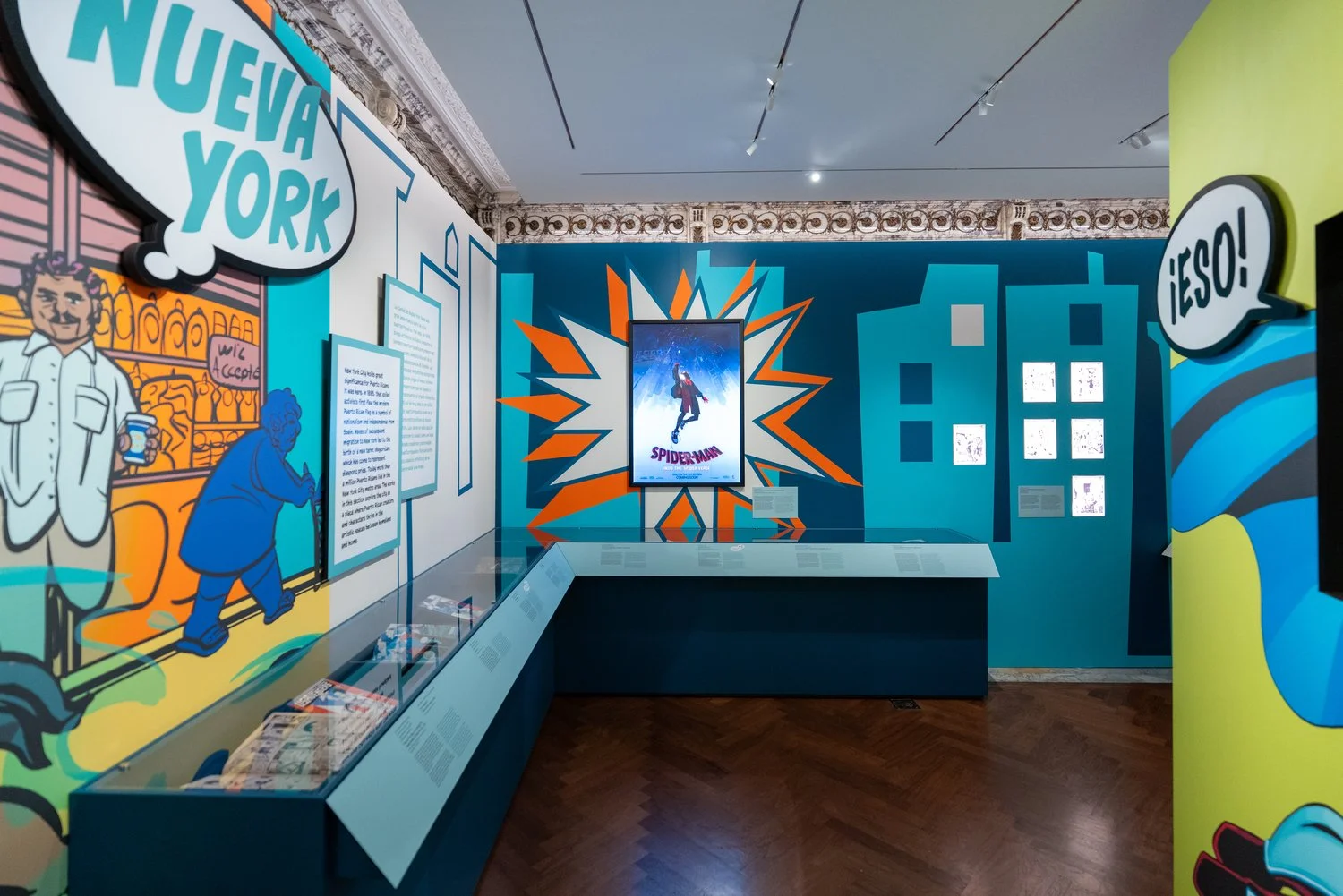
Part of the exhibition “¡Wepa! Puerto Ricans in the World of Comics” at the New York Public Library. New York Public Library/Jonathan Blanc
—
Rich Tenorio is a writer and editor whose work has appeared in a variety of media outlets. He is a graduate of Harvard College and the Columbia University Graduate School of Journalism. Tenorio is also a cartoonist. @rbtenorio

Patricia Guadalupe, raised in Puerto Rico, is a bilingual multimedia journalist based in Washington, D.C., and is the co-managing editor of palabra. She has been covering the capital for both English- and Spanish-language media outlets since the mid-1990s and previously worked as a reporter in New York City. She’s been an editor at Hispanic Link News Service, a reporter at WTOP Radio (CBS Washington affiliate), a contributing reporter for CBS Radio network, and has written for NBC News.com and Latino Magazine, among others. She is a graduate of Michigan State University and has a Master’s degree from the Graduate School of Political Management at George Washington University. She is the former president of the Washington, D.C., chapter of NAHJ and is an adjunct professor at American University in the nation’s capital and the Washington semester program of Florida International University. @PatriciagDC