The Last Corridor: How Trump Administration’s Border Is Threatening Arizona’s Ecosystem
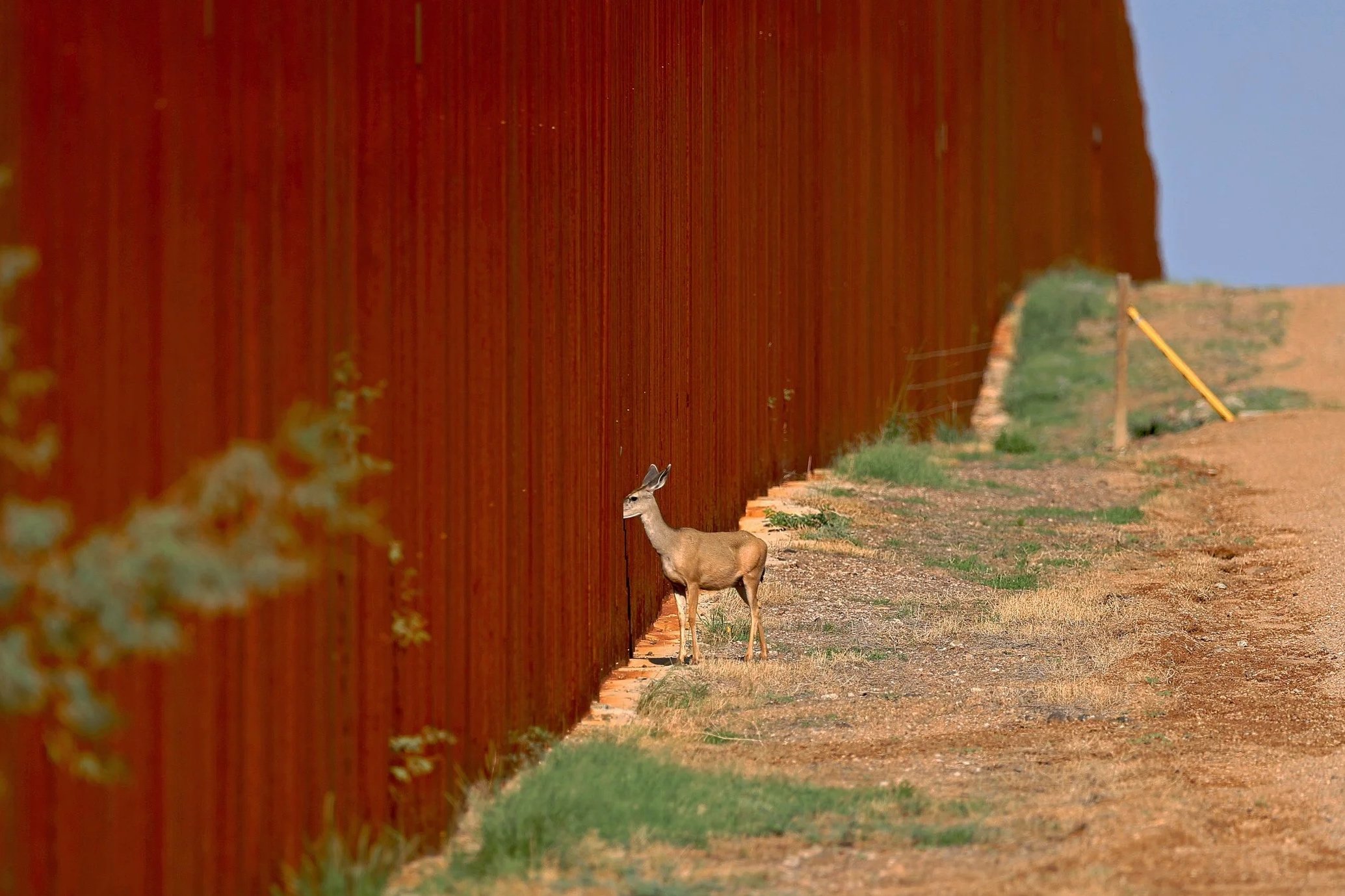
A deer pokes its head through the border wall into Mexico after searching for a spot to cross in the San Bernardino National Wildlife Refuge on Tuesday, July 22, 2025, in Cochise County, Ariz. While small wildlife passages have helped some animals, larger species are unable to cross.
CONSERVATIONISTS working to protect the San Rafael Valley say the continuing border wall construction threatens endangered species in an important wildlife corridor.
Words by Lorenzo Gomez and Marissa Lindemann/News21
Photos by Marissa Lindemann/News21
Edited by Rodrigo Cervantes and News21
SAN RAFAEL VALLEY, Arizona — Over the past few decades, the Arizona-Mexico border has undergone significant transformation. Vehicle barriers once marked the line. Then, shipping containers were double-stacked along the boundary. Now, the Trump administration has officially broken ground on an additional 27 miles of wall construction intended to stop illegal crossings into the United States.
Last September, crews began blasting rock and installing the 30-foot-high steel bollard barrier across parts of the San Rafael Valley, a high-grassland region in southeastern Arizona. Monitors and local observers estimate that about a mile of wall has already been erected.
That has prompted conservationists to scramble for solutions to protect this critical wildlife corridor, one of the last unobstructed such corridors in Arizona – and one used by some of the state’s most endangered species.
Subscribe to palabra’s newsletter
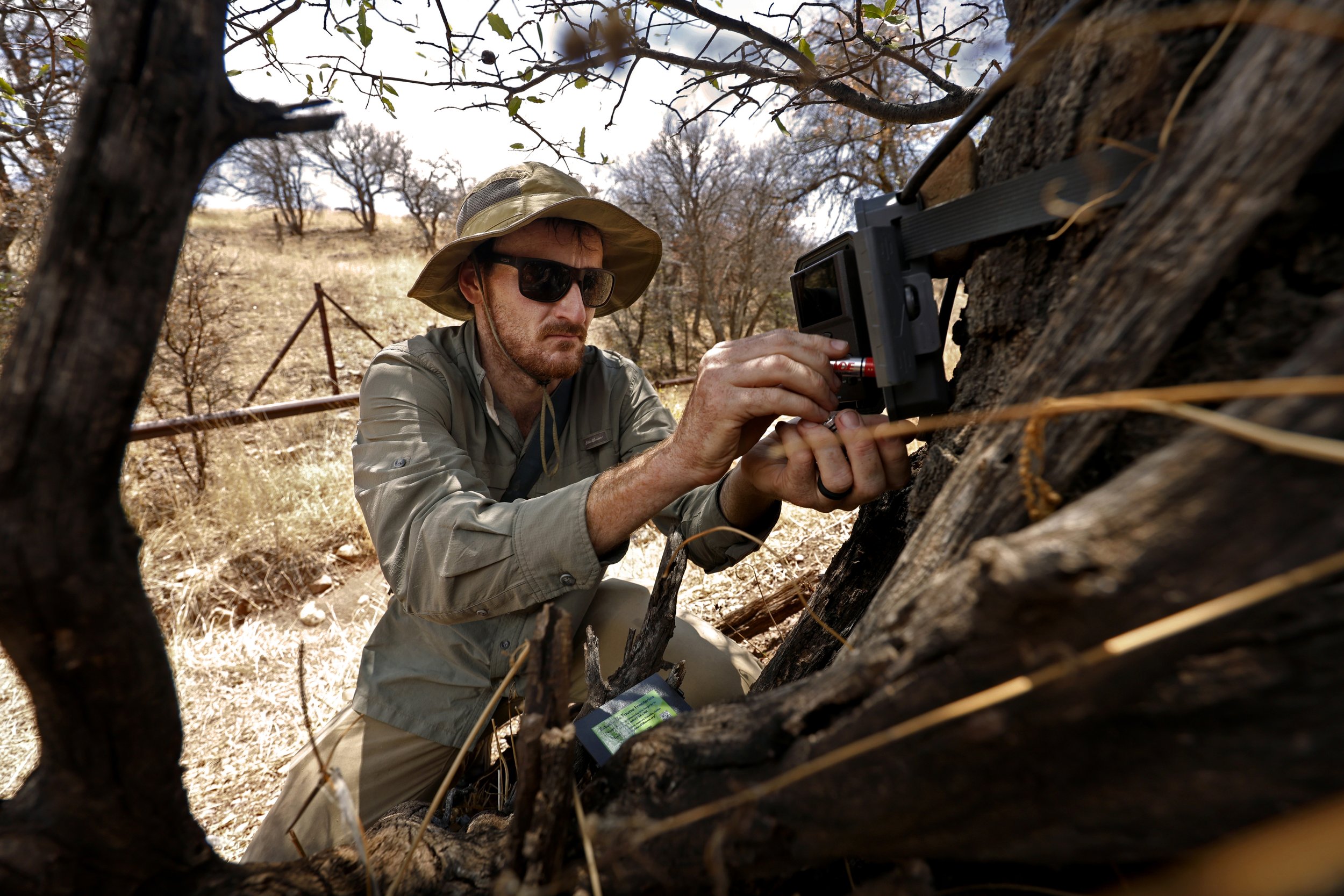
Eamon Harrity, a wildlife program manager for conservation nonprofit Sky Island Alliance, replaces the batteries for a camera trap in the San Rafael Valley on Monday, July 7, 2025, in Santa Cruz County, Ariz. The cameras are part of a study to document how wildlife is affected by border barriers.
In June 2025, the Department of Homeland Security awarded a $300 million contract to North Dakota-based Fisher Sand & Gravel Co. to begin construction. The project includes 24.7 miles of wall between Naco and Nogales – a segment of the border that includes the San Rafael Valley.
The construction will also wall off both sections of the Santa Cruz River that intersect the border, leaving the Tohono O’odham Nation as one of the only areas in Arizona without a border wall.
To expedite the process, Homeland Security Secretary Kristi Noem waived multiple environmental laws, including the National Environmental Policy Act. The Tucson-based Center for Biological Diversity pushed back in July, filing a lawsuit arguing DHS lacks the legal authority to issue such waivers.
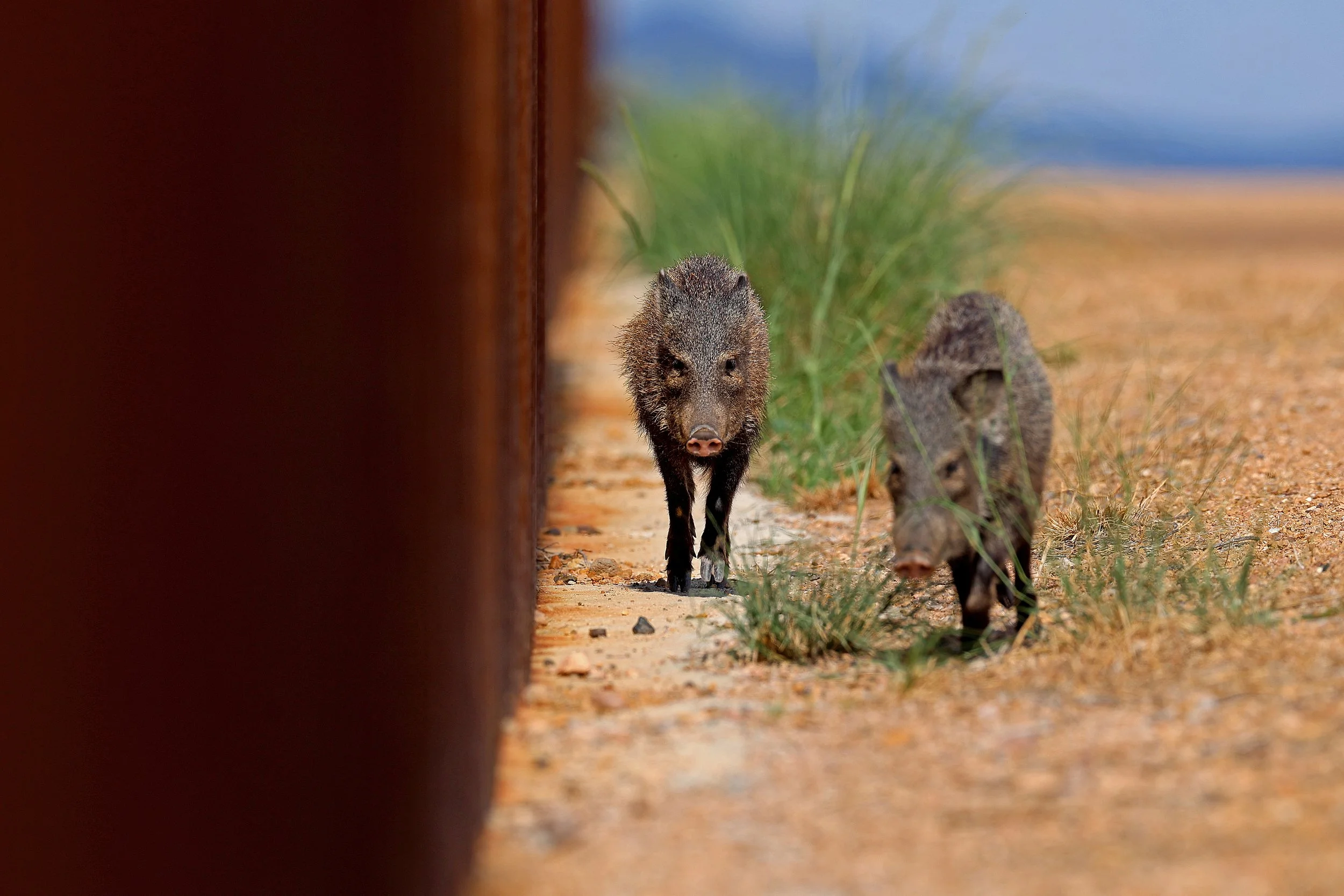
Javelinas pace along the U.S.-Mexico border in the San Bernardino National Wildlife Refuge on Tuesday, July 22, 2025, in Cochise County, Ariz. As the second Trump administration prepares to close some of the last gaps in the border wall, conservationists say the effect will be devastating.
For over five years now, organizations such as Sky Island Alliance, a Tucson-based nonprofit dedicated to protecting ecological diversity, have been documenting how wildlife is affected by border barriers, including in the San Rafael Valley.
The group’s border wildlife study estimates that replacing existing vehicle barriers with a wall will reduce wildlife crossings by 86%. Conservationists said the wall will close a corridor that wildlife have migrated through for millennia, blocking their access to water, food and mates.
According to the National Integrated Drought Information System, 95% of Arizona is experiencing drought. That makes wall construction in the region even more perilous for wildlife, conservationists said.
“It's really hard for them to find watering holes and resources, so they need to travel large amounts of territory,” said Erick Meza, border program coordinator for the Sierra Club. “We might lose species in these areas forever.”
One species that’s particularly at risk is the jaguar, which is listed as endangered under the U.S. Endangered Species Act. In December, the Center for Biological Diversity confirmed that a new jaguar is roaming southern Arizona — the fifth documented in the state since 2011. If border wall construction continues in this migration corridor, conservationists warn it would likely eliminate the jaguar from the United States entirely.
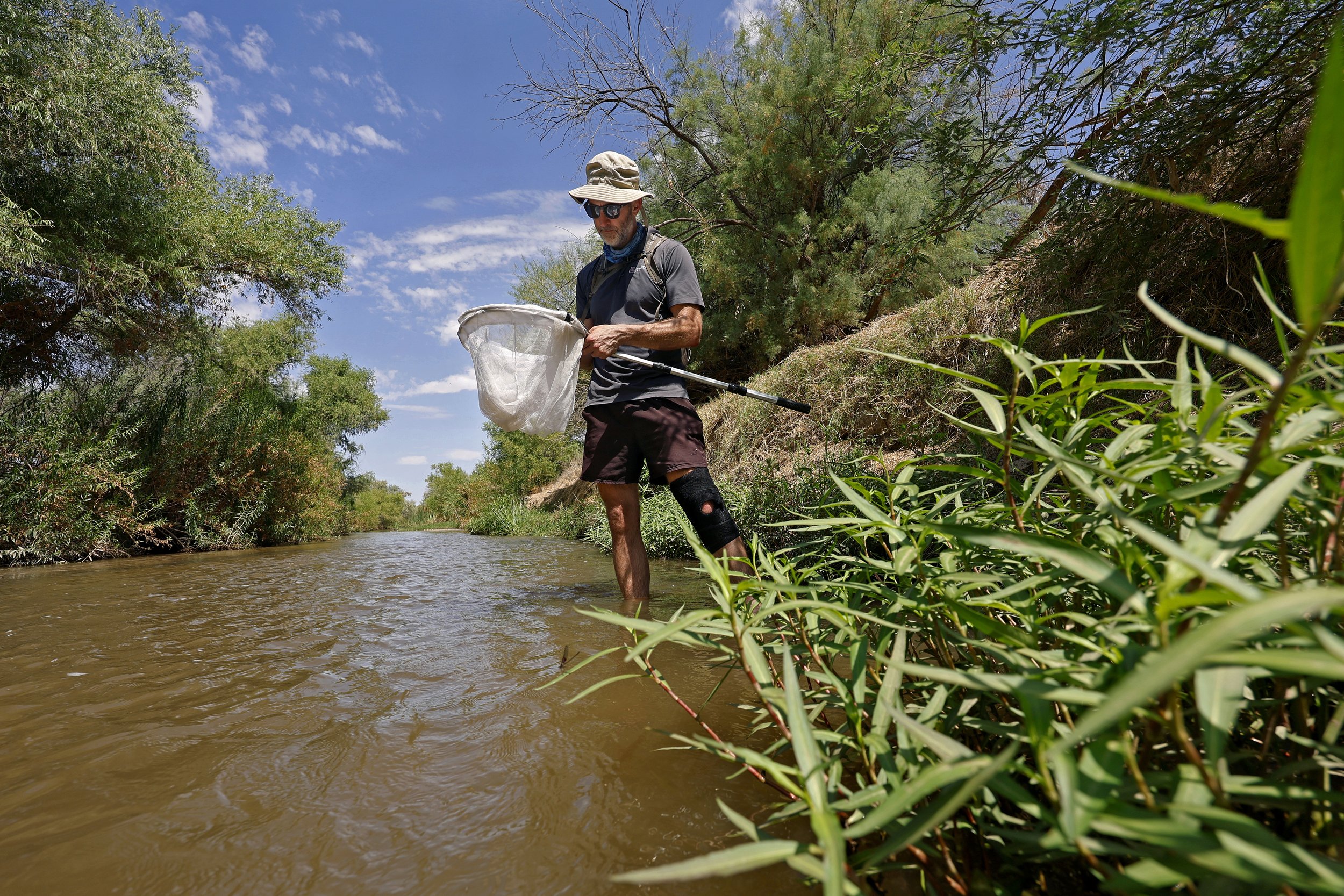
Michael Bogan, an ecologist with the University of Arizona, conducts a dragonfly and damselfly survey along the Santa Cruz River on Tuesday, July 8, 2025, in Marana, Ariz. Bogan is part of an effort to have portions of the Santa Cruz River added to the U.S. Fish and Wildlife Service's National Wildlife Refuge System.
Eamon Harrity, Sky Island Alliance’s wildlife program manager, is on the front lines of the effort to document the effects by setting up and monitoring wildlife cameras across the valley.
“What we ultimately want is awareness of the impacts of the border,” Harrity said. Sky Island Alliance shares its findings with DHS and U.S. Customs and Border Protection; it also proposes design changes, such as wildlife openings, to accommodate affected species.
Wildlife openings were installed in the border wall at the San Bernardino National Wildlife Refuge, about 100 miles east of the San Rafael Valley, as part of a 2023 settlement agreement between the Sierra Club and the Biden administration.
According to Harrity, the openings proved somewhat successful: Animals such as javelinas, coyotes and female mountain lions have been able to squeeze through the ground-level, 8.5-by-11-inch gaps. However, he says, larger and more frequent openings are needed to accommodate more wildlife movement.
For conservationist Myles Traphagen, borderlands program coordinator at Wildlands Network, the threat of construction in the area feels personal.
“When mountains are being blown up, and watercourses are being dammed off, and steel structures are being erected that stop all wildlife movement and also cultural and social exchange along the border, it really is a personal matter,” he said. “It cuts real deep.”
In fiscal year 2025, CBP’s Tucson sector, which includes the San Rafael Valley, reported one of the country’s highest totals of illegal entries along the southern border.
However, across Sky Island Alliance’s 60 motion-sensored wildlife cameras, Harrity said, “Less than 1% of all things on our cameras were humans, and more than half of those humans are hunters.”
The ghost town of Lochiel, about 65 miles southeast of Tucson, is one example of this notably quiet environment. The town became a protest site in May 2025, when environmental advocates from both sides of the border gathered to oppose wall construction.
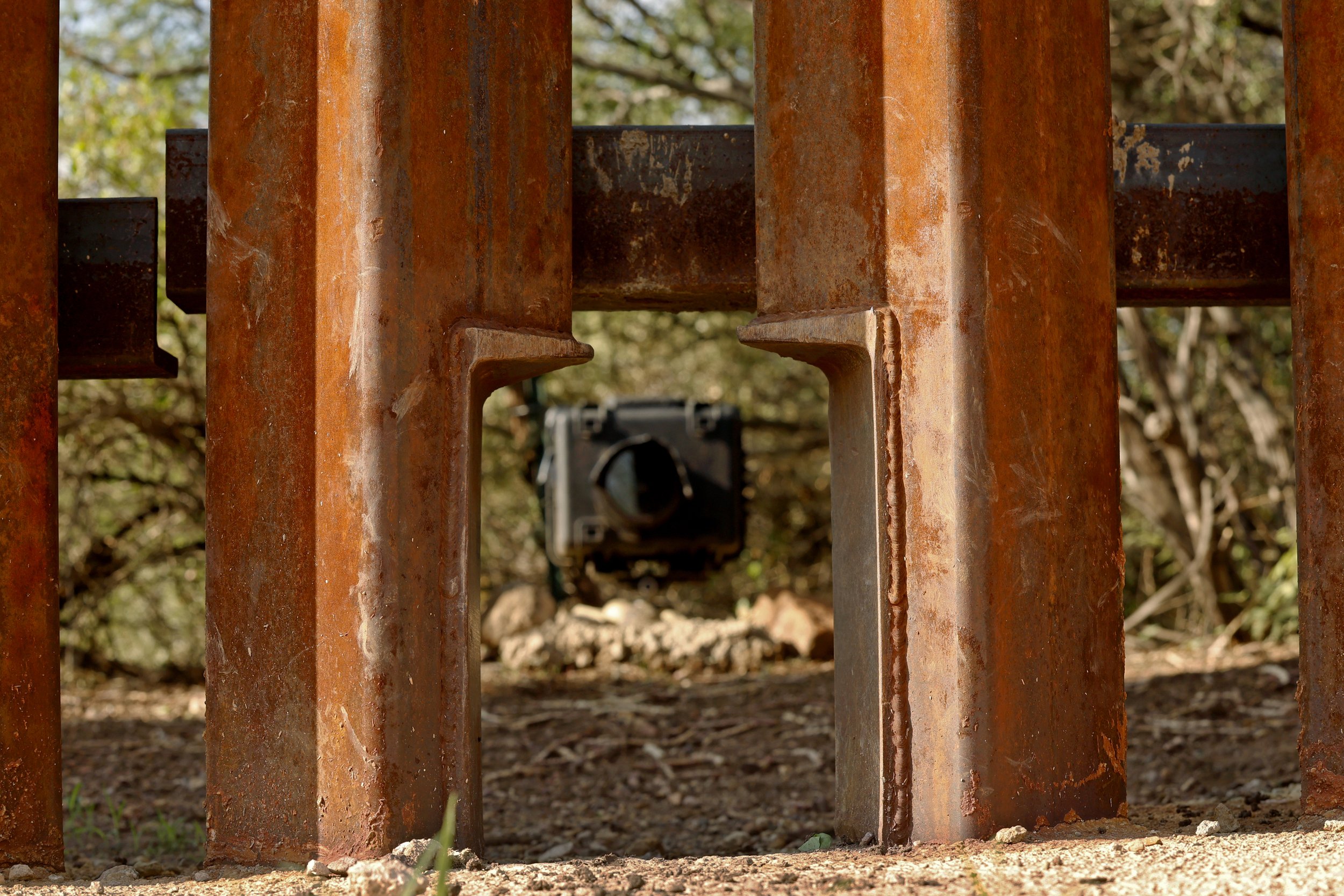
A camera trap to record animals is situated at the front of a small wildlife opening in the San Bernardino National Wildlife Refuge on Tuesday, July 22, 2025, in Cochise County, Ariz. As the second Trump administration prepares to close some of the last gaps in the border wall, conservationists say the effect will be devastating.
“Blocking wildlife migration, plus the water movement on the rivers and the washes that exist on those areas, is going to be really bad for both communities,” said the Sierra Club’s Meza, who helped organize the protest.
In November 2025, dozens of community members and borderland advocates again joined “Rally for the Valley,” expressing shared concerns about ecological damage, water usage and the social impacts of the expanding barrier.
Conservationists have also raised the alarm about wall construction over the Santa Cruz River. The river has nourished the region, including the Tohono O’odham and Pascua Yaqui tribes, for more than 12,000 years. It’s currently fourth on a list of America’s most endangered rivers, and wall construction is the newest obstacle in the river’s path.
Michael Bogan, an ecologist at the University of Arizona who researches the Santa Cruz, said wall construction feels immune to legal challenges. In his opinion, construction is a “foregone conclusion” when considering the hundreds of miles of border infrastructure built during the first Trump administration.
He uses his research to advocate for turning parts of the Santa Cruz River into a national wildlife refuge.
“On a weekly basis, we’re having to mobilize and deal with triage – the ecological (and) environmental disasters that are being thrown our way by the administration,” Bogan said. “So, honestly, the wall is a little bit lower in that.”
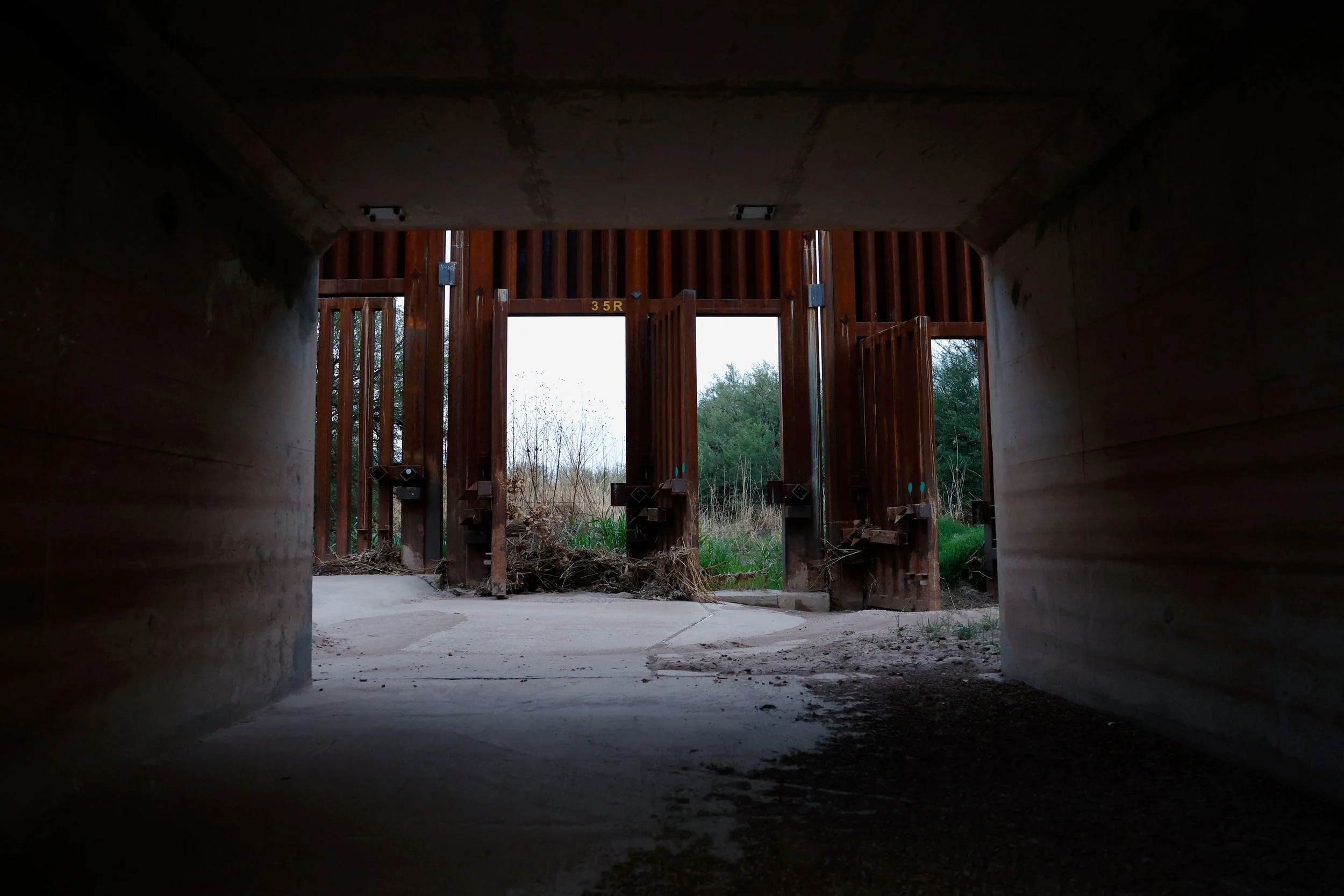
A bridge frames open floodgates in San Bernardino National Wildlife Refuge on Monday, July 21, 2025, in Cochise County, Ariz. As the second Trump administration prepares to close some of the last gaps in the border wall, conservationists say the effect will be devastating.
Conservationists have also raised the alarm about wall construction over the Santa Cruz River. The river has nourished the region, including the Tohono O’odham and Pascua Yaqui tribes, for more than 12,000 years.
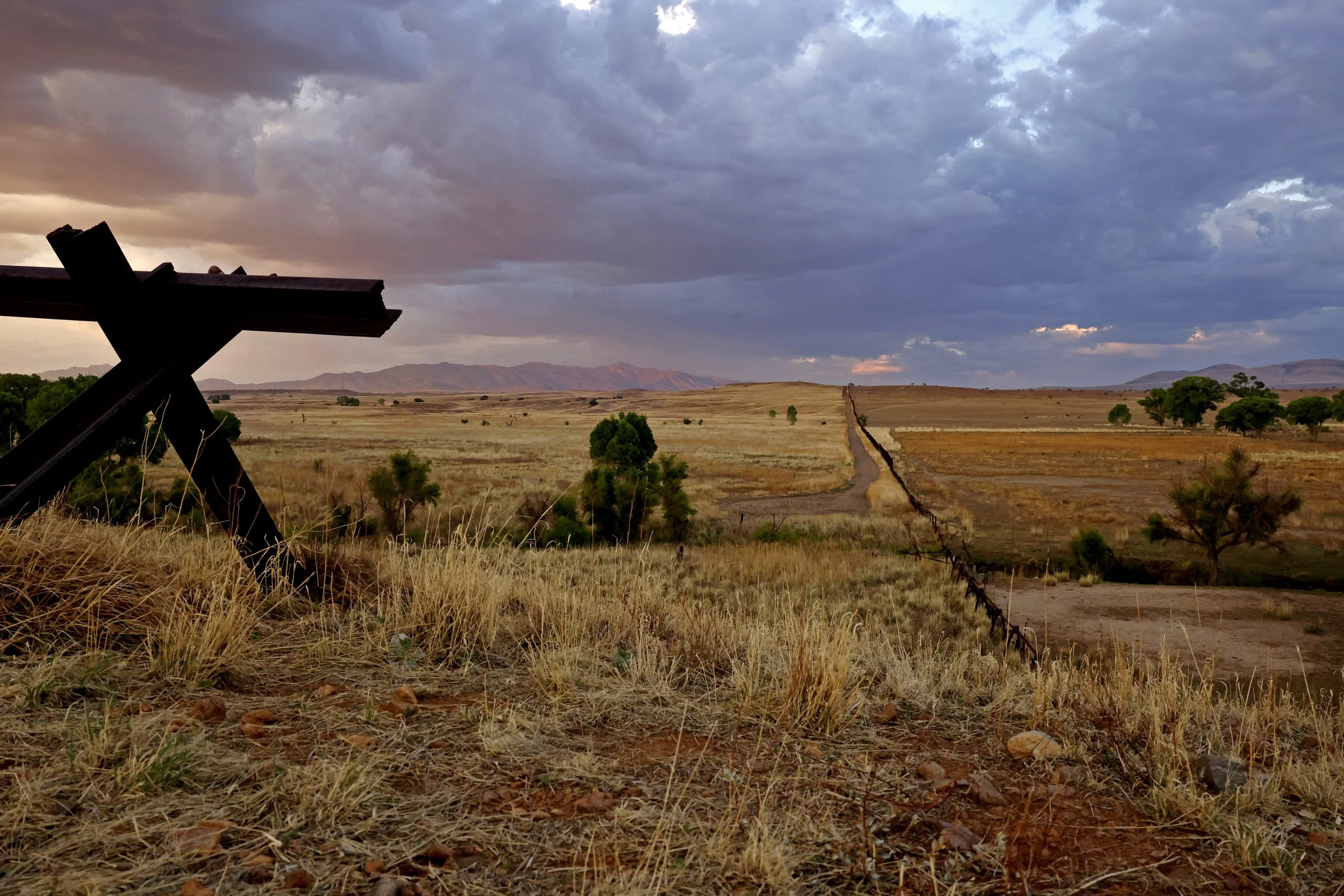
Vehicle barriers mark the border between the United States and Mexico in the San Rafael Valley, on Tuesday, July 8, 2025, in Santa Cruz County, Ariz. The valley is one of the state’s last unwalled sections of the border and a critical wildlife corridor for endangered species.
He added that the effects of wall construction will be seen primarily downstream, closer to the border. That construction, he said, produces fine sediment that can smother aquatic wildlife and change the shape of the river. Debris builds up behind the border wall – particularly in the wake of seasonal monsoons – and could prevent aquatic species, such as the endangered Gila topminnow, from replenishing populations in the United States.
In an email to News21, CBP spokesman Dennis Smith said all border wall projects “are designed to take into consideration transboundary water flows including rivers, creeks, or ephemeral washes” and that construction can include “culverts or other drainage systems with flood gates or grates.”
He added that CBP plans to open the floodgates to allow for higher seasonal flows of water and that the agency will remove any debris and sediment.
Nature-based tourism and conservation contributed nearly $36 million to Santa Cruz County’s economy in 2019, according to a study by the UA Cooperative Extension and Department of Agricultural and Resource Economics.
Even as advocates and researchers push to slow construction and mitigate its impacts on wildlife, Traphagen said the San Rafael Valley is only the beginning of what is to come.
“We are trying to slow the wheels down,” he said, “but it seems like it will be inevitable.”
—
SUPPORT THE VOICES OF INDEPENDENT JOURNALISTS. DONATE TO PALABRA TODAY!
About News 21
ASU’s Walter Cronkite School of Journalism and Mass Communication brings some of the nation’s most talented journalism students together in Carnegie-Knight News21 to report and produce in-depth, multimedia projects for major national media.
This report is part of “Upheaval Across America,” an examination of immigration enforcement under the second Trump administration, produced by Carnegie-Knight News21. For more stories, visit https://upheaval.news21.com.

Marissa Lindemann is an undergraduate student at the University of Nebraska-Lincoln, majoring in broadcasting with a minor in fisheries and wildlife. Marissa’s passion for telling visual stories about the natural world has taken her from the Namib desert to the Monteverde Cloud Forest. Currently, she’s an intern for the Platte Basin Timelapse project, a multimedia conservation storytelling group.
Lorenzo Gomez is a multimedia journalist based in Phoenix, Arizona. He reports on politics, borderlands, culture and minority communities. He holds a Master of Mass Communication from Arizona State University’s Walter Cronkite School of Journalism and Mass Communication. He also holds bachelor’s degrees in political science and psychology and has experience working as a policy analyst and communications specialist. He has reported internationally with work featured in the Associated Press, Phoenix New Times, CALÓ News, LOOKOUT and Cronkite News.
Rodrigo Cervantes is an award-winning bilingual journalist and communications strategist with extensive experience in the U.S., Mexico, and internationally. He has contributed to outlets such as NPR, CNN, The Los Angeles Times, and the BBC. Cervantes led KJZZ’s Mexico City bureau, where he launched the first overseas bureau for a U.S. public radio station. He also served as Business Editor-in-Chief for El Norte, part of Grupo Reforma, Mexico’s leading newspaper company. In Georgia, he led the newsroom of MundoHispánico, then the state’s oldest and largest Latino publication, under The Atlanta Journal-Constitution. His work has been recognized with RTDNA Murrow Awards and José Martí Awards from the National Association of Hispanic Publications (NAHP). He is the former Secretary of the National Association of Hispanic Journalists (NAHJ) and currently serves as co-managing editor of palabra, and as a clinical assistant professor at Arizona State University’s W. Cronkite School of Journalism and Mass Communication. @RODCERVANTES