
The Odyssey of Dallas’ Latino Business Owners Who Survived the Passion of the World Cup
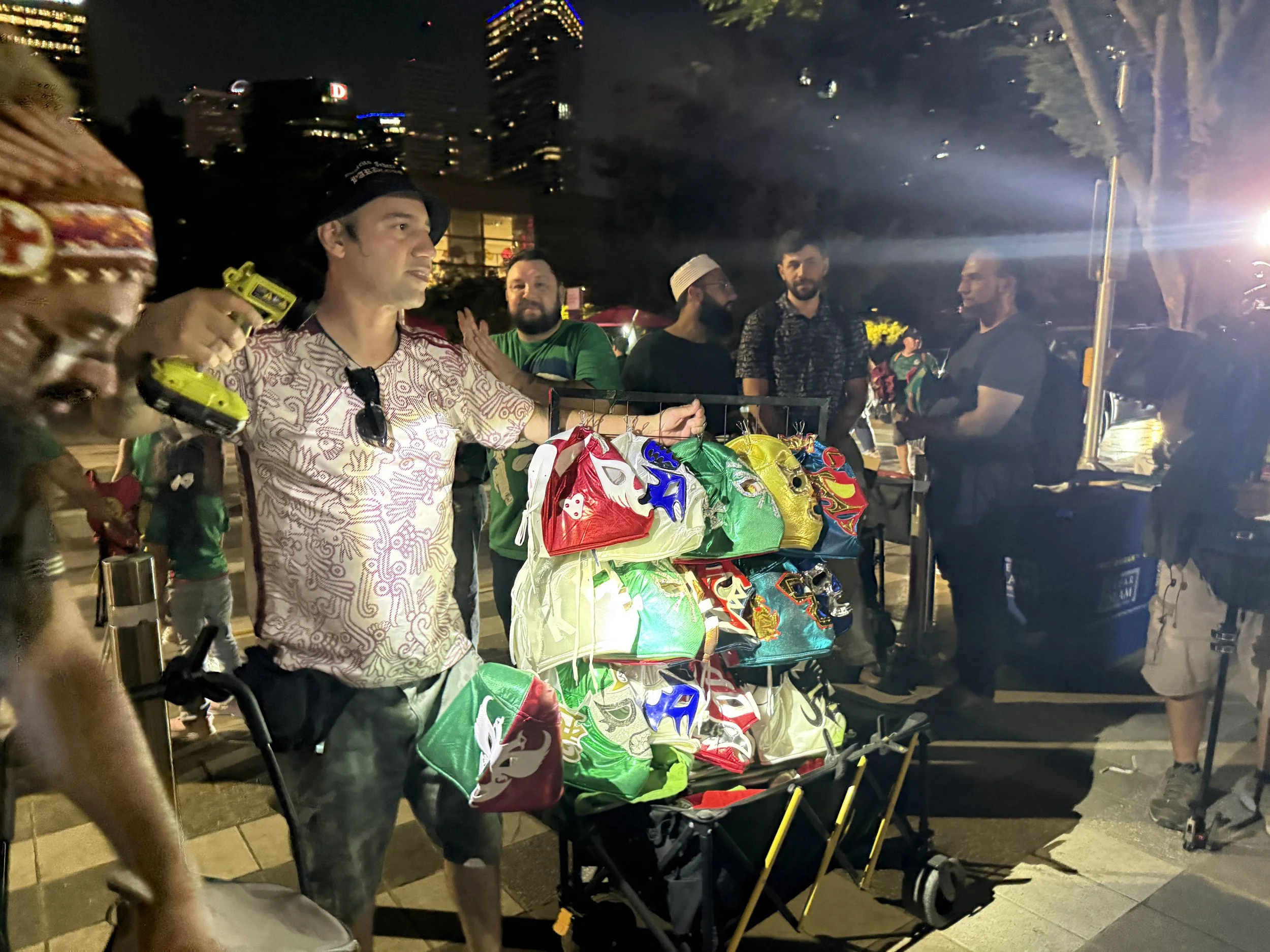
A street vendor at Dallas’ Klyde Warren Park sells masks like the kind worn by participants of Mexico’s freestyle wrestling known as Lucha Libre. Numerous pop-up vendors set up shop near the park during the World Cup.
Between blown engines, chaotic moves, and endless lines, these entrepreneurs lived through an unpredictable tournament that taught them valuable lessons
Clic aquí para leer en español.
Text and photos by Stella M. Chávez, @stellamchavez
DALLAS, TX. Eloisa Schessler couldn’t wait for FIFA World Cup fans to descend on Klyde Warren Park in downtown Dallas. She and her husband operate a food truck, Eloisa’s Kitchen, and a smaller food trailer, Eloisa’s Bodega, at the park.
But the unimaginable happened to their food truck.
“The engine blew on us, just as the World Cup was to start,” said Schessler, who added that it was difficult to find parts for an old truck. “We finally found an engine in New York, but they had to rebuild it.”
No engine, no food truck. No food truck, no food sales. At least not until after the World Cup, when the new engine finally arrived. That didn’t deter Schessler though. Her staff worked out of their small but reliable trailer instead.
“We did good on sales, but definitely we could have done probably double or triple with my food truck,” she said.
SUBSCRIBE TO PALABRA’S NEWSLETTER
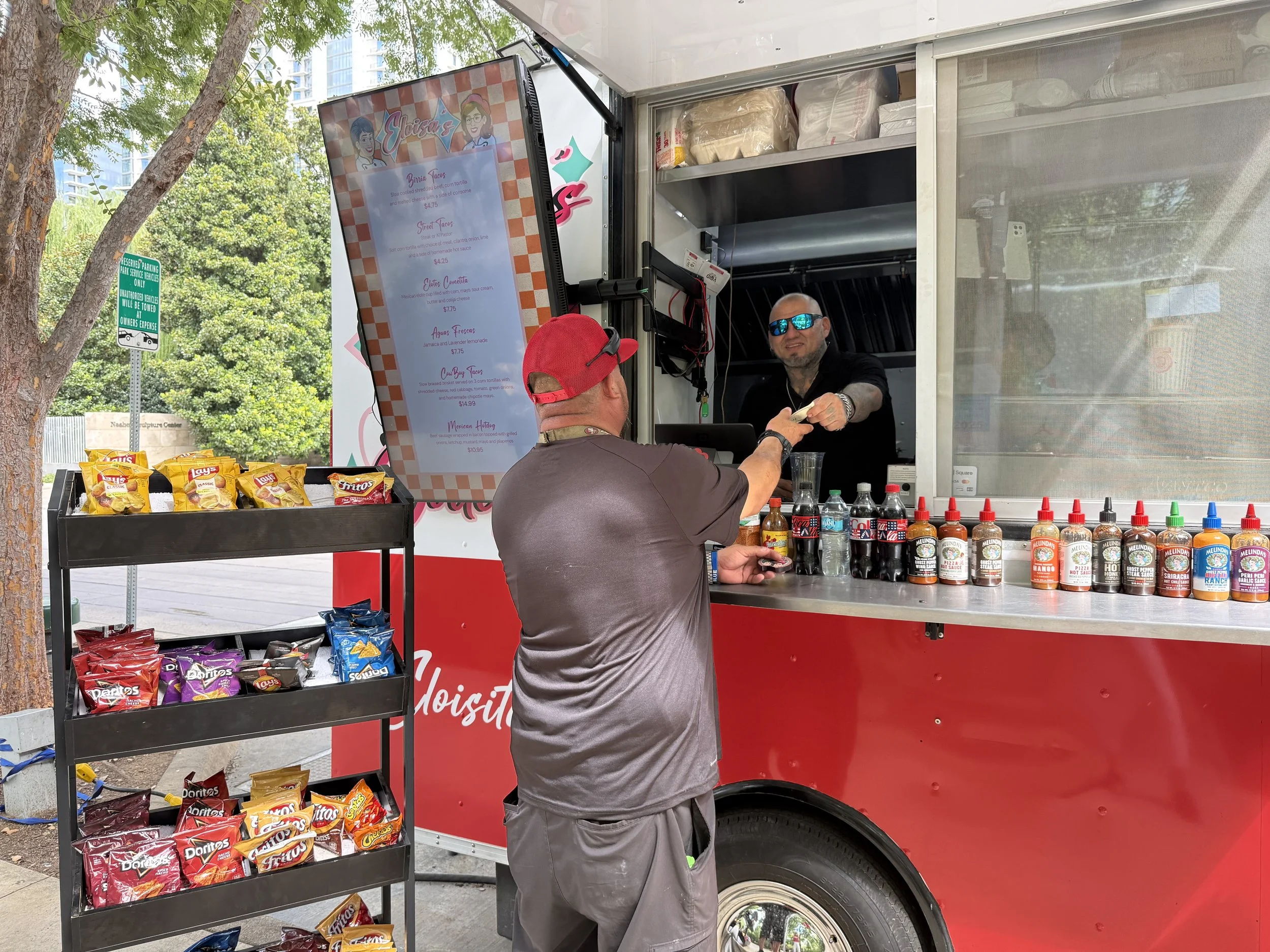
Customer Adrian Ramirez orders tacos at Eloisa’s Bodega at Klyde Warren Park in downtown Dallas. The trailer replaced a larger food truck, Eloisa’s Kitchen, when the truck’s engine malfunctioned.
For business owners like Schessler, the World Cup may have upended their business operations or forced them to improvise. Days were long, hectic and unpredictable. But these North Texas Latino business owners said it was worth it. Running a business during the largest global sporting event taught them a lot, they said, including how to improve their business.
In Schessler’s case, she was able to introduce more people to her trailer, which is usually located on the side of the park that doesn’t get as much foot traffic. During the World Cup, she parked the trailer in the food truck’s spot, which is right next to the lawn where all of the soccer matches were shown on a massive screen.
The trailer offers a different menu, a la carte items like street tacos and corn in a cup. She said customers preferred the street tacos over other items, which tells her it might be time to tweak the menu.
But before she gets to that, Schessler and her husband took their employees to Galveston on the Texas Gulf Coast as a “thank you” for their work during the World Cup.
“We always do that for them,” Schessler said. “I have a really great crew and they gave me 100%, considering everything that was happening with our truck.”
AT&T Stadium, temporarily renamed Dallas Stadium during the World Cup, hosted nine matches in Arlington, the most of any stadium in the tournament. That brought an estimated 3 to 4 million visitors to North Texas.
Texas has the second-largest number of Latinos in the country and an estimated 2.5 million live in North Texas, nearly 20% of the state’s total Latino population.
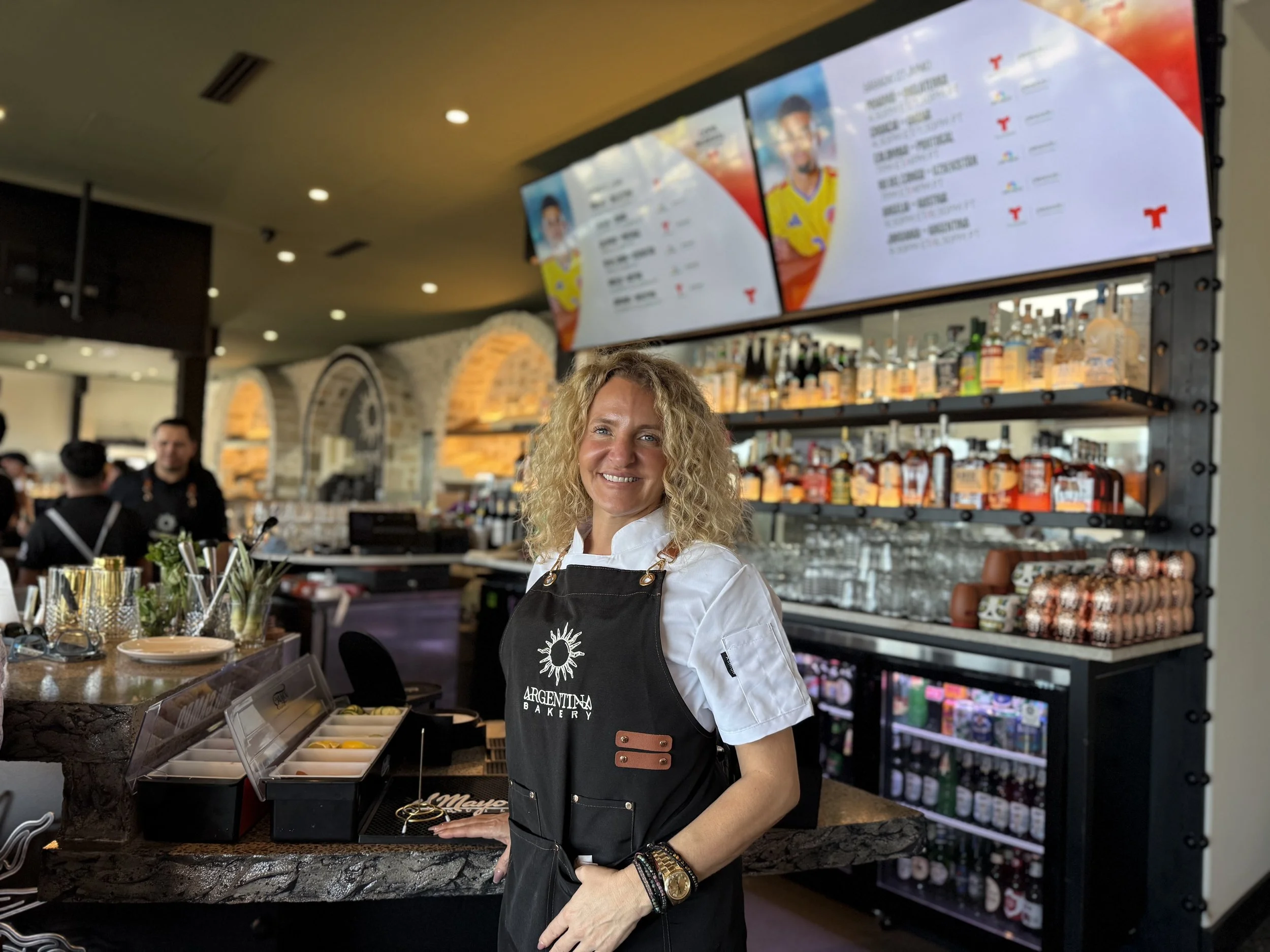
Luly LeDonne, the owner of Argentina Bakery, moved her business and reopened it in a new, larger location in the middle of the World Cup. The restaurant was packed during the Argentina matches and other big games.
“We exceeded expectations, so much so that we keep hiring more people,” she said. “It’s been difficult to go back to normal. The World Cup filled us with a lot of emotion.”
— Luly LeDonne, owner of Argentina Bakery
Luly LeDonne, owner of Argentina Bakery in Irving, closed her bakery’s original location, where it had been for more than two decades, and moved into a new and much larger location in the same week that Argentina played two of its matches in North Texas. That wasn’t her original plan, but construction delays and other hindrances pushed the project three months behind schedule. She reopened as a full-service restaurant.
LeDonne said she averaged three hours of sleep a night the first couple of weeks of running the restaurant, which was packed on the days Argentina played. Even on the days other teams played, customers would stick around to watch those matches.
It was a “crazy” experience, the Argentine native said. “It was the biggest step for me. I was so nervous, but I think it was the right step for me.”
When Argentina played, LeDonne said business sales jumped 65%. The new location is three times larger, has large screen TVs and a bar. Also, the menu expanded. The popular empanadas are made from LeDonne’s mother’s homemade recipe, but the restaurant also serves milanes, which is a crispy breaded chicken or beef sandwich, and Choripan, Argentine grilled chorizo in a bread roll with chimichurri sauce.
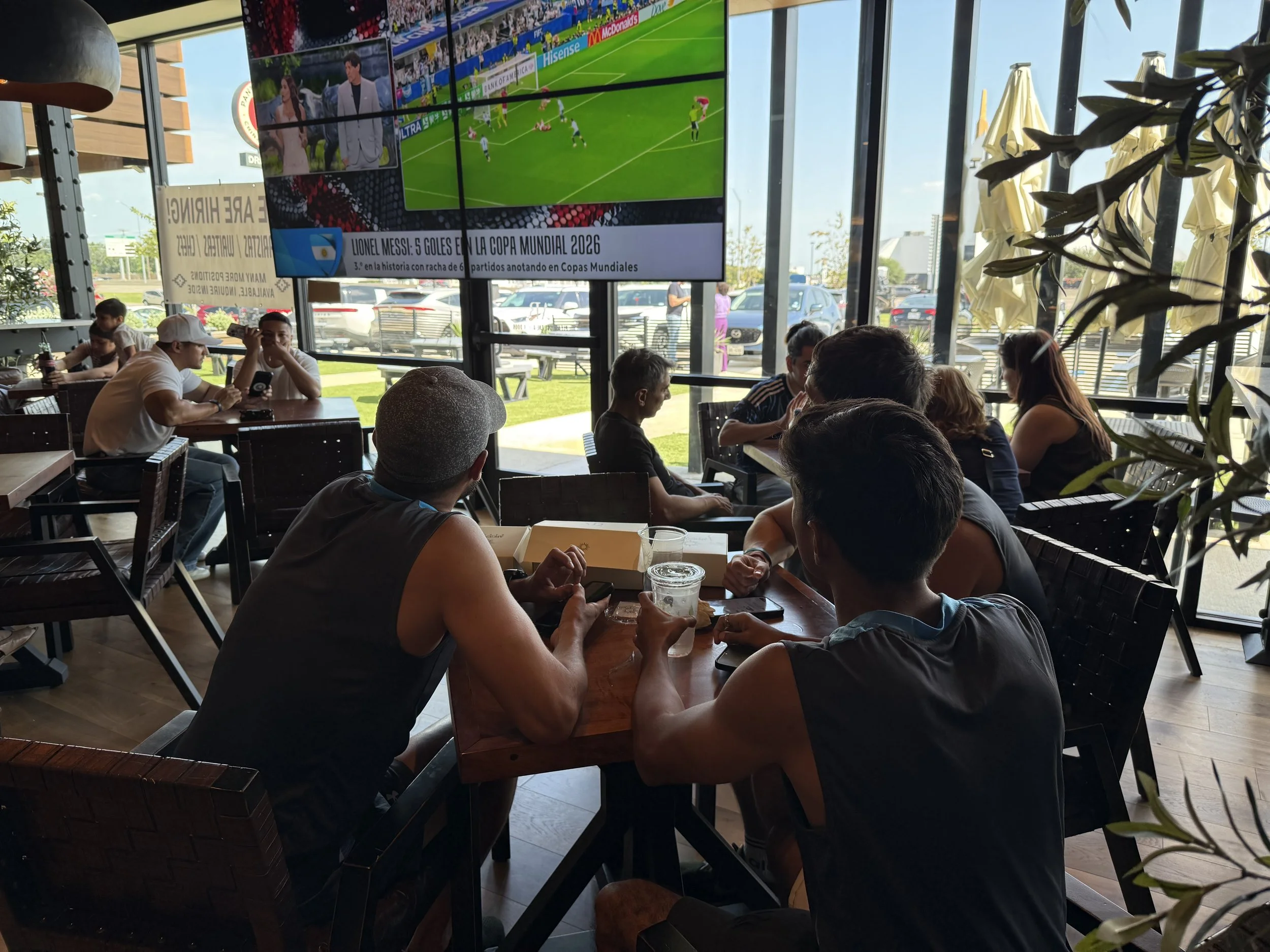
Customers of Argentina Bakery watch World Cup matches on the restaurant’s opening day.
Support the voices of independent journalists.
|
“We exceeded expectations, so much so that we keep hiring more people,” she said. “It’s been difficult to go back to normal. The World Cup filled us with a lot of emotion.”
Lupita and Michael Najera run Najera Sports, a soccer merchandise store south of downtown Dallas that’s been in the predominantly Latino neighborhood of Oak Cliff for 30 years.
They were amazed how quickly their items sold out, like Mexican soccer jerseys. At one point, a line of customers extended out the store’s door and onto the sidewalk. There were fans from Japan, Spain and other countries.
She was struck by visitors who weren’t even soccer fans but explained they saw their co-workers wearing jerseys and had a case of fomo (fear of missing out).
“We had to close the shop at times to wait for some customers to exit before others could enter,” said Lupita Najera, who added that a lot of people discovered the store through videos shared on TikTok and Instagram.
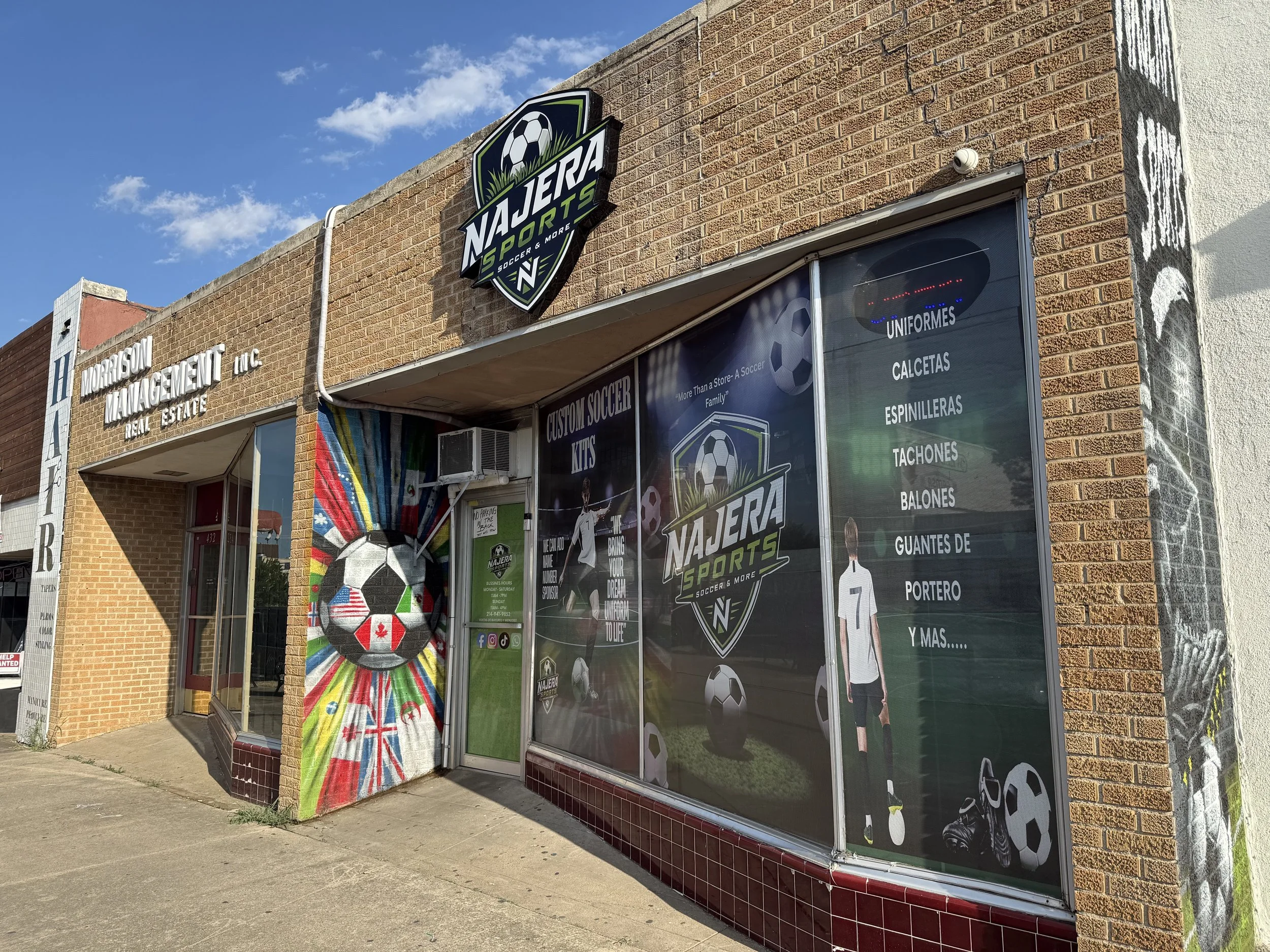
Najera Sports is one of several stores in North Texas that caters to soccer fans and players. It’s been in this predominately Latino neighborhood for three decades.
They also had to extend store hours, open early and stay open later than normal. Najera said the demand for soccer jerseys and other items forced them to temporarily stop selling merchandise to their wholesale clients, so they would have enough for their retail customers.
“We weren’t expecting so many people,” she said, adding that their sales doubled during the World Cup.
This biggest takeaway for them?
“We don’t have to wait for the event to happen,” she said about ordering items. “We have to think ahead. We have to get more inventory.”
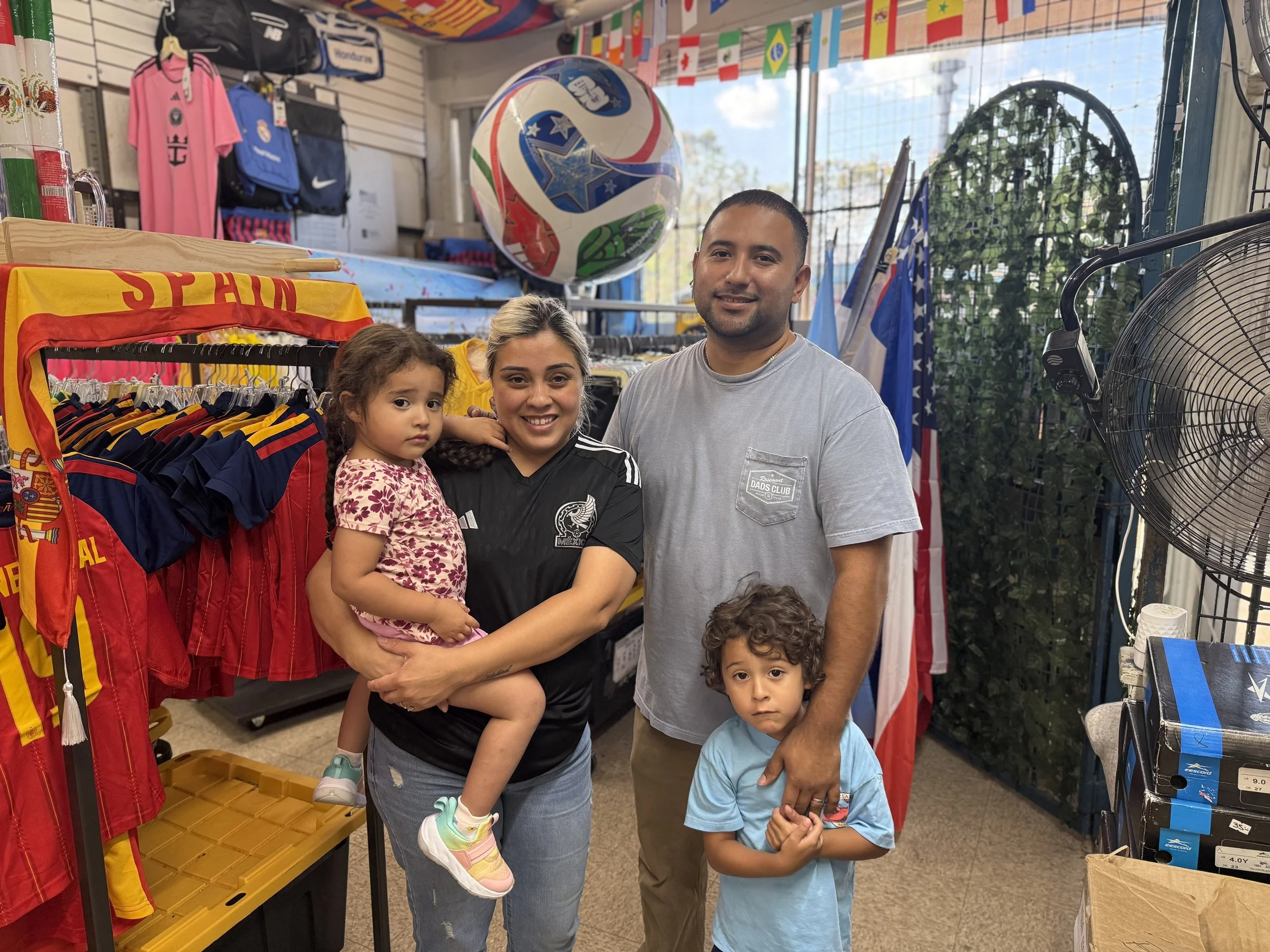
Lupita and Michael Najera own and operate Najera Sports, a soccer merchandise store in Dallas that’s been in business for three decades. Their shop gained new customers during the World Cup through social media.
The World Cup ended in July, 2026, nearly a month ago and its crowds are now gone, but these business owners say there’s been one positive lingering effect: new customers. People who discovered them during the tournament or who learned about them through social media or news reports are returning.
“The people are actually coming to look for the trailer,” said Schessler, whose food truck is back in service. “Now when they come, they ask ‘Where’s the trailer? We wanted to order the bistec tacos or the birria tacos.’”

Stella M. Chávez is an award-winning journalist with more than two decades of experience telling deeply reported and intimate stories about diverse populations, from migrant farmworkers in Florida to refugees and asylum seekers in Texas. Stella reported for daily newspapers, including The Dallas Morning News and the South Florida Sun-Sentinel, as well as KERA, the public radio station in Dallas. Her work has aired on NPR, BBC and CNN. She is a recipient of multiple awards, including from Investigative Reporters and Editors and Livingston Award for Young Journalists. Stella is a member of the Poynter Institute National Advisory Board and a regional judge for the Livingston Awards for Young Journalists. She graduated from the University of Texas at Austin.