
“The 13 Colonies Could Not Have Defeated the British Empire by Themselves”: Scholars Reflect on Hispanic and Latino Participation in U.S. Independence
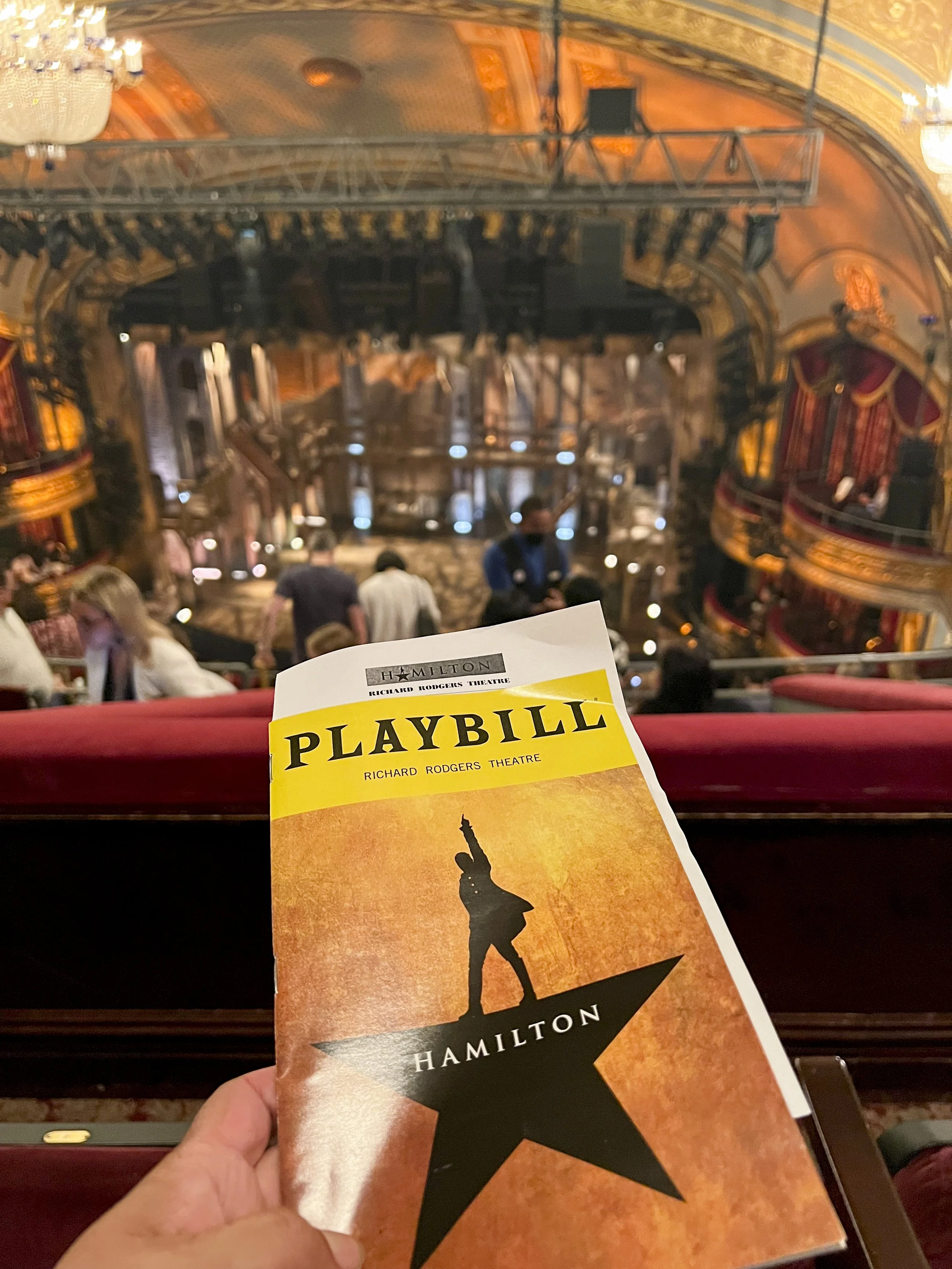
The musical "Hamilton" in Miami, Florida, March 2024. Photo: Tamoa Calzadilla
From the Battle of Pensacola to the hit musical "Hamilton," palabra reviews the crucial, yet often overlooked, Hispanic and Latino contributions to the American Revolution as the nation commemorates 250 years of independence.
Clic aquí para leer en español.
Words by Rich Tenorio, @rbtenorio
In 1780, Bernardo de Galvez, the Spanish colonial general of Louisiana, led an attack on the British in present-day Mobile, Ala. Galvez’s forces were diverse – including white, Black and indigenous soldiers from the Spanish colonies. Together they defeated the British, perhaps diverting the redcoats from sending reinforcements against the rebellious American colonists. It’s a little-known story of Hispanic and Latino contributions to the American Revolution.
With the US marking 250 years since declaring independence from England on July 4, 1776, scholars consulted by palabra are pointing out that Hispanics and Latinos played a role in the successful struggle – primarily on behalf of Spain, which intervened on behalf of the 13 colonies in 1779. Spanish colonists in North America and the Caribbean contributed not only as soldiers fighting the British, but also as financiers of the American war effort.
“I do believe it was decisive,” says Paul Ortiz, director of graduate studies for the Latina/o Studies Program at Cornell University, where he is a professor of labor history. “I want American audiences to understand … for the 250th that the Spanish contribution was, at the very least, equivalent – as important – as the French contribution.”
SUBSCRIBE TO PALABRA’S NEWSLETTER
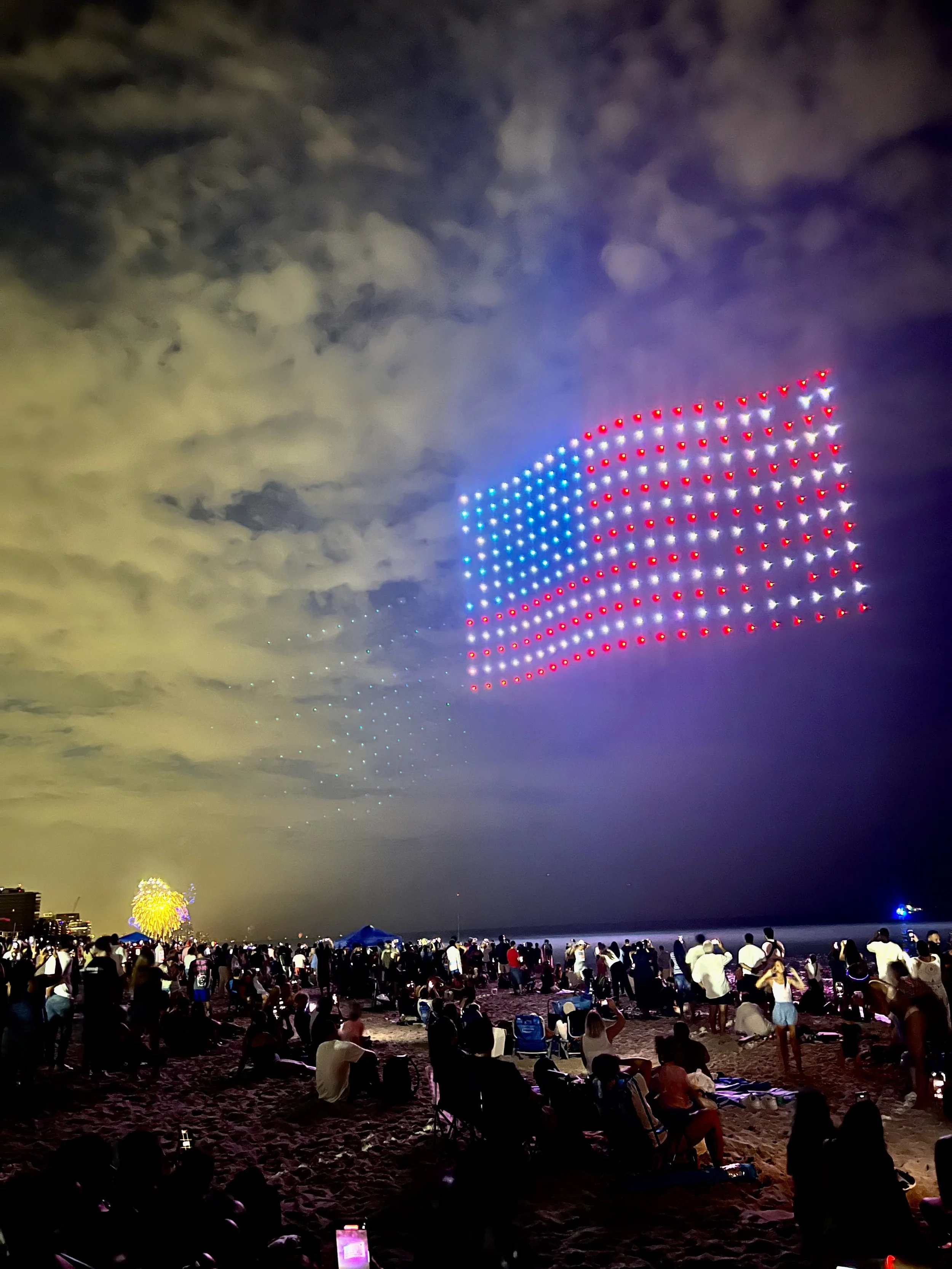
Drones over Miami Beach during the Miami Beach celebration on July 4th, 2025. Photo: David Maris
Hispanic and Latino participation in the Revolution has had unexpected results then and now. In the decades that followed American independence, like-minded Spanish colonists would stage their own revolts against their mother country, with those in Mexico and South America succeeding by the 1820s.
Much more recently, the success of the musical “Hamilton” has inspired younger, more diverse Americans to think about their country’s founding and who was involved in it.
Bernardo de Galvez and others
Support the voices of independent journalists.
|
The Spanish governor of Louisiana forcefully prosecuted the war against the British in the South. He captured Mobile in 1780 and Pensacola a year later.
“[The siege of Pensacola] basically kept the British fleet bottled up in the harbor,” says David Hayes-Bautista, director of the Study for Latino Health and Culture at the University of California, Los Angeles, where he is also a distinguished professor. “They could not sail out.”
Of de Galvez’s troops, Hayes-Bautista says, they included “free Black militia from Cuba,” and overall they were “multicultural, multiracial.”
In the Pensacola campaign, de Galvez’s officers included a descendant of the doomed Aztec emperor Moctezuma II. In later years, Americans would honor the Spanish governor by naming the Texas city of Galveston after him.
“Spain declared war against Britain as part of the American Revolution and involved Latinos all across the Spanish empire,” Kathleen DuVal, a professor of history at the University of North Carolina at Chapel Hill, wrote in an email. “Latino soldiers from Cuba and other Spanish colonies served in the Spanish army and navy and fought on the side of the United States in battles in places as far-flung as Honduras, Alabama, Florida, and sea battles in the Caribbean.”
Also during the American Revolution, Spain sent financial assistance to the hard-pressed colonists, who used it to purchase badly needed items like food, medical supplies and ammunition, according to Ortiz.
“The 13 colonies could not have defeated the British Empire by themselves,” he says.
Hayes-Bautista, of UCLA, notes that in 1780, Spain even put out a call to its colonists for donations to the American cause, and got contributions from as far away as California and New Mexico.

San Francisco Maritime National Historical Park. July 4th, 2024. Photo: David Maris
Revolutionary impact on Spanish America
It’s fair to say that the American Revolution got at least some Spanish colonists thinking about their own independence from the motherland, Ortiz considers.
“There’s a connection between what happened in the American Revolution and the ideas [of Father Miguel Hidalgo y Costilla, a subsequent 19th-century revolutionary in Mexico,] about ordinary people, who were not wealthy, who did not own property, who were considered the outcasts,” Ortiz says. “I argue that the Mexican War of Independence and other Latin American independence wars certainly borrowed from the American Revolution – and went much further.”
Hidalgo, the Mexican priest who issued the “Grito de Dolores” in 1810, included emancipation in his call for independence. He was captured and executed, but upon Mexican independence in 1821, the new nation did emancipate its enslaved persons, as did the republics in Spanish South America – something the US did not do until the end of the Civil War in 1865.
“Latino soldiers from Cuba and other Spanish colonies served in the Spanish army and navy and fought on the side of the United States in battles in places as far-flung as Honduras, Alabama, Florida, and sea battles in the Caribbean.”
— Kathleen DuVal, a professor of history at the University of North Carolina at Chapel Hill
“Hamilton” gets the kids involved
Centuries later (2016), Latino creative Lin-Manuel Miranda reintroduced Americans to their founding history in a new way. He created the hip-hop musical “Hamilton” about the Founding Father Alexander Hamilton, who created the American financial system, strayed from his wife, and died in a duel.
Miranda cast Black and brown actors and actresses in the roles. Hamilton himself was not born on American soil, but rather in the Caribbean. The musical has arguably gotten younger Americans more curious about their nation’s founders.
“The casting of people of color in major roles of ‘Hamilton’ was a really important benchmark,” Ortiz says. In fact, during the song about the battle of Yorktown, the characters famously shout on stage: “Immigrants, we get the job done!”
Reflecting on the impact of the musical for young, diverse audiences, Ortiz adds, “The impact firsthand of seeing a young Puerto Rican actor on the stage, performing, looking like a patriot, looking like a Founding Father, someone from 1776 … it may lead you to the libraries.”
—

Rich Tenorio, is a writer and editor whose work has appeared in a variety of media outlets. He is a graduate of Harvard College and the Columbia University Graduate School of Journalism.Tenorio is also a cartoonist. @rbtenorio