Living Through the Earthquakes in Venezuela With a Disability: Fleeing Is Not the Same for Everyone
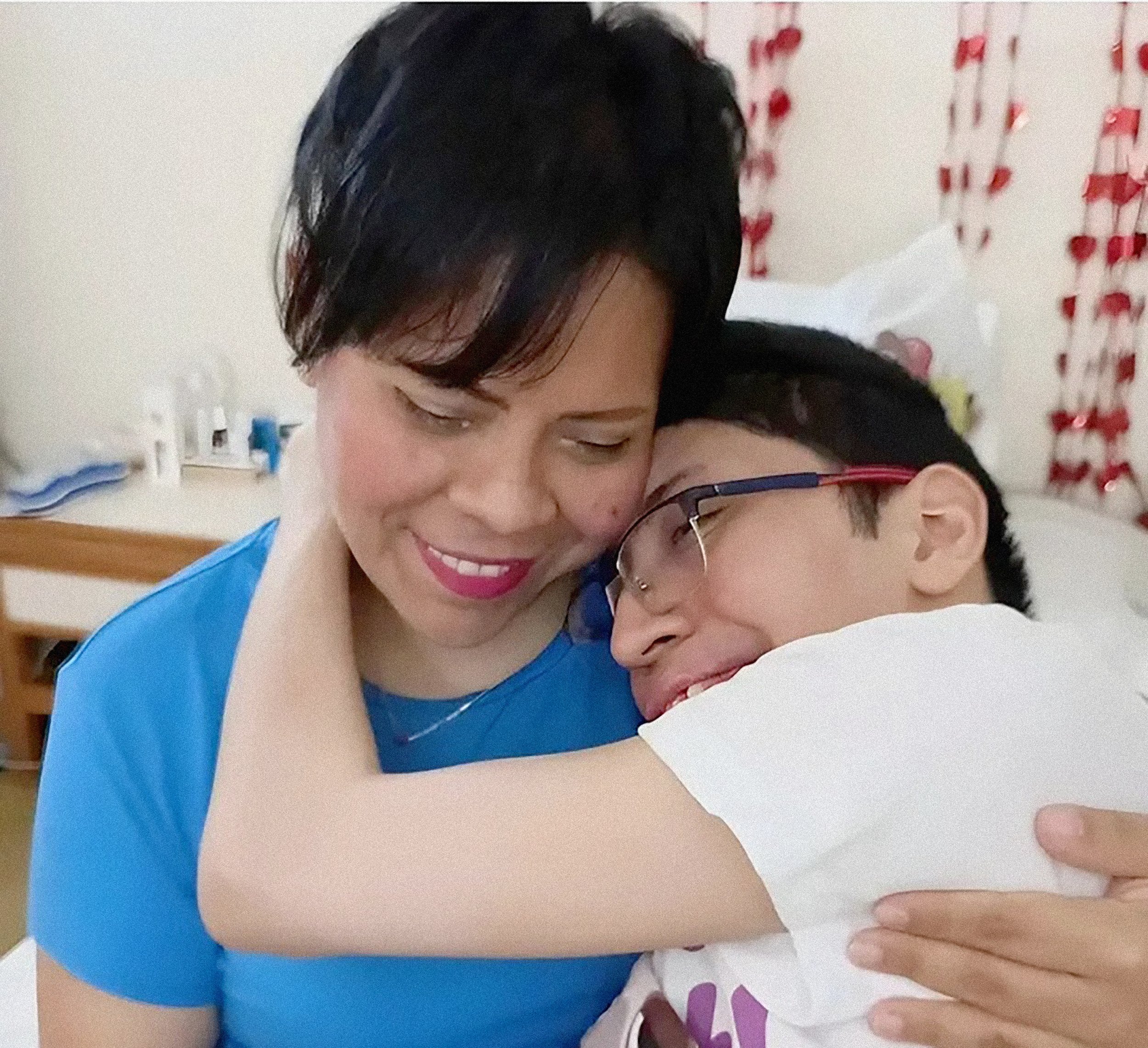
Mariel and Christopher, a young man with multiple disabilities, had to wait for help to evacuate their home after the earthquakes in Venezuela. Photo: @elniñodelosglobos.
There are invisible layers in a catastrophe when fleeing a disaster is not a possibility for everyone. When the recommendation during an earthquake is to run and preserve life, what happens to those who cannot do so on their own? From Caracas, three testimonies show what disabled people —the “world’s largest minority”— experience during a natural disaster.
Clic aquí para leer en español.
Words by Dayimar Ayala Altuve
CARACAS - On June 24, 2026, at 6:04 p.m., the earth shook in Caracas, Venezuela, due to two almost simultaneous earthquakes, measuring magnitudes 7.5 and 7.2, respectively. A chaos of screams, people running trying to get to safety, and thick dust clouds where buildings used to be took over the Venezuelan capital in seconds.
Meanwhile, in the east of the city, Rafael Arreaza could not control the movement of his wheelchair inside his house, from which others had already managed to flee. In the downtown area, Mariel Delgado tried to dress her son Christopher, whose bones are as fragile as glass. In the west, Helen Cárdenas struggled to pull her son Elías, a teenager with autism, away from the television.
Arreaza, 43, who has a spinal cord injury and is a wheelchair user, was at home when everything shook. He had just finished repairing some stringed musical instruments and was going for the broom when his floor started moving; first slowly, then suddenly, from side to side, up and down, and so on for 40 seconds. He says he felt as if his wheelchair were mounted on a surfboard. Outside, people were screaming, crying, trying to get to safety.
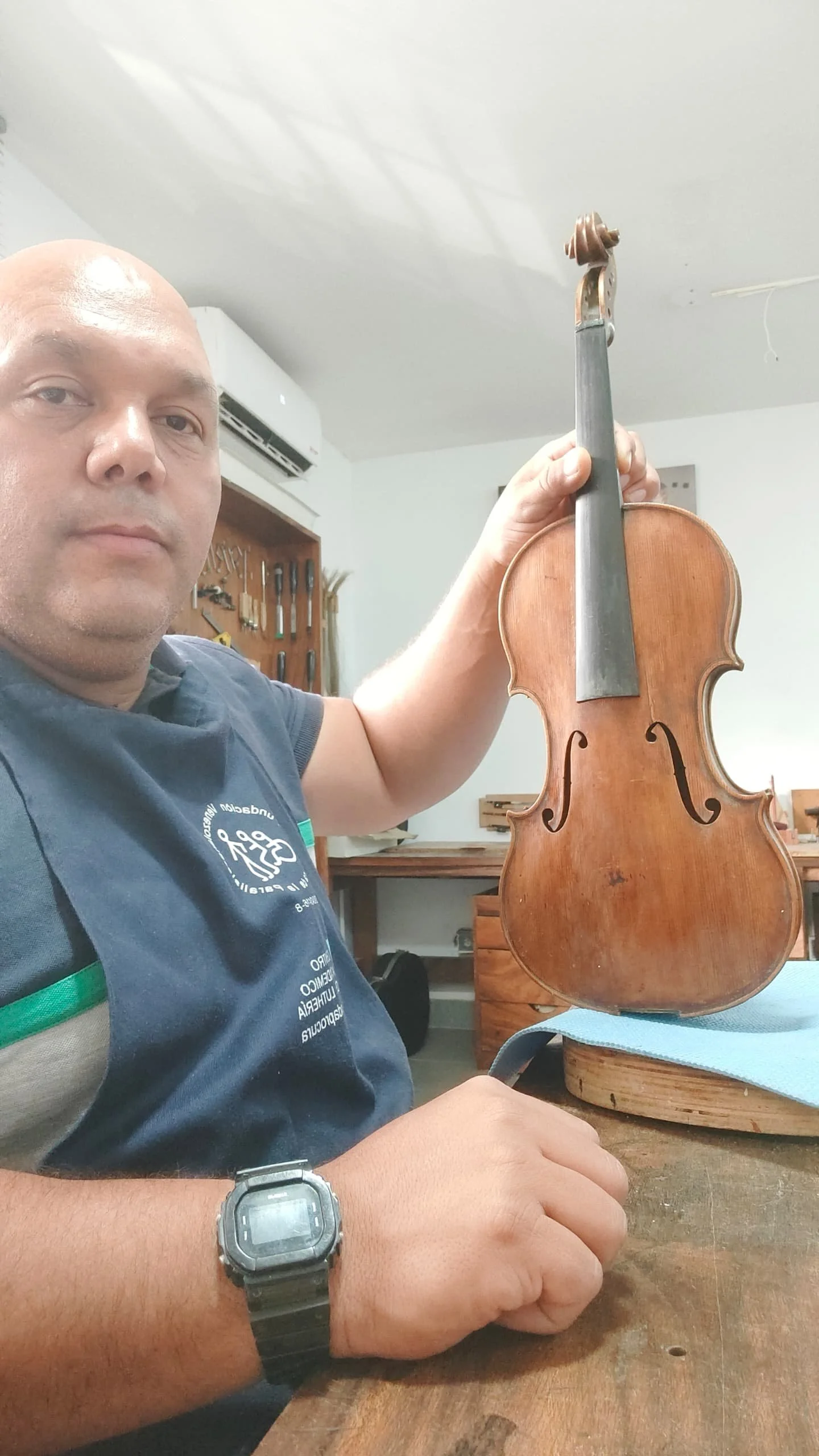
Rafael Arreaza, who has a spinal cord injury and uses a wheelchair, felt as if his wheelchair were on a surfboard. Photo: Rafael Arreaza.
"Horrible (...) It was something I cannot describe. My brother left and left me here [in the house], perhaps because of his own nerves. My son did too, and the one who took me out to the street was my nephew. Those recommendations about getting under a table or protecting oneself with a column, how do I do that?" Arreaza said.
A week after the so-called "seismic doublet," official figures counted more than 1,900 dead, 10,500 injured, and some 15,000 victims. A preliminary NASA study estimates that 58,870 buildings or structures were damaged or destroyed. This barely conveys the dimensions of what the Caribbean country experienced.
For anyone, the priority is to escape to preserve life, but what happens when fleeing is not a possibility for everyone? When a deaf person cannot hear warning shouts from their neighbor or when, as in Rafael’s case, someone must wait for someone else to help him? Escaping having a physical or intellectual disability, using a cane, or being blind adds an extra layer of difficulty. Everything must be done quickly, usually without experience, without the essentials, and working against the clock.
According to the United Nations (UN), people with disabilities are "the world's largest minority," making up approximately 16% of the global population, and yet it remains complex to know how to provide them with the necessary support during natural disasters.
Unable to run even when the fear takes over
In downtown Caracas, on the seventh floor of a building, Mariel Delgado, mother of Christopher, a 24-year-old with spastic paraplegia, pervasive developmental disorder, autism, and osteoporosis similar to 'glass bones,' was in one of her multiple daily care routines. He was only dressed from the torso up when everything shook. They could not leave immediately, as their neighbors could.
She quickly dressed him, assembled the stroller she uses to move him, and packed an improvised bag with the necessities: adult diapers, some medicines, and whatever she vaguely remembered in the moment of fear. She commended herself to God and went out into the hallway to wait for help.
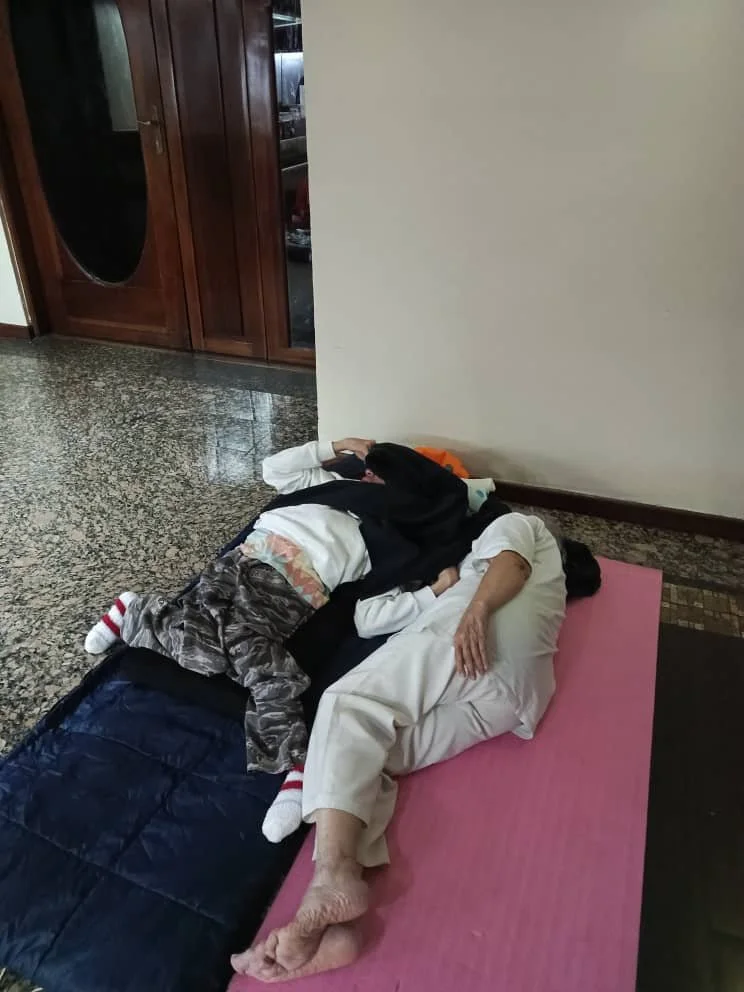
People with disabilities, like Chris, and older adults had to sleep on the floor and outside their homes for fear of aftershocks. Photo: Mariel Delgado.
"For a caregiving mom, it is challenging to take charge and maintain control because we have to think about all of our children's needs. We can't just run out; we must think about medicines, diapers, and everything our children's health depends on, no matter how full of fear one is," she added. Both spent the night in the street, fearing an aftershock, without the privacy needed to, for example, change Christopher's diaper or catheter.
SUBSCRIBE TO PALABRA’S NEWSLETTER
In western Caracas, Helen Cárdenas, mother of Elías, a teenager with moderate autism, was cooking when her house shook. The roof was making noise, the floor was creaking, and she couldn't stand up. The boy was alone in the room, and although he understands instructions in his daily life, when the tremor began he froze, did not want to leave, his attention fixated on the television falling. A device that for him is a valuable object — precious
"He became 'hyper-fixated' [an obsessive interest in a specific topic, almost always temporary, developed by some neurodivergent people] and when I tried to get him out I couldn't. Finally, it was my husband who took us both out," Helen added.
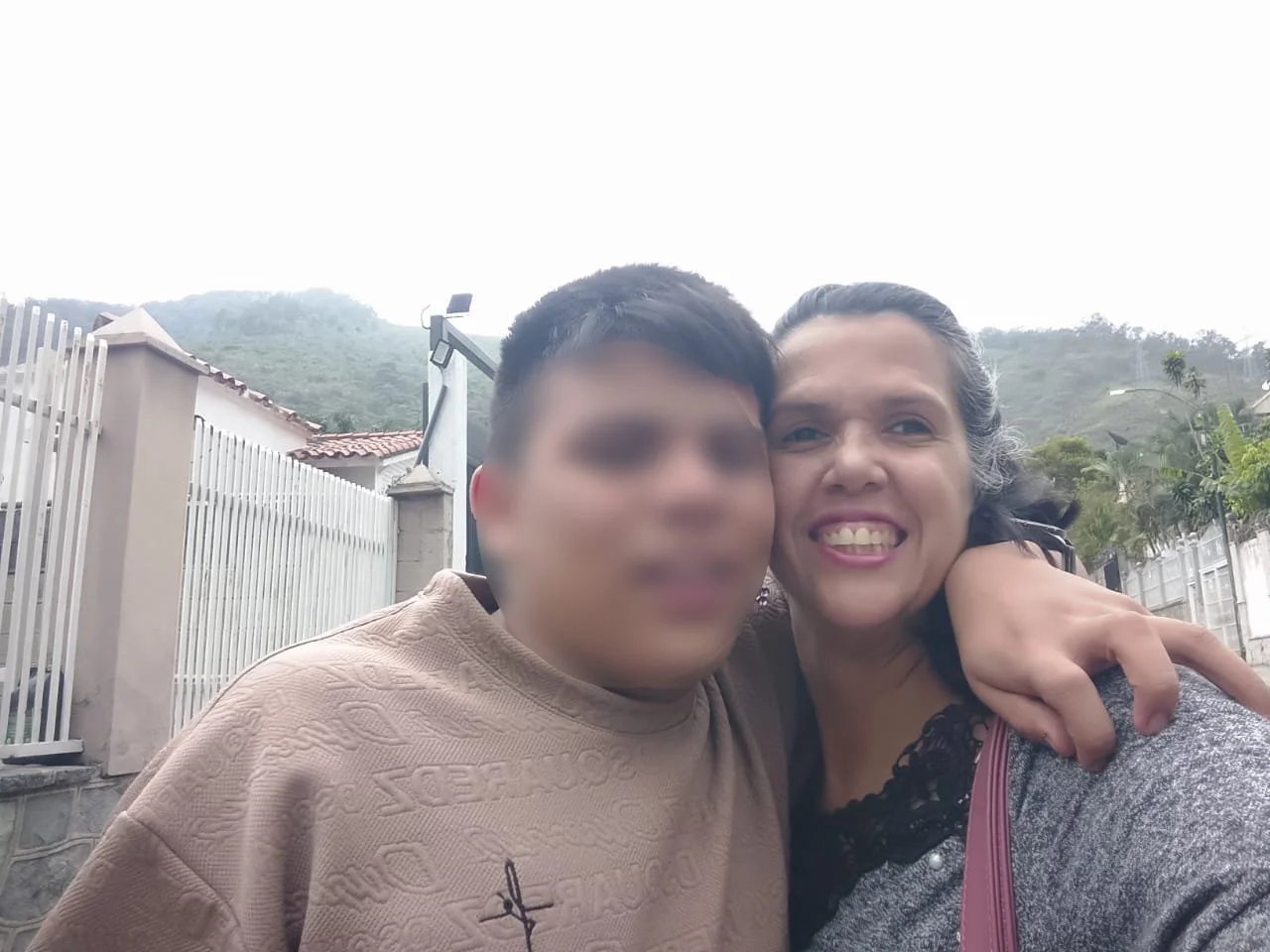
Elías, a teenager with moderate autism, and his mother, Helen Cárdenas, experienced two earthquakes in western Caracas. Photo: Helen Cárdenas.
Support the voices of independent journalists.
|
After the double earthquake and the persistence of aftershocks, Helen and Elías had to sleep in a temporary shelter until the damages to their apartment could be assessed. Elías repeated "the little blanket and the little pillow, the little blanket and the little pillow," as his particular way of communicating that he needed to return to a familiar space, where the uncertainty and anxiety he felt would probably be reduced.
While the immediate emergency implies great difficulties for this sector of the population, the hours and days that follow represent equally great challenges, because amid the contingency, people do not think about the largest minority in the world.
Donations of supplies and basic necessities are focused on clothing, non-perishable foods, and medicines, but people with disabilities need something more: reading glasses, canes for blind people, batteries for hearing aids, walkers, adult diapers, wet wipes, diaper rash creams, wheelchairs, crutches, psycho-emotional support, and even sign language interpretation.
“We can't just run out; we must think about medicines, diapers, and everything our children's health depends on, no matter how full of fear one is”
— Mariel Delgado, mother of Christopher, a 24-year-old with spastic paraplegia, pervasive developmental disorder, autism, and osteoporosis similar to 'glass bones'
What to do and how to help disabled people after the earthquake in Venezuela
Several Non-Governmental Organizations that promote the rights of people with disabilities have joined the relief operations focused on this sector of the affected population. For example, the Venezuelan Foundation for the Cure of Paralysis (Fundaprocura, which supports low-income people with motor disabilities) has an active campaign seeking donations of wheelchairs, crutches, and walkers; and some others have focused on serving as donation collection centers.
Already on the ground with the victims, Unicef Venezuela recalled the impact that an emergency has on children because it drastically alters their environment. The UN agency has an emergency deployment in the most affected areas of Venezuela to try to help families with children.
"Unicef's humanitarian response prioritizes psychosocial support and safe environments for all children, considering all disabilities, thus recovering their stability, protection, and their right to environments adapted to their needs," says a video published on that organization's Instagram account.
The Earthquake Country Alliance, a US public-private-community partnership based in California that works to improve human preparedness for earthquakes, has a guide detailing recommendations for people with disabilities.
For example, for wheelchair users, they advise applying the brakes, covering their heads, and bending their bodies down. For those who use a cane, they suggest sitting on a bed or chair, bending down and taking cover, and having that technical support at hand for when the movement stops.
The Vanessa Peretti Foundation, which works for the rights of people with disabilities, especially the deaf community in Venezuela, has been posting on its social networks using sign language interpreters to present valuable information for helping deaf people, since they do not perceive shouts or whistles from rescuers.
The basics are: to knock with a clear pattern of three times on a metallic pipe to send a physical signal; wait a reasonable amount of time to perceive whether the victim responds with return vibrations; and not dismiss silent zones without trying this method.
For its part, the Venezuelan Autism Out Loud Foundation (Fundación Autismo en Voz Alta) also shared a short emergency guide to protect and regulate children with this condition. "In an emergency, verbal language is often nullified [in people with autism] and the greatest threats are resistance to changes in environment and panic-induced fleeing," the manual reads. Moving away from crowds and flashing lights, creating a micro-shelter like a tent made with sheets, and establishing a calm tone of voice and body posture are other instructions.
The days following the earthquake have been complicated for Chris, because he is not emotionally stable; for Rafael, because he has trauma that makes him feel like he must quickly get into his wheelchair at the slightest noise; and for Elías, because it is complex to explain to him what is happening, for example, why the earth continues to move.
It has also not been easy for possibly tens of thousands of people with different disabilities who depend on canes, walkers, wheelchairs, emotional attachment objects, or the assistance of caregivers. The governmental National Council of People with Disabilities of Venezuela and the private Venezuelan Autism Organization are trying to conduct, amidst the emergency, a digital census of those affected. All in a devastated country that has recorded more than 689 aftershocks, which prevent the recovery of even a minimal sense of normalcy.
—
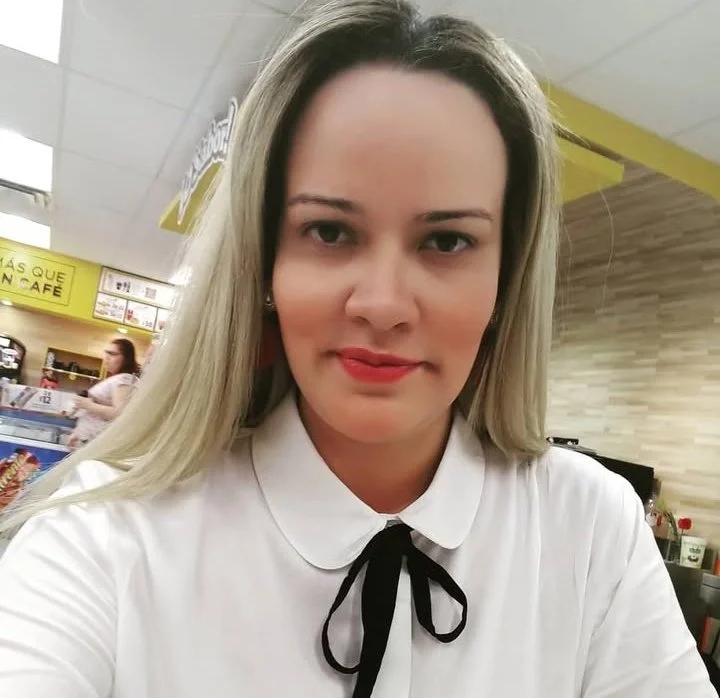
Dayimar Ayala Altuve, is a social communicator who graduated from the Santa Rosa Catholic University in Caracas. She is a specialist in public opinion and trained in disability issues by the Center for Disability Studies at Monteávila University in Caracas, Venezuela. She is the entrepreneur behind Di-capacidad, the first digital information platform on disabilities in Venezuela, which focuses on sharing inspiring stories, advancements for that community, and media literacy. She participates in social volunteering and has been a member of newsrooms such as Univision Noticias, La Razón de España, among others.