
Nostalgia for the World Cups
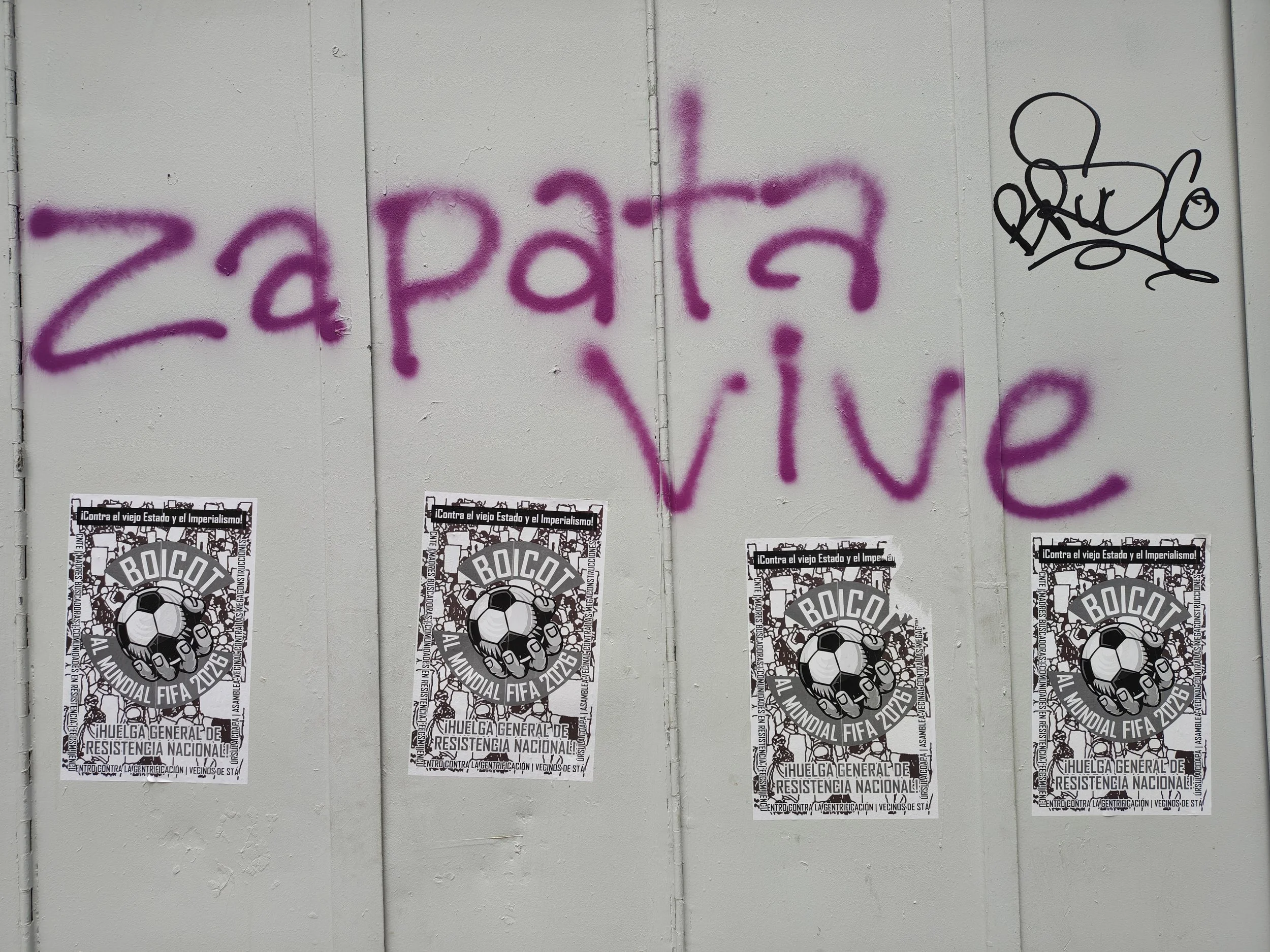
A wall in the central tourist areas of Mexico City shows graffiti honoring Mexican revolutionary Emiliano Zapata and posters announcing a national strike by social organizations during the opening of the 2026 World Cup.
OPINION | Before corporate greed, political cynicism, and VIP areas, soccer world cups felt more personal. Will “fútbol” continue to belong to everyone?
Clic aquí para leer en español.
Words and photos by Rodrigo Cervantes, @RODCERVANTES
MEXICO CITY — Not too long ago, the World Cup seemed like a celebration closer to the people. Cities transformed into enormous street parties with locals and tourists alike. The festivities felt truly universal, whether you were a soccer fan or not.
Those of us who attended other World Cups in Mexico, for example, will remember that tickets were affordable. A few days ago, award-winning director Alejandro González Iñárritu commented on how his father was able to attend the World Cup with modest resources.
The anecdote sums up something that many fans feel today: a nostalgia that, beyond the memorable matches, recalls a time when the experience was less conditioned by the greed of the organizers.
SUBSCRIBE TO PALABRA’S NEWSLETTER
But this will be the most expensive World Cup in history. Tickets cost twice as much as they did for Qatar 2022 and four times more than for the USA 1994, according to The Economist. FIFA President Gianni Infantino (yes, the same one who gave Donald Trump a “Peace Prize”) cynically stated that they expect to generate the equivalent of 104 Super Bowls.
The biggest loss to the soccer festival will perhaps be in the stands, with a projected low attendance and fans facing restrictions on how they can celebrate, including a ban on horns and vuvuzelas.
Promo ads for the 1986 World Cup in Mexico.
Previously, the tournament retained the feeling of belonging to the whole world without distinction, bringing hope. I remember that, during the 1986 World Cup in Mexico, many restaurants and bars introduced the then-new technology of "giant screens" for watching the matches, which transformed these places into spaces of harmony and community. The 1986 World Cup also helped many Mexico City residents emotionally overcome the deep wounds and trauma of the devastating 1985 earthquake.
But now, what promised to be the world championship of unity got off to a bad start.
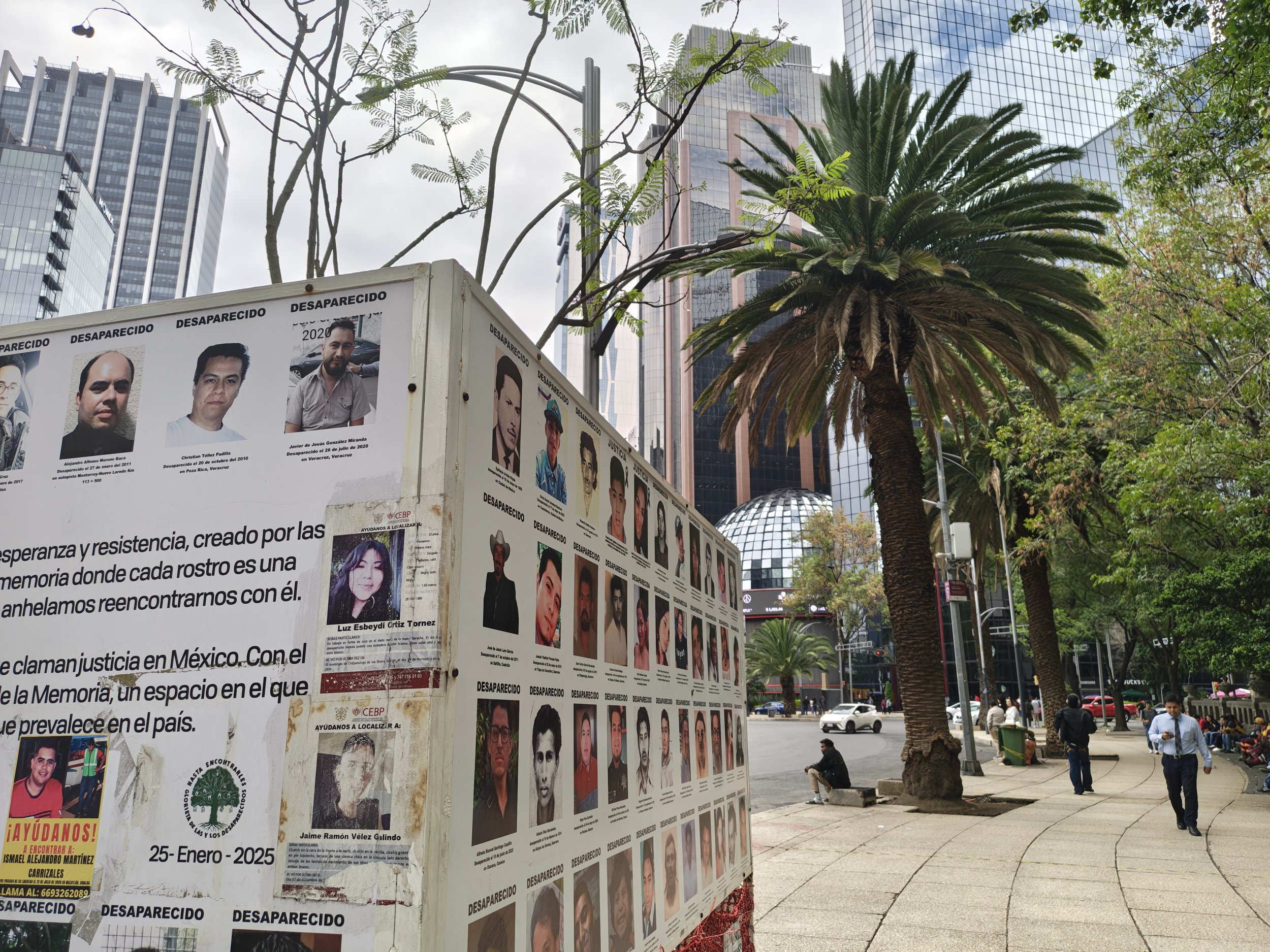
The fences protecting monuments from protesters on Paseo de la Reforma, in Mexico City, are covered with photographs of missing persons and victims of organized crime.
Support the voices of independent journalists.
|
Following the controversies in Russia 2018 and Qatar 2022, after allegations of discrimination and human rights violations, a World Cup with the alliance of the three great North American nations seemed poised to return the soccer cup to its essence of peace and brotherhood.
But reality proved otherwise, marked primarily by the voracious imperialism of the Trump administration and its Monroe Doctrine 2.0, in which the United States keeps its neighbors under threat. And, as often happens with major sporting events, the arrival of the World Cup has become an opportunity to showcase local social problems to the world.
In Canada, protests have focused on housing displacement and international conflicts. In the United States, concerns are growing about domestic immigration policies, the military hostilities against Iran (whose team couldn't even stay in the U.S.), and the polarizing political climate.
Mexico is the only country with three men's World Cups in its history, which should be a cause for celebration and pride. But the nation is living through sociopolitical and economic disappointments. President Claudia Sheinbaum announced that she would give up her place at the World Cup opening ceremony in her country to two Mexican girls, a populist measure rather than one of disdain, probably fearing the jeers and boos that her predecessors faced in past World Cups.
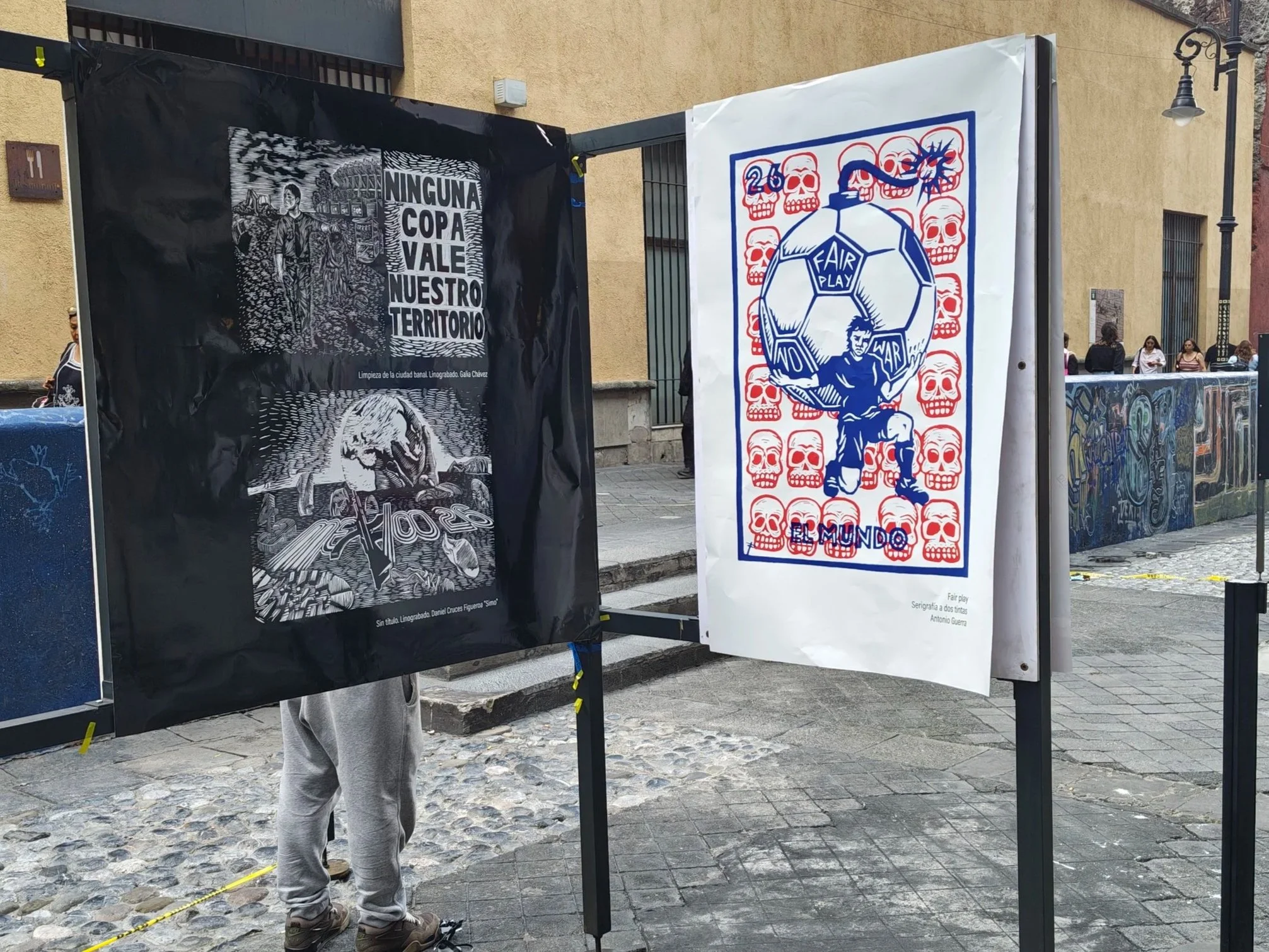
An exhibition of urban artist collectives in the center of Mexico City displayed graphics, posters and prints criticizing the 2026 World Cup.
Chaos in the capital
It was enough to walk through Mexico City just days or hours before the opening of the World Cup at its Banorte Stadium (formerly Azteca and now, by order of the powerful FIFA, Mexico City Stadium) to witness the Government's commitment to form rather than substance.
Among the most notorious examples of governmental superficiality, sources of ridicule and memes on social media, there is a saturation of the city with purple paint and axolotl mascots that the city government ordered, ignoring the much needed investments in infrastructure and public services.
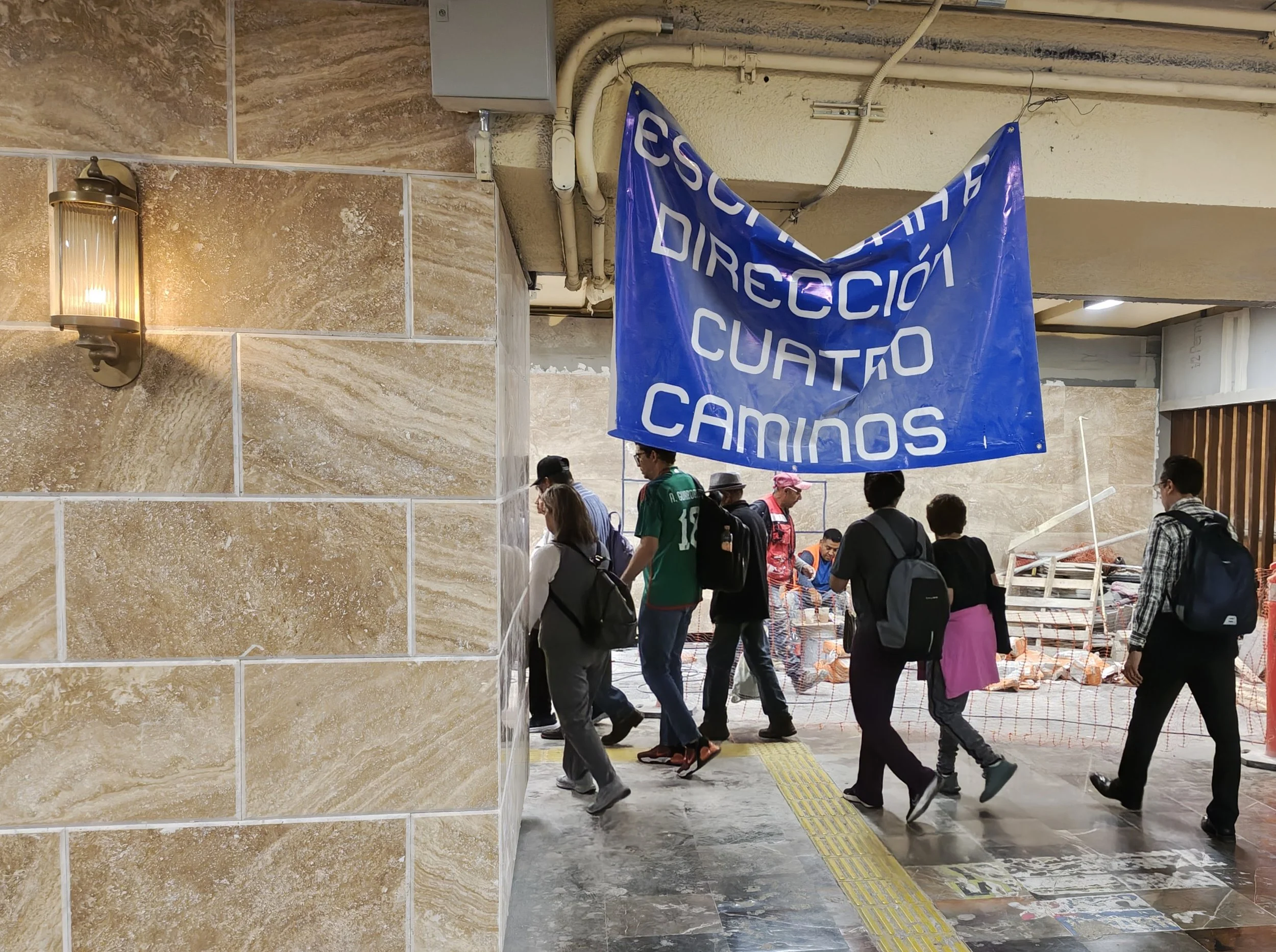
The express renovations of the Hidalgo station of the Mexico City Metro have been subject of ridicule and complaints in social media.
Also noteworthy is the kitsch remodeling of the Hidalgo Metro station with chandeliers that looked like they came straight out of Beauty and the Beast and finishes that mimic the fine marble of a viceregal palace, all of which was being installed at breakneck speed. Meanwhile, millions of passengers just want to reach their destinations using a safe, efficient transportation system that won't derail again.
Along Paseo de la Reforma, one of the city's main avenues, things don't look as the government would like either. Monuments are hidden behind riot fences covered with photographs of people disappeared by organized crime, a stark reminder of the open wound that the Sheinbaum administration has been unwilling or unable to address. That same avenue was adorned with cempasúchiles, the bright orange Mexican marigolds, to reflect national identity. But in one of those sad, all-too-Mexican ironies, the flowers typical of the Day of the Dead festivities become silent tributes to those faces in the photos on the fences.
There is still a certain nostalgia for what once was, but also for what the World Cup of 2026 could and should have been.
Mexico City is experiencing a complex reality, very different from the one the government wants to project with events like “to make the biggest wave in the world.”
The real wave is a tide of tents and canopies in the streets of the city's historic center. The encampments of the National Coordinator of Education Workers (CNTE), the country's largest and oldest teachers' union, continue their fight for better salaries and pensions, waiting for the government to meet with them, but under the watchful eyes of riot police and other police officers.
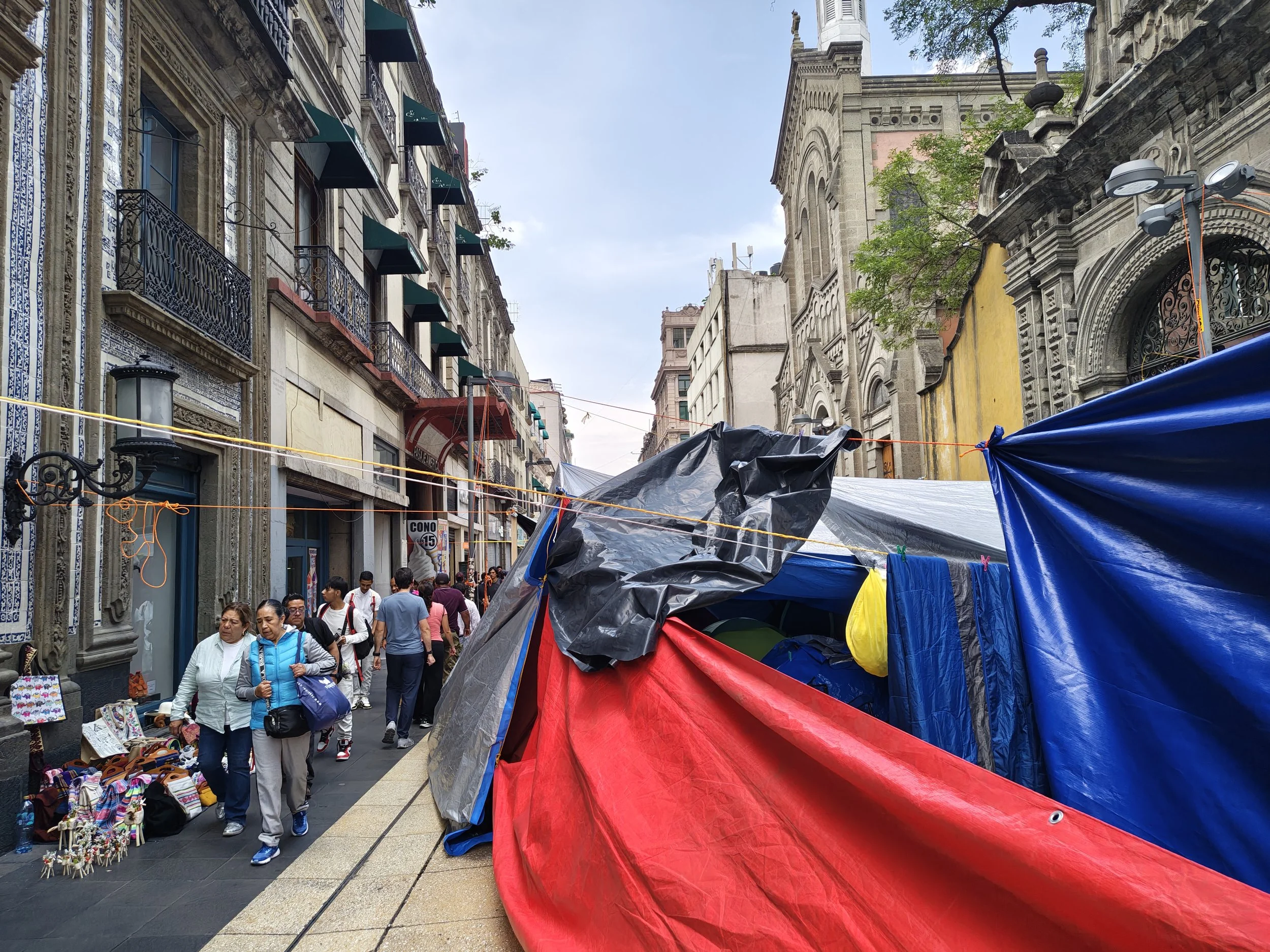
The National Coordinator of Education Workers (CNTE), Mexico's largest and oldest teachers' union, camps out in the streets of Mexico City's Historic Center as the World Cup approaches.
In addition to the encampments in the city center, other barriers have been erected as a result of FIFA's omnipotent control during the tournament. The blocks surrounding the Zócalo's main square are enclosed by high fences, while police and unidentified public officials regulate who may or may not pass through. What is supposed to be one of the largest Fan Zones in the world for watching the matches ended up looking like the privatization of an important public space. And, amidst all this, tourists staying in the area navigate the streets, confused and overwhelmed, dodging these and other obstacles, such as puddles and potholes.
Around the Mexico City Stadium, remodeling works progressed at a fast pace. The “Estadio Azteca” was quickly repaired while shopkeepers and street vendors watch from the sidelines, uncertain of the chaos the World Cup would bring.
In addition to the numerous anticipated protests, another one is expected from the Association of Holders of Boxes and Grandstand Seats, who are facing a legal dispute with the stadium owners as a result of the restrictions on their access to the sporting event.
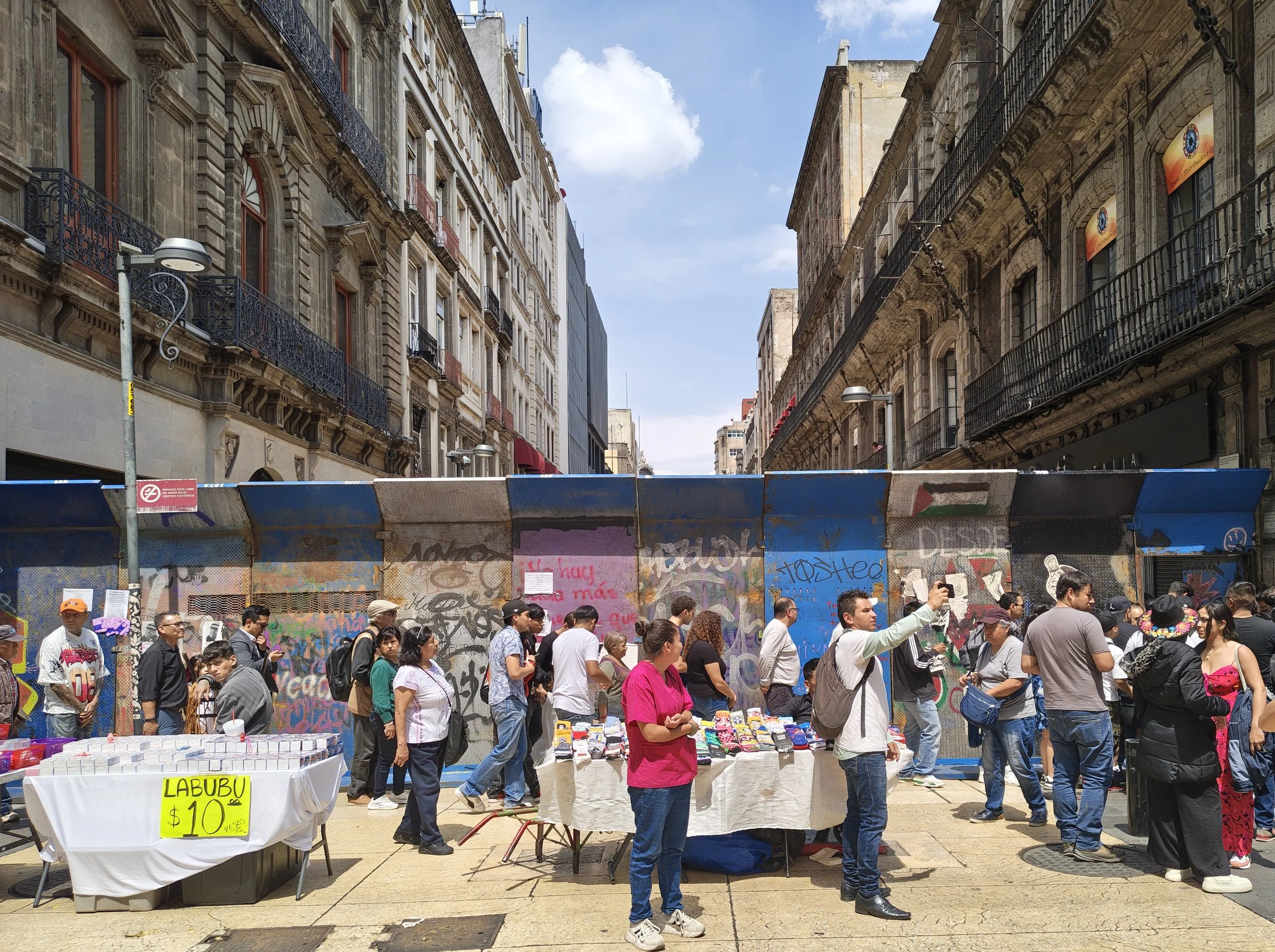
A long line of people waits to pass through one of the few regulated access points to the Zócalo in Mexico City, where the Fan Zone was being prepared to watch World Cup soccer matches on a giant screen.
A game for all (still)
It might seem like I'm romanticizing the past. But it's also true that the World Cups in the past conveyed something different to many of us.
I don’t want to seem pessimistic or fainthearted, either. Perhaps the protests will find a solution, and the fans will find enjoyment. But most importantly: despite everything, soccer retains its popular essence, something that neither FIFA nor the sponsors have managed to completely expropriate.
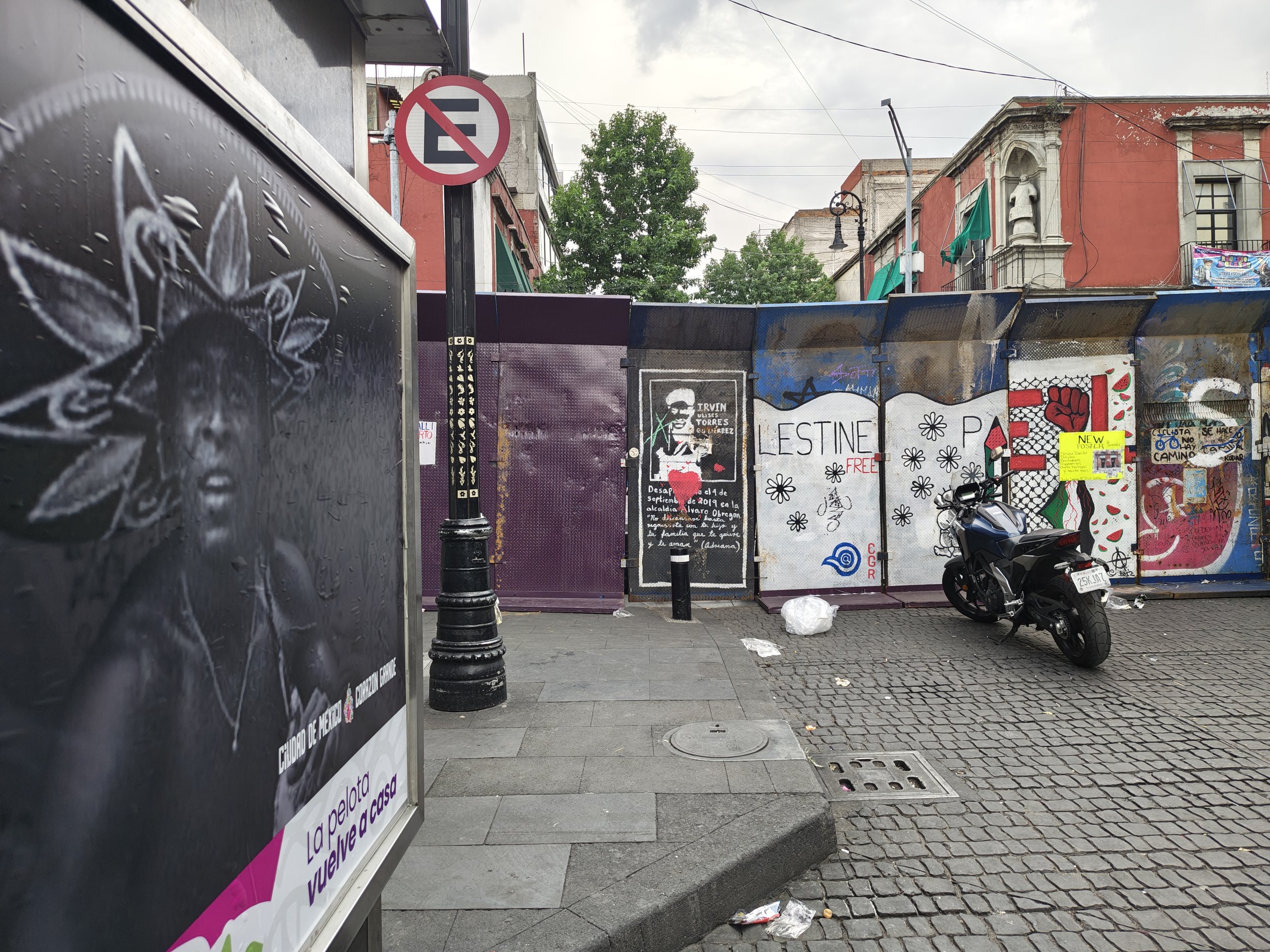
An official announcement highlighting soccer Pelé's victory in the 1970 Mexico World Cup faces a containment fence in the Historic Center of Mexico City with graffiti in favor of Palestine and against gentrification.
There will be joy and hope. Many will celebrate legendary goals. Others will suffer what may feel like tragic defeats. The celebration, in one way or another, will still belong to everyone.
However, there is still a certain nostalgia for what once was, but also for what the World Cup of 2026 could and should have been.
—

Rodrigo Cervantes is an award-winning bilingual journalist and communications strategist with extensive experience in the U.S., Mexico, and internationally. He has contributed to outlets such as NPR, CNN, The Los Angeles Times, and the BBC. Cervantes led KJZZ’s Mexico City bureau, where he launched the first overseas bureau for a U.S. public radio station. He also served as Business Editor-in-Chief for El Norte, part of Grupo Reforma, Mexico’s leading newspaper company. In Georgia, he led the newsroom of MundoHispánico, then the state’s oldest and largest Latino publication, under The Atlanta Journal-Constitution. His work has been recognized with RTDNA Murrow Awards and José Martí Awards from the National Association of Hispanic Publications (NAHP). He is the former Secretary of the National Association of Hispanic Journalists (NAHJ) and currently serves as co-managing editor of palabra, and as a clinical assistant professor at Arizona State University’s W. Cronkite School of Journalism and Mass Communication. @RODCERVANTES