
In D.C. Salsa Has Its Own “Capital”
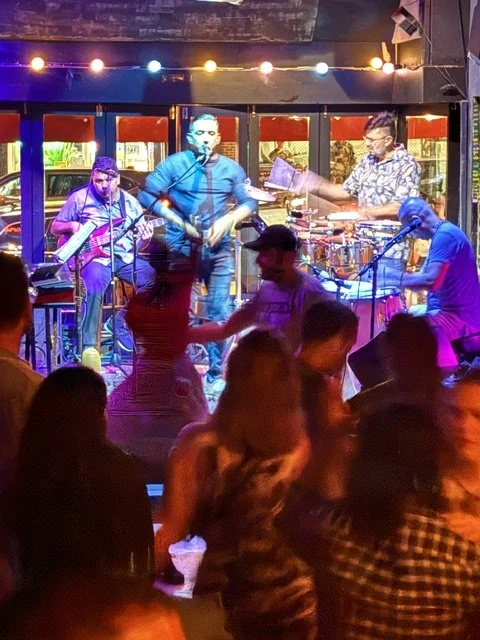
Tumbao takes the stage, a band led by Jorge Martínez Padrón.
Every Saturday night, Bossa, the live-music venue in the heart of Adams Morgan in Washington, D.C., becomes the epicenter of salsa. That’s where Tumbao takes the stage, a band led by Jorge Martínez Padrón that has been performing there for 16 years, turning its shows into a can’t-miss weekly gathering for salsa lovers of many nationalities.
Clic aquí para leer en español.
By Julio Túpac Cabello, @eljuliotupac
Support the voices of independent journalists.
|
WASHINGTON, D.C. - In the quintessentially Washington neighborhood of Adams Morgan, the city has a weekly gathering that becomes the epicenter of salsa in the nation’s capital. At Bossa, when Tumbao takes the stage - as it has every Saturday for the past 16 years -the night turns into a journey driven by the beat of the timbales.
It is not necessarily something you would expect to find. This city, rich in theater, tends to belong more to jazz and blues when it comes to music. And despite its multicultural character, Caribbean communities account for only about 20 percent of its Latino population, according to the American Community Survey. Yet such is the power of salsa at this weekly gathering that it draws not only Latinos of every background, but enthusiasts from every continent, age group, and walk of life.
Café Citron and Cuba Libre Restaurant and Rum Bar also host nights for salsa lovers, although live bands tend to appear seasonally and DJs often lead the evening. Tumbao’s performances at Bossa are Washington’s living, breathing embodiment of salsa, the undeniable proof that a genre born in New York in the 1970s is more alive than ever.
subscribe to palabra’s newsletter
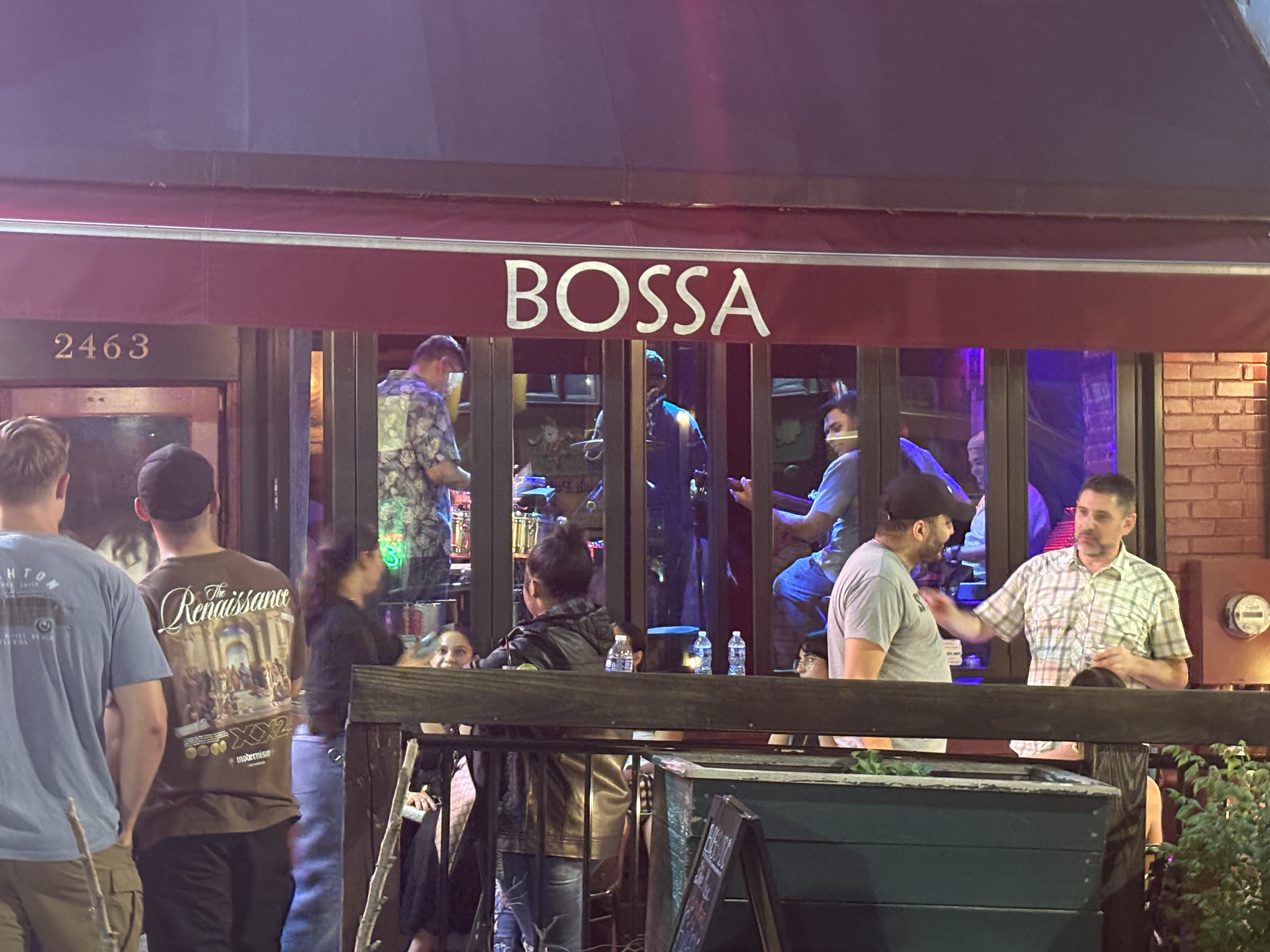
On Saturday nights, Bossa, the live-music venue in the heart of Adams Morgan, becomes Washington, D.C.’s salsa epicenter. Tumbao performs there, led by Jorge Martínez Padrón, who has been at the helm for 16 years and has turned the band’s shows into an essential gathering for salsa lovers in the nation’s capital.
People of every nationality show up. By around midnight, the place is always packed, and no matter what time of year it is, it feels like summer inside: with so many people dancing at once, it is always hot.
Jorge is Cuban and has been studying music since he was seven years old. He entered the Guillermo Tomás Conservatory, regarded by specialized media as one of Havana’s most prestigious and comprehensive music schools. He later studied piano at the National University of Costa Rica and eventually graduated from George Mason University in Virginia with a Bachelor of Arts.
It was only after earning his degree and developing his expertise in classical music that he could devote himself to one of his great passions: salsa.
But make no mistake: Jorge also plays jazz and is an educator. He is a professional musician, and a very popular one. He spends half his time playing and singing backup vocals, and the other half greeting people.
Every gathering brings together a different mix of people: devotees of traditional salsa, beginners who can barely dance, dancers trained in the choreographed moves of Cuban casino-style salsa, people dancing alone and lost in their own world as if they were at a nightclub, women dancing together, groups of friends, Black Latinos and Black non-Latinos. Scandinavians, Japanese, Spaniards.
Salsa can bring together virtually any culture or nationality.
Some nights, you find a woman or a man- an experienced dancer- who comes alone and spends the entire evening being asked to dance. Sometimes someone dances alone, facing the band as though attending a concert.
Raúl Morel is Dominican. “A true frontman,” his bandmates say.
Besides being a versatile singer, he interacts constantly with the audience and the other musicians. He tells stories, imitates the accents of people in the crowd, makes them laugh, dances, and turns the performance into a show.
Raúl has recordings of his salsa interpretations on Spotify. He is a seasoned sonero.
From the stage, the musicians spread their infectious chemistry and improvisational energy throughout the room. Timbales, percussion, vocals, bass and keyboards- sometimes sounding like a piano, sometimes a trumpet, sometimes a trombone- engage in a musical conversation onstage. They take turns, play with one another, and clearly enjoy themselves enormously. That same rush of dopamine seems to spill out across the entire dance floor.
“It’s one of the things I enjoy most every Saturday,” Jorge says. He leads the band from his versatile keyboard.
“Lovable. I don’t want to miss it anymore,” says Antón in his guttural accent, a Belgian man I have run into a couple of times.
The repertoire changes roughly every six months, although individual new songs sometimes make their way into the set along the way. Some arrangements blend one song into another, slip in a chorus from a completely different number, add an improvised joke over it, and then return to the original song.
The musicians entertain themselves while the dancers are caught by surprise. And this much is clear: when the musicians are having fun, the audience has fun too.
The sets last more than 45 minutes, and no one wants to miss a song. Between sets, the room fills with salsa classics, merengue and even reggaeton.
The party stretches well into the early morning. The band starts at 10:30 p.m., but the crowd really begins arriving after 11. By around 1 a.m., there is barely room for another person.
Bossa is home to a full-fledged journey into the world of salsa.
“When you’re there and the set begins, you forget about the world and where you are, because you’re on Planet Salsa,” says Patricia Helena Mendoza, an Argentine regular at the venue.
Every set begins with a musical intro that turns into a kind of guessing game: What song is this going to be?
And each one ends with a few funny words from Raúl, the singer, who promises the band will return after “five Dominican minutes.”
That is when the dancers, drenched in sweat, head to the bar for a drink or step outside for a few minutes of fresh air.
After 1 a.m., the band finishes for the night. Some people stay behind to keep dancing to the DJ, but the most devoted salsa lovers say goodbye until next Saturday.
—

Julio Túpac Cabello is a journalist, author, and storytelling specialist. He has worked for international news organizations including BBC, Univision, and Agencia EFE, as well as television networks such as HBO, Sony Pictures Television, and NBC Telemundo. He graduated from the Central University of Venezuela and holds a master's degree in Film and Television Production from the University of Bristol in England. He is the author of Nosotros, los centauros (fiction), Felices bastardos (an unconventional portrait of the often-overlooked city of Miami), and Sabiduría de moribundo (a work of creative, cross-genre writing), among other books. He currently lives in Washington, D.C. @eljuliotupac