Georgia’s Fulton County as a Symbol of “Electoral Fraud”: How This and Other Disinformation Narratives Are Promoted on Hispanic Radio
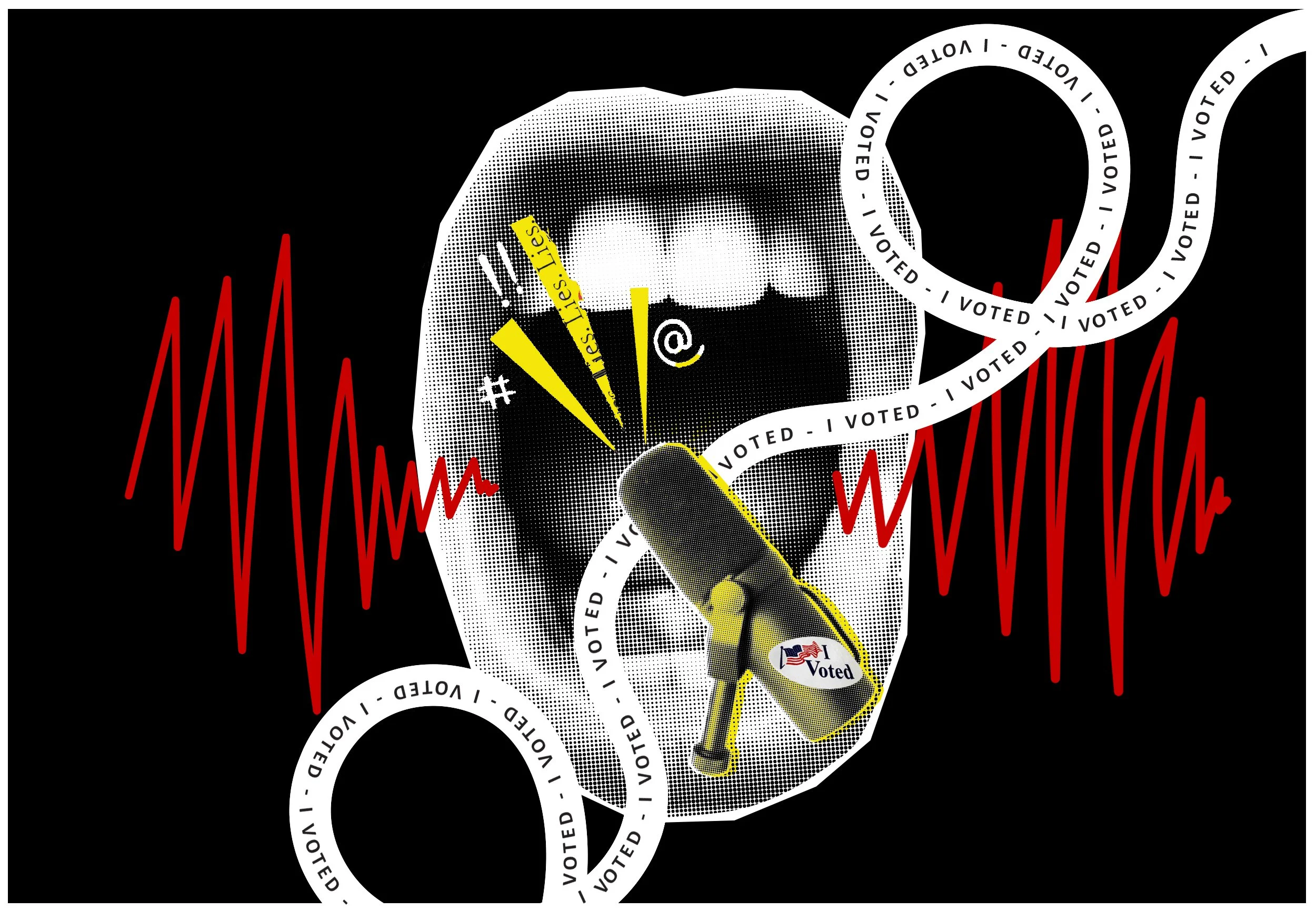
Ilustration by Susana Sánchez.
We listened as the spread of inaccurate, decontextualized, or outright false claims about what happened in Georgia in 2020 intensified, fueled by the emergence of supposed “new evidence” that allegedly revealed a strategy to alter votes. Political communication experts break down the formats and recurring “examples” that sustain this narrative, and explain how the sheer volume of “noise” is gaining ground against the documented reality.
Clic aquí para leer en Español
By Carlos Chirinos, @carl_chirinos
In the early hours of November 4, 2020, as the United States continued counting votes in the election between Donald J. Trump and Joseph R. Biden, Fulton County, Georgia, became the epicenter of fraud allegations promoted by Trump. Authorities in Washington, conservative media, and social networks fueled the idea that the “proof of the theft” could be found, a narrative aimed at demonstrating a non-existent crime that has been repeatedly debunked, yet has persisted six years later, on the eve of the 2026 midterm elections.
subscribe to palabra’s newsletter
The election results in Fulton and Georgia in 2020 were counted three times — the initial tally, a statewide manual audit, and a recount requested by the Trump campaign — and although human errors and incomplete paperwork were detected (0.1053% variation in total vote count, and the Secretary of State said this was within the expected range for hand-counting errors), nothing altered the result: Biden won Georgia by about 11,800 votes.
The election denial narratives from conservative circles, led by Trump, were reinforced with his return to the White House. Trump's insistence on widespread election fraud has never been substantiated, as documented in a case summary by the American Bar Association.
In April 2026, a Reuters/Ipsos poll showed that 31% of respondents believed the 2020 election was stolen, and 46% considered that many non-citizens vote in U.S. elections. Spanish-language radio in the U.S. has helped to spread conspiracy theories about fraud, including the idea that the Democratic Party — along with anti-Trump Republicans — manipulate elections through “importing” immigrants to vote, a claim debunked by multiple investigations and state audits.
Traditional Radio as Part of the Disinformation Strategy
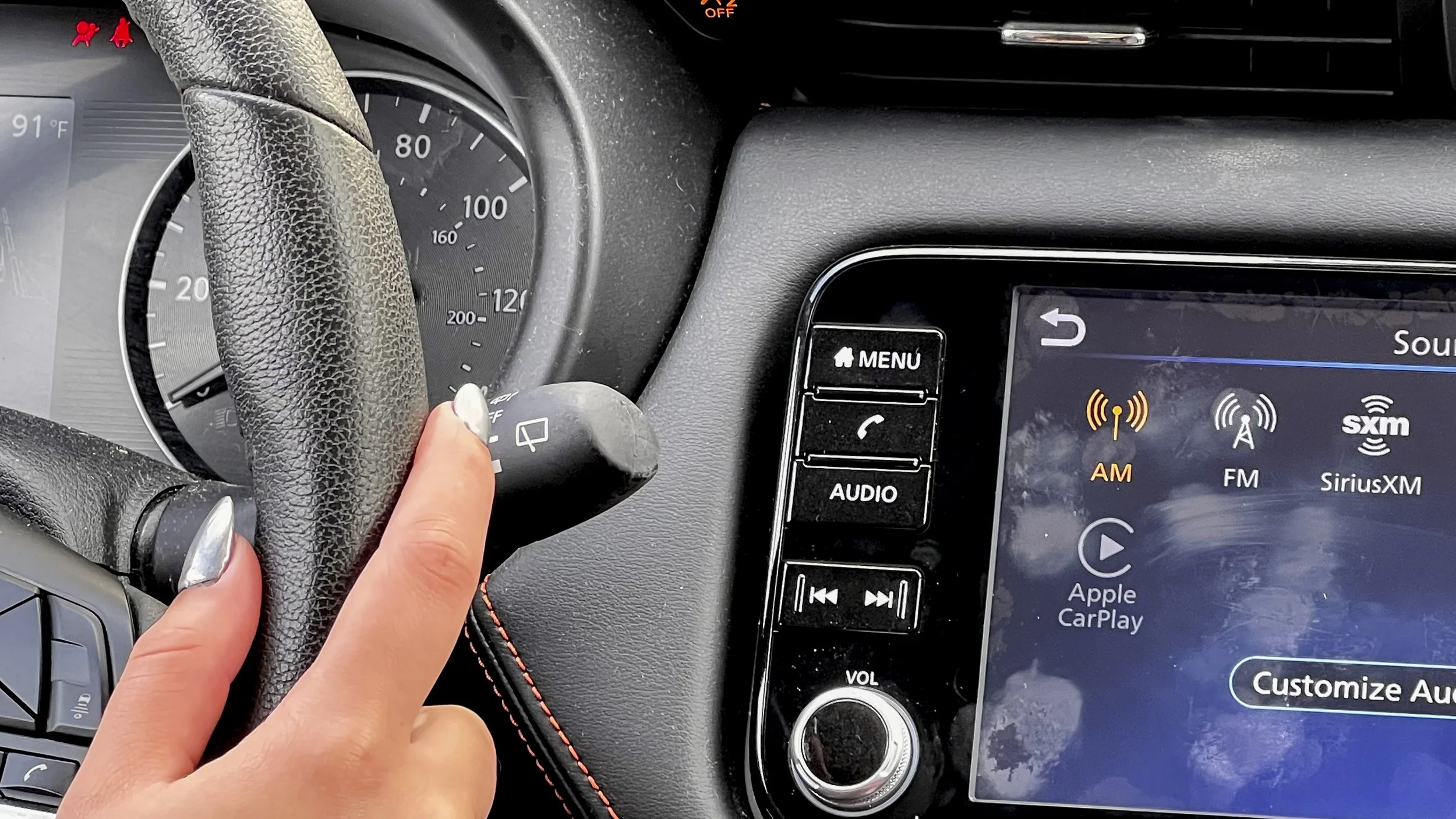
92.3% of adults rely on radio for news or entertainment, according to a Nielsen study (January 2026). Photo: Acento Story Tank
Radio, the oldest electronic mass media, remains the most widely used platform by Latinos in the U.S.: 93.2% of adults rely on it for news or entertainment, according to a Nielsen study (January 2026), which describes it as a “consistent and reliable” way to reach this group. The report highlights that Hispanic listeners turn to radio during key decision-making and purchasing moments, allowing hosts to influence their behavior when they are most attentive. Additionally, they build relationships of trust with hosts and formats that resonate with their experiences.
In a 2022 study on Spanish-language radio political advertising in the U.S., published in the Journal of Radio & Audio Media, professors Christopher Terry (University of Minnesota) and Fernando Severino (University of Illinois) state that “mobilization campaigns targeting Spanish speakers are effective at getting Latinos to the polls.”
Although the study focuses on political advertising rather than opinion, the authors highlight that the broad reach of Spanish-language radio is a “key tool” for achieving mobilization, “especially among those who speak primarily Spanish and show a low propensity to vote.”
“We are a bit concerned, or I could say very concerned because we are seeing narratives similar to those we saw in 2020,” said Evelyn Pérez-Verdía, a communications strategist specializing in narratives and CEO of We Are Más, a consulting firm that promotes political participation in the Hispanic community through public service campaigns.
“Disinformation exists across all spheres. Just as it exists in the Hispanic community, it exists in the Asian community; this is 'micro-targeting'. What makes it different is that we are the largest minority in this country and we are a community that, since childhood and our times in Latin America, has listened to the radio. Even if you were born or raised here, you listen to the radio because you are drawn to the music,” Pérez-Verdía said.
However, until the advent of social media, what was said on the radio was “gone with the wind," fixed in the minds of those who listened. Palabra was able to verify how the spread of inaccurate, decontextualized, or simply false content about what happened in Fulton, Georgia intensified following the reactivation of a disinformation campaign.
“Disinformation exists across all spheres... What makes it different is that we are the largest minority in this country and we are a community that, since childhood and our times in Latin America, has listened to the radio”
— Evelyn Pérez-Verdía, a communications strategist specializing in narratives
The FBI Enters the Scene in Fulton
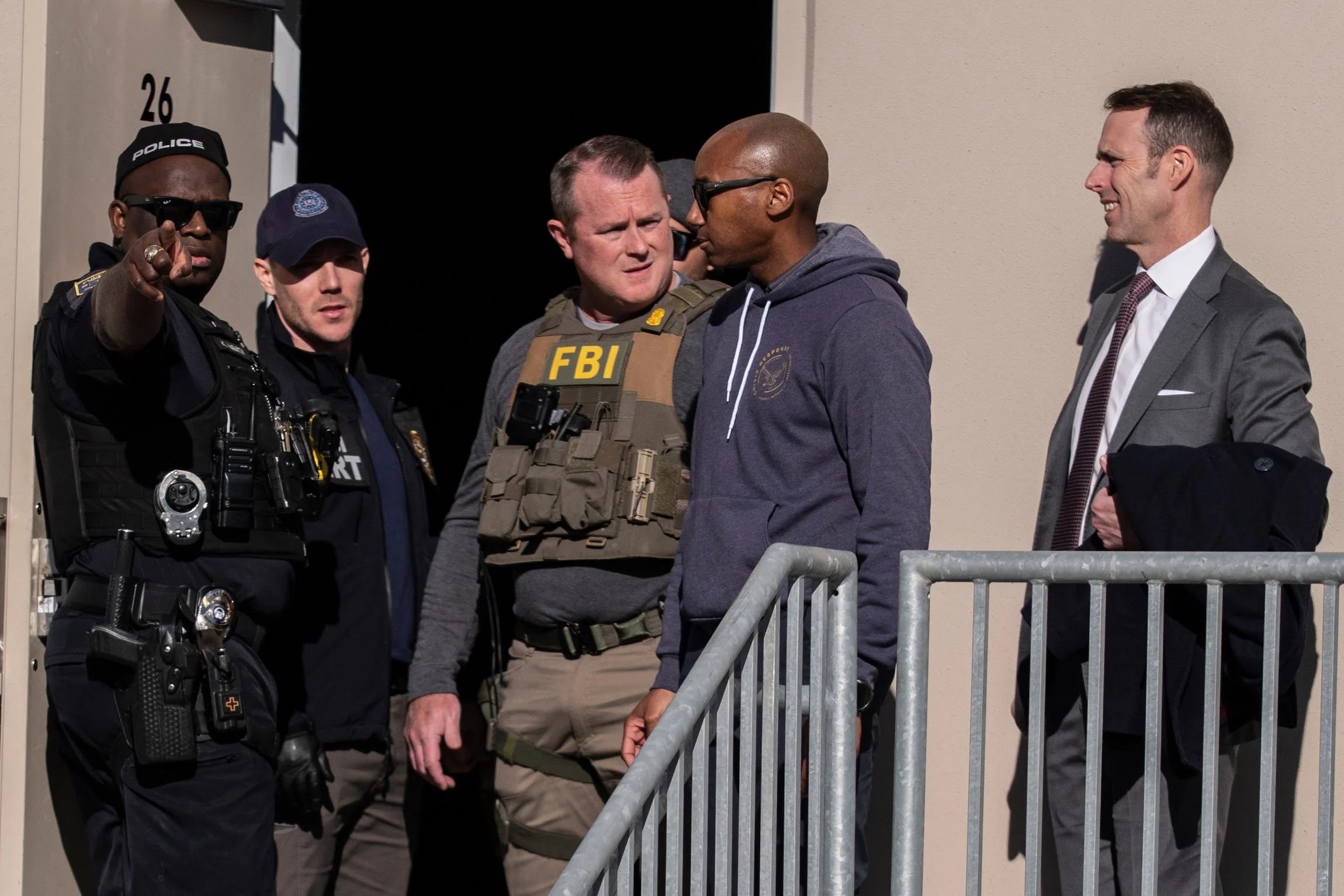
FBI agents are seen at the Fulton County Election Hub and Operation Center, Wednesday, Jan. 28, 2026, in Union City, Ga, near Atlanta. (AP Photo/Mike Stewart)
In early December 2025, officials in Fulton County acknowledged to the Georgia Election Board that more than 130 tally tapes from 2020 lacked the required signatures — an administrative error involving approximately 315,000 ballots. Although authorities stated that the issue did not affect the election result and that those ballots had already been verified in audits and recounts, the finding reignited scrutiny.
Election deniers presented it as “proof of fraud,” claiming on radio shows — such as this one on Actualidad Radio WURN on December 26, 2025 — that Georgia “admitted 315,000 illegal votes” and that this would have changed the outcome, even though authorities never said any such thing.
Palabra’s emails to management at Actualidad Radio seeking information about its procedures for verifying the accuracy of on-air content went unanswered at the time of publication.
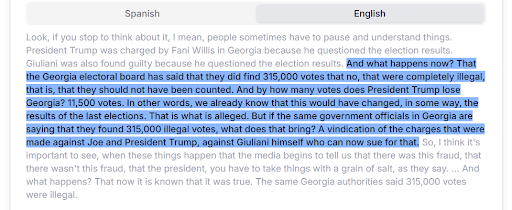
Screenshot of the audio transcript on Verdad
The fraud narrative was repeated for weeks on radio and linked to the FBI raid on Fulton’s Election offices. Commentators used the raid to reinforce the false idea that those 315,000 votes were “illegal,” as claimed by an Interviewee on America Radio WSUA in Miami on February 6, 2026.
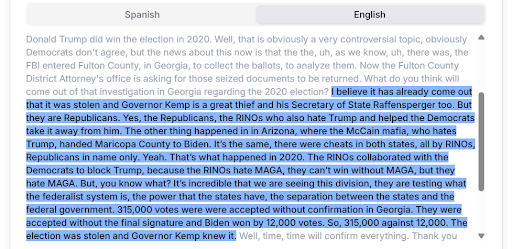
Screenshot of the audio transcript on Verdad.
When asked about internal editorial processes, management at America Radio stated that it was not their policy to question the 2020 election results and that they recognized the outcome certifying Joe Biden as the winner. They attributed responsibility for the statements to the show's guest and claimed the only control they could exercise was to not invite the guest back.
Disinformation narratives persist despite state audits finding no problems with the voting. Yet a host on Radio Libre 790 WAXY in Florida claimed on February 8 that “there are legitimate questions.”
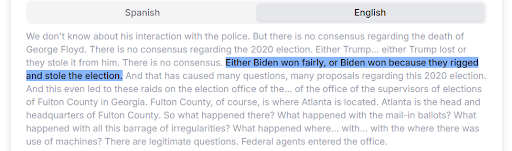
Screenshot of transcript comments on the same Florida radio show.
Representatives from Radio Libre declined palabra’s request for comment on the accuracy of the information presented in that segment.
In this example, heard on Radio Mundo WNMA in Florida on March 24, 2026, the host speaks with notable indignation about a piece of data that the county, according to him, “just admitted.”
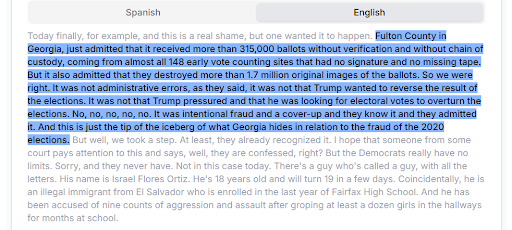
Screenshot of transcript comments on the same Florida radio show.
But Fulton County had already acknowledged that error at a State Election Board meeting on December 9, meaning the host appears to be reporting the news after the fact. . In addition, Secretary of State Brad Raffensperger clarified that “all voters were verified with photo ID and cast their ballots legally”.
Nevertheless, the segment was repeated on Radio Mundo on April 8 and twice more on April 26, even as each passing day it was less new than the host claimed.
That same radio host states that the county “admitted destroying more than 1.7 million original ballot images,” implying an illegality, when in fact electoral authorities disposed of election materials as prescribed by U.S. Code Title 52, Subtitle II, Chapter 207, which requires records to be retained for two years following a federal election.
Maduro, Smartmatic, and the “Venezuelan Connection” to Fraud
Support the voices of independent journalists.
|
Another news event exploited by promoters of election fraud was the capture of Nicolás Maduro by U.S. forces in Caracas on January 3, 2026. Election deniers insisted there was a supposed Venezuelan connection via Smartmatic, a company founded in 2000 in Boca Raton by three Venezuelan engineers, whose first major contract was the automation of the 2004 recall referendum in Venezuela. Since then, Smartmatic has expanded internationally, establishing headquarters in London and securing contracts across multiple countries, including Los Angeles County in 2020, the largest voting jurisdiction in the U.S.
In December 2020, a campaign driven by Trump supporters and amplified by conservative outlets like Newsmax and Fox accused Smartmatic of participating in a conspiracy with Dominion to steal the election, alleging that the “Venezuelan company” acted in coordination with the Maduro regime. Both companies won court victories after suing networks and hosts over those claims.
In 2017, the company reported that Venezuelan authorities had inflated turnout figures by at least one million votes during the Constituent Assembly elections, leading to an abrupt end to its relationship with the government.
Nevertheless, unsupported claims circulated in denialist circles about alleged negotiations by Maduro to offer information on how U.S. election fraud was purportedly committed, as asserted by a host on Radio Mundo WNMA 1210 AM in Florida on July 24, 2026.
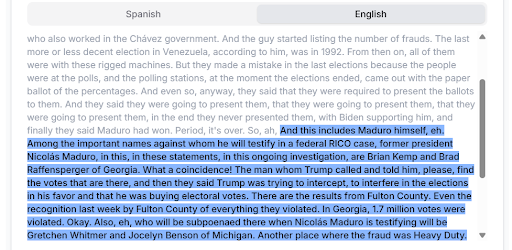
Screenshot of program transcript.
The host repeated several falsehoods: asserting that politicians would be summoned to hear impending statements from Maduro (whose trial is scheduled for June 2027) and claiming that the former leader pleaded guilty to narco-trafficking, when he pleaded not guilty in his initial hearing on January 5, 2026. He also claimed that “the last decent election in Venezuela” was in 1992 and that Smartmatic machines began being used that year. In reality, the company made its entry in Venezuela during the 2004 recall referendum.
Palabra repeatedly attempted to reach Radio Mundo for comment but received no response by email or through the phone number listed. Efforts to reach its parent network, Multicultural Radio Broadcasting Inc., also were unsuccessful.
When Reality Becomes Irrelevant
When analyzing Spanish-language radio content, the persistent repetition of disinformation by hosts is striking, even after claims have been proven false by audits, official statements, and court proceedings.
A characteristic of radio is its one-way nature — even in shows styled as “participatory” — allowing hosts to bombard a largely passive audience with their arguments. Photo: Acento Story Tank.
Political communications consultant Antoni Gutiérrez-Rubí — who has managed political campaigns in Spain and Latin America — explained to palabra that this is a strategy where reality is “irrelevant” and where the goal is generating noise rather than mere disinformation.
“They need to make a lot of noise because noise can be very effective at drowning things out, and we are facing a massive volume of false, distorted, and manipulated content alongside artificial intelligence. This has already reached exponential levels. Today democratic truth, scientific truth, and documented truth are all confronting the same thing: noise,” says Gutiérrez-Rubí, director of Ideograma, a communications consultancy operating in Spain and Latin America.
“Through specifically designed algorithms, bots, and AI agents, they manage to create an artificial opinion climate loud enough to make you feel tiny. And when you feel tiny and paralyzed, you think your truth is small. Therefore, the deafening noise upon which lies and disinformation ride is the central element.”
Gutiérrez-Rubí notes that election deniers rely on the old adage “'se non è vero, è ben trovato' (if it is not true, it is well invented)” because “the president needs what he says to be true, even if it is not, and for the last word and data point to be his, even if it is unfair or incorrect.”
A characteristic of radio is its one-way nature — even in shows styled as “participatory” — allowing hosts to bombard a largely passive audience with their arguments. When reality contradicts those arguments, “surprisingly, it does not matter to them,” Gutiérrez-Rubí warns. “It is irrelevant that it clashes with reality because the argument is never meant to contrast, verify, or compare; the argument is a political offensive. And when cognitive dissonance arises due to opposing data, it is ignored, brushed aside, sidelined, stigmatized, or deliberately denied to maintain the core offensive narrative”.
Hedging their bets: The Strategy Behind the Fraud Narrative
The administrative errors recognized and documented by Fulton County have been transformed into a national conspiracy used to question current election integrity, particularly in states and counties that may not favor conservative candidates.
For Javier Maza, a liberal-leaning political communications specialist who has worked on campaigns and with governments in the U.S. and Latin America, what is projected from Fulton is part of a strategy to sow doubt in the electoral system, allowing Trump and his advisors to pre‑emptively counter potential midterm losses.
“'A lie repeated often enough becomes the truth' is an axiom in modern political communication. If you repeat it, especially with a highly effective messenger like Trump who has that reach... but let's remember: around Trump there is not a traditional party (...) it is almost a cult, a movement. There is a mixture of fanaticism, and fanaticism is always disconnected from reality. In that sector, fraud narratives still work,” Maza indicates.
On March 24, 2026, a host on Radio Mundo WNMA in Florida asserted that “this is just the tip of the iceberg of what Georgia is hiding regarding the 2020 election fraud,” suggesting that irregular election handling extends to other parts of the country.
“What they are doing now is laying the groundwork so that if they lose (in the midterms), they can come out squawking about fraud and try to strip legitimacy from November's election. That is the explanation; there is no other. They are simply hedging their bets, so when the time comes they can say: 'I already told you this was going to be fraudulent,’” Maza said.
Beyond political intent from any sector, for those who work with words — journalists, editors, fact-checkers, educators — Fulton is a reminder that truth does not win on its own. It must be explained and repeated. Even as in the case of the 2020 election — whose integrity is backed by dozens of court cases dismissed for lack of evidence and the authoritative voices of officials, technicians, and experts — we must return to it even if everything should seem clear. Even six years later.
—
Editor’s note: This article was supported by a reporting grant from VERDAD, funded by the MacArthur Foundation, to support the use of technology to advance high-quality journalism. palabra retains full editorial independence and control over the reporting and publication of this story.
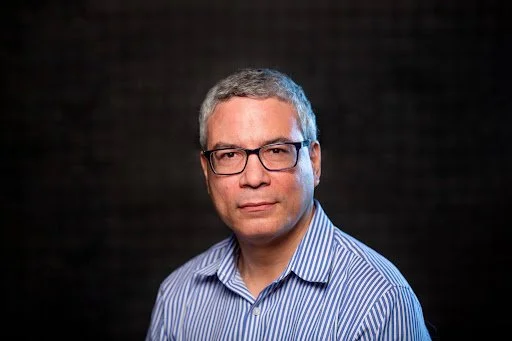
Carlos Chirinos Vásquez is an international journalist and political editor specializing in fact‑checking and misinformation affecting Latino communities in the United States. He led the politics team at Univision News and has more than two decades of experience, including 15 years at BBC World Service. He is currently the political and elections editor at Factchequeado.com.
He serves as an advisory member of the Center for Media Integrity of the Americas and develops bilingual media‑literacy programs for audiences vulnerable to misinformation. He is a Chevening Programme fellow of the United Kingdom. @carl_chirinos