
A New York Festival Unites Brazilians Despite the Political Divide Back Home
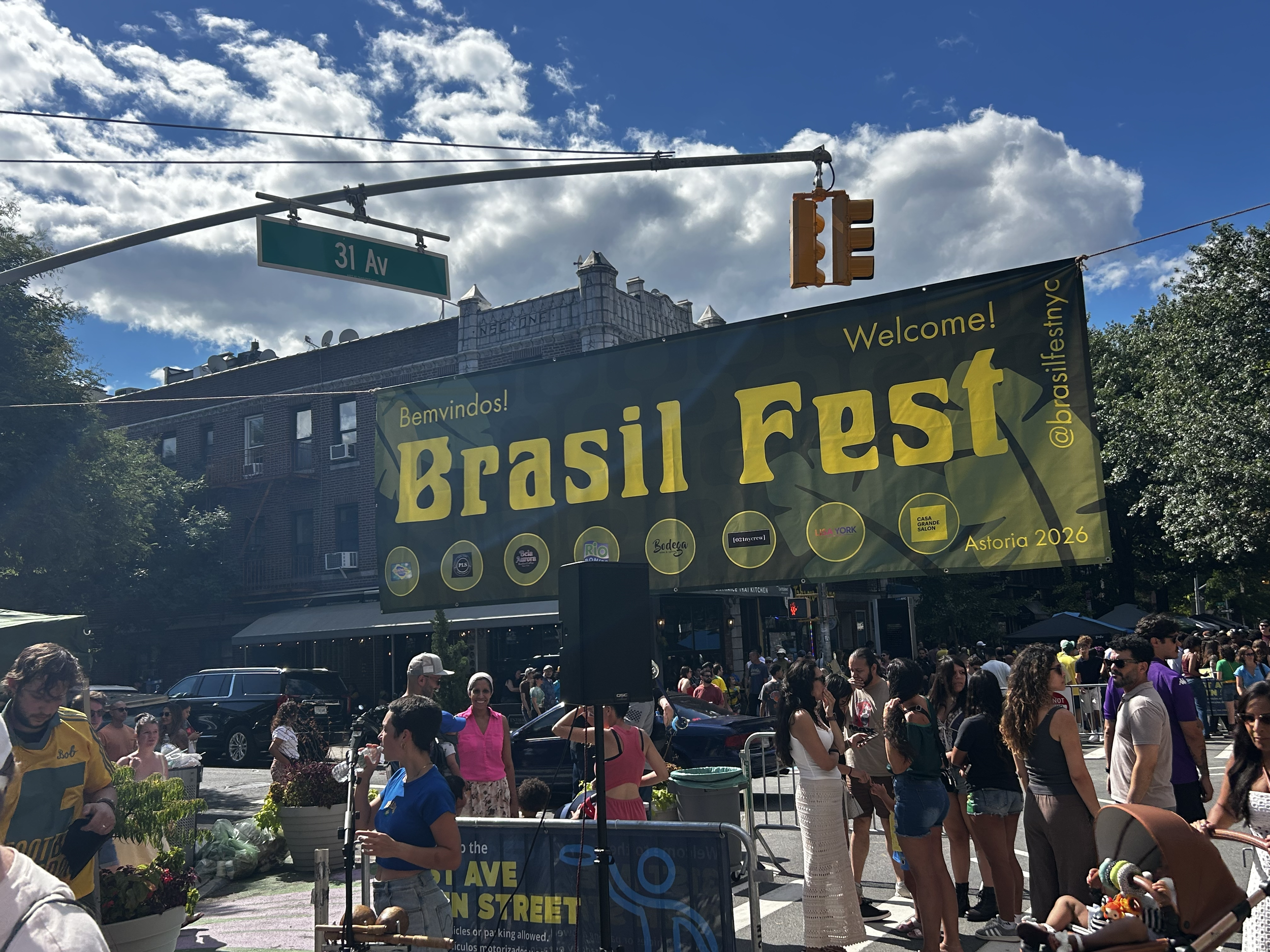
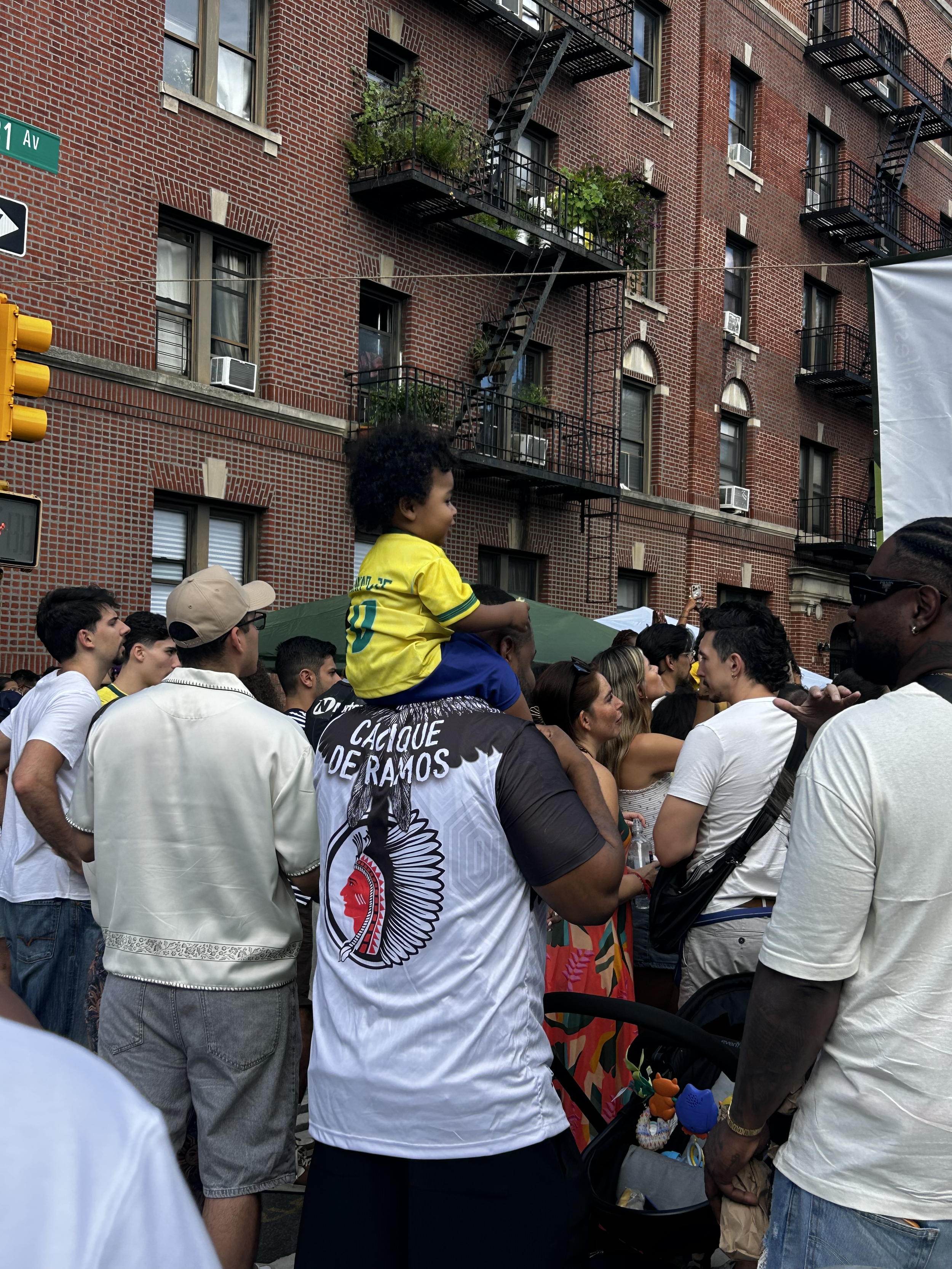
Brasil Fest, a celebration of Brazil’s Independence Day, came to Astoria, Queens, for the first time on September 7. Photo by Alexia Massoud
While Brazil faces a tight, polarizing presidential election year, a celebration in Queens brings togetherness and hope.
Clic aquí para leer en español.
Text and photos by Alexia Massoud
Edited by Rodrigo Cervantes
NEW YORK — Brazilians always know how to make a home away from home. A neighborhood in Queens offered a glimmer of their unity, even in a tight presidential election year for Brazil filled with polarization and concerns over affordability and cost of living.
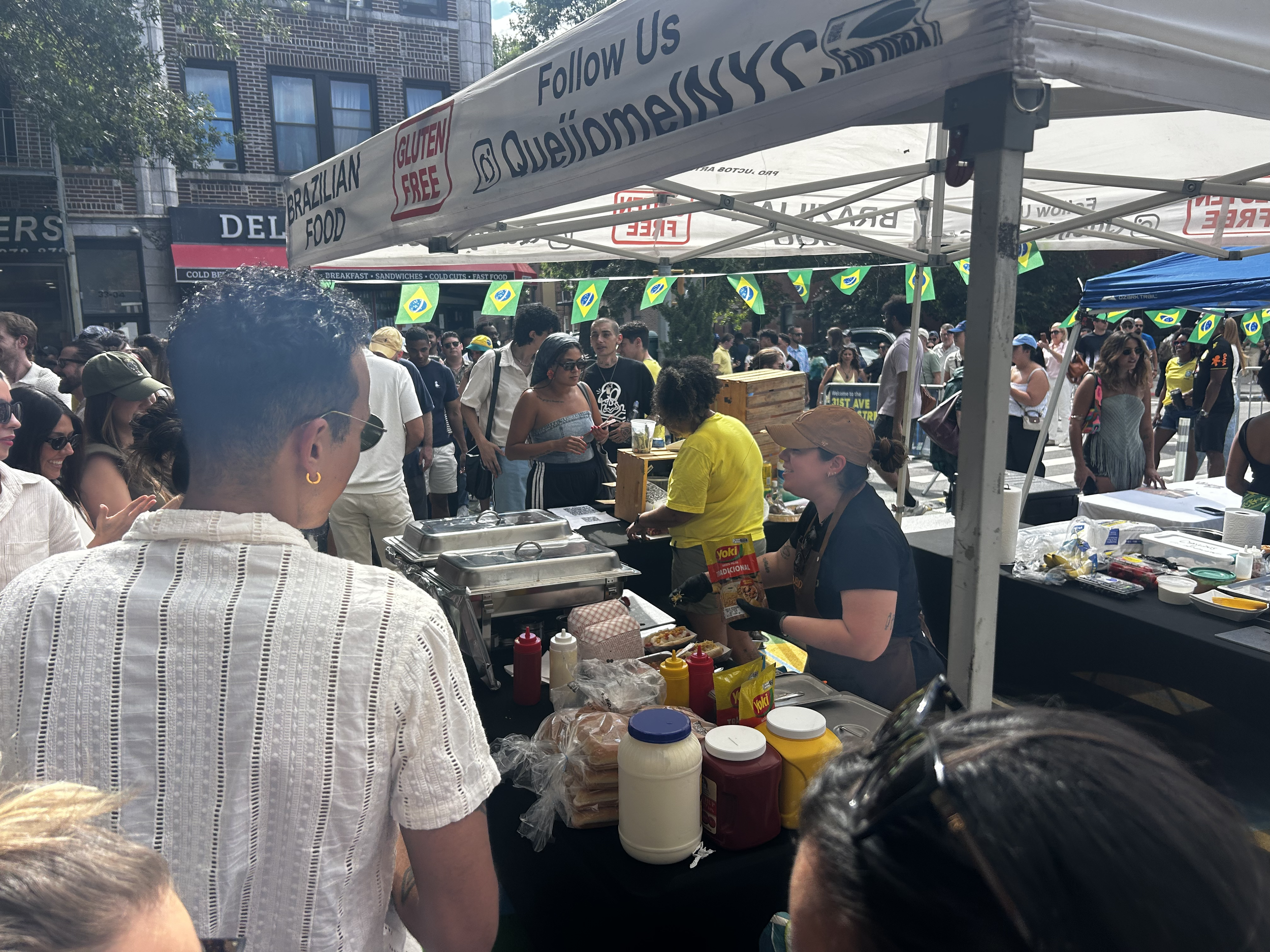
Two blocks of Astoria, Queens, turned yellow and green on a sunny Sunday in September, as the streets became crowded with Brasil Fest attendees commemorating Independence Day. Maria Teresa Furtado, the event’s organizer, said her goal was to show that “unity is more important now than ever.”
The 22-year-old Astoria native grew up surrounded by Brazilians on all fronts. She was raised in a neighborhood home to more than 2,200 of them, according to the 2020 Census.
With a mother from Recife and a dad from Belo Horizonte, Furtado grew up with a rich cultural mix between the country’s north and south. She always felt very connected to her roots, she said. Even Portuguese was her first language.
“For me, growing up, the world was Brazilian,” she said. “I started realizing over time how special Brazilians were, because not everyone has a community like the one we have.”
subscribe to palabra’s newsletter
Brasil Fest attendees danced to live forró music, a national genre that originated in Northeast Brazil, performed by the musical duo Flor de Massapê.
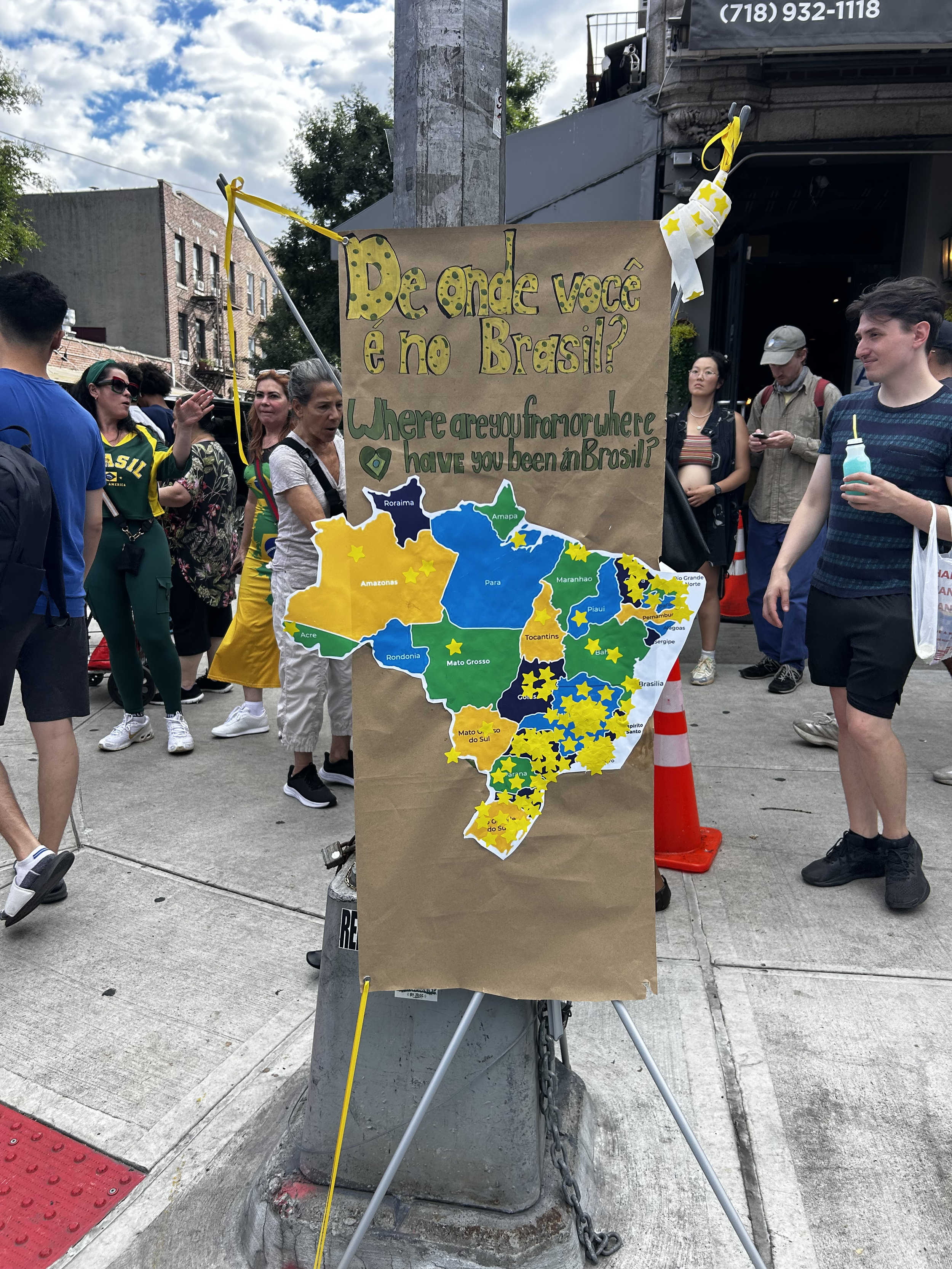
Dancing to live forró, playing altinha, a popular football beach game in Brazil, and eating bites of coxinha and feijoada —two of the nation’s most popular foods— one could almost forget this was happening in New York. Meanwhile, Brazil was approaching to what Daniela Campello, a senior lecturer in international affairs at Columbia University, considers the most “consequential election” of their country and of Latin America.
A tight political stage
Brazil’s current president, left-leaning Luiz Inácio Lula da Silva, is running for reelection against right-leaning Flávio Bolsonaro, a senator representing Rio de Janeiro with close ties to the Trump administration.
Support the voices of independent journalists.
|
Bolsonaro gained popularity as the son of former president Jair Bolsonaro, who is currently serving a 27-year prison sentence for attempting a coup d’état after losing the 2022 election.
Some surveys pointed to a tie between both candidates. Quaest and Datafolha, two of the largest public research institutes in the country, had Lula very slightly ahead of Bolsonaro in all polls.
But in the October 4 first round, the Tribunal Superior Eleitoral, Brazil’s Superior Electoral Court, gave Bolsonaro the victory by a margin of just 2%. The second round will be held on October 25 since neither candidate received a majority needed to win the election.
“If Brazilians reelect Lula, Brazil will still be big enough to balance the Latin American region between the ultra-right presidents,” Campello said. “But if Brazil flips, we’ll be in a worrisome situation, with Flávio Bolsonaro completely aligned with the United States as a subservient.”
The 80-year-old president is running for his fourth term and once had a record 87% of the population’s approval, after he left office in 2010. He was the “best-evaluated head of state in the world,” according to Brazilian newspaper Gazeta do Povo. But today, his approval rate is half that, hovering around the same as his disapproval.
Lula wanted this election to be about sovereignty. His new campaign slogan was “Brasil soberano,” standing in defense of Brazilian autonomy in the face of pressures and tariffs from the United States. President Trump, in Campello’s words, has been “extremely aggressive” with his foreign policy, leaving many countries “walking on eggshells,” not knowing how to deal with him.
Political scientist and editor-in-chief of The Brazilian Report, Gustavo Ribeiro, said Brazil has become much closer to China as Trump has ended the “American soft power” by implementing aggressive politics.
“This election, in the end, has not been about sovereignty, which was what Lula wanted,” Ribeiro said on NPR’s All Things Considered. “This election has been almost exclusively about domestic issues.”
Surging prices of food and transport and the general cost of living are what Brazilians are concerned with the most, according to Ribeiro and Campello. “It doesn’t matter who is in power, right or left: it’s very negative to have a high cost of living,” Campello said.
Earlier this year, Bolsonaro traveled to Texas to speak at the Conservative Political Action Conference, a gathering of conservative leaders and elected officials. In his speech, he said “Brazil and America were made for each other,” sharing the same “Judeo-Christian values.”
He framed Brazil as “America’s solution to break dependence on China for critical minerals, especially rare earth elements.” Brazil ranks second in the world in rare earth reserves behind China, but its mine production accounts for less than one percent of the world’s total, according to the January 2025 Mineral Commodities Summaries. The U.S. has roughly one-tenth of the total reserves Brazil does.
“Trump 2.0 is much better than Trump 1.0, right?” the Brazilian candidate told the audience in Texas. “Well, Bolsonaro 2.0 will also be much better.”
The U.S. has the largest population of Brazilians abroad, according to the Migration Policy Institute. Data from Brazil’s electoral court show more than 265,000 eligible voters in the U.S. In the first round, they elected Bolsonaro with 45,000 votes, while Lula received roughly 23,300. However, more than 70% of the voters were abstinent. In Brazil, where voting is mandatory, over 33 million Brazilians chose not to.
“Having a foot in one world [the U.S.] and one in another [Brazil] is hard, but being part of a Brazilian community helps define how close you feel to your culture.”
—Maria Teresa Furtado, Brazil Fest organizer
A ‘resistance force’ in New York
The voter turnout and the results can change on October 25. But for now, Brazilians in New York City, like Dora Flor and Davi Massapê, want to keep showing up for their culture. As members of the musical duo Flor de Massapê, they play and teach forró classes in Brooklyn and beyond, including Brasil Fest.
“We combat marginalization against our Latin communities by showing up and sharing our culture,” Flor said. “All united, we end up being a resistant force.”
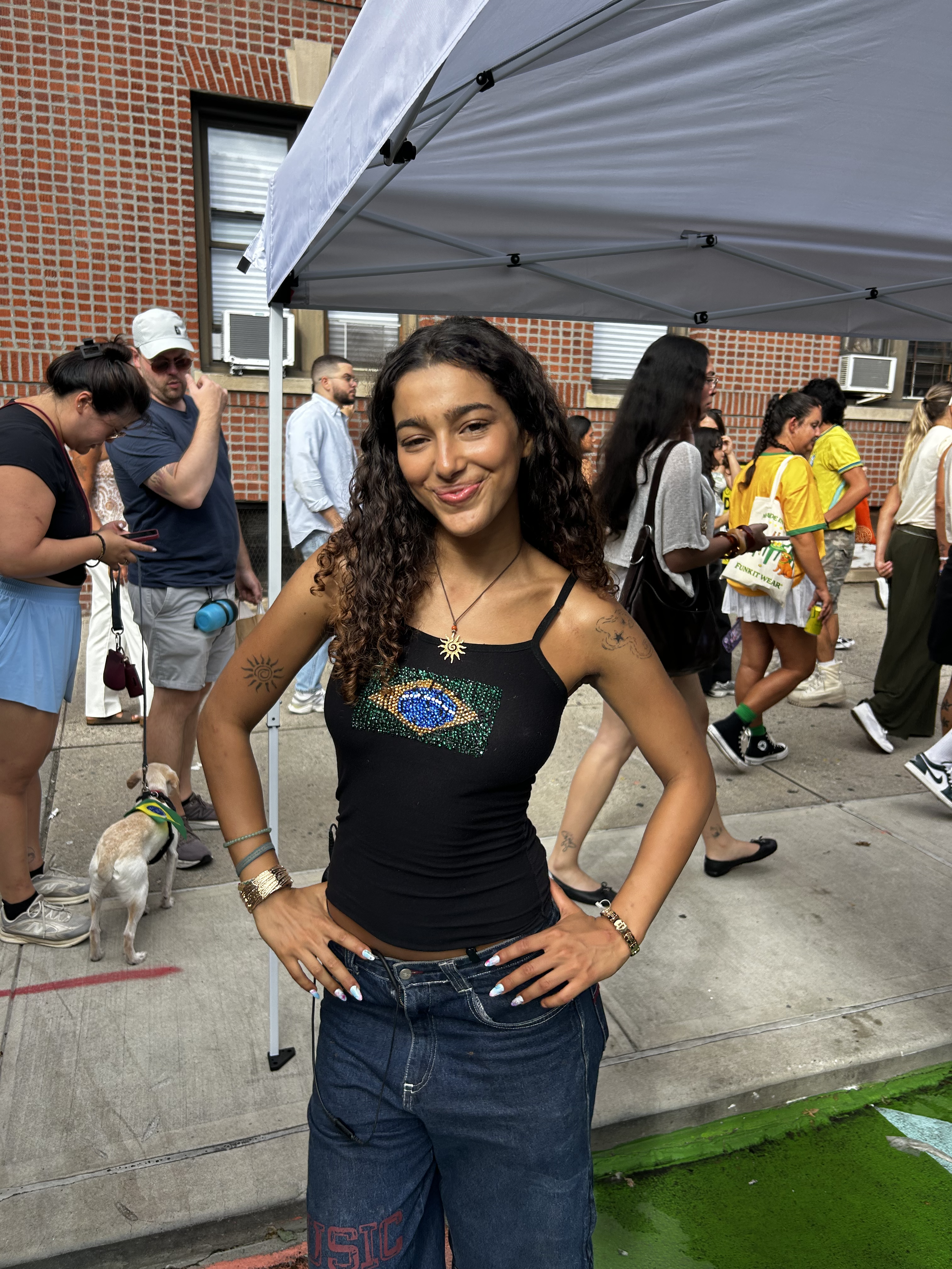
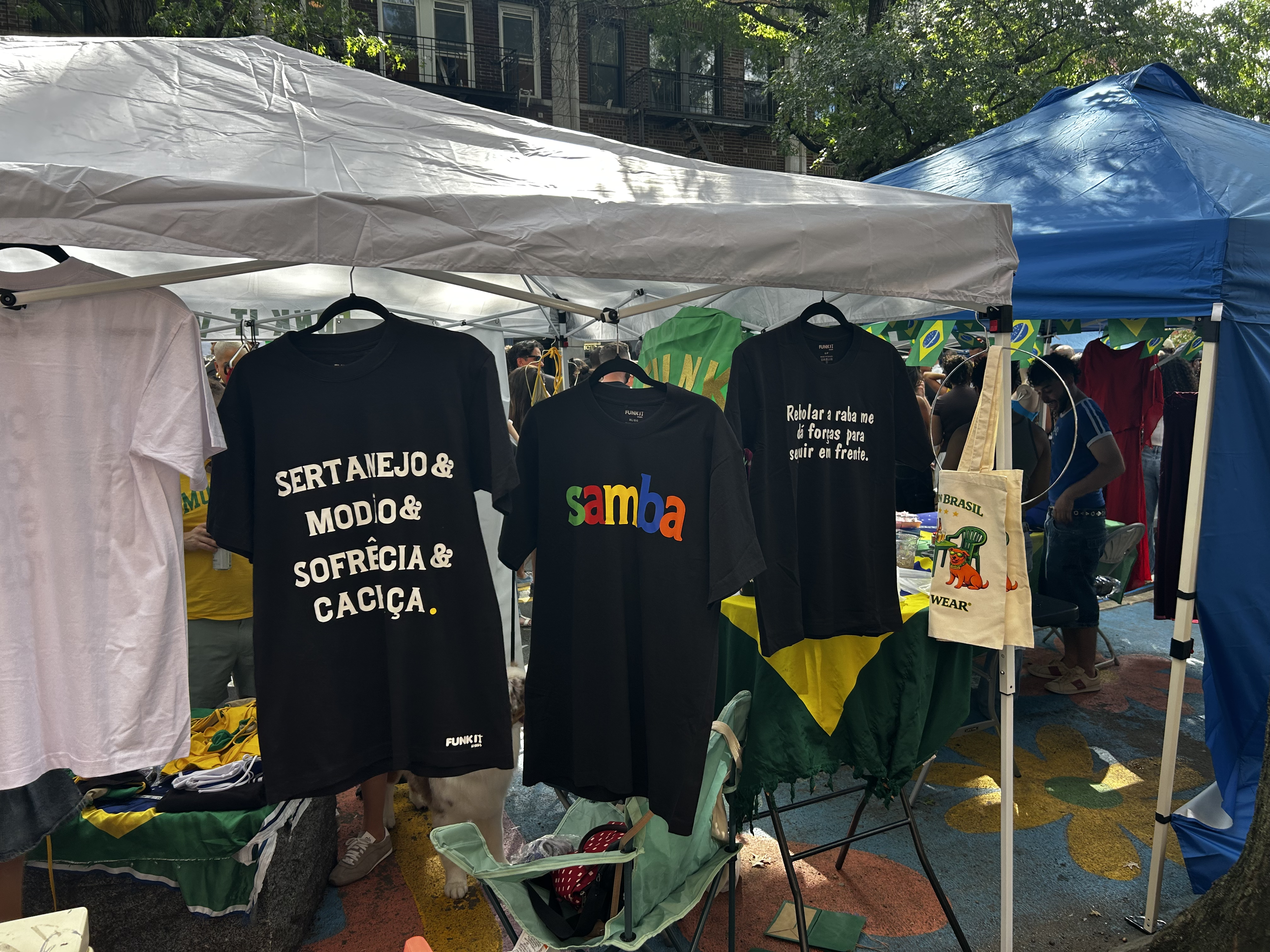
Brazilian flags waved everywhere, stamped on T-shirts and even put on dogs as bandanas. Families brought young kids wearing Brazilian football jerseys, posing for pictures with nothing but huge smiles on their faces. There was no clothing or writing with “Lula” or “Bolsonaro”; just a day at a street festival where nothing mattered but owning the pride of being Brazilian.
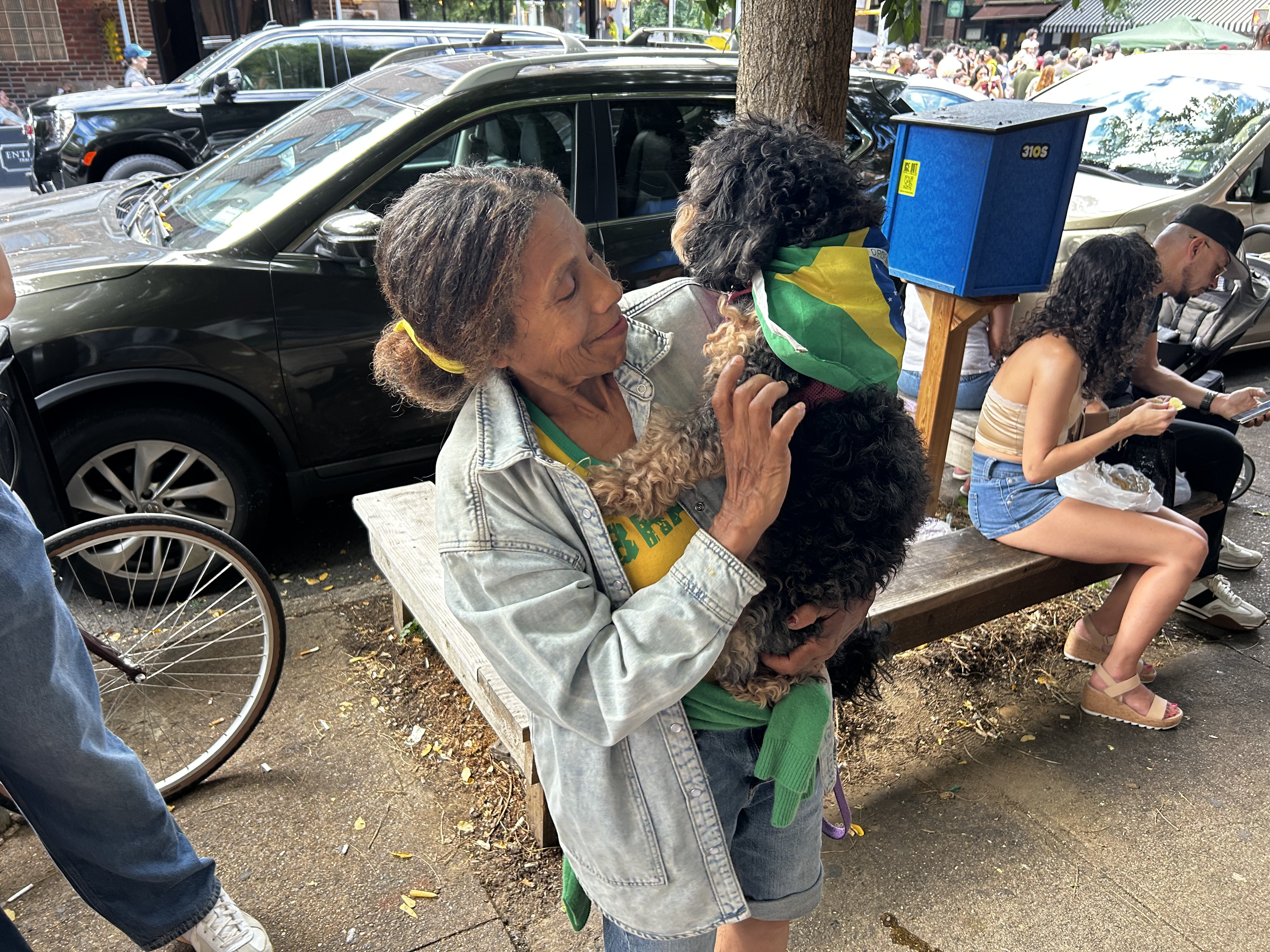
Antoninha holds her dog Princess wrapped around a Brazilian flag.
And after all, that is what Furtado wanted to achieve when she organized Brasil Fest.
“Having a foot in one world [the U.S.] and one in another [Brazil] is hard, but being part of a Brazilian community helps define how close you feel to your culture,” she said.
—
Alexia Massoud is a student at Columbia University pursuing her master’s degree in journalism. She previously studied international affairs and politics at The George Washington University, where she also worked as an environmental correspondent for Planet Forward in Rio de Janeiro, Brazil. She previously interned at the San Antonio Express-News through the Dow Jones News Fund as a business and healthcare reporter; Bloomberg Law on the legal reporting team; and The Brazilian Report.