
What the World Cup Revealed About Tijuana’s Little-Known Iranian Community
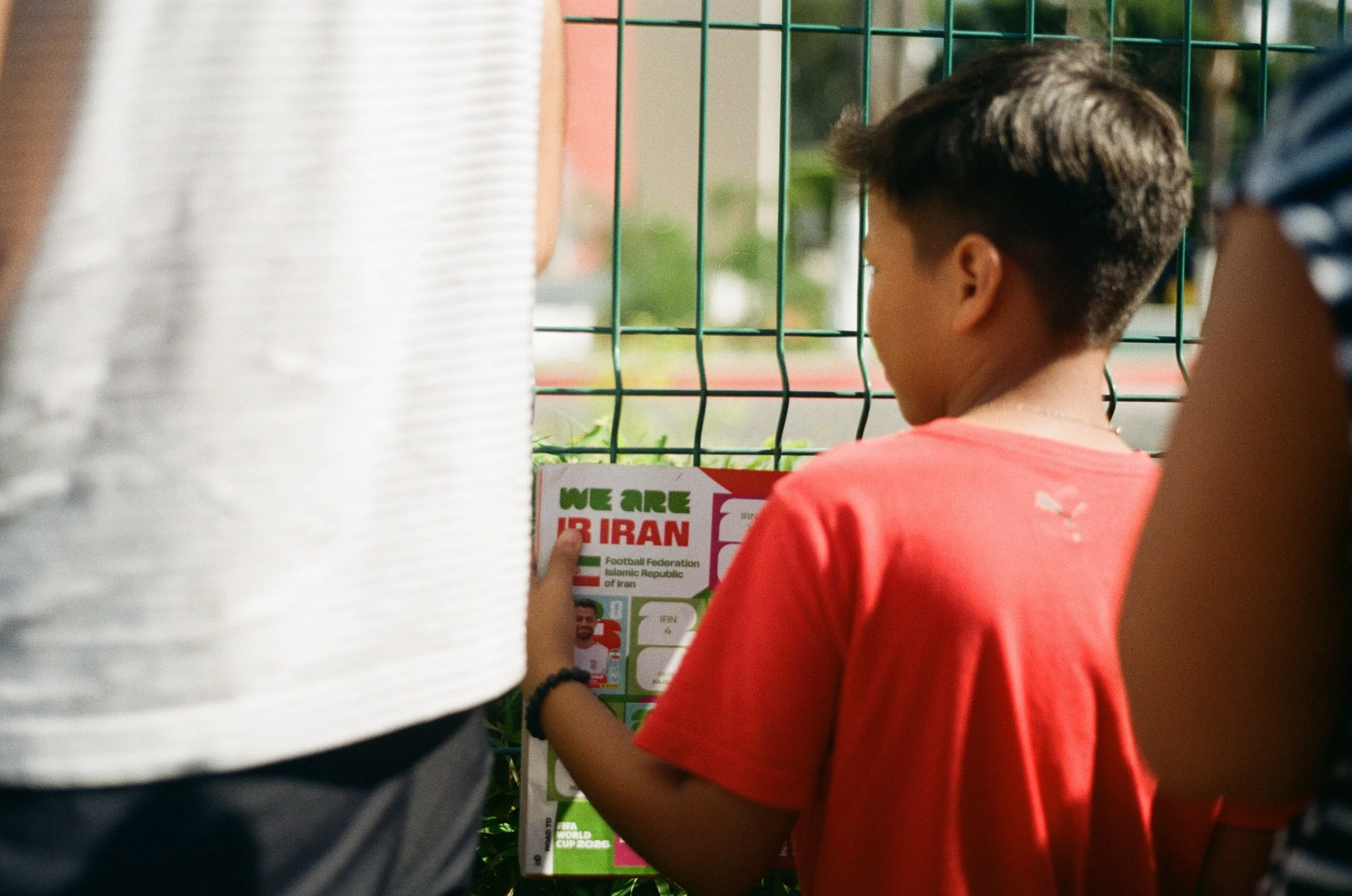
A Mexican child waits outside the Tijuana Marriott Hotel to get an autograph from a player of the national soccer team of the Islamic Republic of Iran. Photo: Abraham Márquez
The geopolitical drama surrounding the soccer tournament pulled back the curtain on a quiet Iranian diaspora of families and business owners bridging two worlds, who poured into the streets during the competition to embrace their national Team Melli.
Clic aquí para leer en español.
Words, photos and videos by Abraham Márquez, @abemarquez02
“We take pride in being Iranian, but also in being Mexican,” said Sadegh Galavi as he waited for a second day outside the Tijuana Marriott Hotel for another glimpse of the national soccer team of the Islamic Republic of Iran. Galavi was born and raised in Zahedan, Iran, and has been living in Tijuana for four years. “We want to let the team know we are here and we support them. We want them to know that Tijuana is a great place,” Galavi added.
The 2026 FIFA World Cup allowed Tijuana to showcase its tradition to the world and added another chapter to its history of hospitality this summer by welcoming the national soccer team of the Islamic Republic of Iran with respect and affection, showing the world the long, deeply rooted cultural philosophy of “mi casa es tu casa.”
For weeks, the border city became an international attraction and a new home for Team Melli, the official nickname of Iran’s national soccer team, amid the U.S.- and Israel-led war on Iran, which imposed visa restrictions that prevented the team from staying in the United States for the 48-team tournament. On May 25, the Mexican government announced that Mexico would host the soccer team. President Claudia Sheinbaum confirmed the decision after U.S. visa denials and security concerns prompted a rush to FIFA’s decision-makers.
“We have no reason to deny them (Iran) the possibility of staying in Mexico,” Sheinbaum said during her daily “mañaneras.”
What could have been merely a logistical nightmare for Iran’s team became a remarkable story of solidarity between two nations and peoples separated by 7,679 miles but united by kindness.
The geopolitical drama surrounding the World Cup 2026 pulled back the curtain on a quiet diaspora of families and business owners bridging two worlds. Together, they demonstrated to the world that despite U.S. actions and rhetoric directed at one community, they can unite and support each other.
Welcome to Tijuana
When the news broke about the day the soccer team would arrive at Tijuana’s International Airport, residents gathered with Iranian flags, welcoming the players and coaches with love.
TJ’s locals and members of Tijuana’s small Iranian community, soccer fans, and curious residents lined the streets, waited outside the team’s hotel, and wished the players luck as they boarded the bus and plane to head to Los Angeles and Seattle for their matches.
Among them is Galavi, who moved to Tijuana with his wife, Maryam. They welcomed their first child in the city two years ago. The couple, from Iran’s southeastern city of Zahedan, which sits near the borders of Afghanistan and Pakistan, named their Mexican son Sepehr, a Persian name meaning ‘sky,’ ‘heavens,’ or ‘celestial sphere,’ and gave him the middle name Mayahuel, a reference to an Aztec god. “He is going to grow up learning that he comes from two countries with a lot of history and culture, Iran and Mexico,” said Maryam.
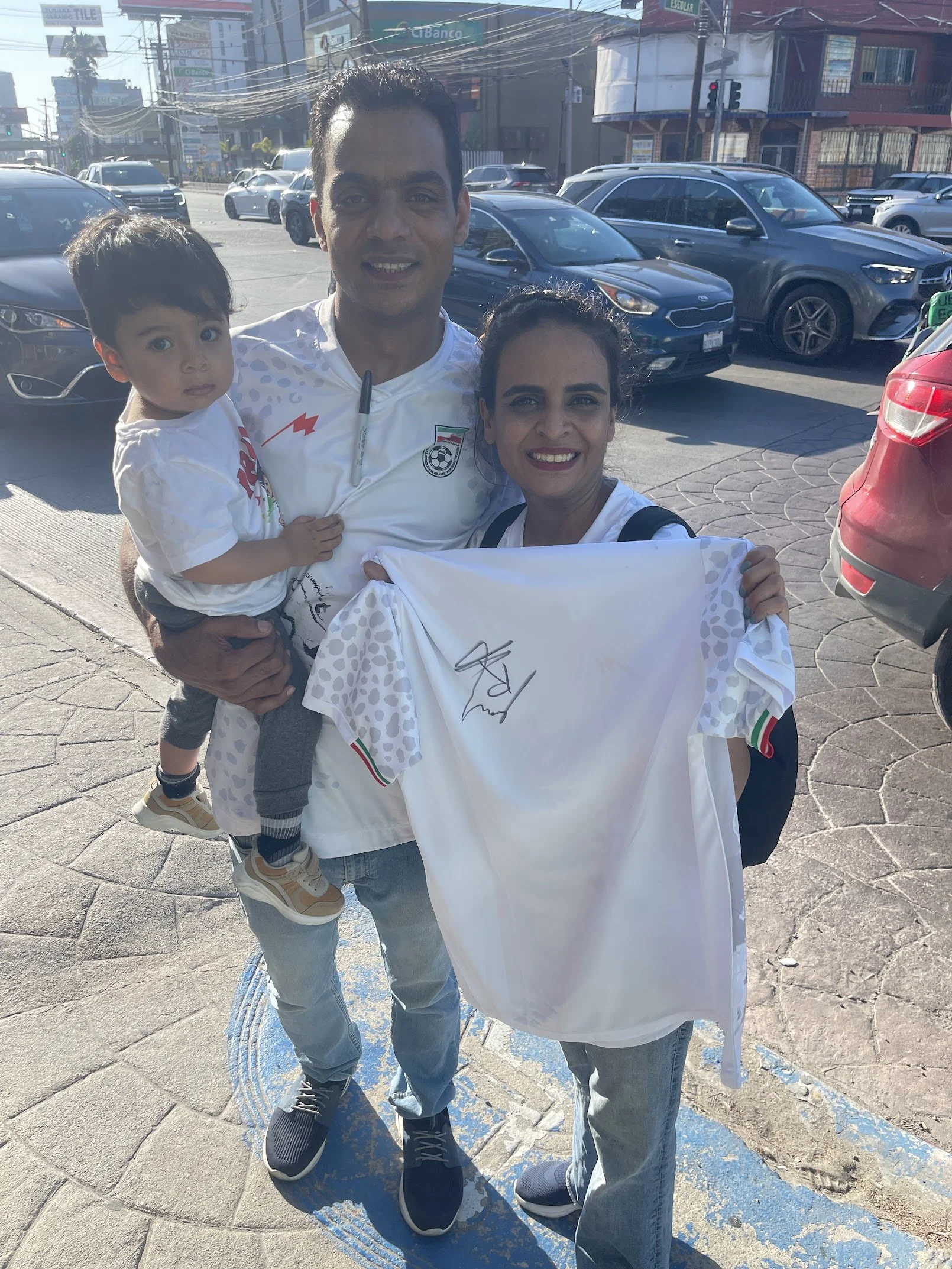
Sadegh and Maryam with their son Sepehr showing the signed jersey they received from the team. Photo: Abraham Márquez
For Maryam, Tijuana was a mystical city she had heard stories about from her late father when she was a child. In the 1970’s her father served in the Iranian military during the Shah Mohammad Reza Pahlavi's rule. He was among thousands of Iranian servicemen sent to San Diego for training with the U.S. Army, where he met a Mexican woman and later had a child with her.
When the Shah’s rule ended in 1979 following the Islamic Revolution, his military training exchanges with the US Army in San Diego also ceased. As a result, Maryam’s father was forced to return to Iran, and his newfound love, pregnant with their first child, traveled with him. After a few months in a country where she didn’t know the language or culture, she decided to return home.
Maryam grew up hearing personal anecdotes from her father about the half-brother she had yet to meet, who lived in a faraway place with a Spanish name she was not familiar with, Tijuana. This mythical place she once thought was not real came true when her older brother visited Zahedan when she was thirteen.
After Maryam and Sadegh’s wedding, they planned a trip to visit her brother in Tijuana, not knowing how much they would enjoy their time. After a few weeks, they decided to stay. Little did they know they would meet other Iranians who live in TJ and discover a community that was hiding in plain sight.
“The best decision I’ve ever made”
Support the voices of independent journalists.
|
Many Iranian’s arrived in Tijuana or Mexico through a variety of pathways. “I moved my business from San Diego to Tijuana in 2018. Less than two years after that, in late 2019 or early 2020, I moved myself to Tijuana,” said Dara Makoipour, who was born in Tehran and grew up in San Diego. After learning about TJ’s vast residential neighborhoods, he couldn’t resist moving to this border town.
“It’s the best decision I’ve ever made. I love Mexico’s rich history and culture,” said Dara. “The people of Tijuana and Mexico are nice and welcoming. The other day, my car broke down in the middle of the road, and more than a handful of people stopped to try to help me. In the U.S., people would’ve honked at me for bothering them and not even offered to help me. These types of characteristics remind me of Iran, which is why I didn’t hesitate to move to TJ,” added Dara. Years later, after moving, he is raising a family in Tijuana, too.
Makoipour owns and operates British Motors Restorations, where he specializes in restoring classic Land Rovers and Range Rovers. Sadegh met Dara after seeing a car with a license plate that read “Tehran.” Unable to contain his curiosity, he left a note on the car with his phone number. The car belonged to Dara, who later brought Sadegh in for an interview and hired him. Today, they are friends as well.
Baja California’s famous wine country, El Valle de Guadalupe, is also home to an Iranian-owned winery, Jardín de Persia. When Maryam and Sadegh first visited the winery, the owners were excited to meet them and offered them items not on the menu. “They were so happy when we told them we were from Iran,” said Sadegh.
Not only Iranians living in Tijuana but also locals supported the soccer team’s stay, showing their enthusiasm. When the news broke that the team was staying in Tijuana, “It felt great,” said Ana Solis, a Tijuana native. “But it was also kinda sad knowing that the U.S. didn’t allow them to stay,” she added.
Due to strict U.S. visa and travel restrictions related to Iran’s national soccer team, they faced unusual limitations during the tournament. The Trump administration allowed the team to arrive in Los Angeles only twenty-four hours before each match and forty-eight hours before their match in Seattle. But in both cases, the team was forced to leave the U.S. and return to Tijuana right after the match, disrupting their recovery time.
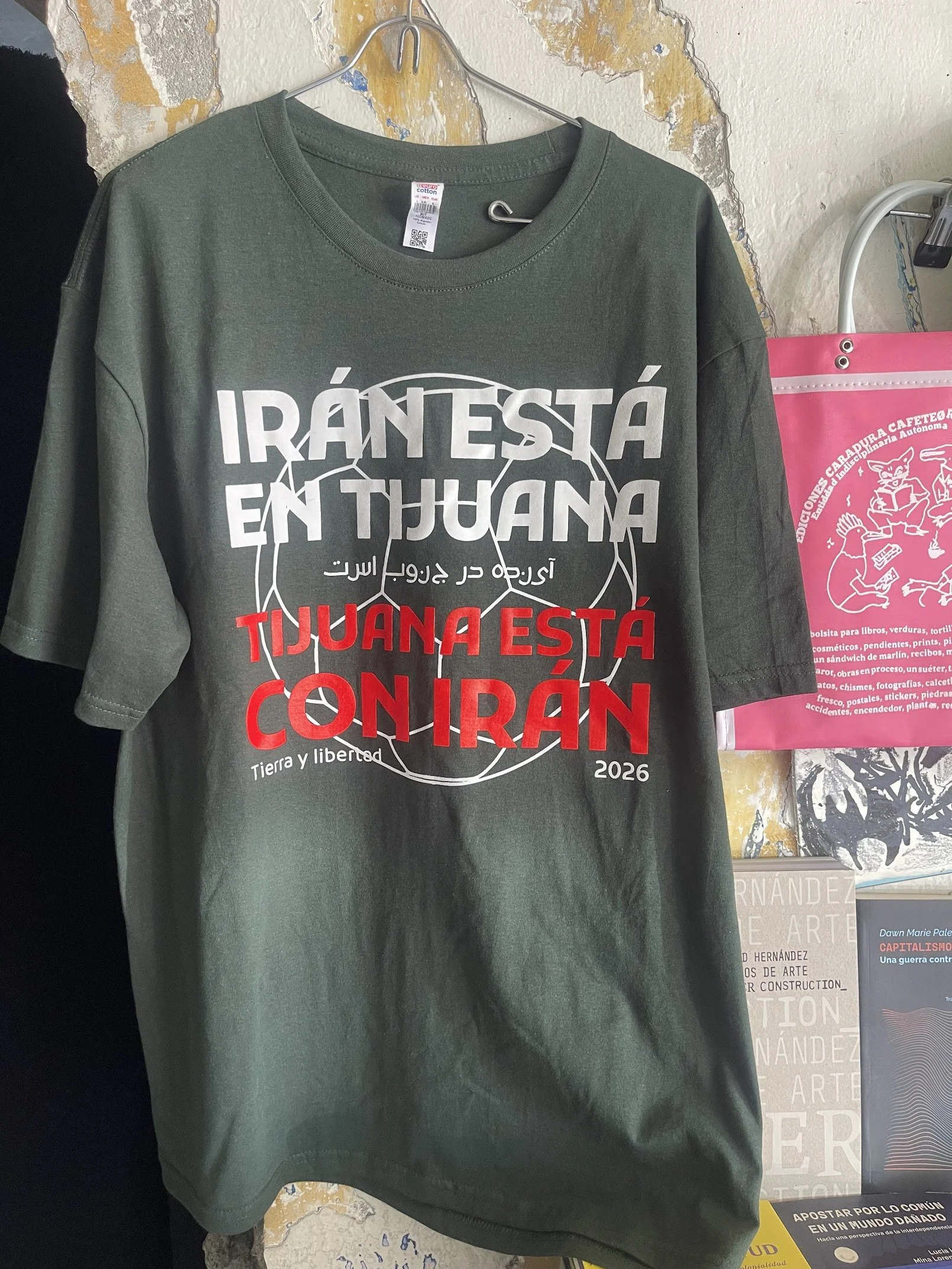
T Shirt being sold at a local coffee shop/ bookstore in Tijuana. Photo: Abraham Márquez
More Than a Sports Story
With Tijuana opening its arms to the Iranian soccer team, the love during the World Cup became one of the most unexpected stories in sports. The tournament often produces stories and headlines about politics, the U.S./Israeli war on Iran, and visa restrictions. Yet in Baja California, another narrative was quietly spreading on the streets and across all social media platforms: ordinary people extending their love and friendship to strangers from the other side of the world. Meanwhile, people were gaining a better understanding of this border town, which typically has a negative reputation.
Interview with Alfredo Reynoso Gonzalez in downtown Tijuana. Video and interview by Abraham Márquez.
“The decision of TJ housing the Iranian soccer team is great. It falls in line with the history of Tijuana and Mexico at large,” said Alfredo González Reynoso, a Humanities and Social Sciences professor at the Autonomous University of Baja California.
“We are a city that welcomes everyone, including refugees, asylum seekers, immigrants from all over the world, and tourists from across the U.S. who come here for food, drinks, or to escape whatever they are dealing with in the U.S. This time, it is on the world stage of the World Cup,” Reynoso added.
The videos and photos that emerged from Tijuana’s Marriott Hotel were not primarily about politics but about acceptance. Children, residents, and football fans showed up to let the team know they loved them.
“It feels really cool that the national soccer team is here because it also means the World Cup is in Tijuana. I’d never expected that to happen,” said Mikel Pena, a teenager who was waiting outside the hotel, hoping to get an autograph from one of the players.
For the people of Tijuana, embracing Team Melli required no grand political act, nothing out of the ordinary, but simply doing what this border town is known for: its longstanding culture of welcoming newcomers with love and acceptance, the ultimate display of solidarity.
In Mexico’s most western and northern city, where the border crashes with the Pacific Ocean, sits the city of Tijuana. Unlike the rest of the country, which is peppered with cenotes, indigenous pyramids, centuries-old churches, and ruins, Tijuana was founded in the 1880s on a former ranch known as ‘Tía Juana,’ from which the city took its name.
Today, the border city is long known as a city of refuge, migration, and resilience. Millions of people have crossed through TJ as they head to the United States, and many who are denied entry into the North American dream either stay or continue their journey elsewhere after leaving their footprints on the city’s gravel.
Throughout their stay, the players trained and prepared for the tournament at Tijuana’s famed Estadio Caliente while local supporters adopted the team as one of their own. Their practice field had the phrase “Welcome to Tijuana” written in Farsi, Iran’s official national language.
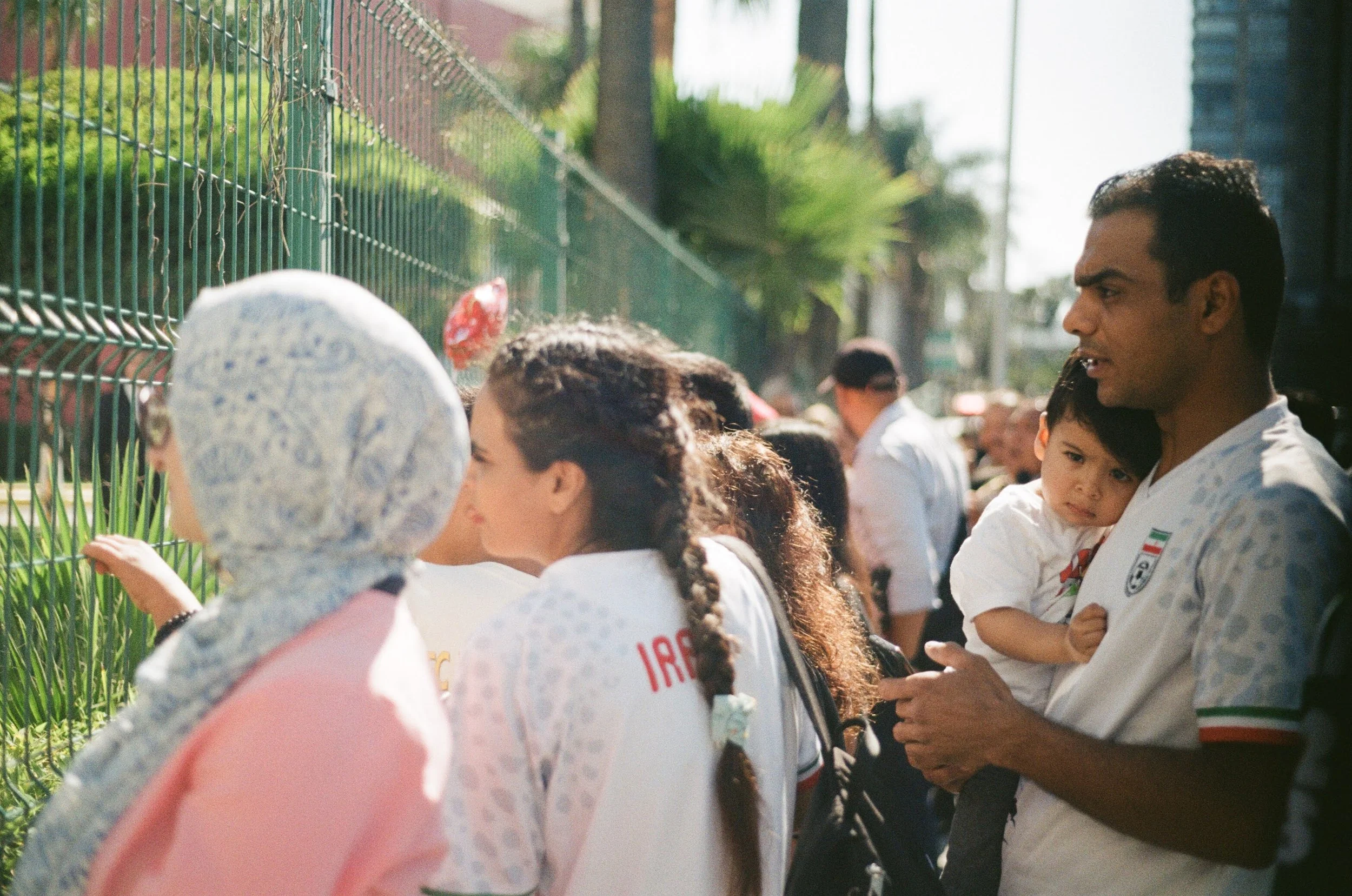
Maryam and Sadegh with their son Sepehr outside the Tijuana Marriott Hotel waiting on the team to come out. Photo: Abraham Márquez
A Community Hidden in Plain Sight
That embrace did not go unnoticed. For many observers around the world, including in Mexico, the sight of so many people coming out in support of the Iranian team raised many questions: Is there an Iranian community in Tijuana? How is it that so many people are supporting a country so far from Mexico?
The answer reveals a little-known chapter in both Mexican and Iranian migration and, more importantly, in Tijuana’s history. While Los Angeles, to the north of the border, is well known for having one of the largest Iranian populations outside of Iran, Mexico is home to a small Iranian community, and some live quietly in this border town.
Official government statistics state, “In terms of immigration to Mexico, 116 immigrants from Iran were registered in 2020, 31.9% women and 68.1% men. The states with the highest concentration of immigrants from Iran were Ciudad de México (74 people) and Michoacán de Ocampo (42 people).”
There is no official government record of how many live in Tijuana, but rest assured, there are a few who make TJ their home. There are a handful of dedicated Persian restaurants and cafes operating in Tijuana, each with a unique name such as “Taste of Persia” and “Argana Hookah Lounge,” and one on the outskirts of the city in Rosarito, “Comida Persa.” Each business owner might have different political views, but they can agree on expressing their culture and food.
Iran opened its embassy in Mexico in 1975, following a state visit by the Shah Mohammad Reza Pahlavi. The original diplomatic relationship between the two nations was established in 1964. After the 1979 Islamic Revolution, the embassy in Mexico City remained operational despite a turbulent phase in relations as Iran's new government established its footing in the new system.
Today, the Embassy of the Islamic Republic of Iran in Mexico City continues to operate, and the Mexican Embassy in Tehran continues to function.
Over the years, Iranians who now call Mexico home have built businesses, raised families, and created new lives. The arrival of Iran’s national soccer team offered a rare opportunity for that community to step into the spotlight and represent their nation from thousands of miles away as media coverage of the team’s stay in Tijuana made international news.
And although Iran’s World Cup journey ended sooner than fans hoped, the relationship forged with Tijuana appears likely to last forever. The team’s farewell message made it clear that while tournament results go into the scorebooks and sports history, the people of Tijuana’s generosity will be remembered for generations.
Over the years, Iranians who now call Mexico home have built businesses, raised families, and created new lives. The arrival of Iran’s national soccer team offered a rare opportunity for that community to step into the spotlight and represent their nation from thousands of miles away as media coverage of the team’s stay in Tijuana made international news.
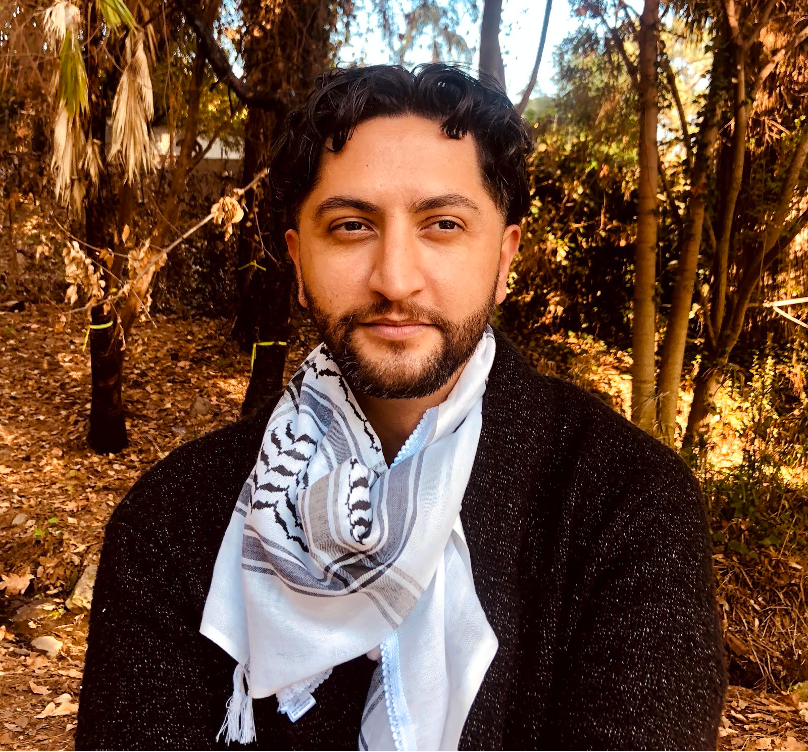
Abraham Márquez, is a Chicano journalist from Inglewood. He’s reported from the U.S./Mexico border, Honduras, Guatemala, and Nicaragua, covering various topics, including immigration, international law, and presidential elections. @abemarquez02