
The Mexican Capital Prepares for the World Cup Amidst Construction, Displacements, and Protests
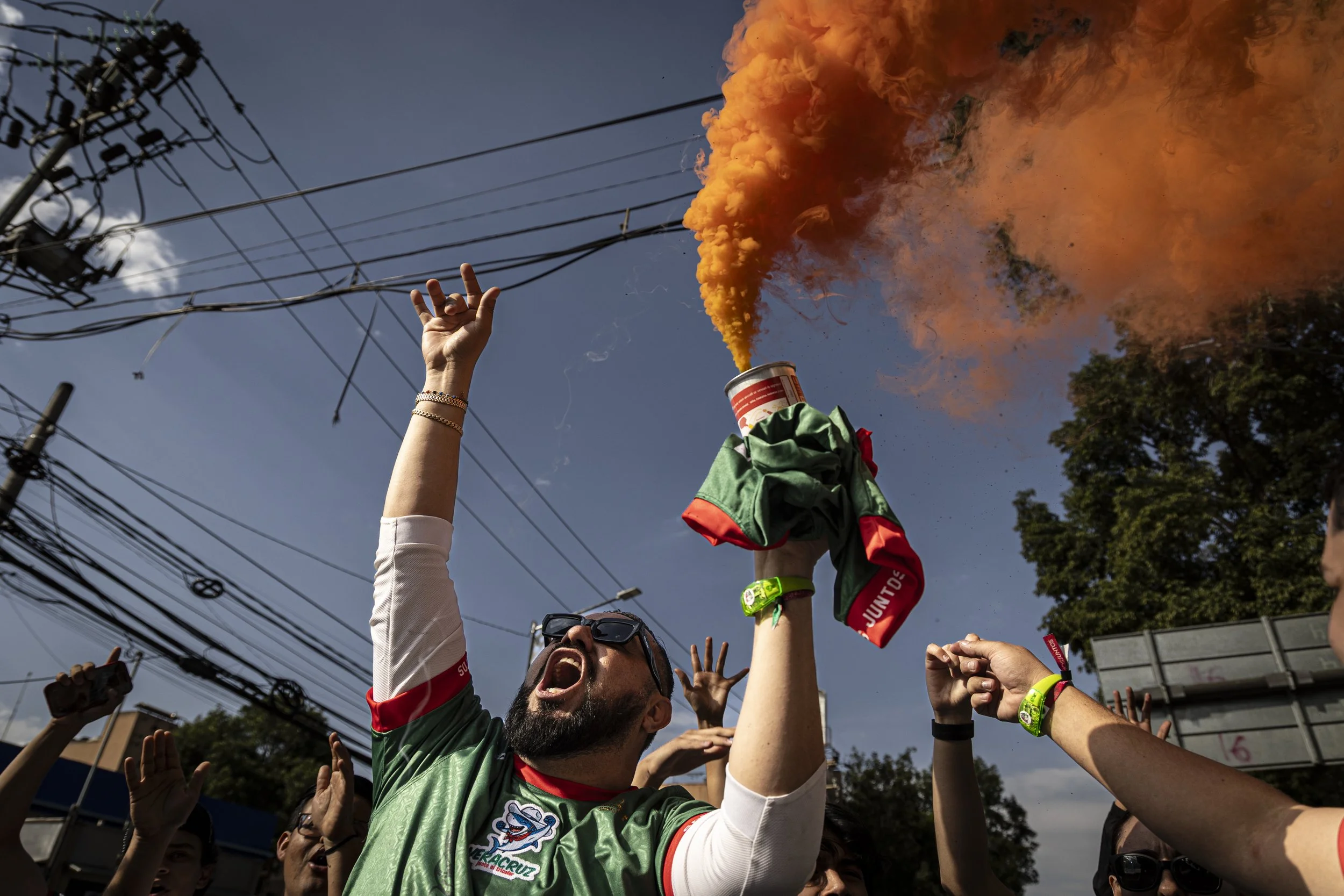
During the reopening, fans celebrated outside Banorte Stadium in a festive atmosphere, while protests were reported in other parts of Mexico City on Saturday, March 28, 2026.
BEFORE THE LIGHTS OF THE “AZTEC STADIUM” FLICKER ON FOR THE FIFA WORLD CUP, SOUTHERN MEXICO CITY UNDERGOES A TRANSFORMATION, LEAVING MANY AFFECTED AND DISSATISFIED.
Haz click aquí para leer esta historia en español.
Text, video and photos by Jacky Muniello
Edited and translated by Rodrigo Cervantes
MEXICO CITY— From the early hours of the morning, the metallic clang of construction work has, for months, been a constant presence in the vicinity of the Banorte Stadium (better known as the Aztec Stadium) in southern Mexico City—one of the Mexican capital’s most densely populated areas.
On June 11, the stadium will host the opening match of the 2026 World Cup, a tournament Mexico is co-hosting with the United States and Canada. The tournament is envisioned as a global showcase designed to put the country in the spotlight. However, with less than three months remaining before the event, preparations have proceeded under a persistent shadow: on one hand, commercial and political tensions among the host nations; and on the Mexican side specifically, concerns regarding security and infrastructure.
Yet in the day-to-day reality, at the local level within Mexico City, the tensions preceding the World Cup are felt in a different way. Cranes pivoting since dawn. Orange barriers redrawing the contours of sidewalks. Traffic lanes vanishing without warning. The “Colossus of Santa Úrsula”—as the stadium is known, named after the surrounding neighborhood—gears up for the tournament while its immediate environment undergoes a reorganization that, simultaneously, leaves it fragmented.
According to official rhetoric, the project promises modernization, improvements in mobility, and optimal conditions for hosting international visitors. In everyday experience, however, the transformation proves far more uncertain. Residents, shopkeepers, informal vendors, and sex workers face economic losses, displacement, and an uncertainty that advances in lockstep with the construction work.
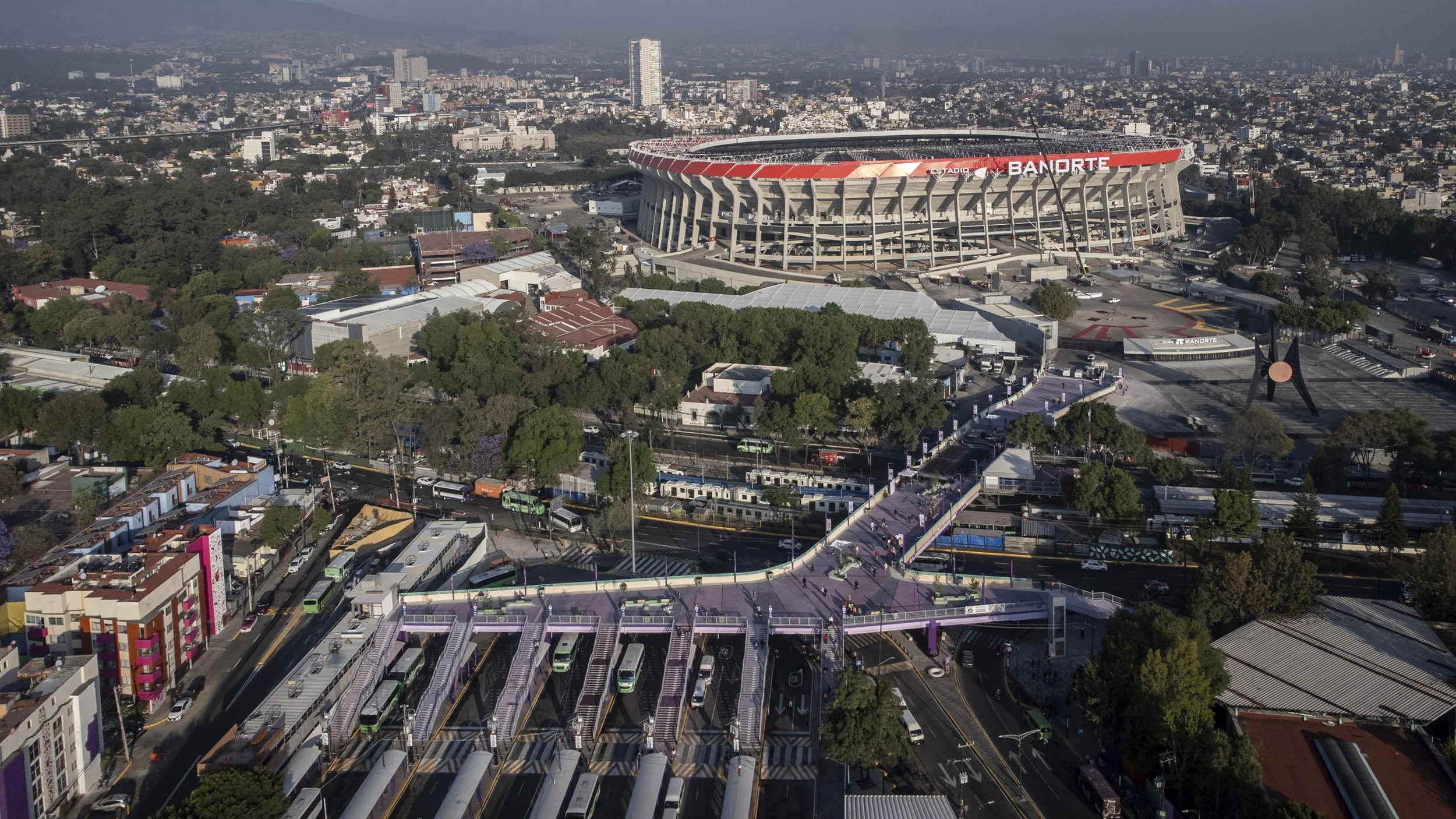
Following its renovation and reopening on March 28, 2026, the Estadio Banorte was modernized to serve as the venue for the opening match of the Soccer World Cup.
Neighborhood in transformation
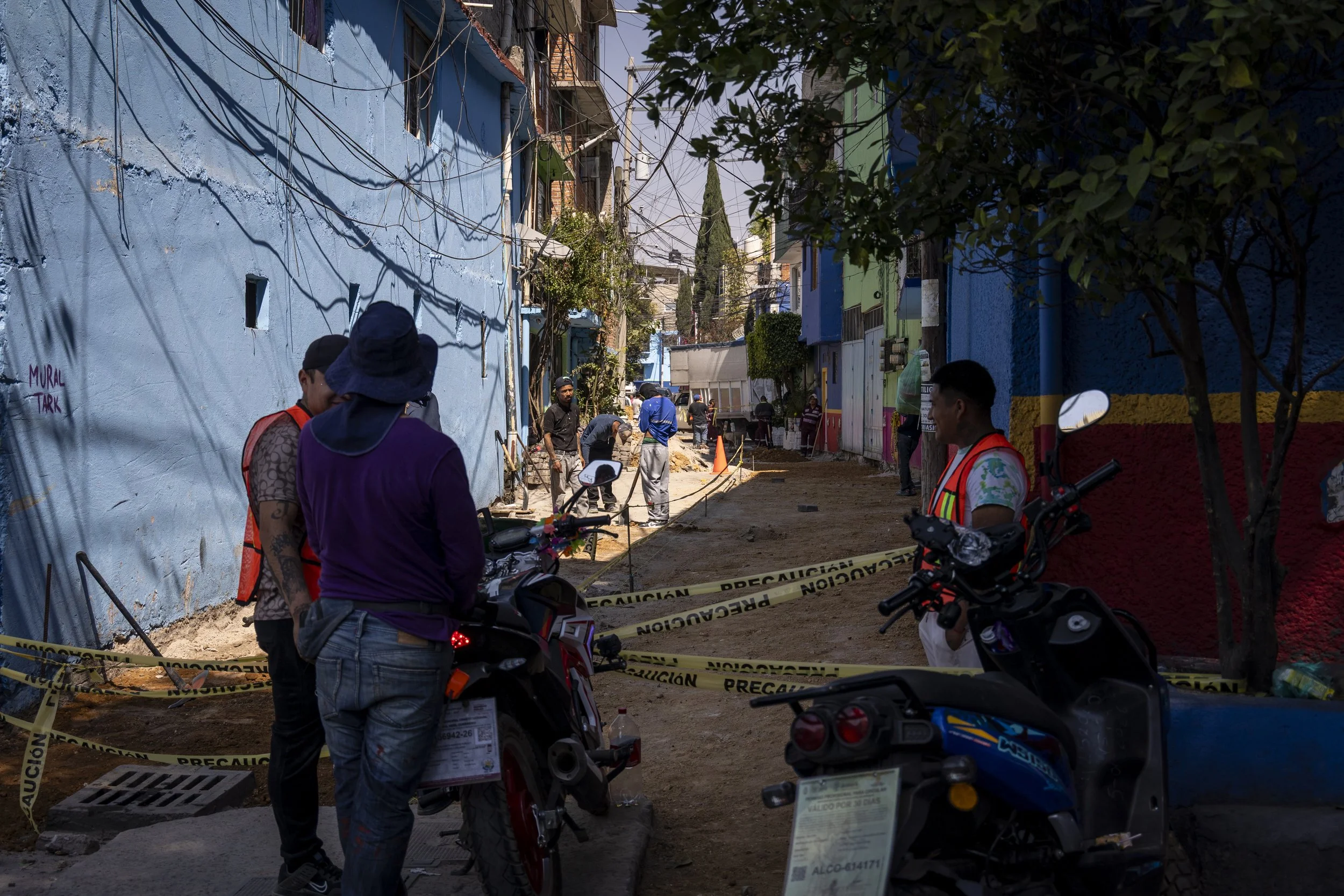
In Santa Úrsula Coapa—a working-class neighborhood in the southern part of the city—the World Cup is not a distant concept. It is being built right on people’s doorsteps. The streets have changed. Commutes have grown longer. Dust billows up with every passing truck.
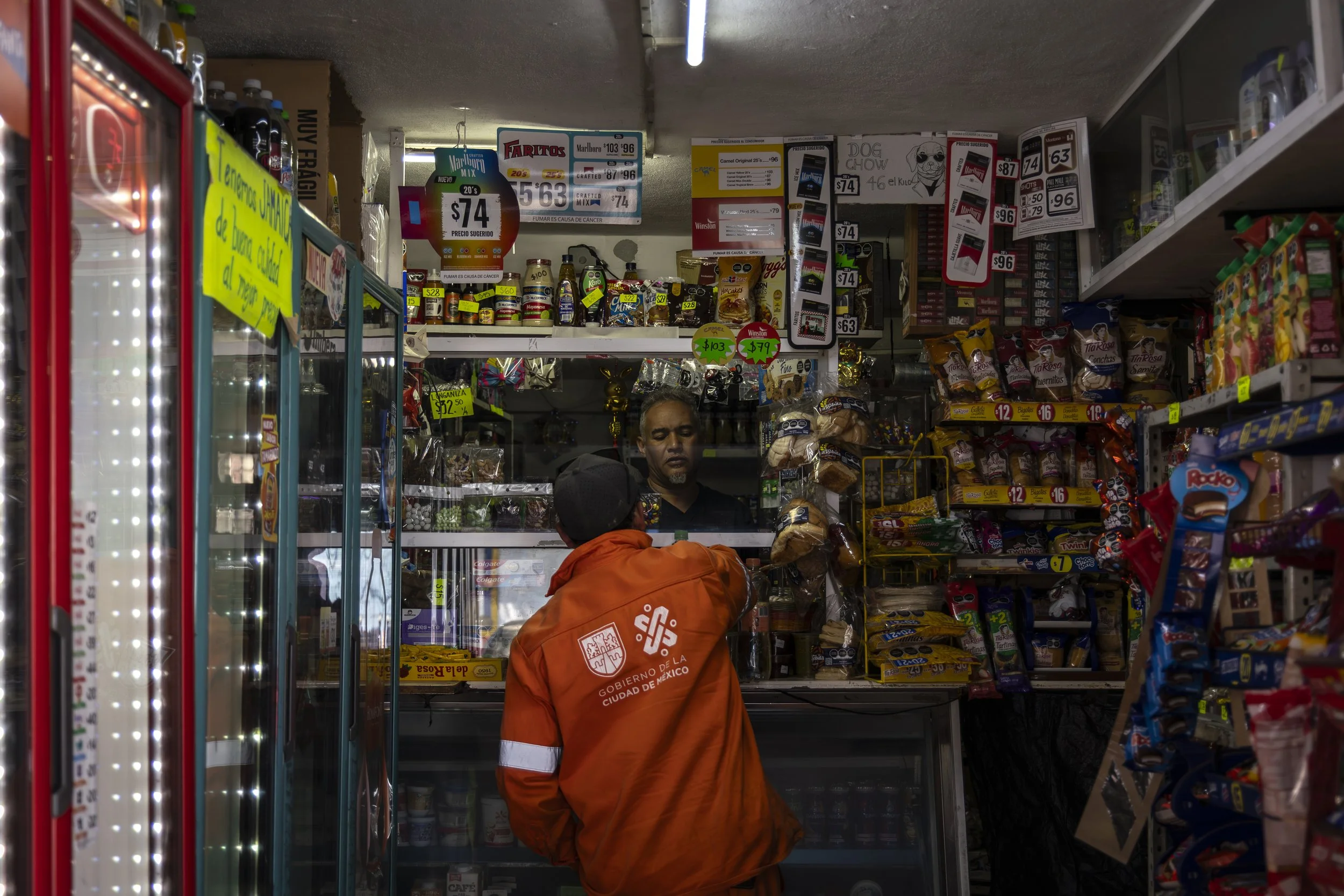
Behind the counter of his grocery store, Pedro Andraca observes a change that requires no statistics. Where there was once a constant flow of activity, there are now long lulls.
“It’s not just the stadium,” he explains as he restocks shelves; “it’s everything they’re doing around it.”
His business, named Carmelita, relies on the neighborhood’s daily foot traffic. That flow has been diluted amidst detours, road closures, and traffic chaos.
The concerns extend beyond just sales. There are also issues with water shortages, increased strain on already fragile public services, and a growing sense that the neighborhood is becoming increasingly difficult to live in.
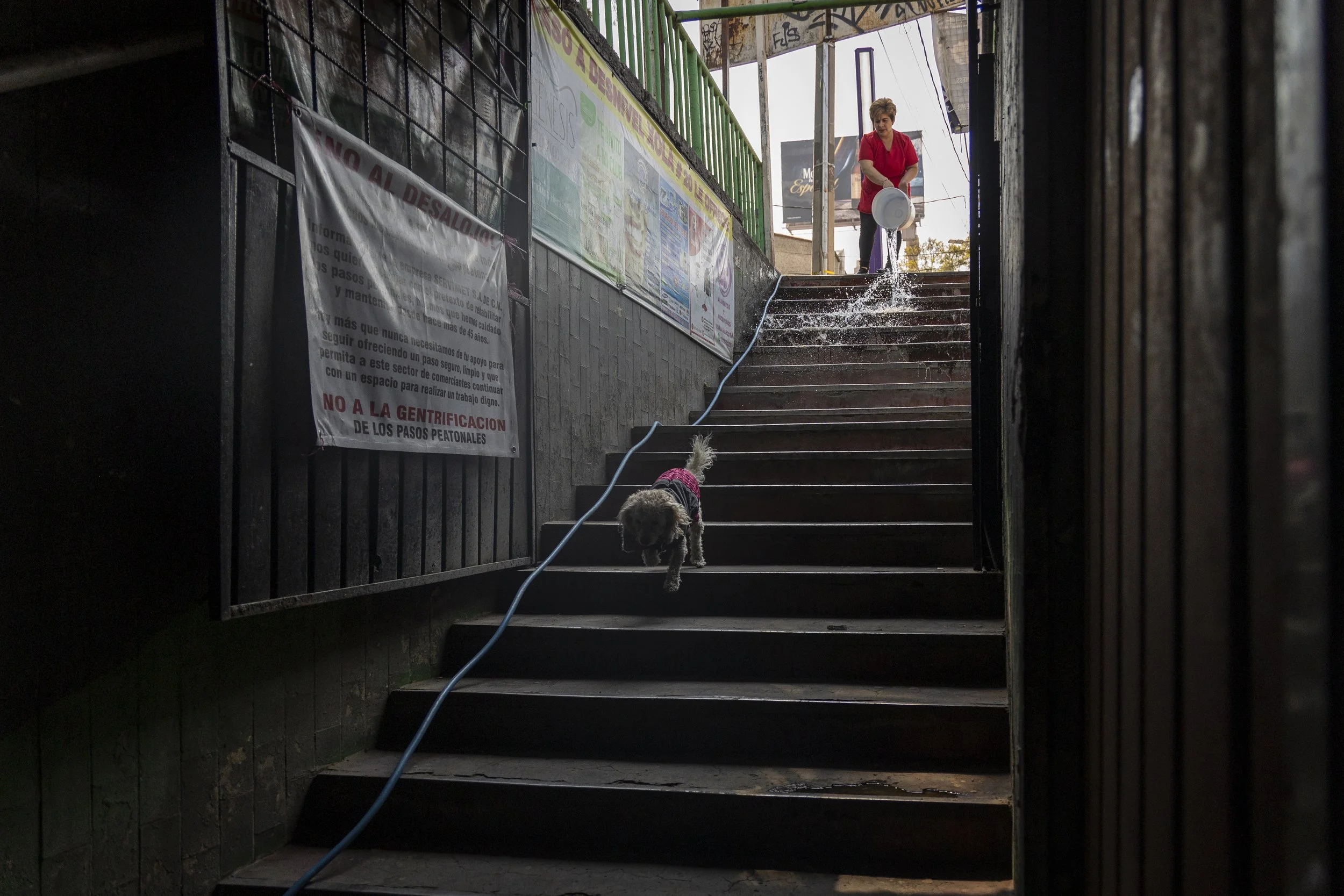
Along Calzada de Tlalpan Avenue—one of the main arteries connecting the southern part of the capital to the city center, and the street bordering the Banorte Stadium—construction work is proceeding on several fronts: an elevated walkway running above Metro Line 2, a pedestrian promenade dubbed “La Gran Tenochtitlán,” and a bike path that will extend all the way to the stadium. In the official plans, everything points toward the long term. In the present, however, the changes are measured in detours, delays, and dwindling sales.
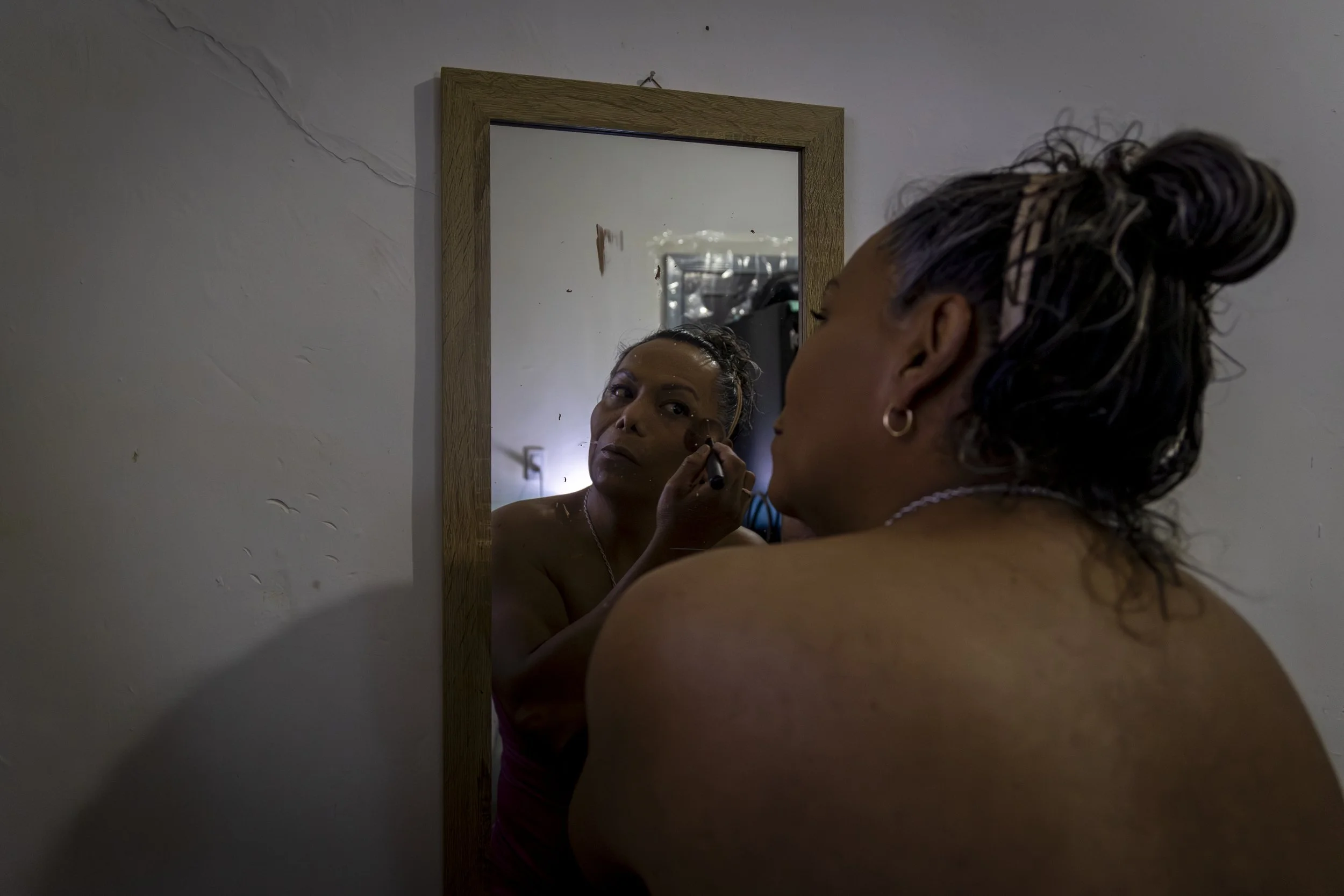
Vanishing Economies
Beneath the avenue, the impact is more silent.
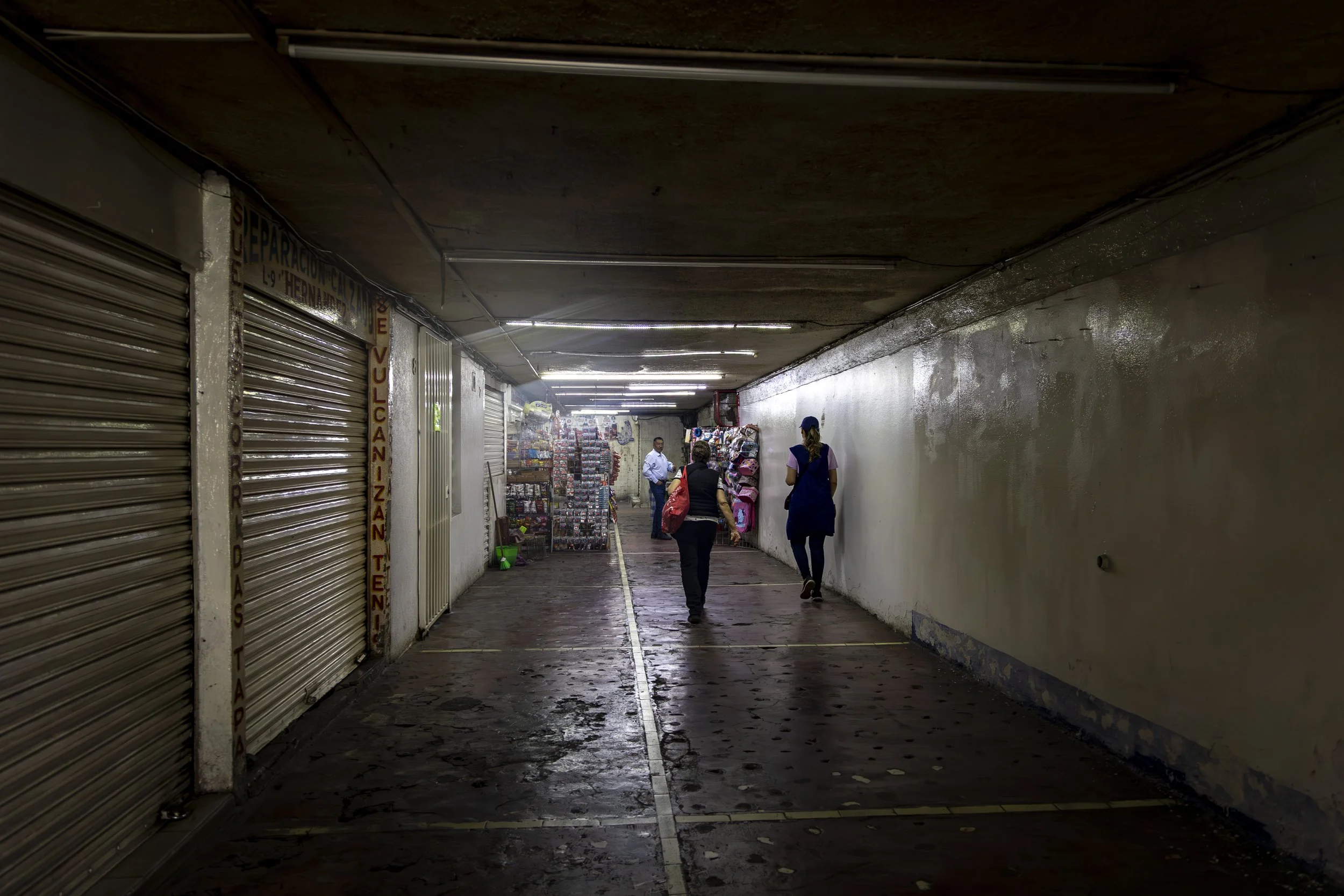
The underpasses—which for years functioned as corridors for both formal and informal commerce—are beginning to empty out. Where voices and merchandise once bustled, closed-up spaces now predominate. Shutters are down. Corridors stay in twilight. Dim echoes are heard.
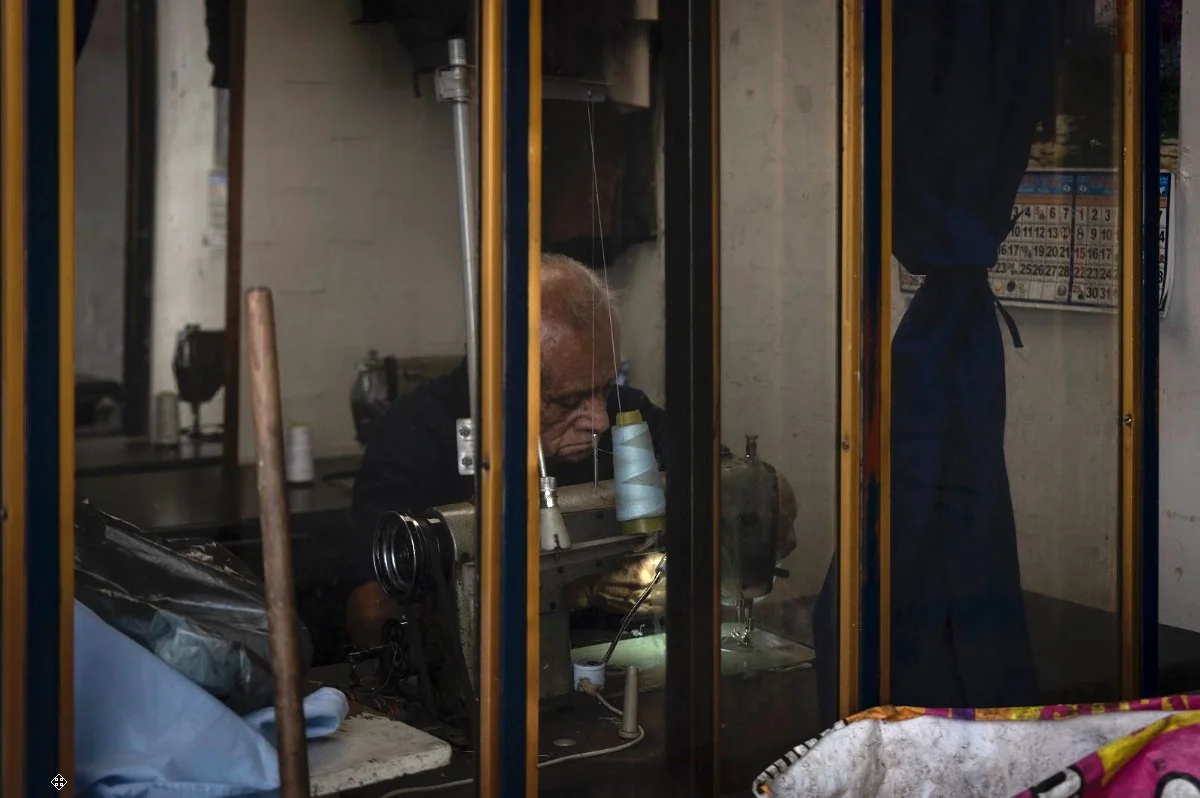
In Underpass No. 19, Guillermo López Ortega keeps his tailor shop open. The daily ritual of raising the metal shutter persists, even though his surroundings have changed.
“Without foot traffic, there is no work,” he says.
All around him, the shuttered stalls reinforce the sense of abandonment. His greatest concern, however, lies with the future: he fears vanishing without a trace in the official plans—left with no access to support or alternatives.
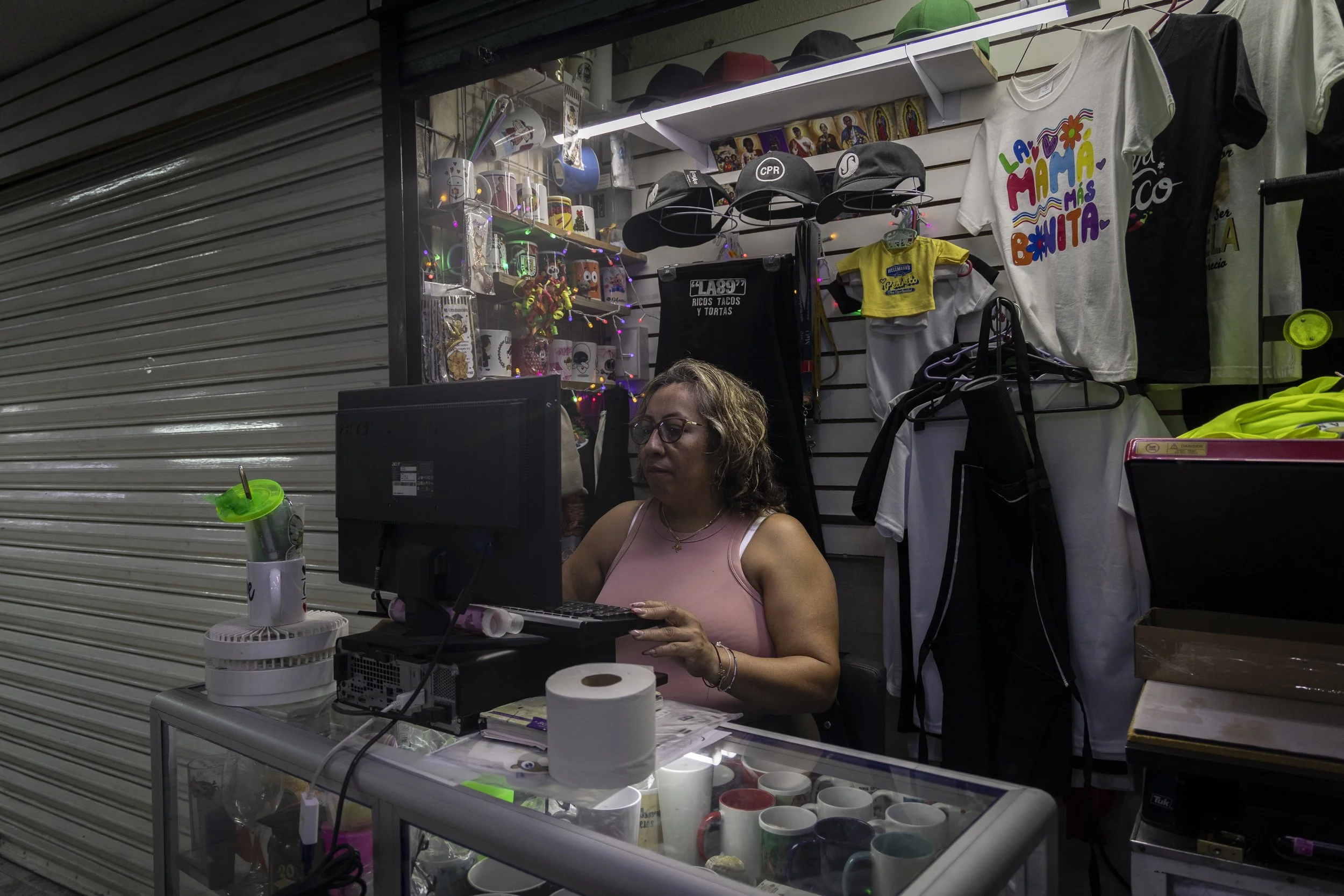
A few meters ahead, in Underpass No. 20, Marí Zamora has been running her business—customizing and printing on mugs and T-shirts—for eight years. Uncertainty defines her situation.
“As of now, there has been no formal order,” she clarifies.
SUBSCRIBE TO PALABRA’S NEWSLETTER
What does exist is a vague timeframe for completing the construction work. According to the information she has received, the stretch between Viaducto and Tasqueña avenues (where her business is located) will not undergo work immediately. November 2026 appears as a possible benchmark, though nothing is definitive. In the meantime, the strategy she says she is pursuing is simple: hold out.
Further north, that stage has already taken place. Some corridors were cleared out and renovated.
“These have been very difficult months,” recalls Zamora. “All we want is to keep working.”
At another point along the avenue, Magali Sánchez works at the family-run stall selling stationery and basic necessities—a business with a history spanning more than three decades.
“This is how we make our living,” says Sánchez, who states she has not received any written notification of the construction surrounding the business. Even so, the message they seem to be receiving suggests that this type of commerce does not fit into the vision of the city the authorities are seeking to project.
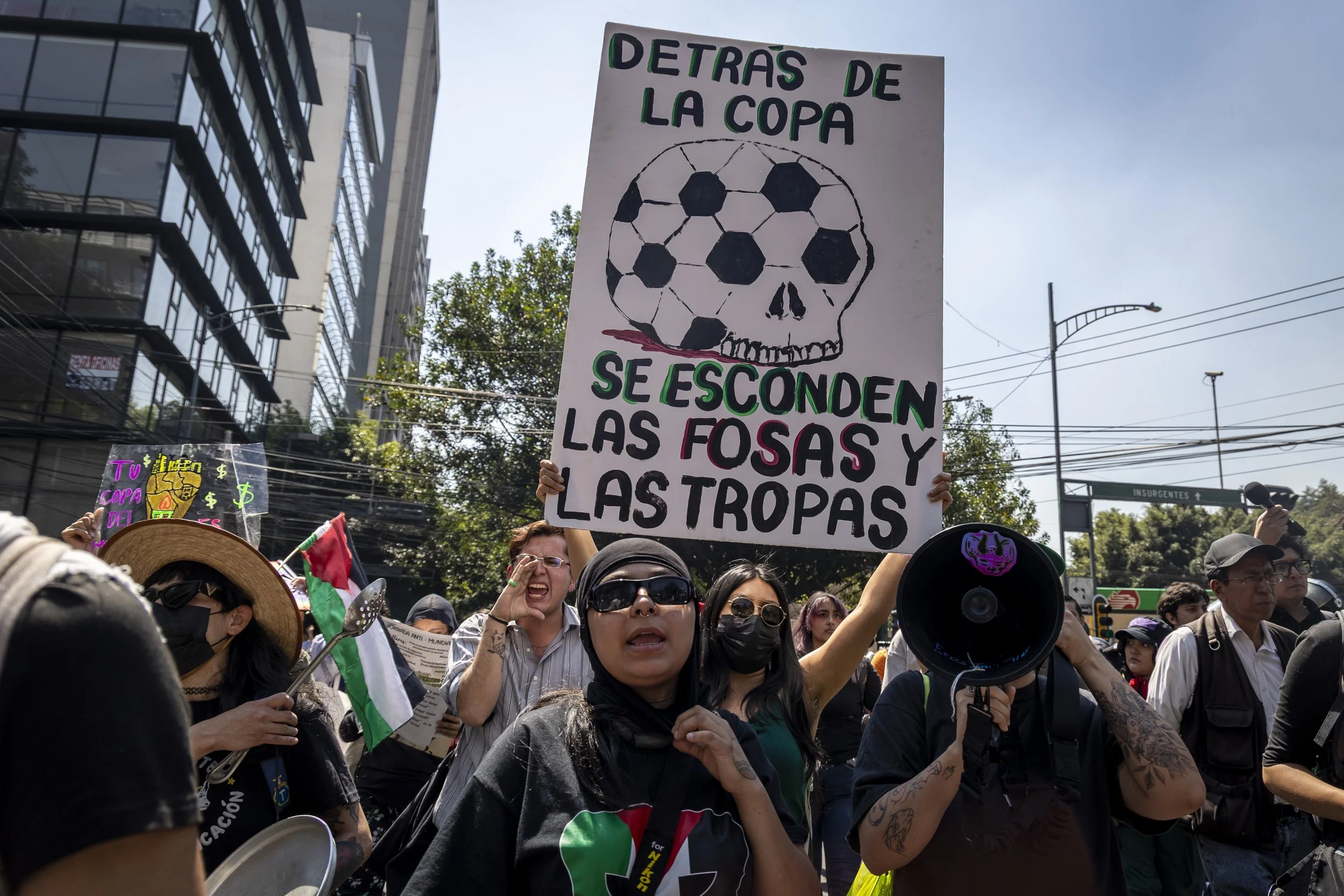
Amidst chants and placards, some protesters have accused the World Cup of serving as a smokescreen—a diversion intended to conceal the country’s ongoing security crisis, the epidemic of disappearances, and the displacement of local vendors.
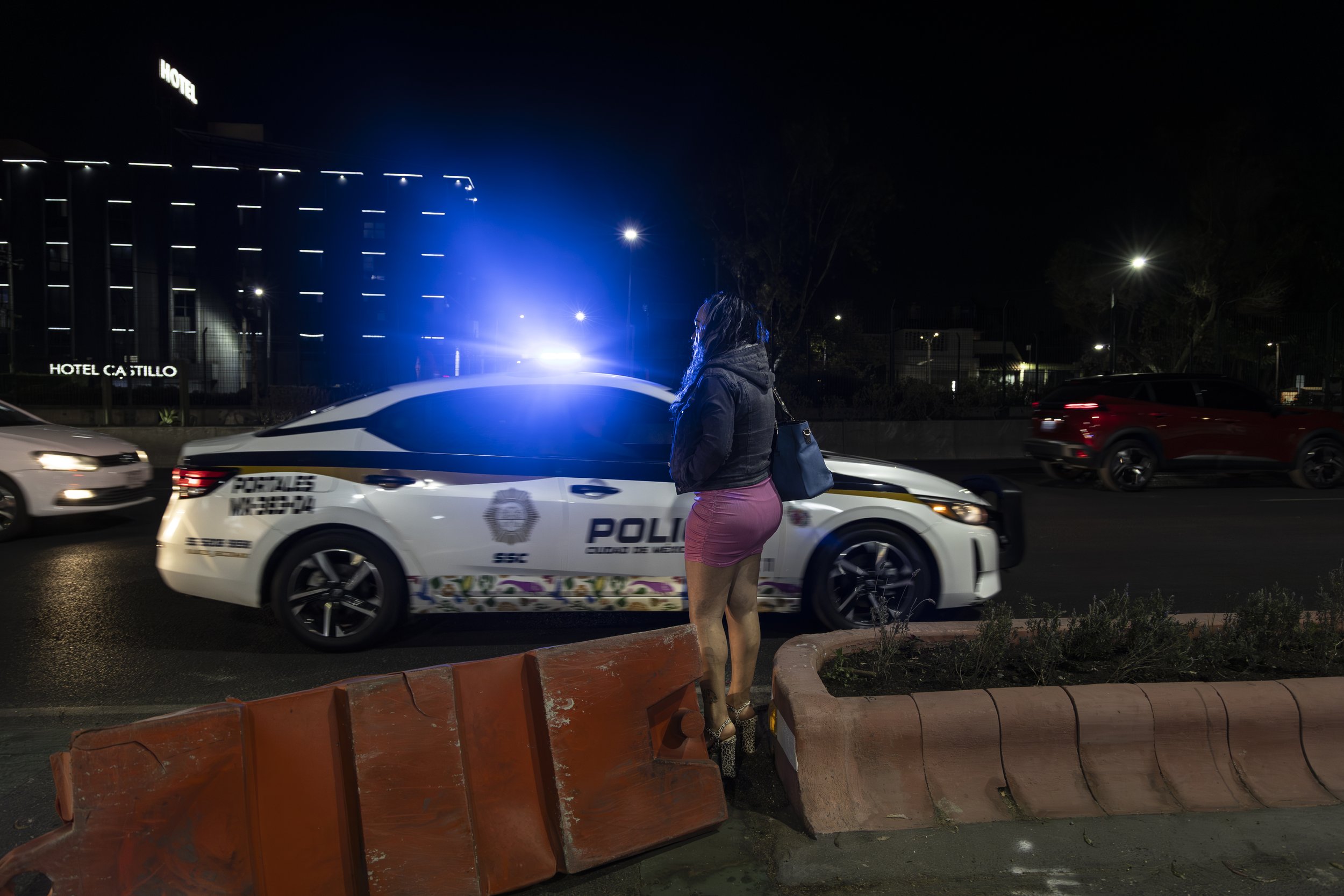
Every night, Montserrat—a sex worker—prepares to head out to work along Calzada de Tlalpan Avenue, facing deep uncertainty regarding the availability of clients due to the ongoing construction work.
Support the voices of independent journalists.
|
Invisible Presences
Along the length of Tlalpan Avenue, a vulnerable group is also facing the impact of the area's transformation. Sex workers have occupied a section of the sidewalks along Calzada de Tlalpan for decades. Their presence is constant, yet it rarely appears in urban planning blueprints.
Monserrat—as one of the women prefers to be called—dates the onset of this uncertainty to a meeting with authorities in September 2025. During that meeting, she says, authorities mentioned potential temporary financial assistance and the distribution of food parcels while construction of the bicycle lane along the avenue was underway. But she says nothing was ever formalized.
“We didn’t say yes, but we didn’t say no either,” she remarks.
Since then, she adds, there has been no follow-up.
“There is nothing: no support, no food parcels, no information,” she says. “It’s a mockery.”
Along this uncertainty is fear. She recalls recent episodes of violence during demonstrations and protests along the avenue—incidents involving a police presence that failed to translate into actual intervention.
“When you see that, you understand who really controls what’s happening,” she observes.
The construction work also directly impacts her livelihood: torn-up sidewalks and streets closed off at night hinder both vehicular and pedestrian access for her clients. Customers tend to steer clear of areas cluttered with heavy machinery, open trenches, or police patrols. This scene plays out repeatedly along the entire length of the avenue.
“There are days when I go home without earning a single cent,” she says. “And it’s not just me. It’s all of us.”
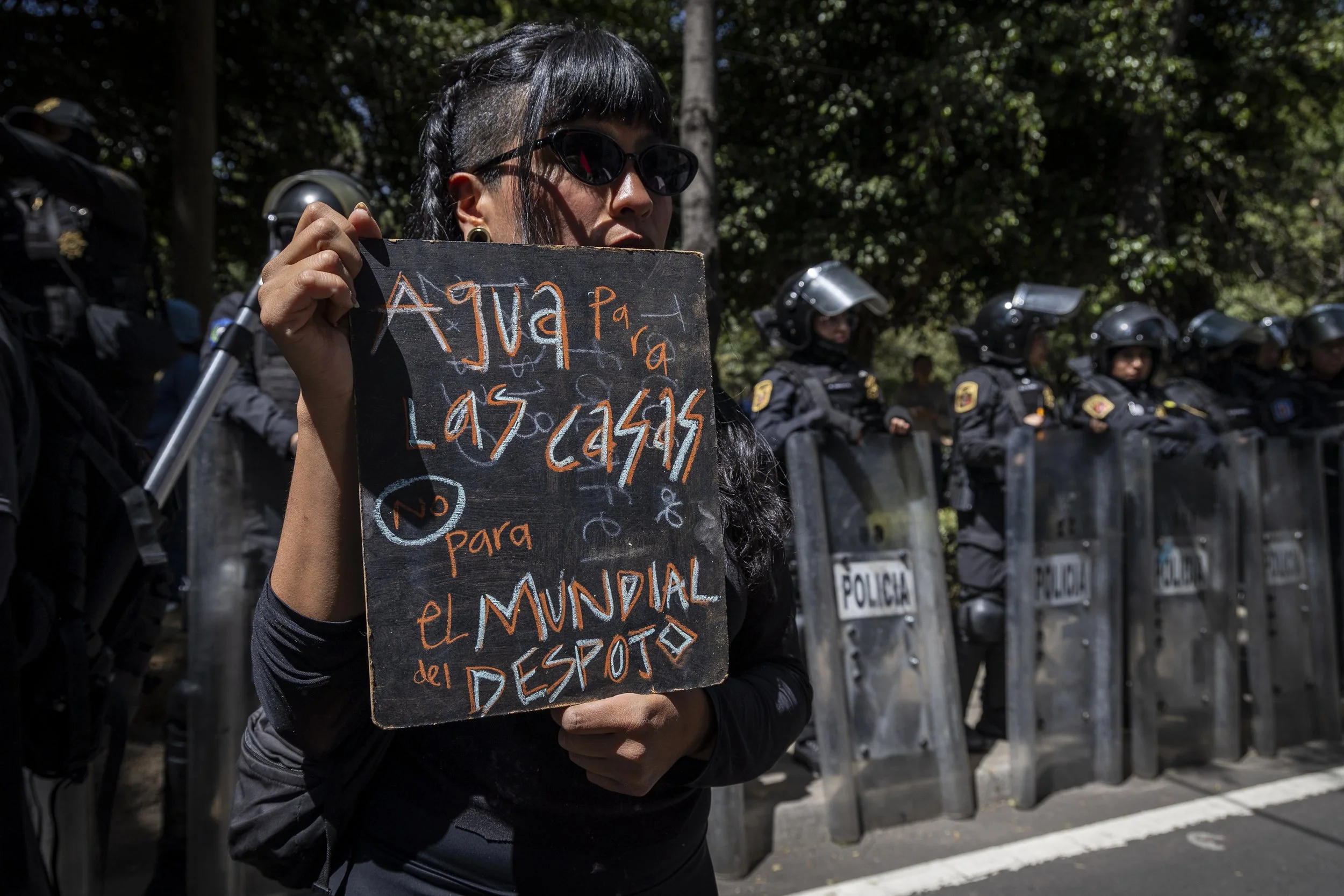
Protesters take to the streets to denounce the violence lurking behind the sporting spectacle, holding signs and chanting slogans outside the Mexico City’s Department of Tourism building on February 27, 2026.
Security and the Official Narrative
While the communities surrounding Banorte Stadium endure the adverse effects of these public works projects, the Mexican government remains intent on projecting an image of total control.
In recent years, under the administration of President Claudia Sheinbaum, the federal security strategy has focused on operations against organized crime and federal troop deployments. The capture of Nemesio Oseguera Cervantes, leader of the Jalisco New Generation Cartel, was presented as a key blow within this narrative. As the World Cup approaches, this discourse is being amplified: reinforced security, international coordination, and the capacity to host millions of visitors.
This narrative, however, coexists with other expressions within the public sphere. At various times, collectives and citizens have taken to the streets to protest not only against the transformations linked to the World Cup, but also against the persistence of violence and the crisis of missing persons plaguing the country.
These demonstrations—at times scattered, at times subdued—reveal a deep-seated concern that is not assuaged by official announcements. They highlight the disconnect between the image of a country ready to welcome the world and the unresolved demands for justice and security that still linger.
Yet, in the southern part of the city, these promises are experienced in a far more immediate—and far more uncertain—manner.
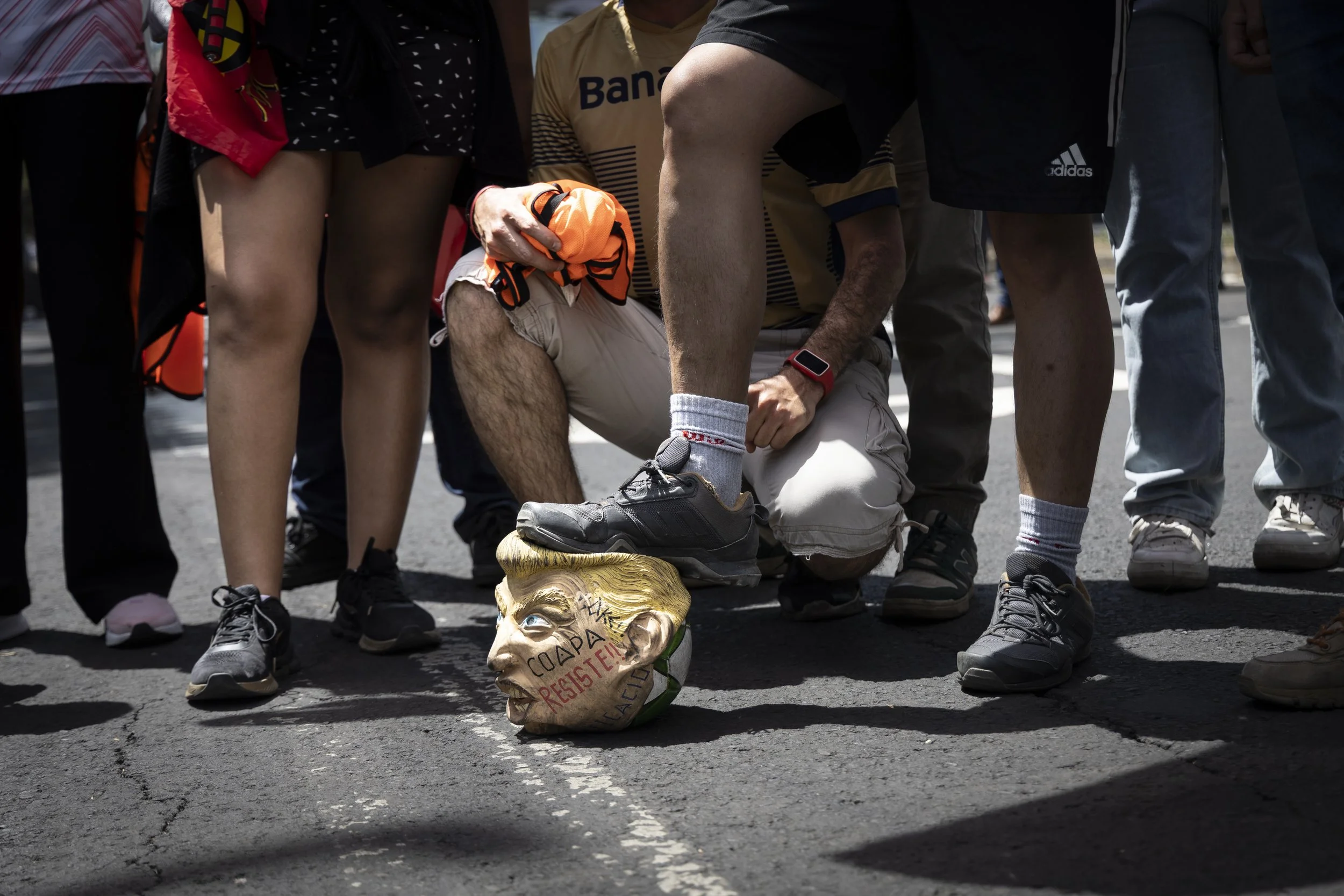
Mexico experienced a day of contrasts marked by the reopening of Banorte Stadium and protests denouncing insecurity, evictions, and the crisis of disappearances. In a symbolic act of protest against these injustices, a casual soccer game was played using a ball bearing the image of President Donald Trump on Saturday, March 28, 2026, in Mexico City.
The construction work never ceases. It advances like a countdown—a sensation felt in every street closure, every vacant storefront, and every day lost without income.
Federal authorities have maintained that these interventions are part of a comprehensive plan for urban modernization and preparation for the 2026 FIFA World Cup, emphasizing benefits in infrastructure, mobility, and international standing.The Mexico City government has stated that the construction aims to improve public spaces and ensure optimal conditions for access and safety during the tournament, while acknowledging the temporary disruptions caused to residents and local merchants.
Caught between long-term promises and immediate costs, southern Mexico City approaches the World Cup amidst a transformation already underway—and a debate that remains unresolved. Against this backdrop, public discourse remains very much alive.
The city is preparing to present itself to the world. It is being organized, transformed, and redefined. Yet, not everyone fits into that image. For those who have sustained the daily life of these spaces for years, the World Cup arrives not as a celebration, but as a breaking point.
And one question remains unanswered: when everything is finally ready, and the tournament draws to a close, who will be allowed to stay?
—
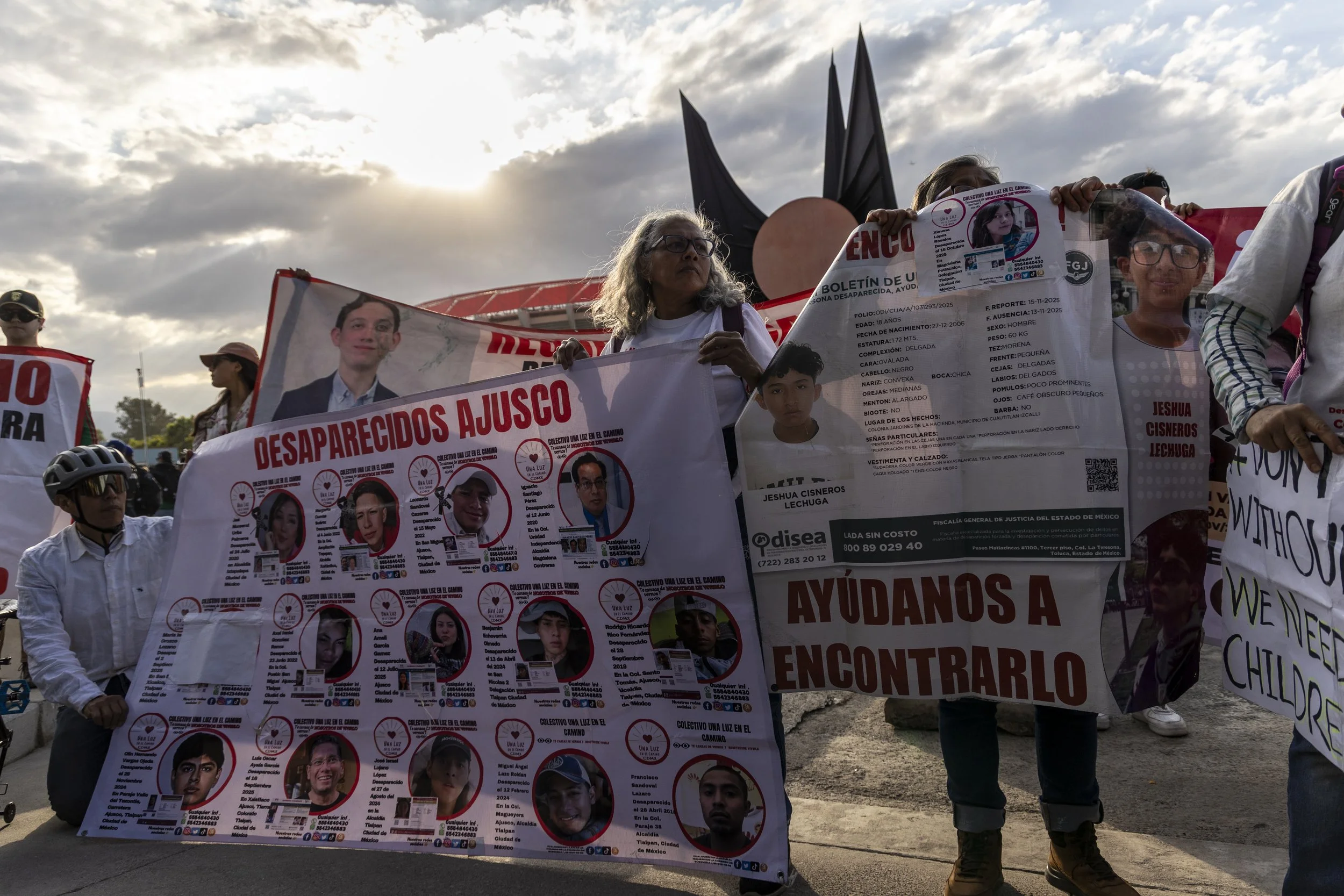
Relatives of missing persons in Mexico were present during the reopening of Banorte Stadium. They underscored the importance of addressing fundamental issues such as security, justice, and memory.
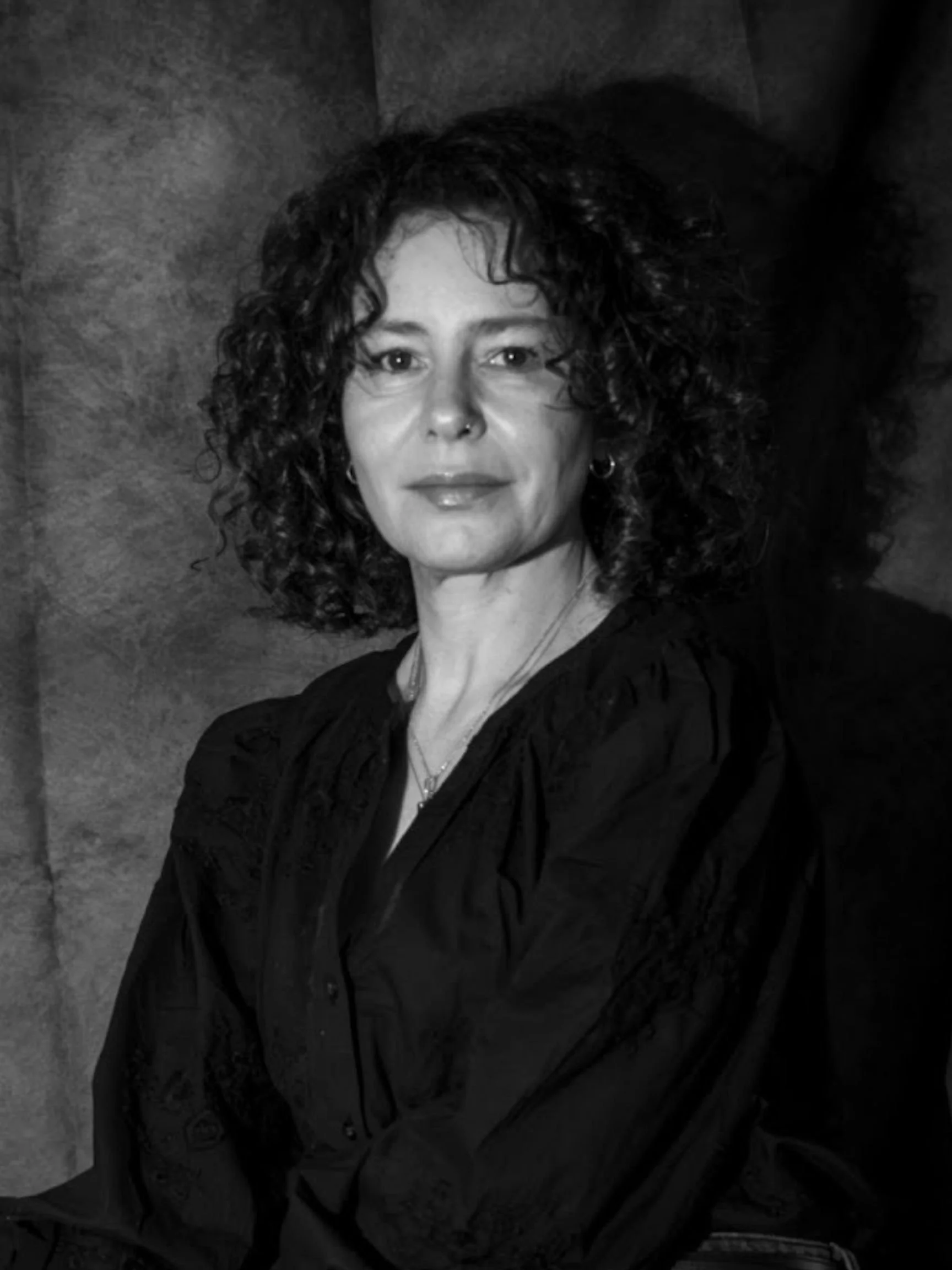
Jacky Muniello is a Mexican documentary photographer and photojournalist, and member of the National System of Art Creators (Sistema Nacional de Creadores de Arte). Muniello documents migration, human rights, and the environment, with a particular emphasis on human mobility, identity, and memory. She collaborates with international agencies, such as Bloomberg, AP, AFP, and DPA. Her work has been published in media outlets including The Washington Post, CNN, The Guardian, El País, DW, Longreads, Yes! Magazine, Civil Eats, and Revista Gatopardo, among others. Her work is held in collections such as the U.S. Library of Congress, the FEMSA Collection, the María Taurina Archive, and the Contemporary Images Platform (PICS) at the Centro de la Imagen. She received an honorable mention at the Héctor García Biennial (2013), took first place in the AAVI Competition (2012), and was featured in AP’s “The Year in Photos” (2023). In 2025, she was selected for Rosa Chillante, Mexico’s First Feminist Photography Archive. Muniello conducts educational and outreach activities at academic and cultural institutions, and her work has been featured in solo and group exhibitions both in Mexico and abroad.
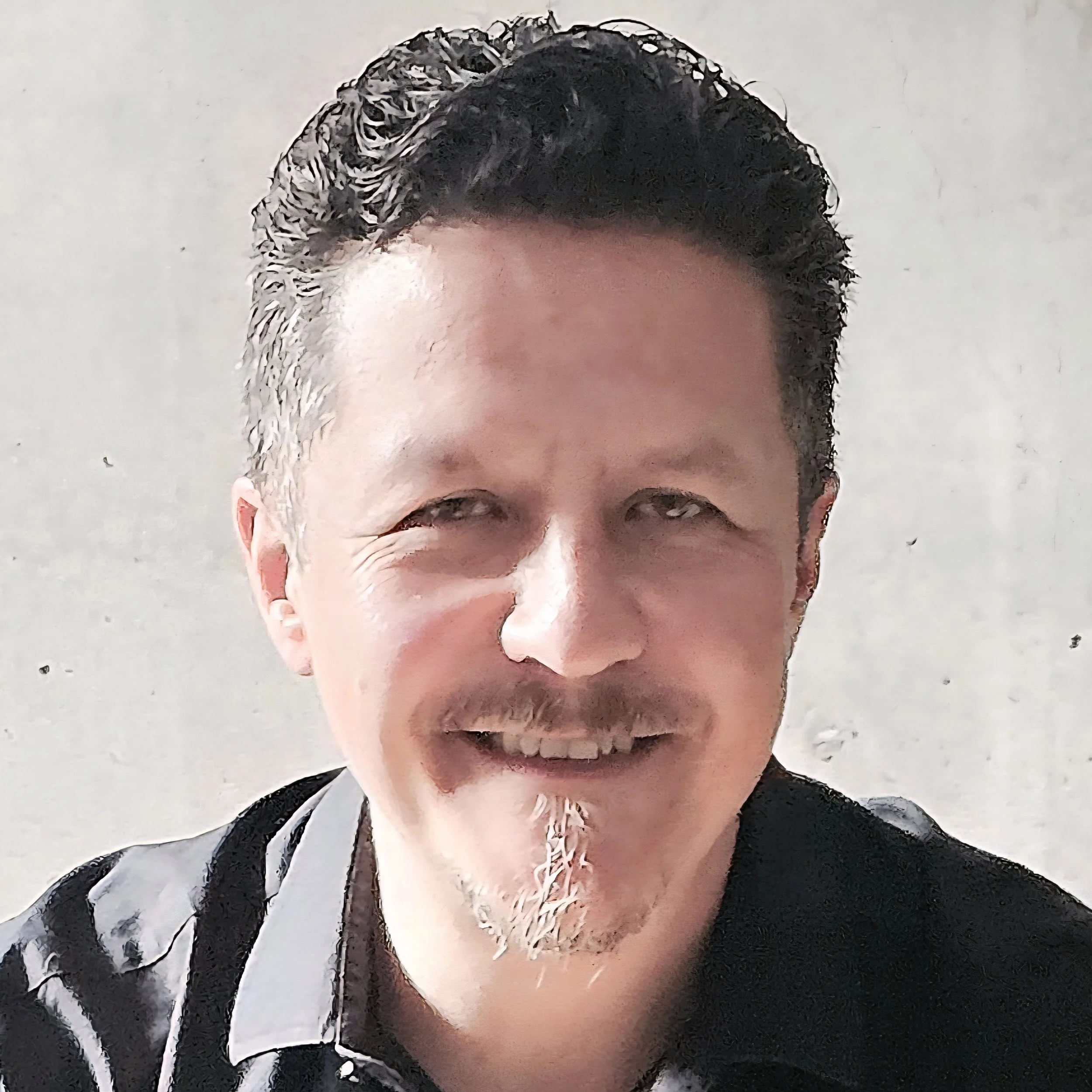
Rodrigo Cervantes is an award-winning bilingual journalist and communications strategist with extensive experience across the U.S., Mexico, and beyond. He has contributed to outlets such as NPR, CNN, The Los Angeles Times, and the BBC. Cervantes led international coverage as Bureau Chief for KJZZ’s Mexico City bureau, where he launched the first offshore bureau for a U.S. public radio station. He later joined KPCC/LAist in Los Angeles as Senior Editor. He previously served as Business Editor-in-Chief for El Norte, part of Grupo Reforma, Mexico’s premier newspaper company. In Georgia, he led the newsroom of MundoHispánico, then the state’s oldest and largest Latino publication, under The Atlanta Journal-Constitution. Rodrigo is a longtime member and former Secretary of the National Association of Hispanic Journalists (NAHJ). He holds an MBA from Universidad San Pablo CEU in Madrid, where he was a Fundación Carolina fellow. His work has been recognized with RTDNA Murrow Awards and José Martí Awards from the National Association of Hispanic Publications (NAHP). @RODCERVANTES