
The Man Who Turned Trash Into The Memory of New York City
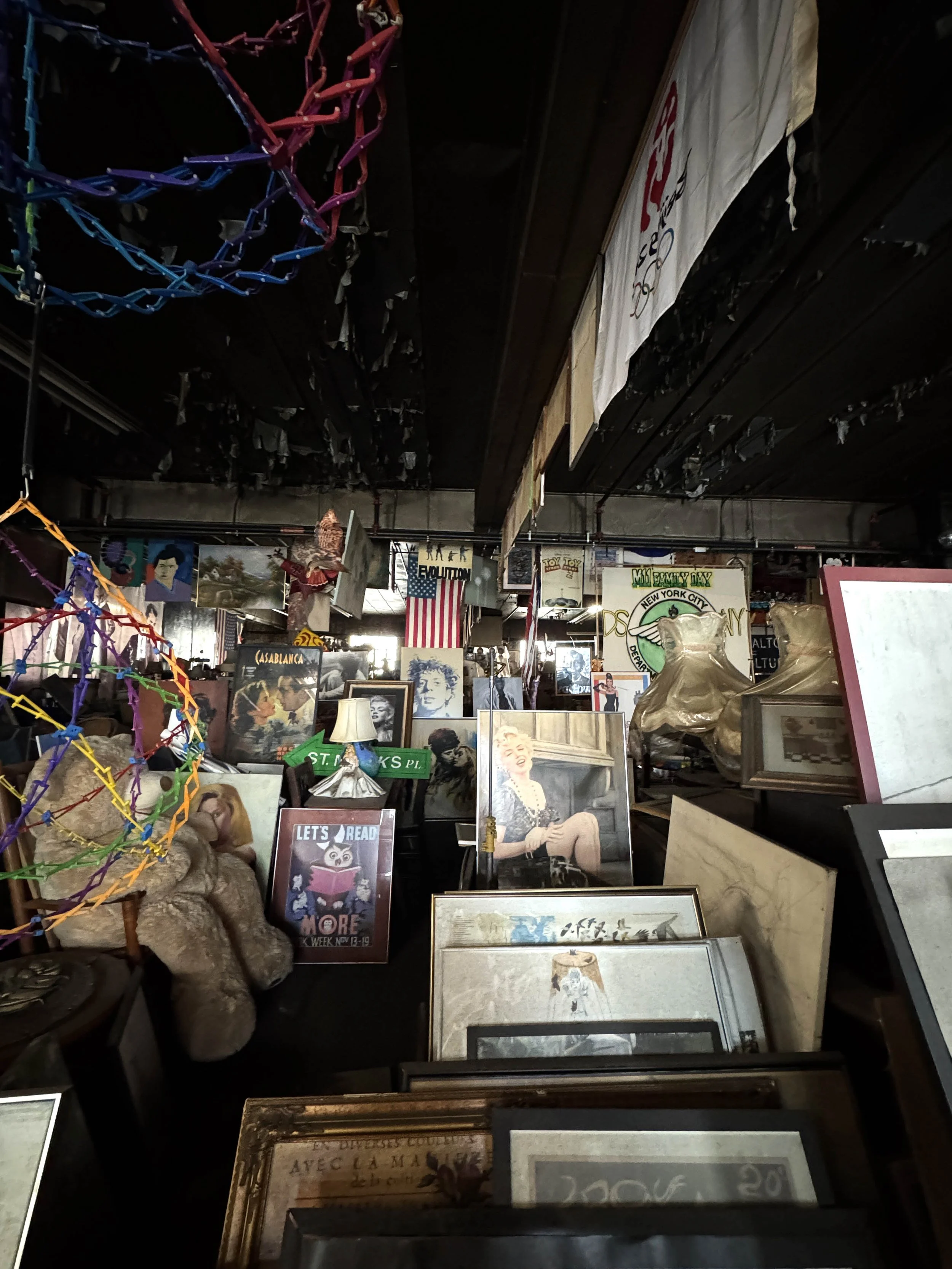
Over the course of his career, Nelson Molina collected, curated, and put on display thousands of objects rescued from Manhattan's garbage. Credits: Sophia Castillo
Nelson Molina collected 55,000 discarded objects and turned them into a one-of-a-kind gallery in East Harlem. After the pandemic forced it to close, the city has yet to decide its fate — and its creator fears everything will end where it began: forgotten.
Clic para leer en español.
Words by Sophia Castillo, @irrelevantehh
New York City - Between 59th and 96th Street on the Upper East Side, Nelson Molina learned that New York is, at its core, a city of obscene and involuntary generosity. In a neighborhood where buildings have doormen in white gloves and dogs wear coats in winter, people throw things away unopened. Bed sheets still in their packaging, televisions, and complete kitchen sets. Once, Molina found a set of leather suitcases stacked on the sidewalk, as if someone had decided, all at once, to never travel again.
For 34 years, Nelson worked as a sanitation worker for New York City — and he learned early on that he actually had two jobs: the one the city paid him for, and the one he gave himself. “If I find it on the street, someone can always use it,” he says. While his fellow workers saw bags and waste, he saw an electric guitar that still worked, an intact porcelain vase, or a family portrait that just needed a nail on a wall.
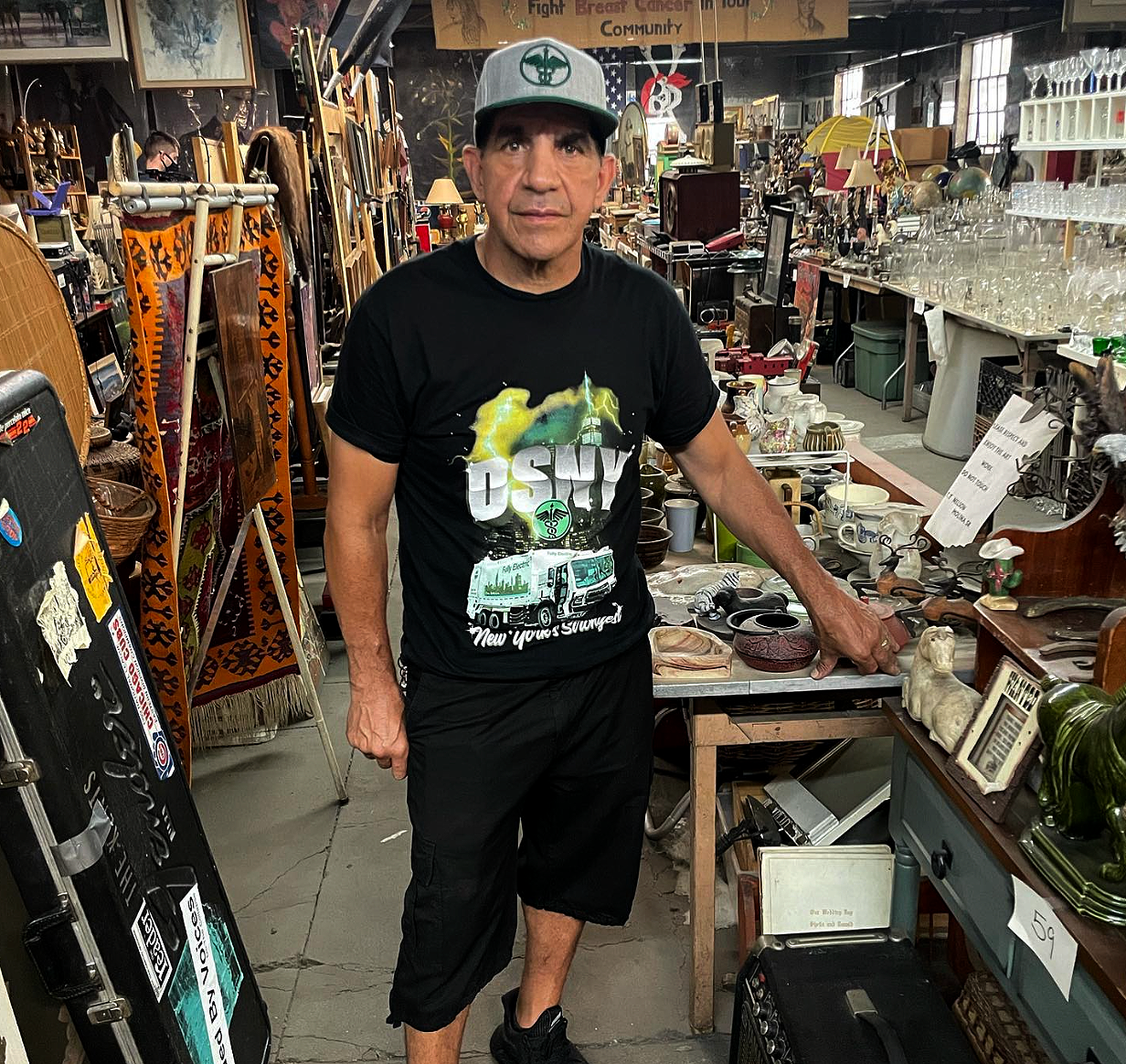
Nelson Molina is the mind behind "Treasures in the Trash." Credits: ‘Treasures in the Trash’ / Instagram
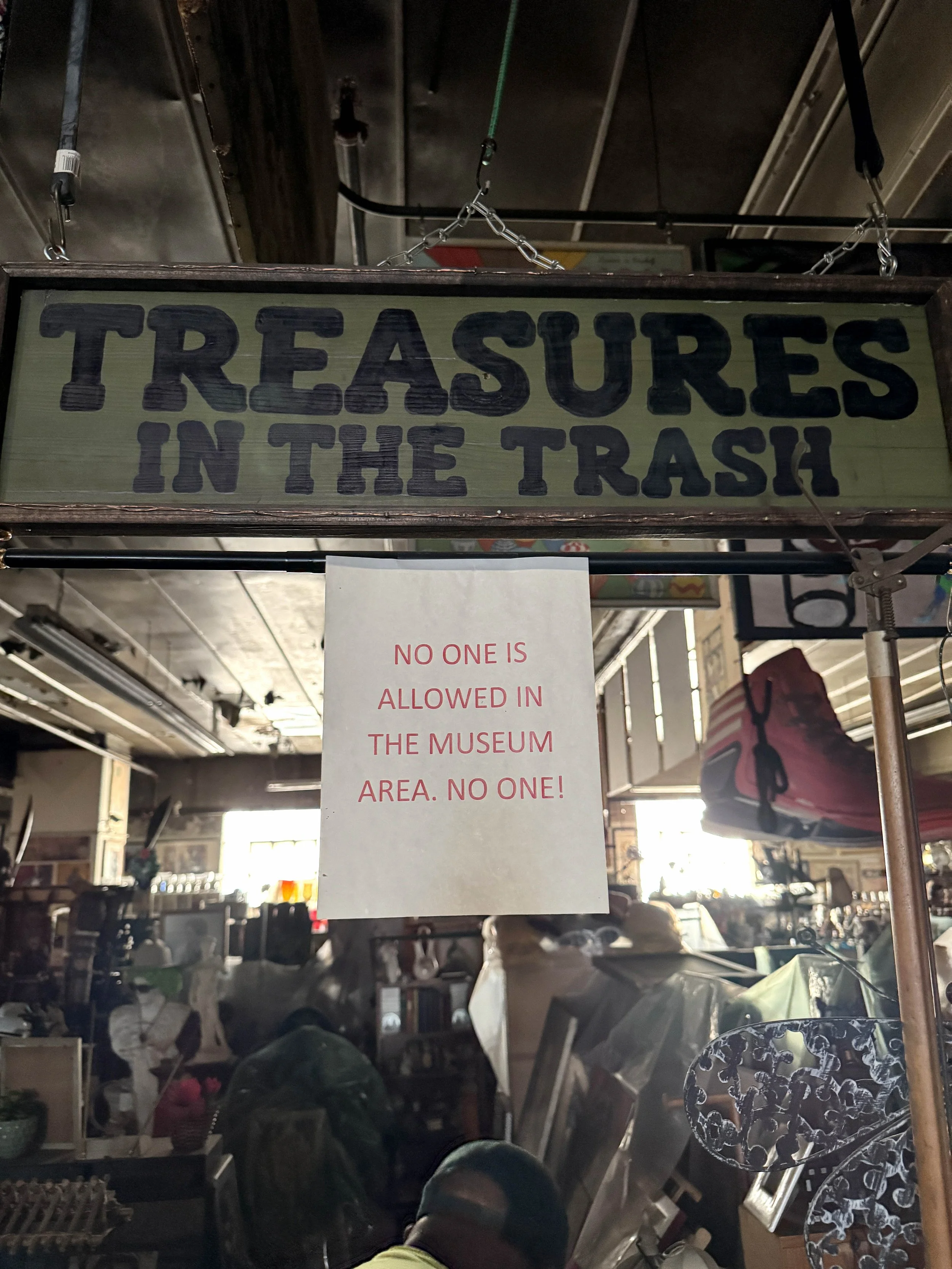
Today, the space holds only the memory of what was once a popular gallery among tourists and New Yorkers alike. Credits: Sophia Castillo
Molina was born in East Harlem in 1953 and grew up in the Jefferson Houses, just blocks from the garage where, decades later, he would store his treasures. He joined the Department of Sanitation on July 6, 1981 — a date he remembers as his own birthday — and knew from day one that the job was a perfect fit.
His mother taught him almost everything. “She never threw anything away,” he recalls. “If she could fix it, she fixed it. And if she couldn't fix it, nobody could.” Nelson is the third of six siblings, and he was nine years old when that logic took hold of him for good. Before Christmas, he would go out looking for broken toys, repair them, and give them to his brothers and sisters. “To them, I was like Santa Claus. Every time I left, they knew I was coming back with something.” So when he started working and saw the sheer volume of perfectly useful things discarded every day across Manhattan, he didn't hesitate. He set them aside, stored them, fixed them and, without meaning to, started building something.
At first, it was boxes stacked in a corner of the Department of Sanitation garage in East Harlem. Then, makeshift shelves. Then entire rooms. Until one day, someone walked up the stairs and said what no one had ever said to him before: “You're a curator.” Nelson hadn't realized it, but he had spent years organizing chaos. He wasn't hoarding objects — he was telling the story of a city.
SUBSCRIBE TO PALABRA’S NEWSLETTER
"Treasures in the Trash" had a corner for toys, another for tools, another for memories no one came back for. According to Molina, the collection grew to roughly 55,000 objects. An appraiser once estimated the whole thing could be worth between $60,000 and $70,000. He never sold a single piece.
Ronnie Cooper, a sanitation worker with 31 years on the job between the Bronx and Manhattan and a former colleague of Molina's, remembers well what it was like to walk into the garage and see the collection. “As soon as you walked through the door, it was like: wow, this is incredible,” he says.
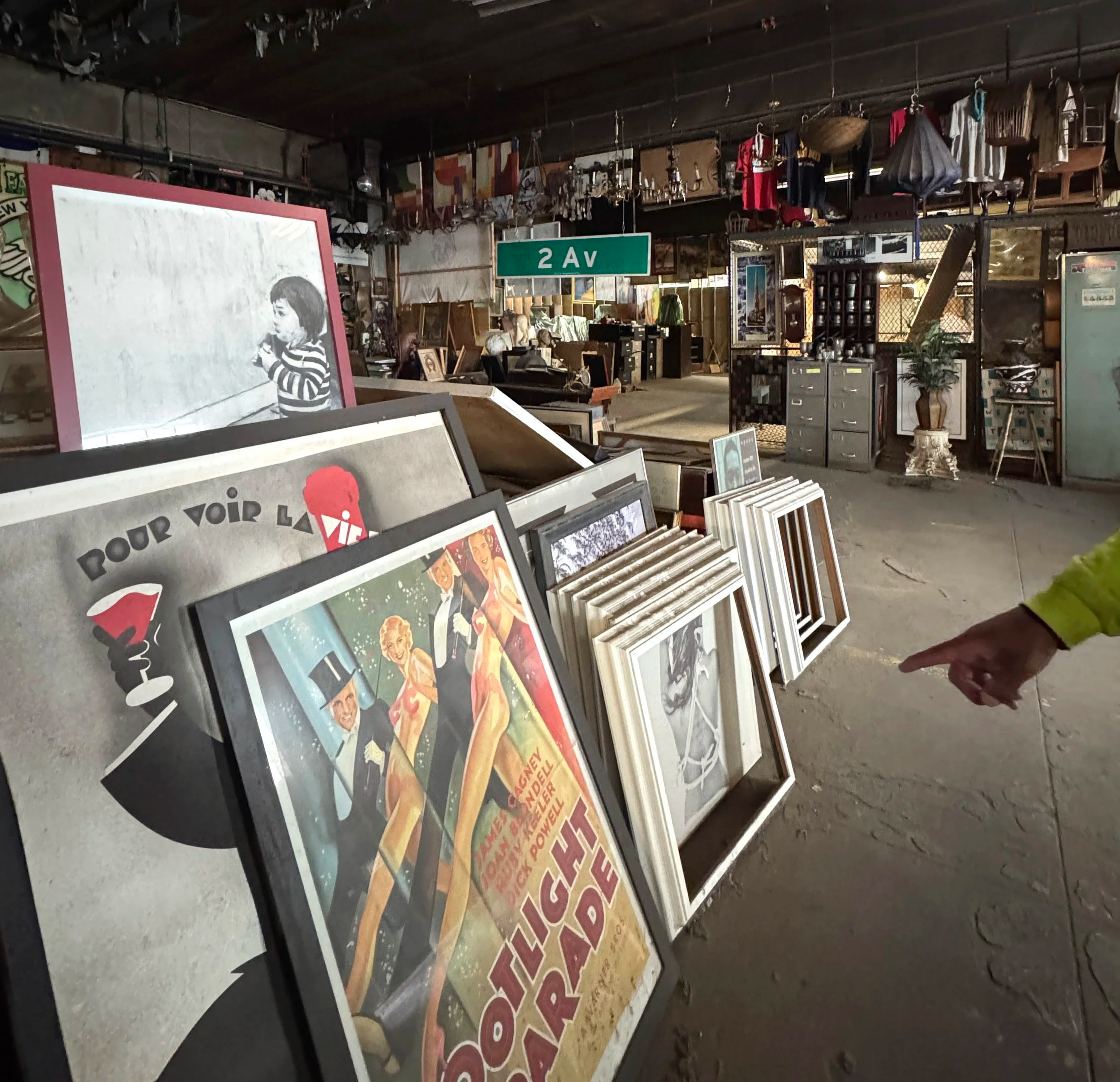
The gallery's second floor still houses some of the pieces Molina rescued over his 34-year career. Credits: Sophia Castillo
One Man’s Trash…
Molina developed something close to a sixth sense. He says he could hear when something valuable was inside a black garbage bag — that the weight, the sound, the way it shifted when he lifted it gave him clues. “I can hear it, I can feel it… I know there's something in there.” And there always was.
Support the voices of independent journalists.
|
He has found jewelry, rare collectible teddy bears, and an intact vase — appraised at thousands of dollars — that someone had carefully wrapped before throwing out. “In other countries, people use things until they fall apart,” he says.
The Upper East Side was his Disneyland. That was where he found his best hauls. “I'm constantly jammed,” he says, as if that part of the city produced more waste than it could hold.
The Other Side
“Sanitation is an extremely dangerous job,” Molina says. A bumper once flew off during an accident and struck his legs. A piece of wood exploded into his chest when he was compacting a table. Toxic fumes. Acid. Paint. Invisible things people throw away, too.
After September 11, 2001, that invisibility turned deadly. Molina spent five days at Ground Zero, sweeping the dust left behind by the attacks with almost no protection — just a paper mask. “They told us the air quality wasn't bad,” he says. “It was a lie.”
No one talks about sanitation workers when that day is remembered, Molina says. No one calls them heroes. But he remembers.
Letting Go of What You Love
“This is my last day. The last time I'll ever climb on this truck.” That was how Molina said goodbye on April 28, 2015, in a video where he recorded himself. But the transition wasn't easy. He developed what he describes as a work separation syndrome — waking up not knowing what to do after 34 years of constant motion. His wife took him to therapy. She got him out walking, to the gym, on bike rides. “My wife was always there.”
The museum was still there, too, but it wasn't the same. Not going every day, not finding new things, not feeling the pulse of the city in his hands. Even so, he never stopped collecting. “He's always picking things up and fixing them, even now,” says Myra, his wife of 44 years.
Molina has six children. None of them inherited his obsession — though all of them know that when something breaks, there is only one person to call.
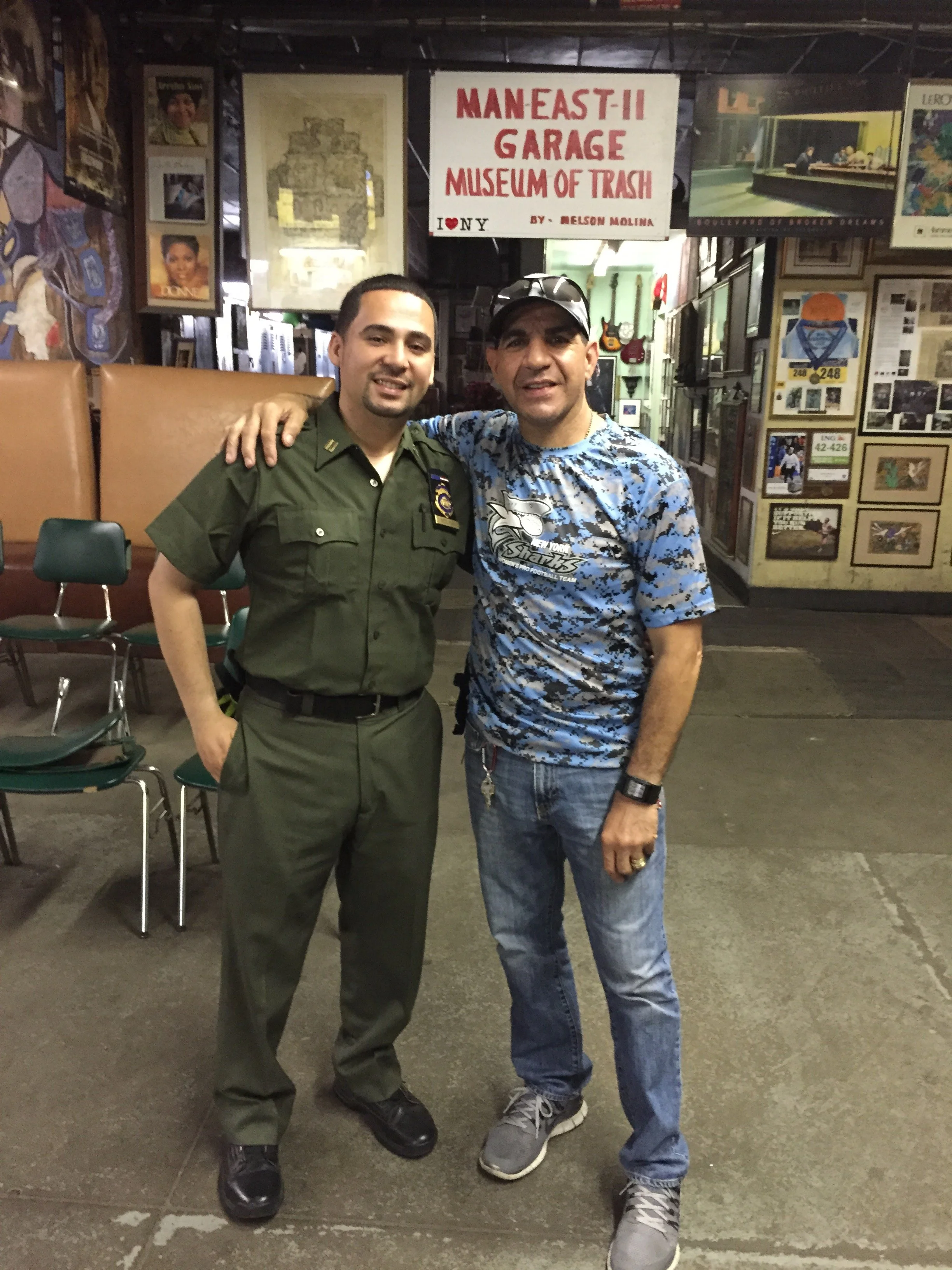
Nelson Molina with his son, Nelson Molina Jr., who currently serves as a lieutenant with the New York City Department of Sanitation. Credits: Nelson Molina
From Fame to Uncertainty
The museum closed in 2020, during the pandemic. Since then, it has remained there, suspended. No one knows quite what to do with it — not the city, not the department, not Molina himself.
“The portion of the garage that houses this collection is not structurally sound and has therefore been closed to the public in recent years,” said Vincent Gragnani, press secretary for the Department of Sanitation's Office of Public Affairs, when asked about the collection's future.
Molina visits the garage often, but the space tells a different story. The collection sits in near-darkness, covered in plastic sheets. Rain leaking through the roof has forced workers to place buckets throughout the room. A thick layer of dust coats everything. The objects have been pushed and stacked into a corner of the second floor, as if waiting for a decision that has yet to come.
Molina wants a proper, public-facing space. Something official. “For people to come and see everything that's there,” he says. And now a question settles, uncomfortably, among the objects: What happens when he's gone?
“I don't think it'll survive,” he admits. He doesn't say it dramatically — he says it with the precision of someone who understands exactly how much invisible work holds it all together. The museum is not just what it contains. It is the eye that organizes it.
—

Sophia Castillo is a bilingual journalist from Lima, Peru, with 10 years of experience. She currently reports on Latino communities in New York City, where she is pursuing a master’s degree in bilingual journalism at the Craig Newmark Graduate School of Journalism at CUNY.