
¡Te Amo Porque S.O.S. Pueblo!: A Look at New York's Immigrant Artist Collective
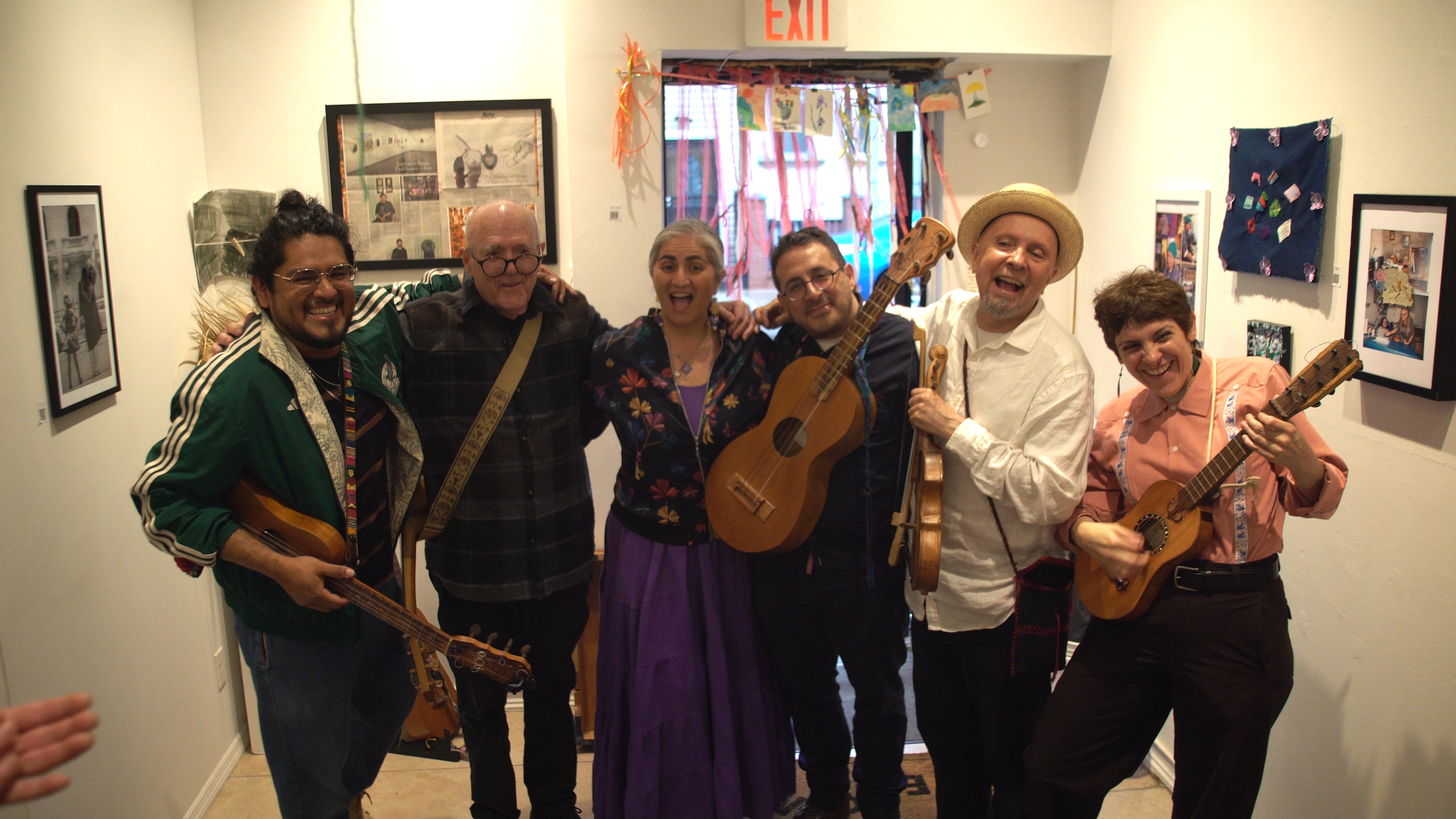
To the rhythm of son jarocho, the immigrant artists of ¡Te Amo Porque S.O.S. Pueblo! celebrate their third exhibition.
palabra was present at the third edition of this initiative, where immigrant creators from various disciplines come together to heal in community, defend their roots, and resist hate-driven policies through art.
Clic aquí para leer en español.
Words, photos and videos by Ángel Melgoza, @ar.melgoza
NEW YORK — Tiny guitars ring out on Stephen Street. Tú eres la tristeza de mis ojos. Tiny guitars stirring up. Que lloran en silencio por tu amor. Tiny guitars called jaranas. Me miro en el espejo y veo en mi rostro. Jaranas accompanying a serenade. El tiempo que he sufrido por tu adiós. A serenade in which the people sing, play, weep, and tear themselves apart shouting.
The serenade performs Juan Gabriel's classic “Amor Eterno” with son jarocho — a traditional music originating in the Mexican state of Veracruz — which couldn't be more fitting; it's a communal rhythm that brings together music, dance, and an inventive use of verse.
This is the third edition of ¡Te Amo Porque S.O.S. Pueblo!, a collective exhibition of immigrant artists — or artists whose families have been shaped by migration — which this time brought together the work of 28 of them at Stephen Street Gallery, a small white-walled space in Ridgewood, Queens, New York. The exhibition paid tribute to motherhood and, paradoxically, coincided with the artist Cristian saying goodbye to his mother, who had passed away two days before the opening.
Cristian's piece, ‘Crónicas de una Pandemia’ (‘Chronicles of a Pandemic’), is a reminder “of human fragility and its surroundings,” as well as an acknowledgment of the most vulnerable. But today it is also a testament to the strength of the people to whom the artist dedicates his piece — people marked by their immigration status, gender, and/or social class.
SUBSCRIBE TO PALABRA’S NEWSLETTER
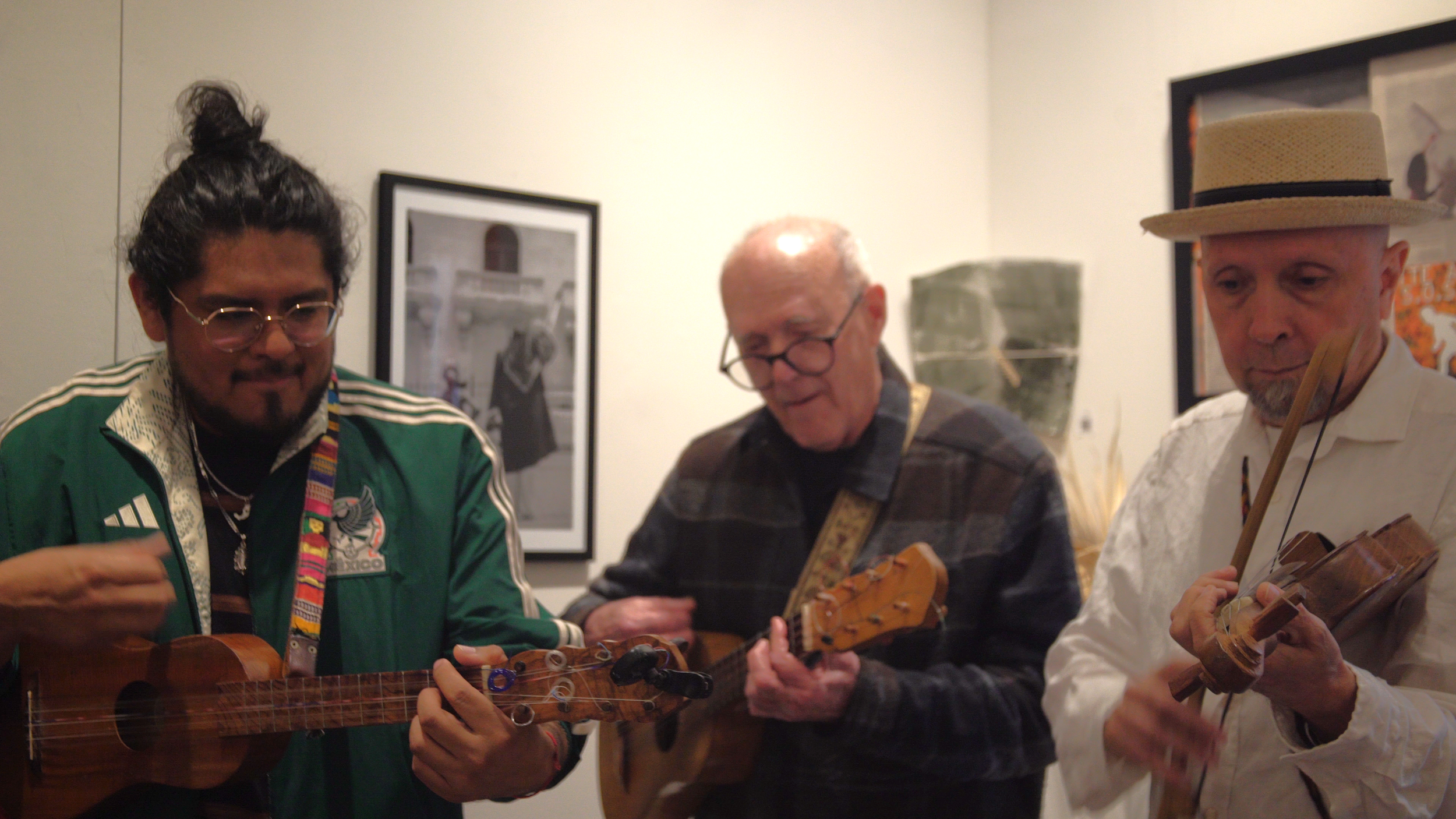
The third edition of the immigrant art exhibition ¡Te Amo Porque S.O.S. Pueblo! opened to the rhythm of son jarocho.
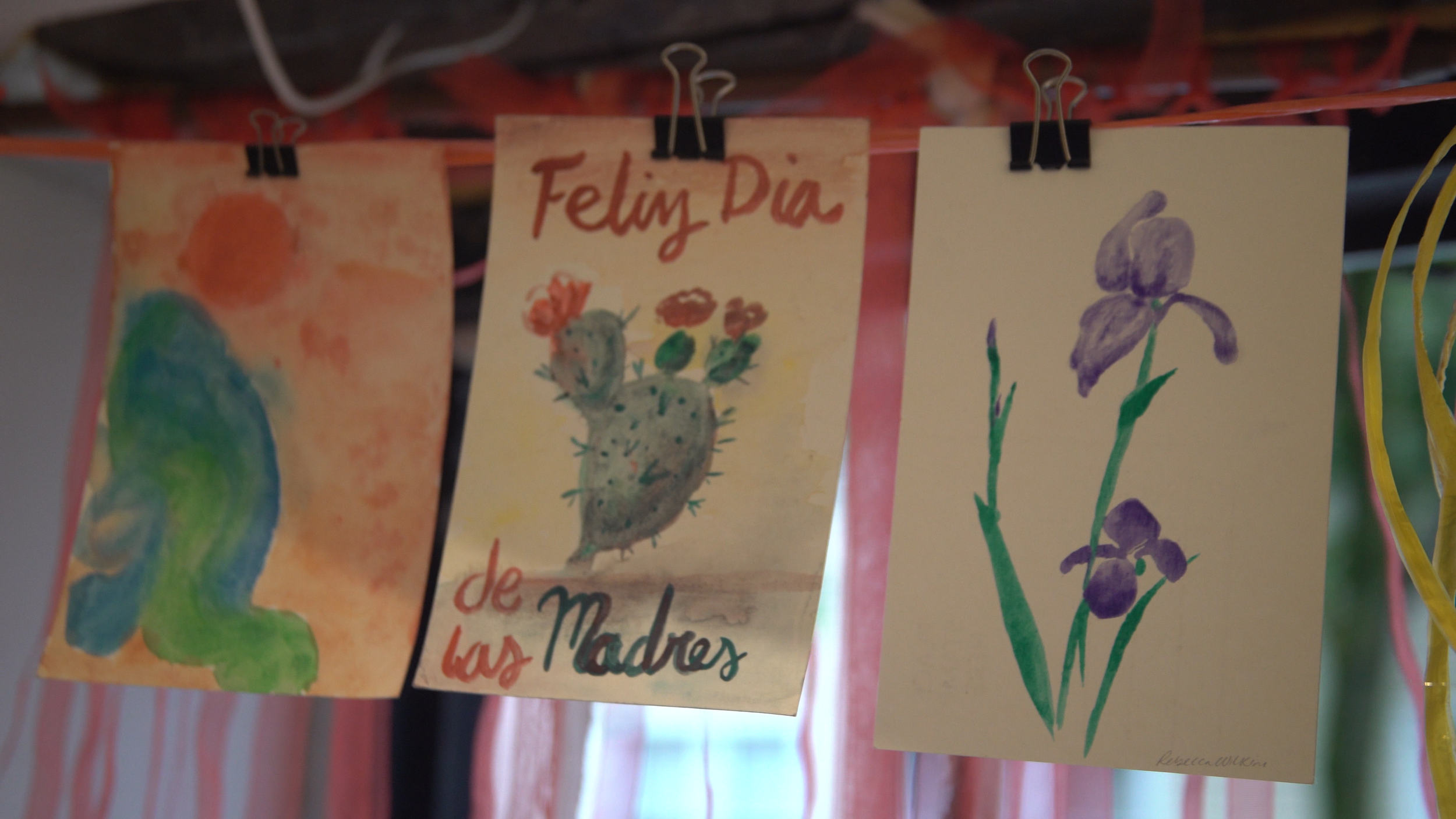
The exhibition ran from May 1 to 24 and paid tribute to motherhood.
¡Te Amo Porque S.O.S. Pueblo! has gradually grown into a collective that began taking shape in late 2024, as Donald Trump's second term loomed. Mexican artist Blanka Amezkua knew very difficult times were coming, and had been putting off an invitation from BronxArtSpace gallery to mount a solo exhibition.
Blanka entered the United States pretending to be asleep when she was four years old. At ten, she went back to Mexico and didn't see her parents again for five years, as they stayed behind working in California's cotton fields. She would eventually return to the U.S. to study art; for a time she worked at a law firm, and later settled in the South Bronx, which has been her home for more than 20 years.
She describes her current situation as one of privilege: she can now come and go from the country, speaks the language, has a strong network of family and friends, and has no children. “I know it's not easy for a lot of people to say ‘I'm not afraid,’ but that's exactly why we need to build alliances,” Blanka says in an interview with Palabra.
That's what Blanka, artist Marco Saavedra, and organizer María Ponce Sevilla did — they formed an alliance to create ¡Te Amo Porque S.O.S. Pueblo! Turning the solo invitation the gallery had extended to Blanka into a collective exhibition, that takes its name from a line by Uruguayan poet Mario Benedetti.
The idea came from Marco, who also suggested reworking “sos” — Spanish for “you are,” and a homophone of the English distress call “S.O.S.” — into an emergency call in the face of the climate of hatred, racism, deportations, and terror championed by the federal administration. With no reason to celebrate, Blanka, Marco, and María created one anyway: an exhibition that has been growing into a community built around art, a pueblo that creates, gathers, and celebrates.
Excerpt from the poem “Venimos sin apellidos” (“We Come Without Surnames”) by Alexandra Délano.
Support the voices of independent journalists.
|
Paulina, Eugenia, Eufemia, and Mary are Indigenous women. On May 9, they took part in the festival “¡A toda madre!”, an event organized by Peruvian artist Niceli Portugal, who led the curation and coordination of this third edition. That day, they held a workshop on traditional infusions — fruits, herbs, and plants steeped in boiling water to make a healing drink. But here, these women are also artists.
An important part of the project, Niceli Portugal tells us, is inviting “people who make art and who had never exhibited before.” These women work with textiles and palm fiber, incorporating elements that are familiar to them; like Paulina, who wove epazote, palo santo, and cilantro leaves into her embroidery — “an edible, healing herb,” she says in an audio recording that accompanies her piece. The exhibition featured audio recordings of all the artists explaining their work, which can be heard on the exhibition's website
“It's been very inspiring to work with them,” Niceli said at the exhibition's closing.
The day after the Mother's Day festival, Niceli had to say goodbye to her mother's mother. She traveled to Peru to attend the funeral, something impossible for many immigrants who are forced to grieve from a distance, often isolated from family and friends. “In our countries, grief has a different flavor, like when you live in a small town,” Niceli says, “and that's what I feel with this project — that we are a pueblo.” A people that celebrates in spite of adversity.
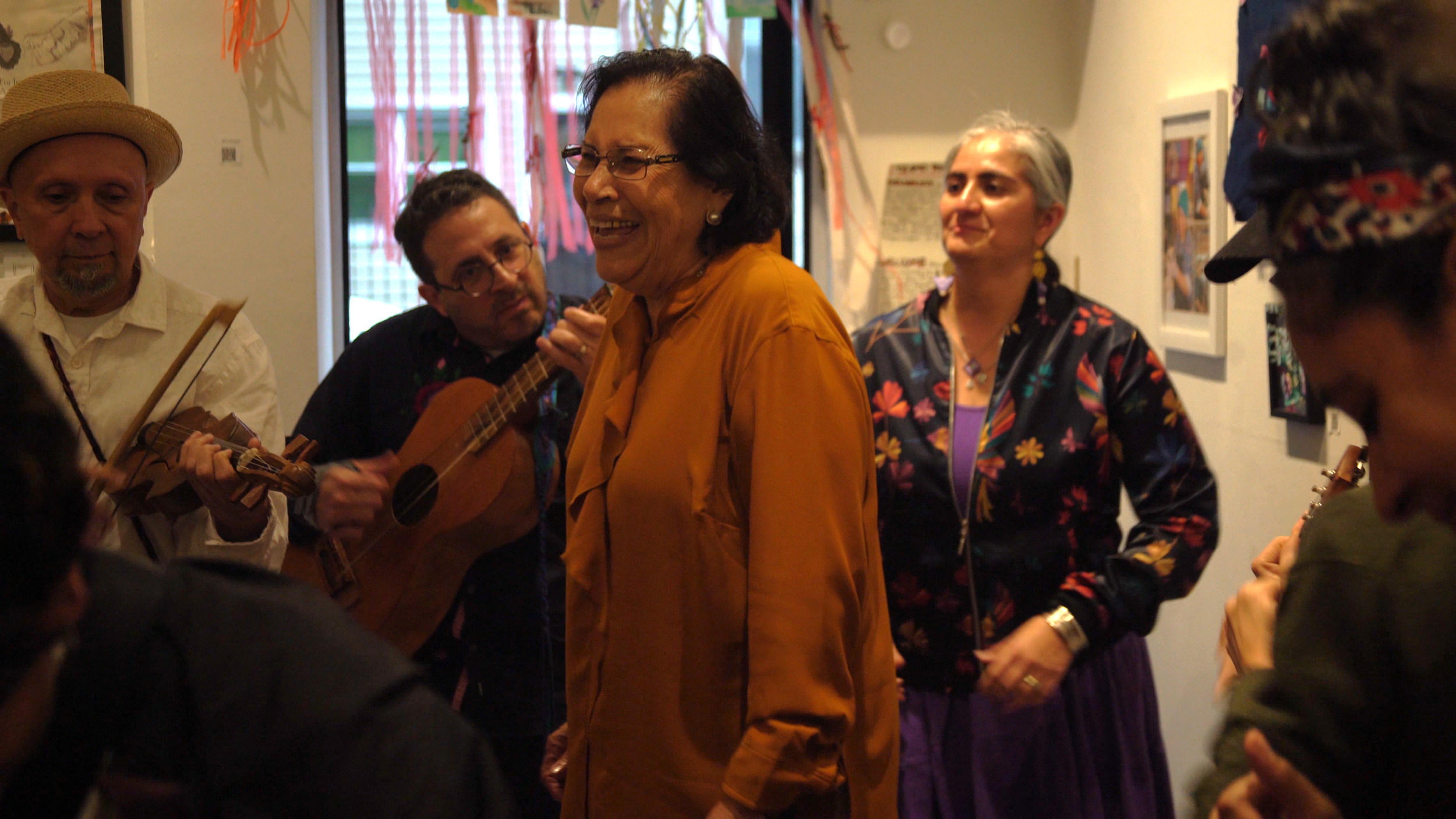
The migrant artists' collective ¡Te Amo Porque S.O.S. Pueblo! celebrated its third exhibition with music, dance, and community.
Happiness Is…
Blanka Amezkua's work began to shift after Trump won the presidency a second time. To face what was coming, she sought to surround herself with color, with the presence of others, with the positive energy art could give her. In her papel picado (cut-paper art) workshops, she'd ask participants to give her their leftover material, and out of those scraps of tissue paper, confetti, and other festive paper, she pieced together a collage.
The piece Blanka presents in this edition is titled ‘La felicidad es’ (‘Happiness Is’), an open invitation for people to define happiness however they choose. For her, happiness is the feeling that there is justice in the world — which may be why, she says, one doesn't feel happy every day.
Asked about her life's achievements, Yadida names three: her family's happiness, having made it to another country and learned its language, and above all, that her children are fighting “fascism in America.”
Yadida is the mother of Odalys, a Mexican artist born in the Bronx. And it's Odalys's voice we hear through a portable speaker, describing her work of photographs on paper embedded with seeds.
It sounds a bit robotic, and is drowned out by the jaranas already ringing out on the other side of a thin cardboard-and-drywall partition. Niceli asks which piece we want to hear next. “The butterfly one, Odette's,” Blanka says. Such is the atmosphere at Stephen Street Gallery during the closing of the third edition of ¡Te Amo Porque S.O.S. Pueblo!
The small white-walled gallery lights up with the work of immigrant artists — people whose stories and work are shaped by the journey, by the here and the there Odette refers to in the recording accompanying her piece, titled Justo cuando la oruga pensó que el mundo se había acabado, se convirtió en mariposa (“Just when the caterpillar thought the world had ended, it became a butterfly”).
“[Monarch butterflies] never forget their roots. They always return to their ancestral lands and are welcomed by their people,” Odette says, in a soft voice that makes us all look at one another. Our eyes meet because, in the cramped space, everyone is straining to hear the portable speaker. The gallery has a false wall that opens onto a series of small studios, where at that moment the musicians are tuning their instruments.
Then Blanka says to her mother: “Mami, Ángel is from Michoacán.” “Oh really? Which part, vali?” she says playfully. We fall into a conversation about our hometowns — where you're from, who you know, when you last went back — a conversation about Michoacán happening in New York, fittingly preceded by a piece about monarch butterflies, which migrate between these two lands. They never forget their roots, artist Odette tells us, and they always return to their ancestral lands, welcomed by their people. And we, too, I think, can build that pueblo. Here and there, we are pueblo.
“[Monarch butterflies] never forget their roots. They always return to their ancestral lands and are welcomed by their people.”
— Odette, artist in the group exhibition ¡Te Amo porque SOS Pueblo!
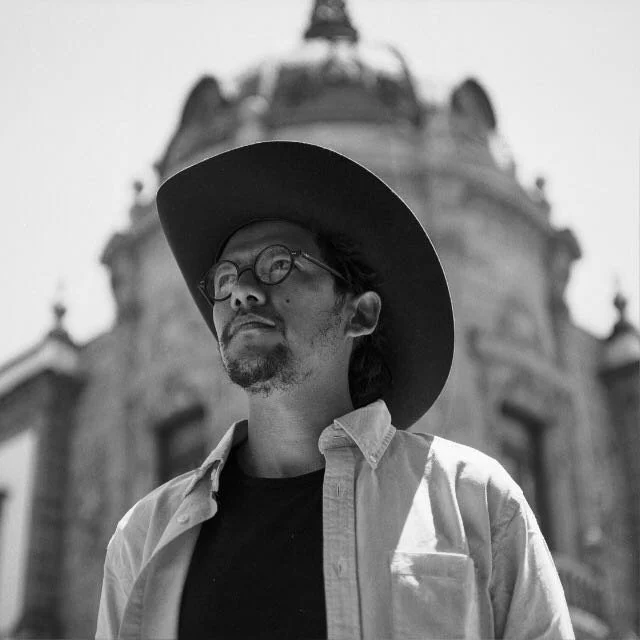
Ángel Melgoza, is a cultural journalist. He has contributed to publications including Nexos, Revista de la Universidad, Revista Magis, and El Malpensante. In 2021, he directed the documentary Tolvanera. @ar.melgoza