
Salarymen by Day, Metal Gods by Night
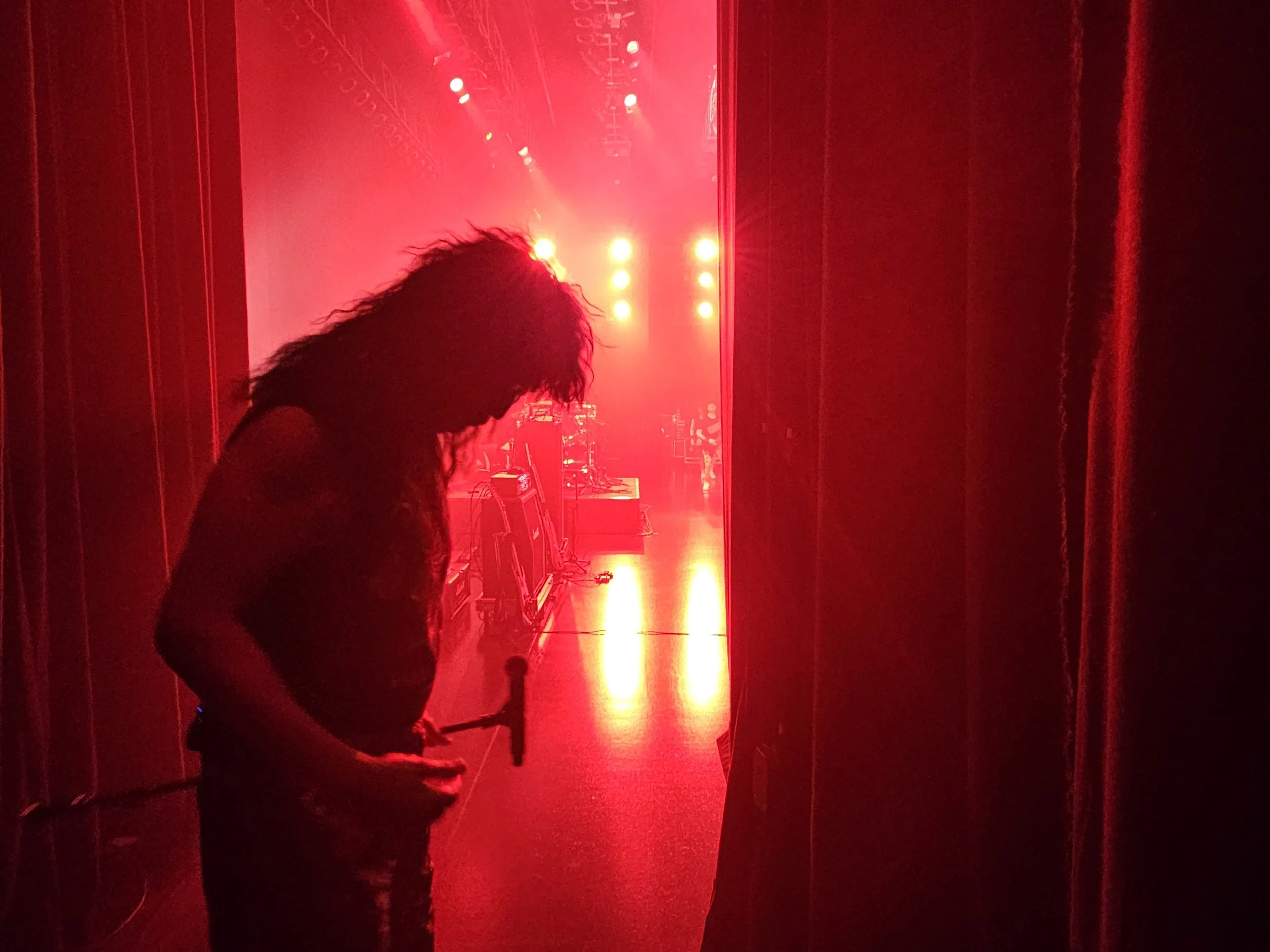
With his wig on and mic in hand, Toshi Matsuo prepares to jump on stage and sing with Nonthrax, the Anthrax tribute band
A LATINO JOURNALIST EXPLORES A JAPANESE SCENE THAT COULD FIT IN LATIN AMERICA; ONE IN WHICH WORKERS FIND RELIEF THROUGH HEADBANGING, POWER CHORDS, AND AN ALTER-EGO.
Clic aquí para leer en español.
Words and photos by Rodrigo Cervantes, @RODCERVANTES
TOKYO — What I found might have happened anywhere in Latin America’s bustling cities, but this was Tokyo.
Latinos have gained some fame as hard-working people. However, if any country has a reputation for overworked citizens, it is Japan.
The country is actually well behind the average annual hours worked per worker compared to other nations, according to the Organization for Economic Co-operation and Development (OECD). Latin America leads the chart with Mexico in first place, followed by Costa Rica and Chile. Meanwhile, the U.S. occupies the seventh spot, and Japan falls to 21st!
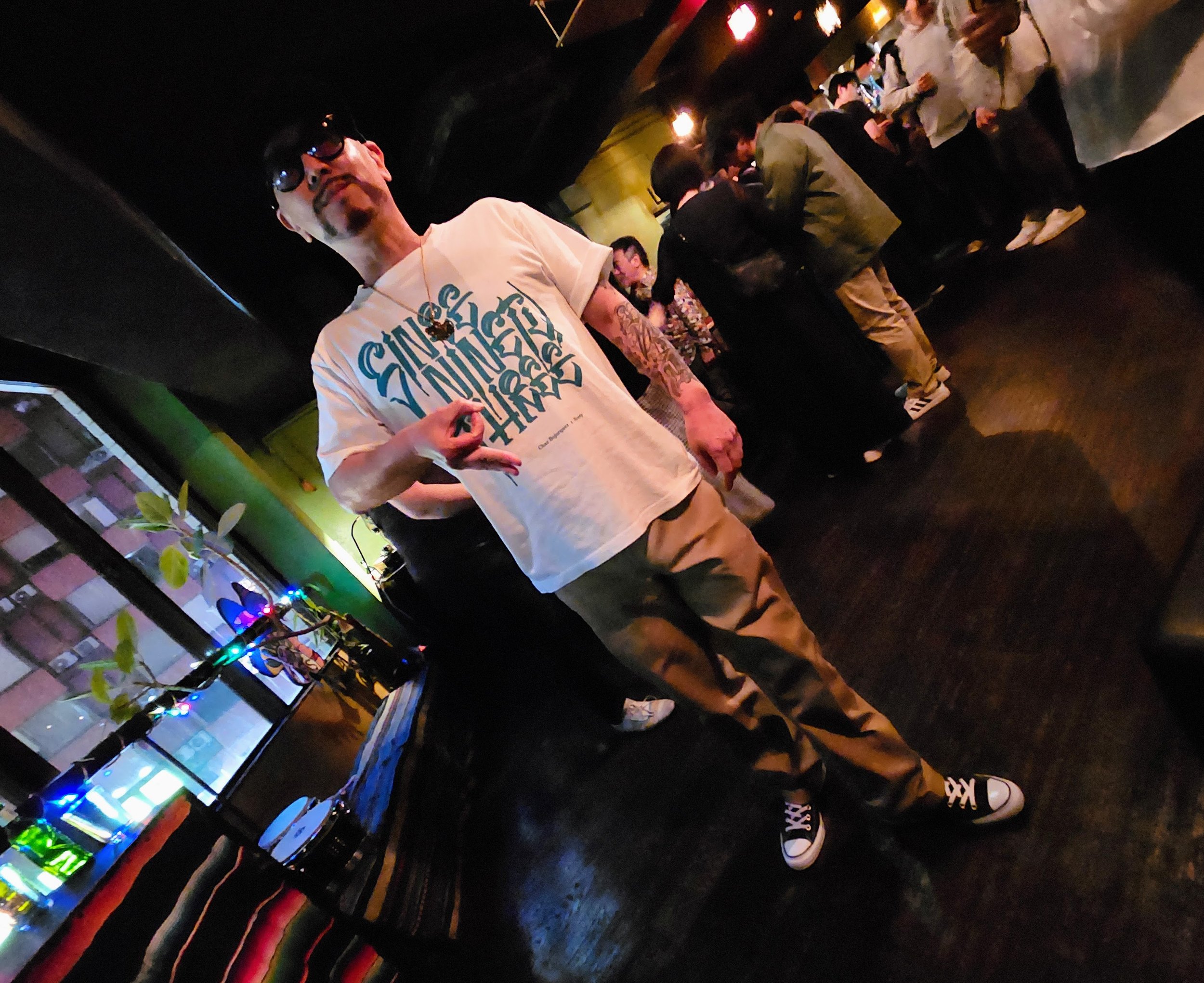
Inside Japan’s Underground Cult To Latin Music
But the reputation stems from Japan's notorious work culture, where employees tirelessly work overtime or use their commutes on public transportation to type reports and presentations. There is even a Japanese word for the ultimate consequence of this lifestyle: karoshi, or death from overwork.
High pressure at work in Japan is often a response to a sense of collective responsibility and rigid, vertical hierarchies.
But hard work also comes with rewards. After long hours, many Japanese workers loosen their ties, swap high heels for flats, and head out to meet friends for drinks, smokes, and food in the beloved izakaya (Japanese pub) tradition. One could easily compare Japanese after-work culture to that of Latin America; perhaps because the Japanese, like Latinos, work a lot, but prefer to work to live rather than live to work.
It was during one of those nights that I met a man who introduced me to one of the most overlooked subcultures in Japan by foreigners, and yet reminded me so much about my people back in the Americas.
His name is Toshi Matsuo. We were sitting next to each other in a small bar called Metal Justice Tokyo. The place lives up to its name: heavy metal is the only genre played by the owner, Shinji-san, who leads the Metallica Japan fan club.
Argentina, Brazil, Chile, and Mexico are among the Latin American countries with a huge appetite for heavy metal music. Many legendary bands have given some of their most memorable and massive shows there. And Japan is very similar. Even the legendary metal guitarist and former member of Megadeth, Marty Friedman, moved there years ago, attracted by the culture and Japan’s love for his music genre.
SUBSCRIBE TO PALABRA’S NEWSLETTER
Surrounded by heavy metal memorabilia, Matsuo’s presence was distinctive. Not only was he the best-dressed person in the bar, wearing a well-fitted suit (most of us wore jeans and T-shirts), but he was also incredibly amicable.
After learning I am Mexican, he spoke a few words in perfect Spanish. He had visited my country on business trips and had also lived in the United States. After some small talk about our favorite bands and learning I am a journalist, Matsuo, 55, told me about an underground scene in which he actively participates.
That is when I learned that Toshi Matsuo, a leading executive for a major Japanese hotel chain, periodically transforms into his idol: Joey Belladonna, the thrash metal vocalist for Anthrax.
And that is also how I ended up at a festival that would be perfect in Latin America, but happened here, in Japan. A place where ordinary people free themselves from daily pressures to become the best impersonators of their heavy metal idols from the 1980s and '90s.
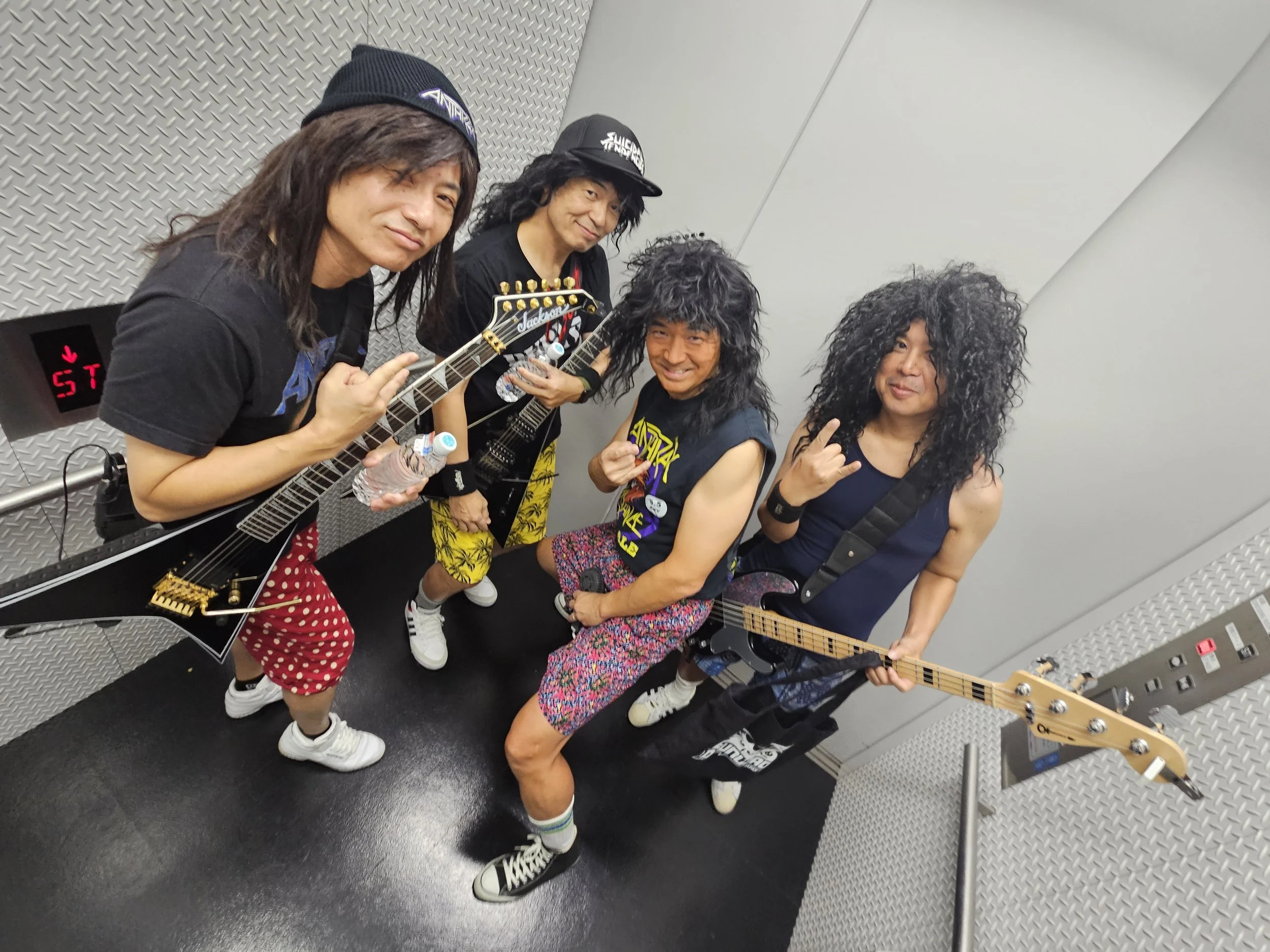
The entire crew of Nonthrax, Anthrax tribute band in Tokyo, inside an elevator at the Ex Theater Roppongi in Tokyo.
The Japanese Legend of Rock
A few years ago, Matsuo formed Nonthrax, an Anthrax tribute band, with friends.
Metal tribute bands are relatively common in Latin America, but the way they work in Japan seems to be different. They become a way to leave the routine and social formality behind and make life more satisfying.
Matsuo-san is not the only top professional from the band. Three members from Nonthrax —the two guitarists and the drummer— are airline pilots, and the bassist is an attorney.
"All of us have different careers and different backgrounds, but when we get together in a practice session or a stage performance, we really want to make this one thing successful because we're so passionate about it," Matsuo said.
Matsuo recognizes the high pressure of modern work but stresses the importance of work-life balance, particularly now that he and his wife are empty nesters with a son living in New York City.
"I think it's important to have a hobby outside of work," Matsuo said. "If I don't do anything, I would just sit at home watching TV all day on Saturday and Sunday, which wouldn't be fun."
Nonthrax is part of a collective of tribute bands that strive for professional sound quality. They often gather for festivals, the largest of which is called Legend of Rock.
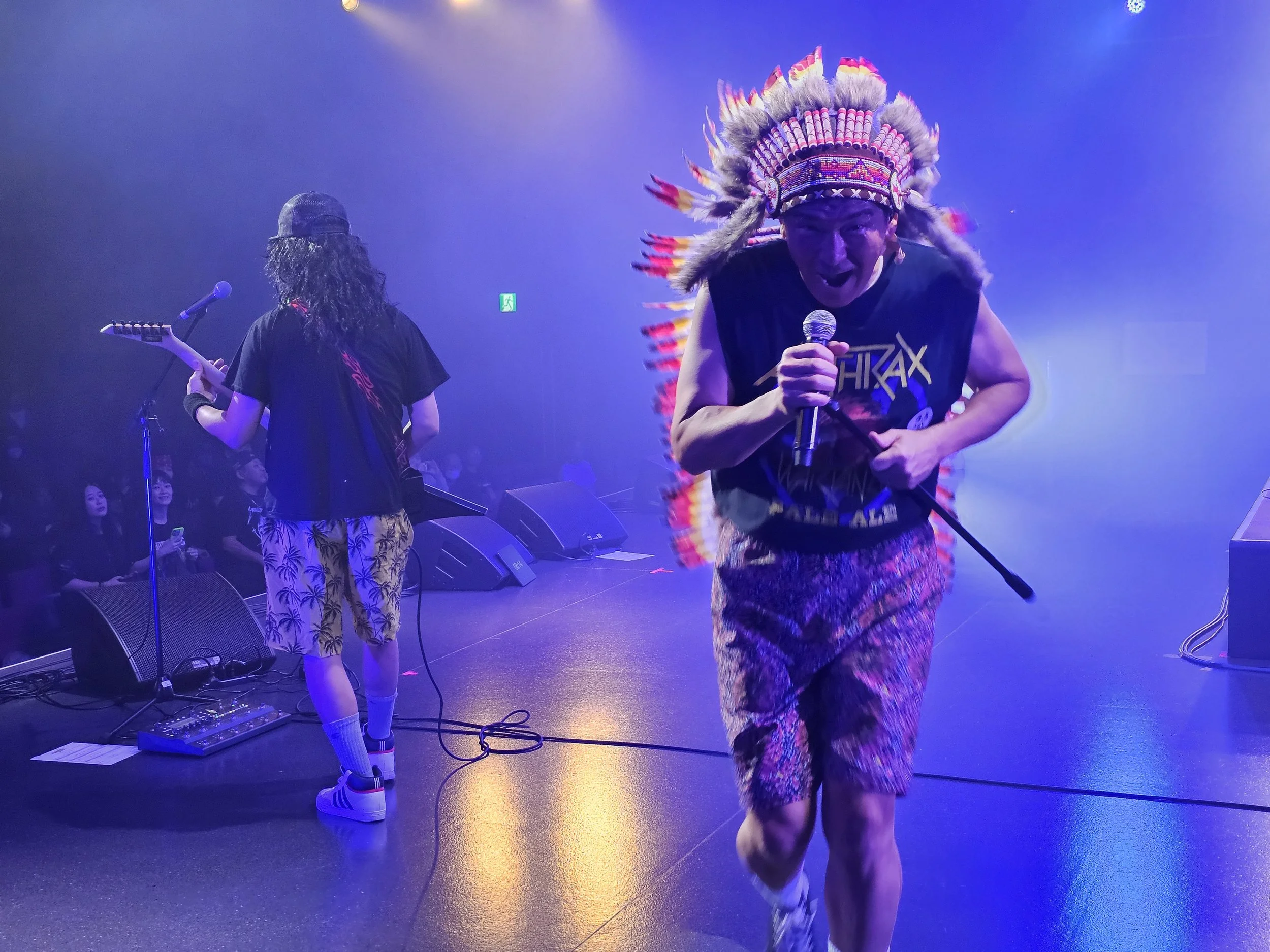
Toshi Matsuo runs on stage singing and wearing a Native American feather headdress in the likes of Joey Belladonna, who had Iroquois ancestry.
SUBSCRIBE TO PALABRA’S NEWSLETTER
Takashi Okabe, a passionate music lover, created the festival 21 years ago. He saw an opportunity to gather tribute bands in small bars, creating a space to celebrate classic rock while helping younger generations understand the impact those bands had in their prime.
"I thought of making this concept for people who like this music, trying to transform the concept of what a legend of rock is about," Okabe said. "Making people happy while listening to the tribute bands, but also seeing them as well."
In just a few years, the scene expanded. From small bars, Legend of Rock grew into a full production at Ex Theater Roppongi, a major venue where some of the original bands have actually performed.
"In a local bar we would have around 100 people, but right now the maximum has been 3,000," Okabe said.
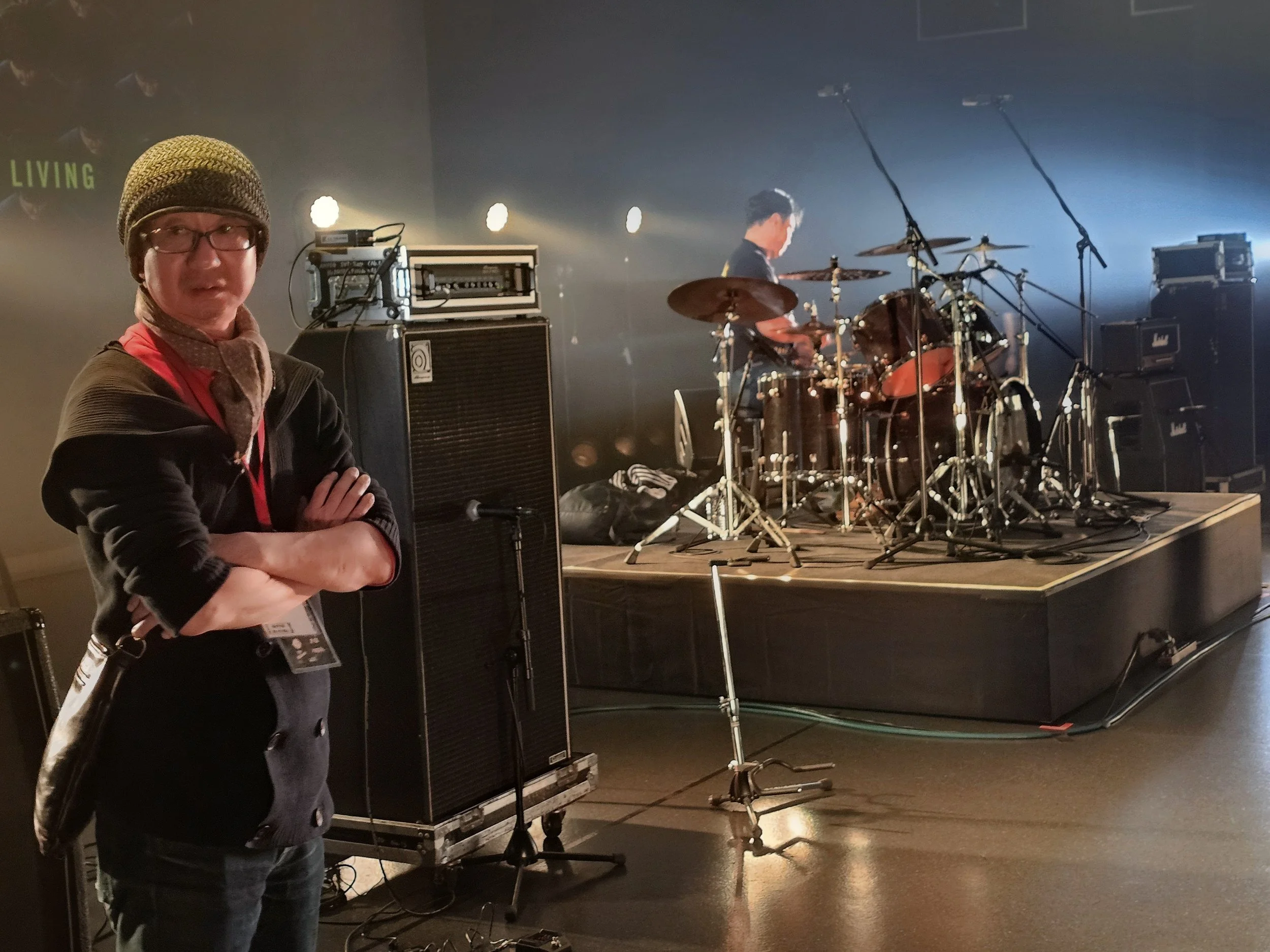
Takashi Okabe (left), creator of the Legend of Rock festival, during soundcheck at the Ex Theater Roppongi.
Support the voices of independent journalists.
|
And while tribute bands are not exclusive to Japan, the talent here is phenomenal. Japanese musicians are renowned for precision and technicality, and these bands are no exception. In the land that gave the world karaoke, it is no surprise to find world-class singers in unexpected places.
However, seeing this much talent sharing a major stage in front of dedicated fans is something else entirely. Imagine you could put together all the major metal tribute bands from São Paolo, Buenos Aires, Caracas or Mexico City in a main theater from one of those metropolises, with professional lights and sound. That’s Legend of Rock in Tokyo.
The audience may not be as wild as in Latin America. The Japanese also get excited, of course, but tend to be very respectful and organized during concerts, even in heavy shows like this. No crowd surfing. No moshing or slam dancing. No “wall of death” or “circle pit”. No improvised torches or chairs flying around.
But the public is demanding, Okabe said.
"I think that the Japanese crowd tends to sit back, telling the promoters, 'Show us what you got,'" Okabe said. "That's the type of attitude and criticism that Japanese performers face, so the audience tends to be a little bit tough and receptive, rather than trying to just enjoy themselves."
But with tough audiences come great performances. Many of these bands put immense effort even into their aesthetics: JP/DC, an AC/DC tribute, features an "Angus Young" in the signature Australian schoolboy outfit, and Guns Love Roses (a Guns N’ Roses tribute band) features a "Slash" complete with bushy hair.
Furthermore, the sound quality is startling; if you close your eyes, you might believe you are hearing the original artists.
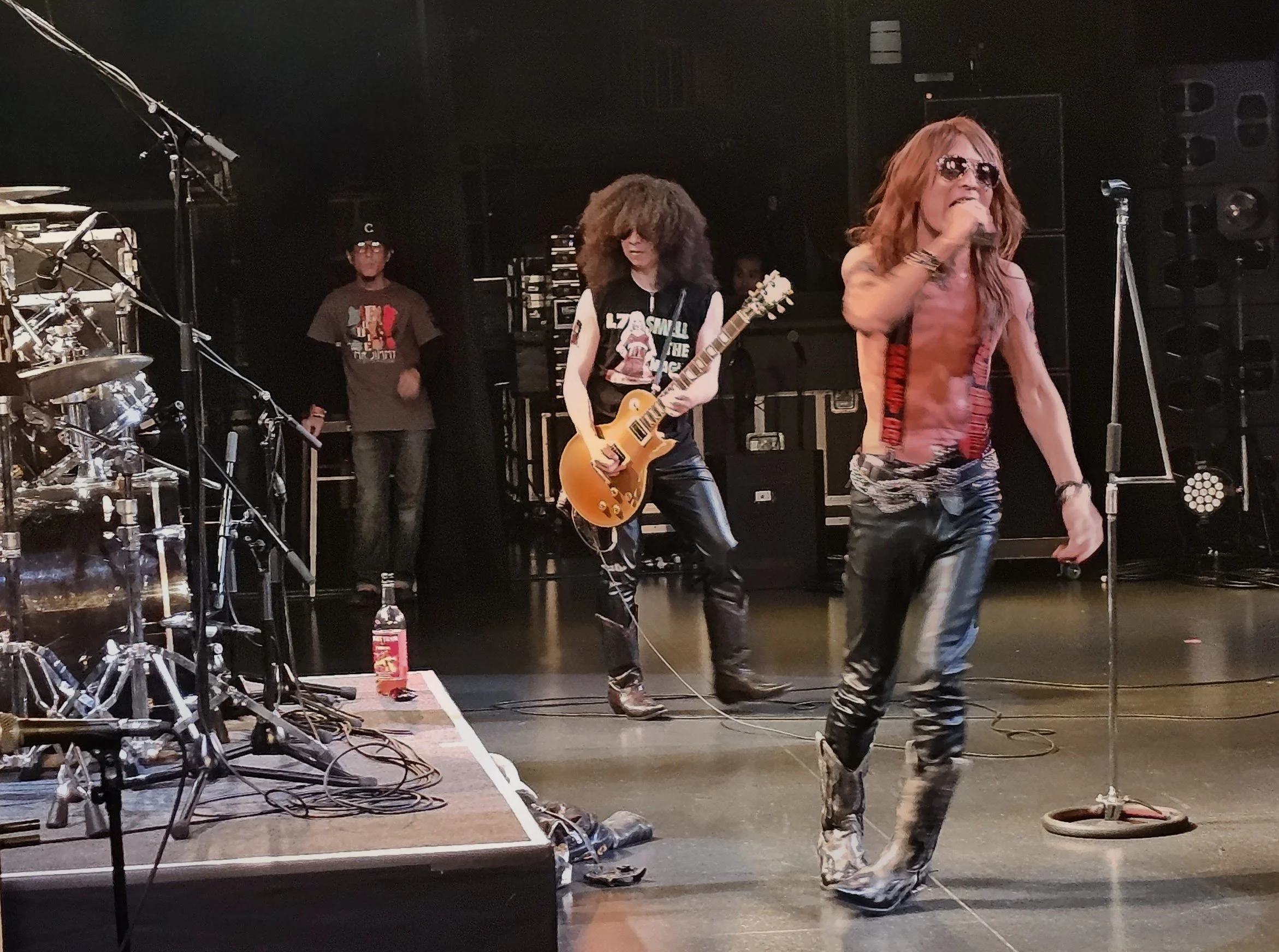
Guns Love Roses (a Guns N’ Roses tribute band) features its own "Slash" and “Axl Rose.”
Shredding in the stars
Among the most impressive metal tribute bands I saw at Legend of Rock was Hattallica, whose name is a clever play on the Japanese word hattari, meaning to bluff or pretend, combined with Metallica.
Hattallica has reached legendary status among local tribute bands. Even Matsuo said he was inspired by them, and they reportedly have the blessing of James Hetfield and the rest of Metallica.
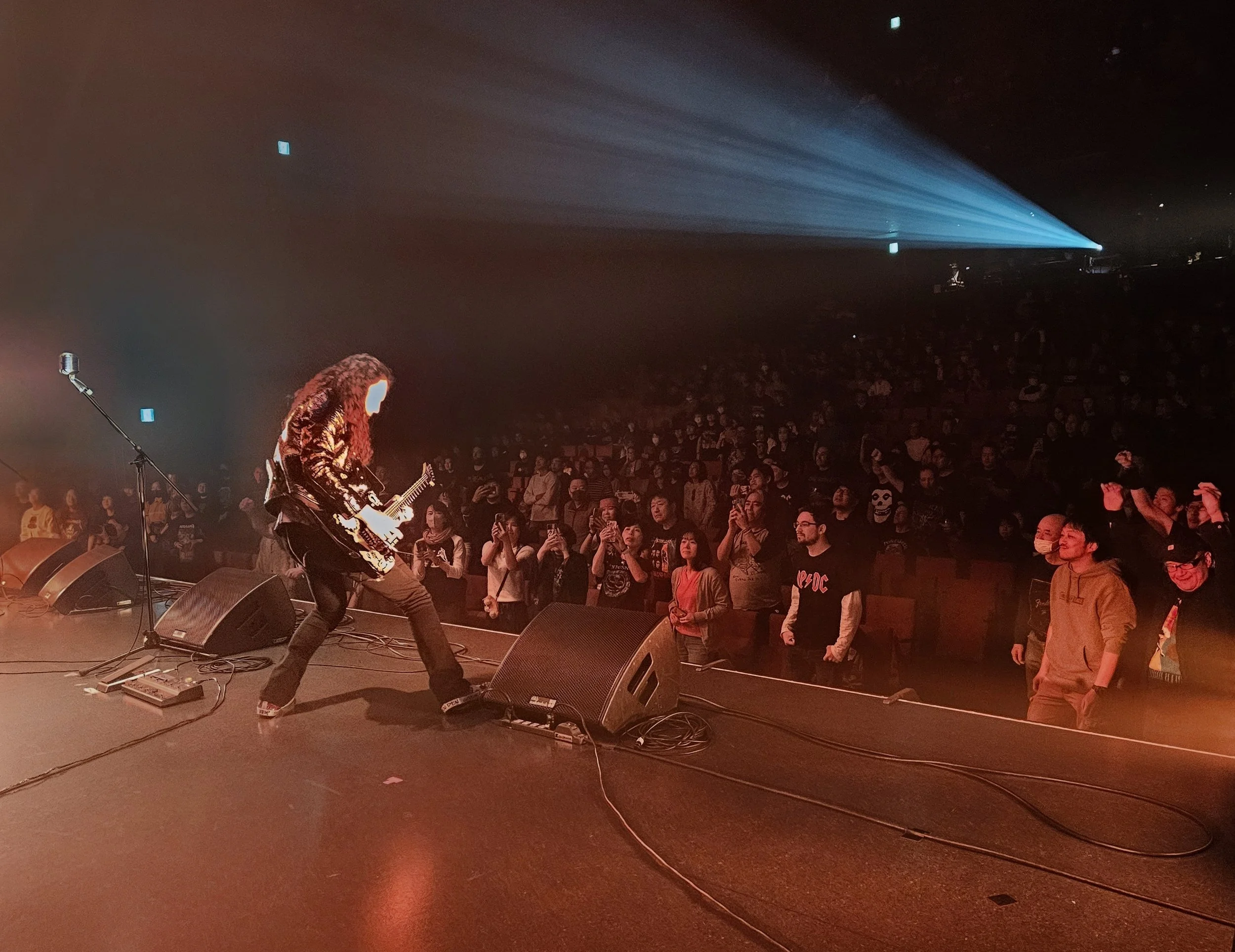
Kazuaki "Kirz Hammett" Kanetoyo of Hattallica performing at Ex Theater Roppongi.
Kazuaki "Kirz Hammett" Kanetoyo of Hattallica played guitar solos with methodical precision. According to “Kaz,” his resemblance to Metallica’s Kirk Hammett was so uncanny that Metallica’s own crew mistook him for a Japanese cosplayer when he met his idol in person.
In his daily life, Kanetoyo worked, believe it or not, as a metal scraper. I couldn’t help but chuckle for a bit when he told me this. He admitted his job took most of his time and regretted the toll it took on his family, but he viewed his performances as a lesson for his 5-year-old heir.
"My message to my son is that it is not only important to work, but also, at the same time, to do your best effort to enjoy your life," he said.
Kanetoyo passed away from natural causes a few weeks before the publication of this article. Metallica’s Hammett himself paid his respects to Kanetoyo on his Instagram account.
“A talented musician, always friendly and happy,” Hammett wrote. “Now he's shredding in the stars.”
A Family Within a Family
At the festival, Nonthrax performed as the opening act. Matsuo-san donned a long-haired wig while his wife, a former professional singer, helped him get ready by powdering his face. The scene itself reminded me of those in which we grow up as Latinos, when tender wives help their husbands to look tidy before going to work.
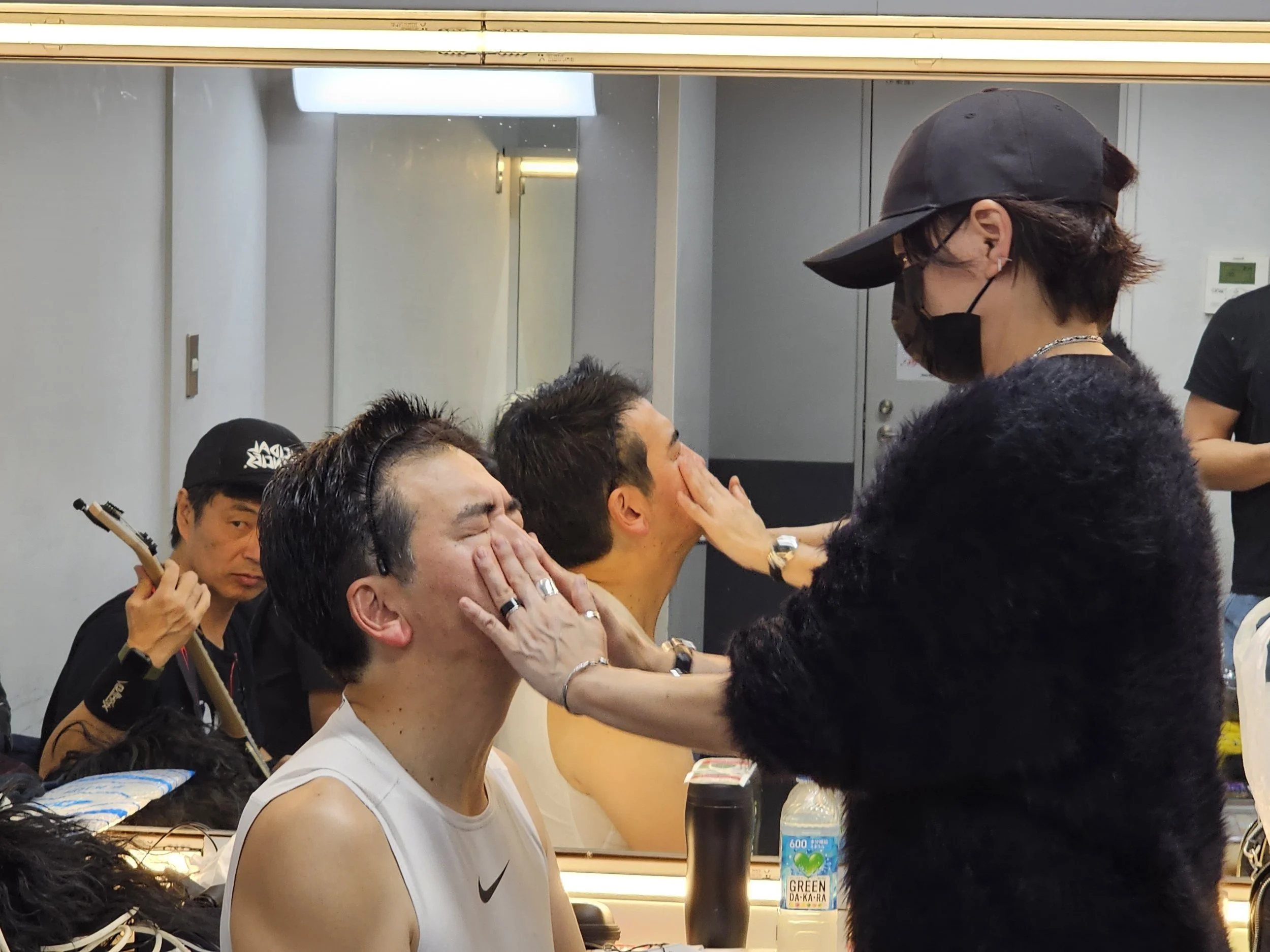
Toshi Matsuo gets some makeup from his wife, Yume Suzuki, preparing to sing with the tribute band Nonthrax.
Matsuo-san jumped onstage with his bandmates, imitating the movements and vocals of Belladonna—even wearing a Native American feather headdress at one point like his idol did (Belladonna had Iroquois ancestry).
The salaryman had vanished. It was time for rock 'n' roll to rule.
"If you're in your 20s or 30s and you do this, people fight or argue, you know?" Matsuo said. "But I think we're mature enough to know our priorities: The family comes first, work comes second, but you need to have this hobby to make your life more fulfilled and enjoyable."

A singer impersonates Axl Rose in the Guns Love Roses tribute band.
Like in Latino households, family here comes first, too. And that night had been particularly special for the Matsuos because their 25-year-old son, Kaz, was visiting from the U.S. It was the first time he had seen his father perform live.
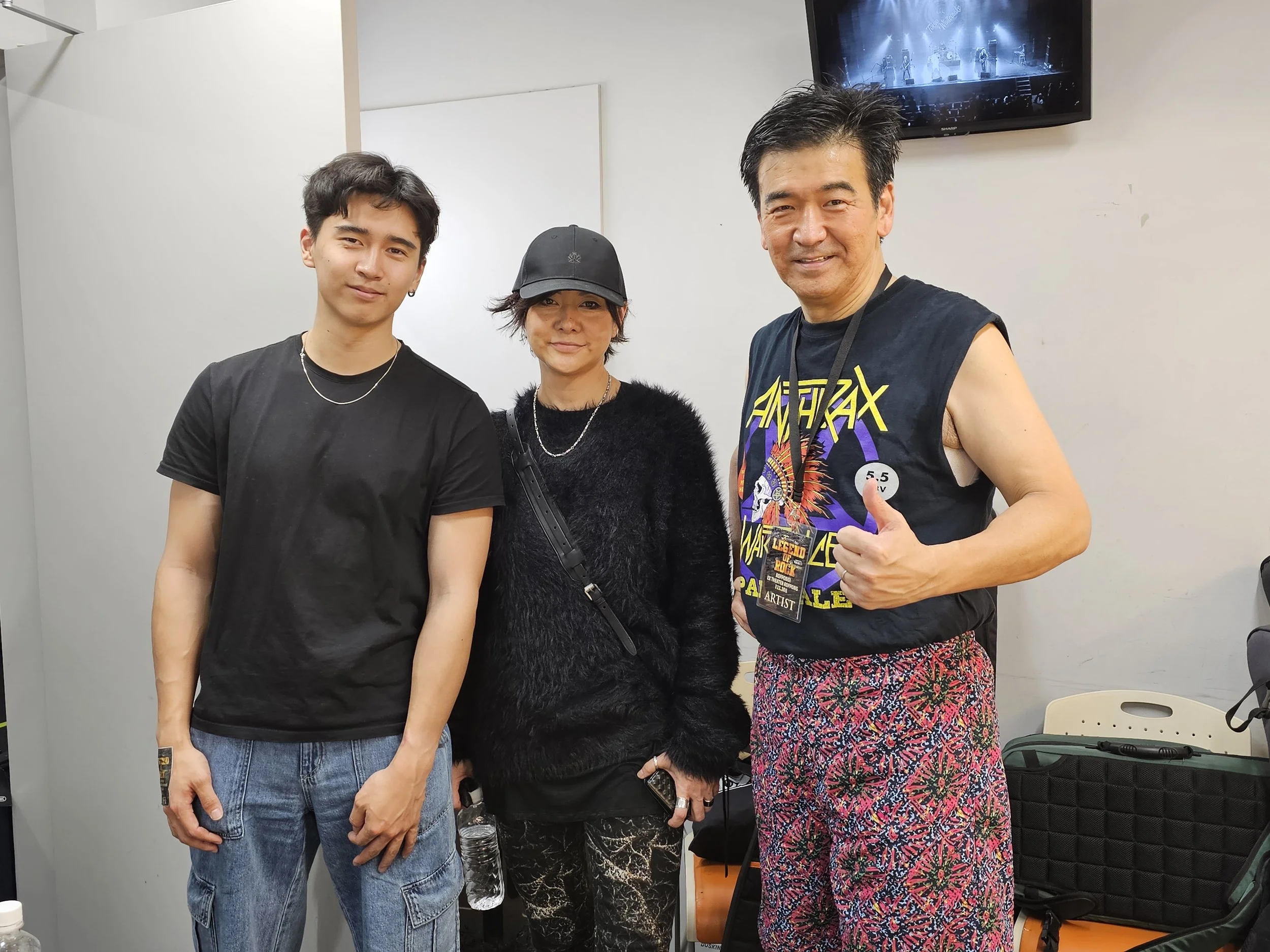
The Matsuo family: Kaz, Yume and Toshi, after the performance of Nonthrax at the Legend of Rock festival at Ex Theater Roppongi.
"I'm glad to have caught it before I fly out tonight," Kaz said. "I never actually thought growing up he would do a cover band, just because my mom has always been the artist and the singer. I didn't really expect this, but it's definitely a good turn of events, being able to see him perform like this, still very, very lively."
When the show ended, the family of three gathered backstage and greeted their own Japanese Belladonna, ready to take Kaz to the airport. But it was clear that the Matsuos weren't the only family present. Almost like in a prosperous Latino barrio, the entire community of performers and fans had formed a family of their own.
"I love to do this because you simply meet a bunch of great people, which means that you get to know different perspectives," Toshi Matsuo said.
When the night is over, the fans and performers return to their routines. But their hearts have been liberated, and rock 'n' roll remains alive and well.
—

Rodrigo Cervantes Rodrigo Cervantes is an award-winning bilingual journalist and communications strategist with extensive experience in the U.S., Mexico, and internationally. He has contributed to outlets such as NPR, CNN, The Los Angeles Times, and the BBC. Cervantes led KJZZ’s Mexico City bureau, where he launched the first overseas bureau for a U.S. public radio station. He also served as Business Editor-in-Chief for El Norte, part of Grupo Reforma, Mexico’s leading newspaper company. In Georgia, he led the newsroom of MundoHispánico, then the state’s oldest and largest Latino publication, under The Atlanta Journal-Constitution. His work has been recognized with RTDNA Murrow Awards and José Martí Awards from the National Association of Hispanic Publications (NAHP). He is the former Secretary of the National Association of Hispanic Journalists (NAHJ) and currently serves as co-managing editor of palabra, and as a clinical assistant professor at Arizona State University’s W. Cronkite School of Journalism and Mass Communication. @RODCERVANTES