
Holiday Cheer: Mexican Tourists Revive U.S. Travel Amid Declining International Numbers
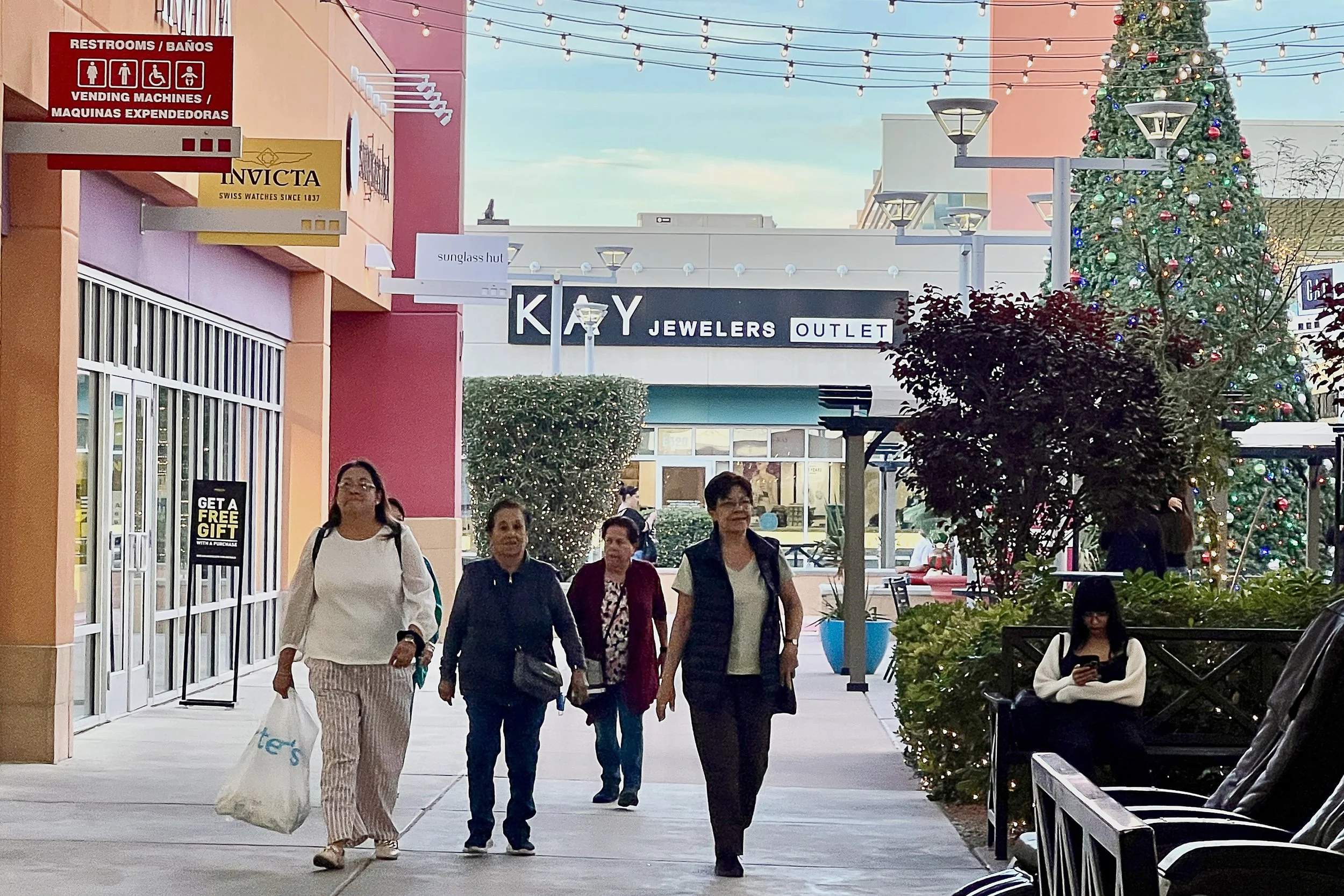
Shoppers walk through the Outlet Shoppes at El Paso. Visitors from Mexico flock to malls across Texas and other border states during the holiday season. Photo by Angela Kocherga/Puente News Collaborative
Despite political rhetoric and higher visa fees, visitors from Mexico are a booming, bright spot for U.S. border economies, driven by family, shopping, and deep-rooted ties.

Editor’s note: This story was co-published with Puente News Collaborative in partnership with KTEP News. Puente News Collaborative is a bilingual nonprofit newsroom, convener, and funder dedicated to high-quality, fact-based news and information from the U.S.-Mexico border.


CIUDAD JUÁREZ - The number of international tourists traveling to the United States has declined, with one exception: Mexico.
After a dip at the beginning of the year, visitors from Mexico are back, and their numbers are growing. In fact, those tourists are a bright spot this holiday season when many plan trips to visit relatives, enjoy entertainment and amusement parks, and, of course, Christmas shopping in malls from San Diego, Tucson, San Antonio, or El Paso, across from Ciudad Juárez.
The increase in Mexican travelers is up despite repeated videos on social media platforms showing ICE or Border Patrol agents tackling and arresting people, the majority of them Latinos, to carry out Trump’s mass deportation promise. And it comes just as the U.S. government plans to require visitors applying for travel visas to provide their personal social media history going back five years, among other requests, according to a recent proposal by the U.S. Customs and Border Protection, or CBP.
Through August, about 3 million visitors arrived by air from Mexico. That’s up slightly over the same period last year, according to data from the National Travel and Tourism Office. The number of people driving through land ports of entry grew by 13 percent this year, according to U.S. Customs and Border Protection.
“The president, the government, can do or say whatever they want, and it's all for show,” said Raymond Robertson, a professor of economics and government and director of the Mosbacher Institute for Trade, Economics, and Public Policy at Texas A&M University. “But the real love between the two countries, especially with Texas and Mexico and other U.S.-Mexico border cities, is very strong and it's very real.”
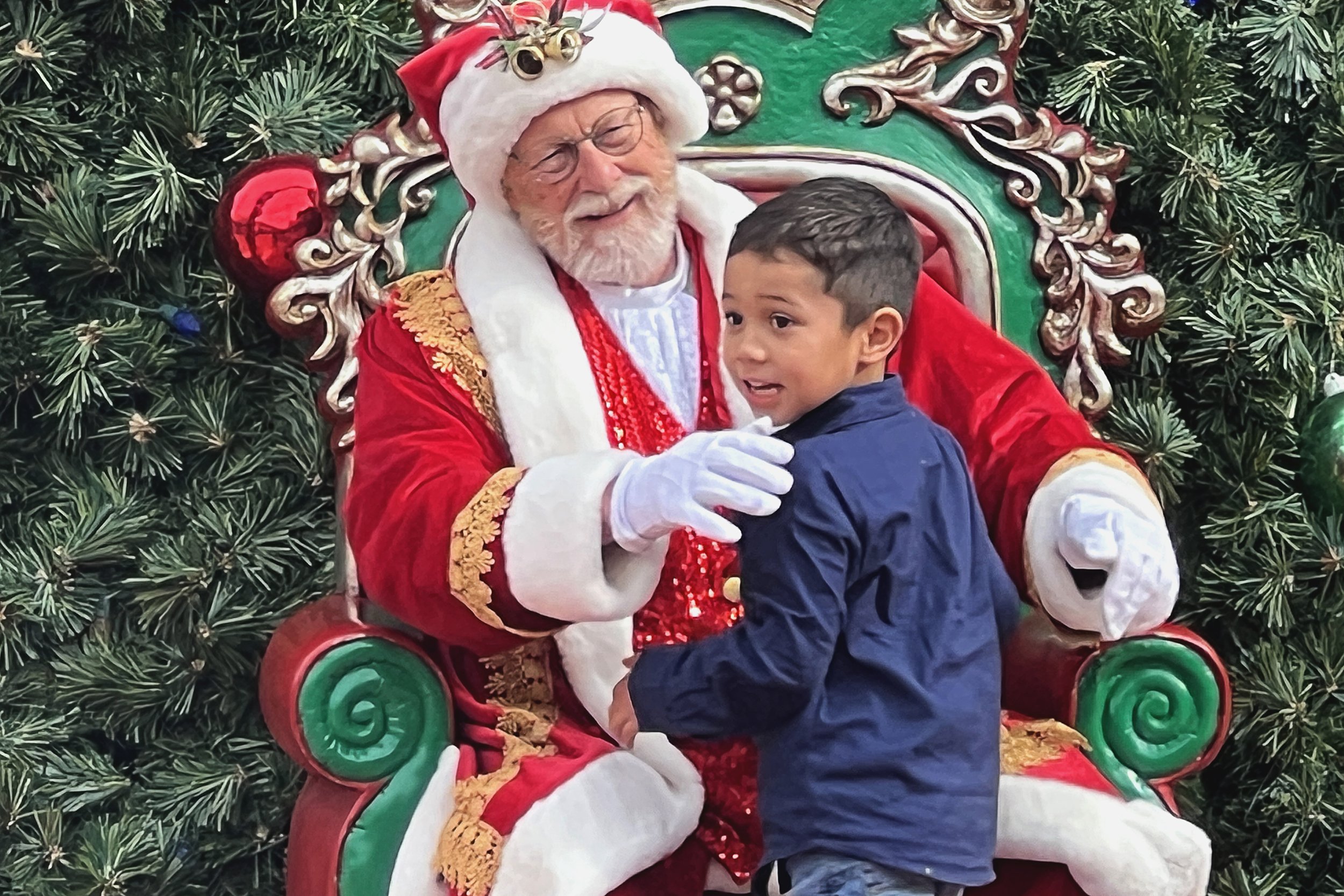
A young visitor with Santa at the Outlet Shoppes at El Paso on the busy weekend after Thanksgiving in 2025. Photo by Angela Kocherga/Puente News Collaborative
Historically, neighboring Canada and Mexico have been the top countries for international visitors. This year, travel from Canada plummeted in part because of tariffs and President Trump repeatedly saying he wants to make Canada the 51st state, which many Canadians say is insulting.
The decline in international tourism is expected to cost the U.S. $5.7 billion compared to the previous year, according to the U.S. Travel Association.
However, travel from Mexico, for now, remains strong. Citing statistics from a 2023 Department of Commerce study, Robertson said 22 percent of foreign travelers are Mexicans, the largest group overall. On average, Mexicans spent about $1,500 per trip.
Mexico, with an estimated 133 million population, is the top U.S. trading partner. More than $800 billion flows in two-way trade, figures that underscore the deep economic and cultural connection between the two countries.
“No matter the national or state politics, Mexicans still feel welcomed by the people that they engage with personally because they know, based on history, that somehow politics is always going to be ugly,” added Robertson, author of the upcoming book, “Not Just Neighbors: The Remarkable Economic Relationship in North America.”
Raúl Vargas agrees. For more than four decades, Vargas, owner of a tour company, has been driving his 52-seat bus from Monterrey, Mexico, to North Texas for Dallas Cowboys home games. In the spring, he takes busloads of fans to Houston to see Astros baseball games.
“When visiting family is involved, or seeing a game, particularly the Cowboys or Astros, we will come. Traditions are hard to break,” he said. “Good shopping deals also help.”
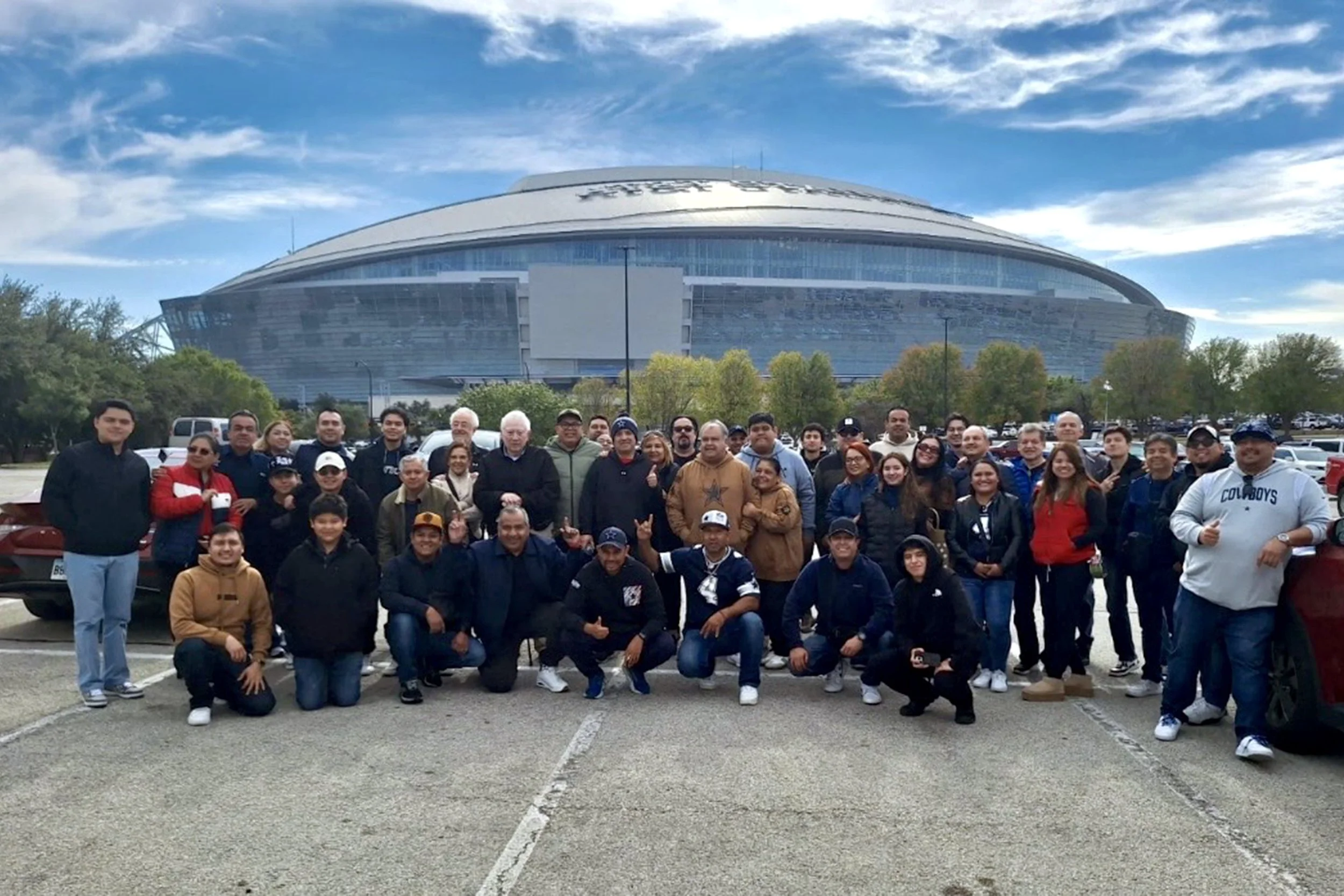
Fans from Mexico outside the AT&T Stadium where the Dallas Cowboys play in Arlington, Texas. They are among the visitors on a bus tour organized by Raúl Vargas to watch a home game and shop in November. Photo courtesy Raul Vargas
In Ciudad Juárez, people arriving at the U.S. consulate are hopeful that their application for a tourist visa will be approved. On a recent morning, the area near the massive building was bustling with activity. There are hotels and restaurants, and agencies helping people prepare their applications. The U.S. consulate in this Mexican border city has the largest visa operation in the world, issuing everything from work permits to family and tourist visas.
“I want to visit my sister in Indiana,” said Carolina. She, like most people outside the consulate, only wanted to be identified by first name because of concern that speaking to a reporter might affect approval of their visa.
Several applicants said they want a visa to go shopping just across the border in Texas or New Mexico. One young woman was renewing her visa so she could participate in a marathon at Disney World in Florida in January.
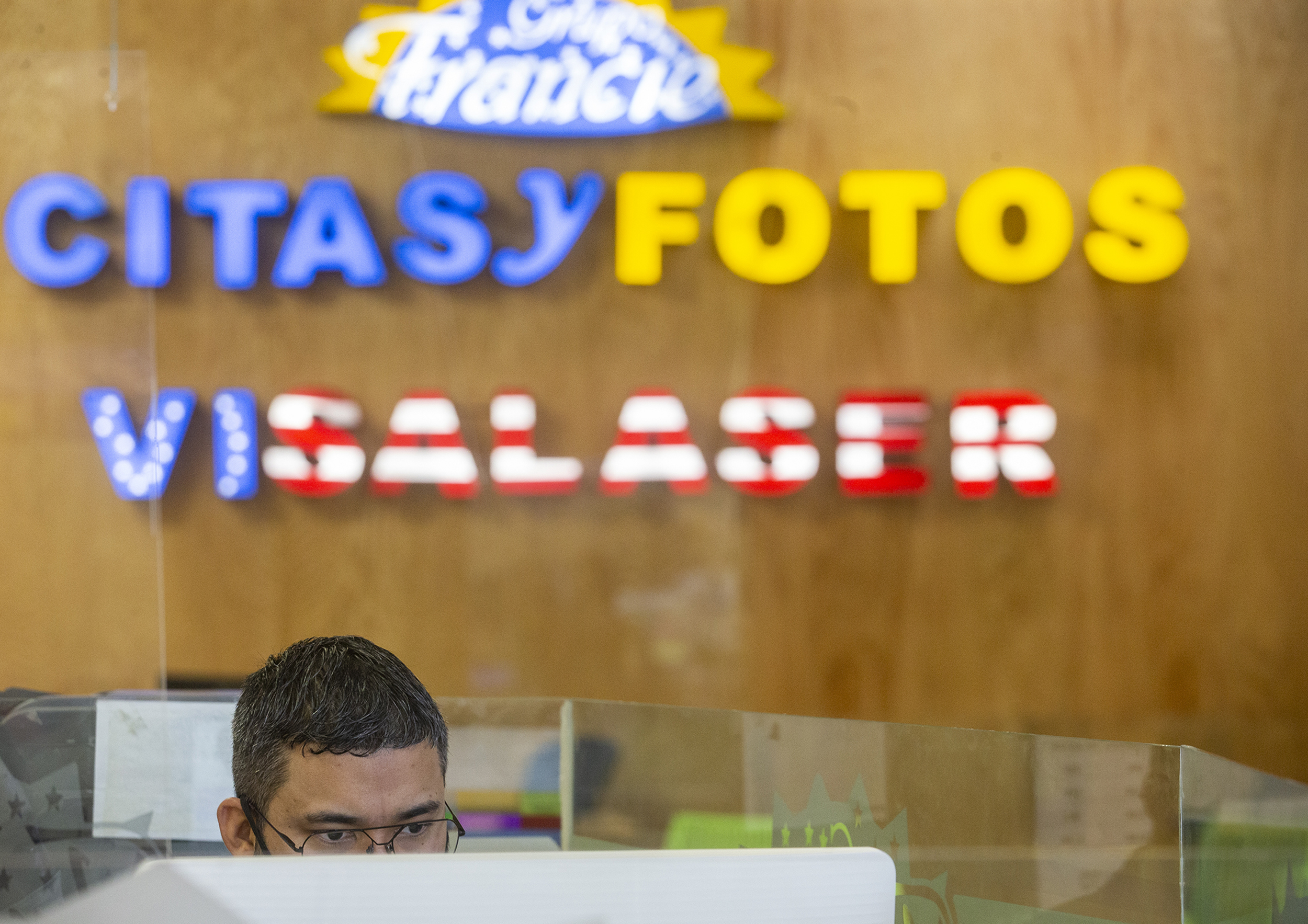
A visa application service clerk in Ciudad Juárez, Mexico, one of dozens of local providers who assist applicants before their U.S. consulate appointments. Photo courtesy El Paso Times
Mexico is not on the U.S. travel ban list, but the visa application process has become harder and more expensive since Trump took office. Even those renewing a visitor visa are now required to show up for an in-person interview. Last October, the cost rose from $185 to $435 because of a new visa integrity fee.
Moreover, there's a price hike for the required entry form tracking arrivals from $6 to $30. Finally, federal authorities are checking applicants’ social media feeds to see if they are critical of Trump administration policies.
“People are being double and triple-inspected upon entry,” said Tony Payan, Director of the Center for the U.S. and Mexico at Rice University’s Baker Institute.
Support the voices of independent journalists.
|
Payan added that the higher cost and new restrictions on everything from student to skilled worker visas can be a deterrent for some who want to come to the U.S. legally.
“I think the basic message is that you’re not welcome in the United States, even tourists who often come and spend money in the country are not welcome,” Payan said.
Yet, at least along the border states, Texas, New Mexico, Arizona, and California, the reliance on visitors from Mexico remains a potent source of income. Malls in these cities value and pamper their shoppers from south of the border.
“These consumers are very important to us,” said Gina Slechta, Director of Marketing for Horizon Group Properties. The company operates shopping centers across the country. Two of their busiest outlets are located in the border cities of Laredo-Nuevo Laredo and El Paso-Ciudad Juárez.
Slechta estimates that up to 65% of customers on weekends at El Paso’s Outlet Shoppes are from Mexico. These days, the mall is decked out and full of holiday cheer. People carry large shopping bags, and children pose for selfies with a bilingual Santa. A snow machine creates a winter wonderland in the desert southwest at sunset.
“It is not unusual for us to see people come into the shopping
center from Mexico with many family members and friends,” she said. “When it
comes to making Christmas special for their children … they do not sacrifice.”

Angela Kocherga is an award-winning multimedia journalist who has dedicated her career to reporting about the Southwest border and Mexico. In 2019, she received a Maria Moors Cabot Prize from Columbia University for courageous reporting in Latin America. She served as Mexico bureau chief and border correspondent for a group of U.S. television stations. Kocherga is currently the news director for public radio station KTEP in El Paso and contributes stories to the Texas Newsroom and NPR. @AngelaKBorder

Alfredo Corchado is the executive editor for Puente News Collaborative and the former Mexico/Border Correspondent for The Dallas Morning News. He’s the author of “Midnight in Mexico” and “Homelands.” He graduated from the University of Texas at El Paso and was a Nieman Fellow at Harvard. @ajcorchado