
Efforts to Preserve Latino Historical Monuments After Decades of Racism Left Them Neglected
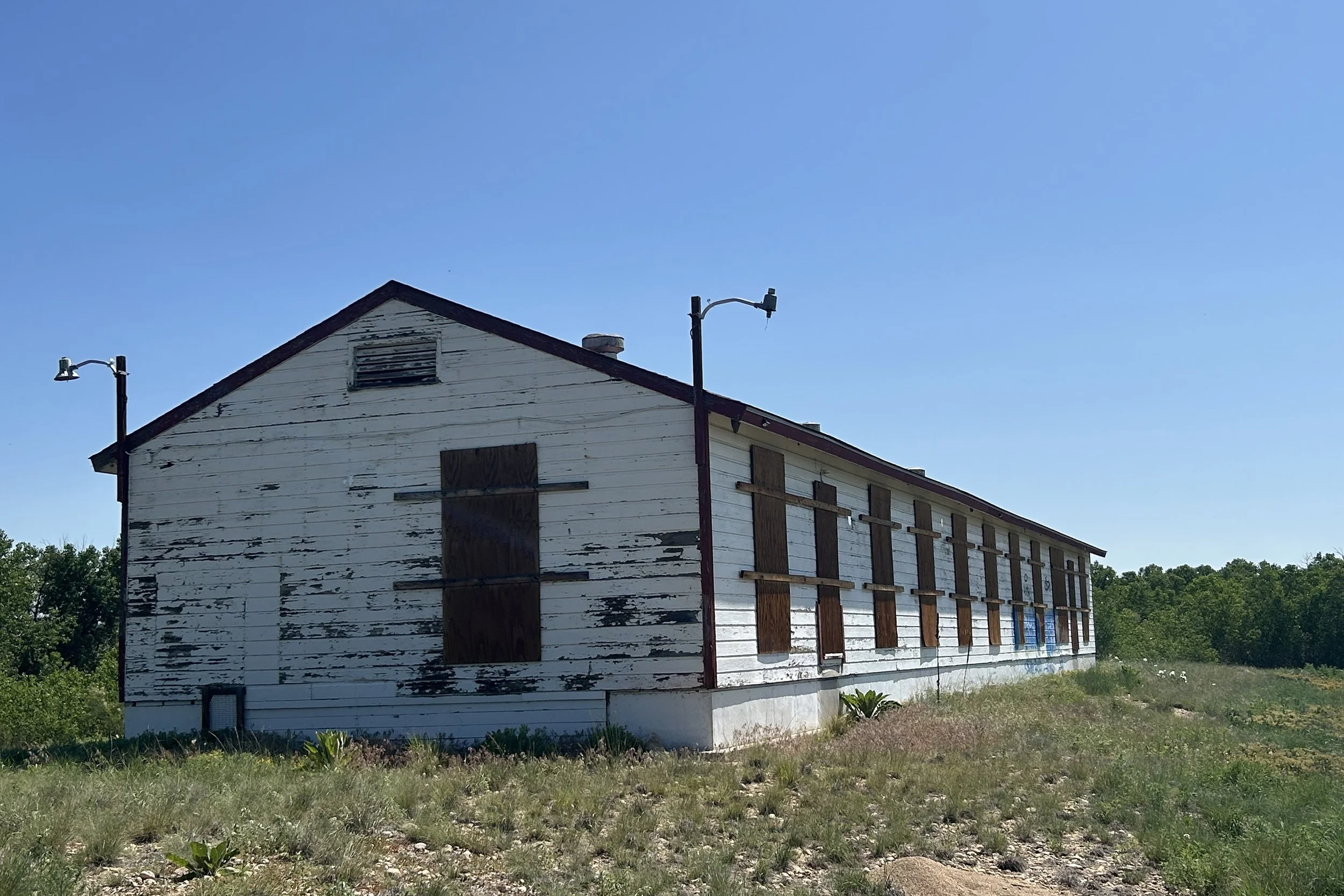
Las Barracas, a former World War II military barracks later used as agricultural labor housing in Boulder County, Colorado. Photo courtesy of Elizabeth Rios-Brooks
Reclaiming history from the ruins.
When Elizabeth Ríos-Brooks stepped into her job as a Cultural Resource Program Coordinator at Boulder County Parks and Open Space last February, she knew she wanted to honor and uplift the many histories in the county, especially those that were historically overlooked. As a Puerto Rican in a predominantly white area, she came into the role with one question: “How do we tell stories of color on the land?”
The county’s three museums and other programs that they run were predominantly sharing white, colonial stories, she said. It took some digging, but she eventually uncovered the history of Las Barracas, a World War II-era barracks located in Longmont, Colorado, where Mexican and Chicano families worked on vegetable farms from the 1970s to the 1990s, when the barracks were closed down for crowded and dangerous conditions.
“I think that the barracks represent multi-generational stories of families who shaped agriculture but were excluded from land ownership and local historic narratives,” Ríos-Brooks said. “I think it's a very tangible reminder of inequity, crowded housing, segregation, racism, and labor that really underpinned Colorado's agricultural success.”
There was not much recorded history of Las Barracas, so Ríos-Brooks interviewed community members who either lived in Las Barracas or are descendants of those who worked there. She found stories of resiliency; although they had been subjected to poor working and living conditions and segregation, the Latinos still found joy and community among each other. There was hardly any documentation of that history, and due to this neglect, the landmark faced vandalism, break-ins, and deterioration over the years.
Las Barracas isn’t the only historical Latino landmark that is overlooked and now endangered. Across the country, buildings, murals, and historical districts that tell stories of contributions and resiliency of Latinos face threats — some go back decades, others go back centuries. In the National Registry of Historic Places, which documents historical landmarks in the US, only 1% are in Latino communities. Latino conservationists and preservationists say that the cause of this is that the industry is mostly white, which leads to bias about what is worth preserving. In 2015, 80% of museum leadership was white, although demographics have diversified since then.
“For so long, our stories, Latinos, Chicanos, Hispanos, have been erased, invisibilized, and sort of forgotten,” Ríos-Brooks said. “I don't think that was a mistake. I think that the systems of white supremacy and oppression that exist in the United States have played a role in purposely erasing our narratives and our stories.”
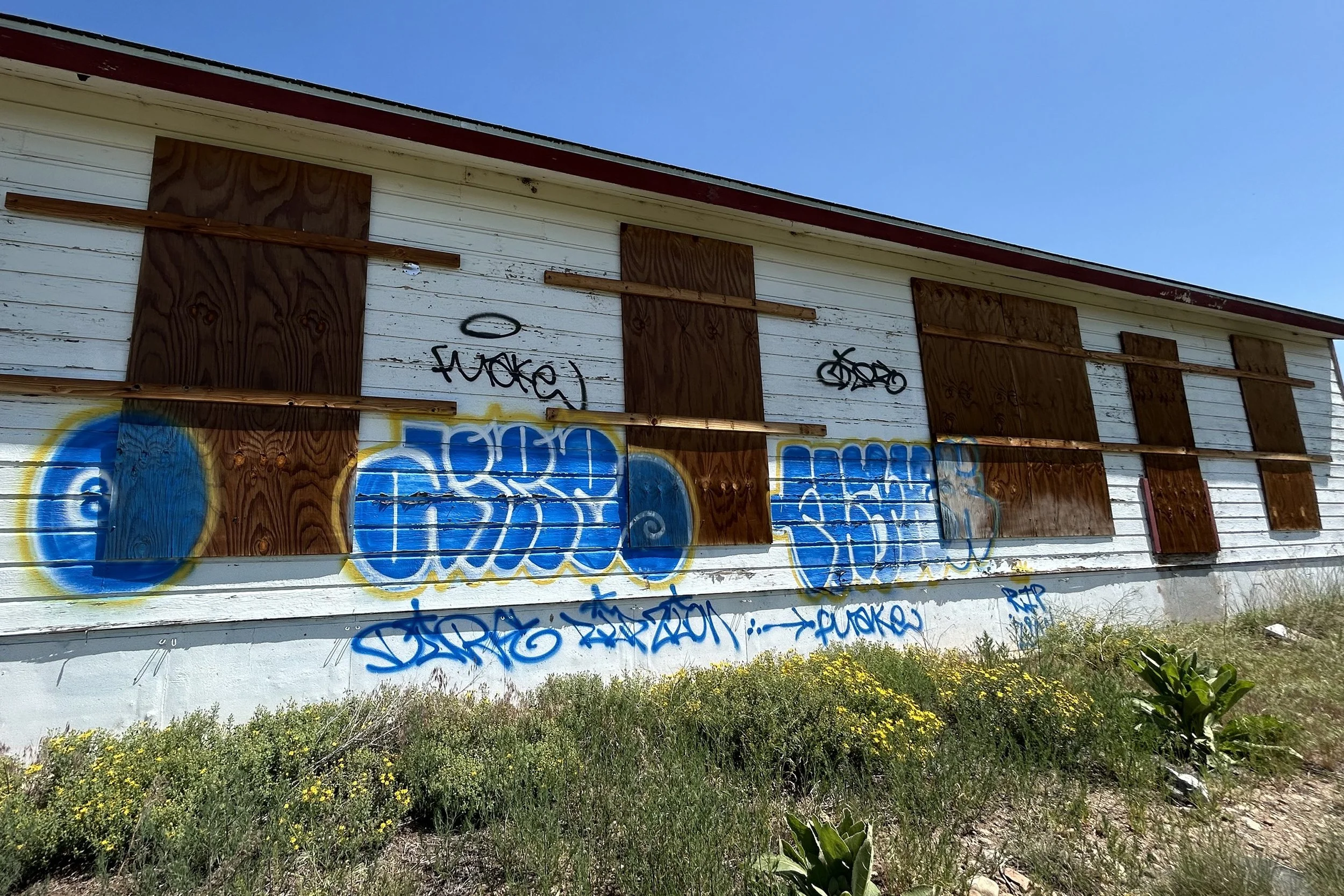
Graffiti on the south entrance of Las Barracas, in Boulder County, Colorado. Photo courtesy of Elizabeth Rios-Brooks
Sehila Mota Casper, executive director of Latinos in Heritage Conservation, the only organization in the country dedicated exclusively to the preservation of Latino heritage, created a list of Endangered Latinx Landmarks to uplift and bring recognition to these overlooked parts of history, as the US tends to neglect Indigenous and Mexican historical places.
“What we noticed is that a lot of the work that's being done at the federal and national level, and even at the state level, is focused on colonization, and this nationalistic history,” Mota Casper said. “If you have a history that begins with colonialism, you've already taken out the contributions of Indigenous and Mexicans and the footprint of what was historically Mexico.”
In addition to Las Barracas, another example is Barrio Chihuahuita, a neighborhood that has existed since before the US took the land following the Treaty of Guadalupe Hidalgo. While Barrio Chihuahuita is older than some of the presidents’ houses that have been preserved, that piece of history rarely gets recognized, and now it faces gentrification of the district, vandalism of the murals, and the people who live there are getting displaced.
Mota Casper said that Latinos in Heritage Conservation are trying to help Barrio Chihuahuita get a historical landmark status to keep the buildings from getting demolished and built over, and at the same time, encourage local businesses there to also get the status so they can qualify for funding.
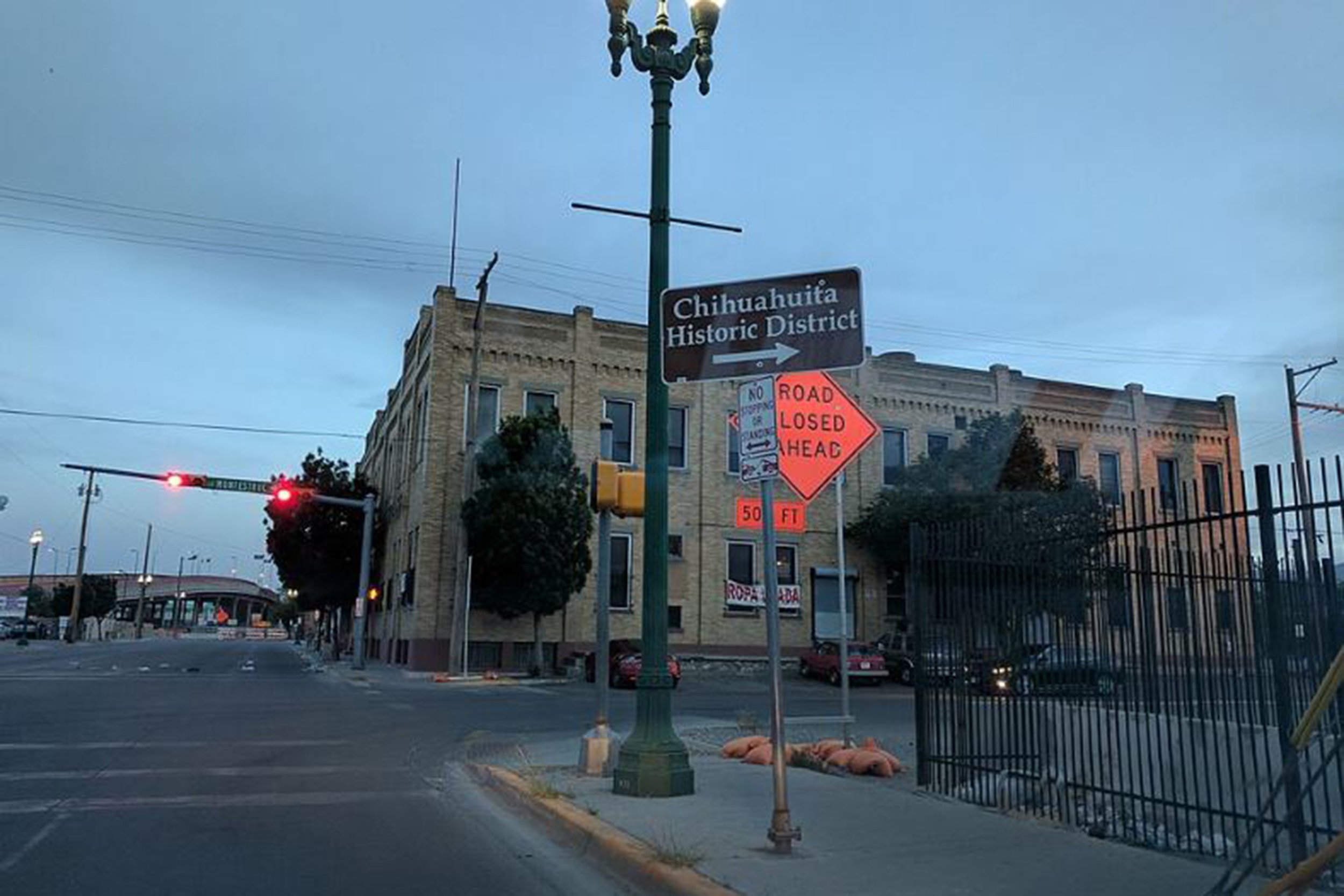
Barrio Chihuahuita in El Paso, Texas. Photo courtesy of Latinos in Heritage Conservation
“Whenever I look at Barrio Chihuahuita, I'm not just looking at the historical structures, I'm looking at the continuation of generation after generation, or that have migrated like those that have migrated before,” Mota Casper said. “In this barrio, you have tienditas, tortillerías, you have legacy businesses that keep it thriving and that keep it going.”
In San Francisco, the Calle 24 Latino Cultural District is home to more than 150 vibrant murals going back to the 1970s. These murals tell stories of Chicano history, the anti-war movement, solidarity with El Salvador, and more — but like Las Barracas, the murals have been neglected. Many faded or were vandalized over the years. Most of the murals that predate the 2000s have faded away because they were never preserved.
Art conservationist Aureliano Rivera said that before he started working on preserving the 24th Street murals in 2008, no other conservationist had taken an interest in working on them, and he has not worked with another conservationist since then. He said that there is systemic bias and disconnect in the professions that are part of conservation and preservation, and the community of muralists on 24th Street.
Rivera also said there are a lot of barriers in the art conservation industry that make it difficult for people of color to get into graduate school and get experience. As someone who grew up with a father who is a farmer in Puerto Rico, he felt like he was competing against people whose realities were different from his; however, this background has helped him connect and bring visibility to Latinos in San Francisco.
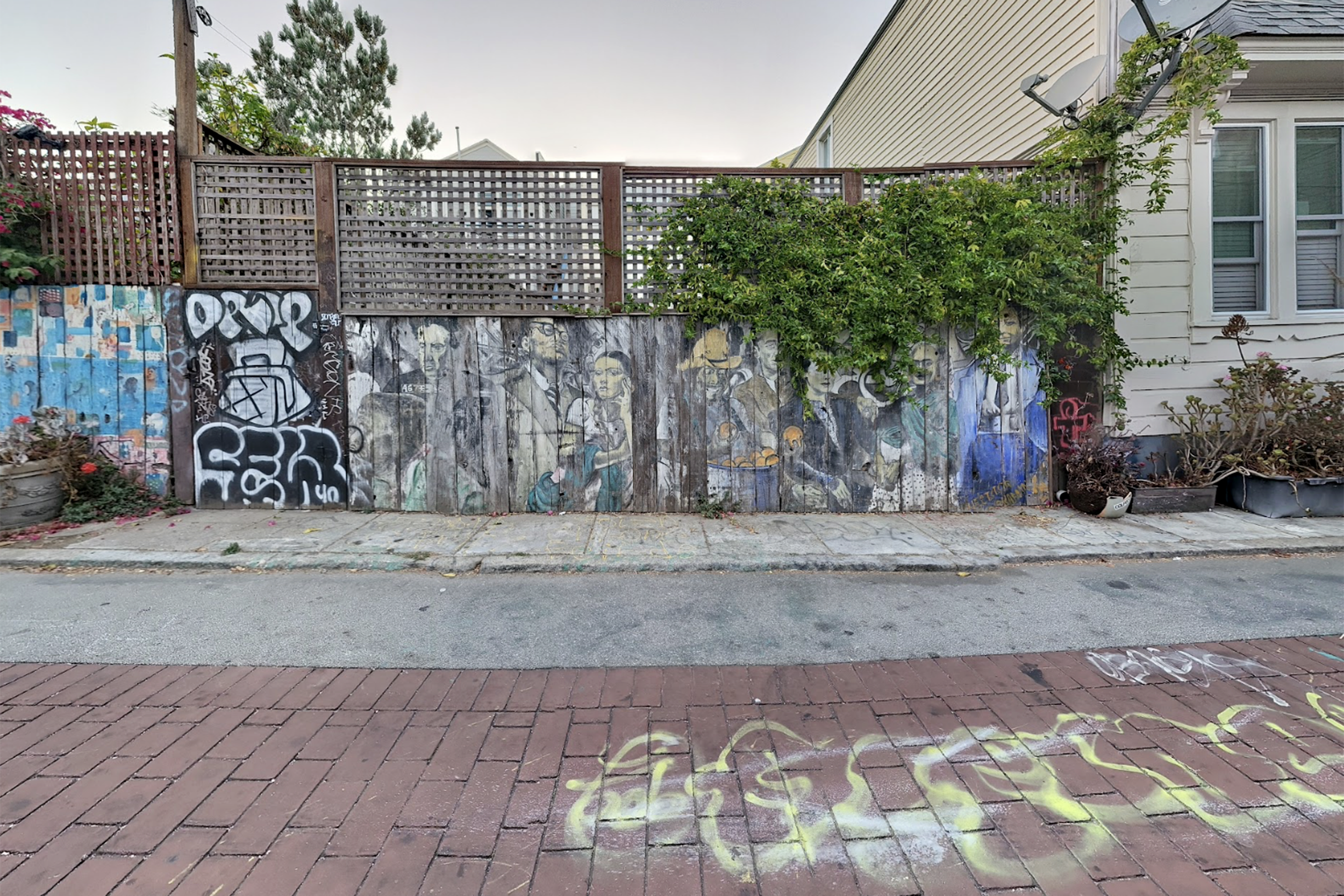
Mural of icons of Mexican art by Héctor Escarramán, painted in 1995, located in the 24th Street neighborhood in San Francisco, California. Photo courtesy of Aureliano Rivera
Support the voices of independent journalists.
|
“Being fluent in Spanish has been critical,” Rivera said. “It means you can include people who don't normally get included in this kind of work, and that right there has been super key to having a connection with people and helping them understand what kind of work was going on.”
Rivera said that conservationists and preservationists should do better, and he hopes to see more diversity requirements to apply for funding when working on projects.
Ríos-Brooks said that she is planning to continue doing community outreach to learn more about Latino history in Colorado that was not recorded. As she has been doing this work, she has already had people reach out to her to say that they were raised in Las Barracas and share memories.
“If there's no books for us to research, then we have to go straight to the community, and we have to ask, ‘Where did you feel connected? Where did you find joy? Where did you labor?’ and then start to document those stories for future generations and so that they're not lost,” Rios-Brooks said.
—

Victoria Valenzuela is an independent journalist in California covering immigration, prison reform, and Chicano activism. She has a Master’s in specialized journalism with a concentration in social justice and investigations from the University of Southern California. She has been published in the Los Angeles Times, The Guardian, BuzzFeed News, The Intercept, Ms. Magazine, Bolts Magazine, and more. She previously worked with NAHJ as an intern and was a member of the student committee, and has also worked with The Marshall Project as an audience engagement intern, was an emerging reporter fellow with ProPublica, an uprising fellow with Just Media, and an inaugural fellow with the Law and Justice Journalism Project. @Victoriaevalenz

Patricia Guadalupe, raised in Puerto Rico, is a bilingual multimedia journalist based in Washington, D.C., and is the co-managing editor of palabra. She has been covering the capital for both English- and Spanish-language media outlets since the mid-1990s and previously worked as a reporter in New York City. She’s been an editor at Hispanic Link News Service, a reporter at WTOP Radio (CBS Washington affiliate), a contributing reporter for CBS Radio network, and has written for NBC News.com and Latino Magazine, among others. She is a graduate of Michigan State University and has a Master’s degree from the Graduate School of Political Management at George Washington University. She is the former president of the Washington, D.C., chapter of NAHJ and is an adjunct professor at American University in the nation’s capital and the Washington semester program of Florida International University. @PatriciagDC