
Fewer Deportations, But a Deadlier Driver

February 27, 2025 - Texas National Guard troops stand near the Border Wall in El Paso before they are deputized by the Trump administration to carry out immigration enforcement duties.
The Trump administration deported fewer Mexicans in 2025 than in recent years. But new data shows cartel violence — not just economic hardship — is now driving migrants from regions wracked by criminal gang warfare.

Editor’s note: This article was co-published with Puente News Collaborative, a bilingual nonprofit newsroom that covers stories from Mexico and the U.S.-Mexico border, the Los Angeles Times, and Quinto Elemento Lab, an independent, non-profit investigative journalism organization based in Mexico
Words by Steve Fisher @Stevelfisher
Photos by Angela Kocherga- KTEP News/Puente News Collaborative
Edited by Steve Padilla Column One Editor/Los Angeles Times
MEXICO CITY – The Trump administration has launched an unprecedented immigration enforcement operation across the U.S. to deport undocumented people, but data compiled by a Mexican investigative outlet show that deportations of Mexicans were lower last year than in each of the previous four years.
Under the Biden administration, deportations per year of Mexicans reached nearly 300,000. Since President Trump returned to the White House last January, the U.S. has deported a little over 144,000 Mexicans to their homeland by the end of 2025, according to Mexican government data.
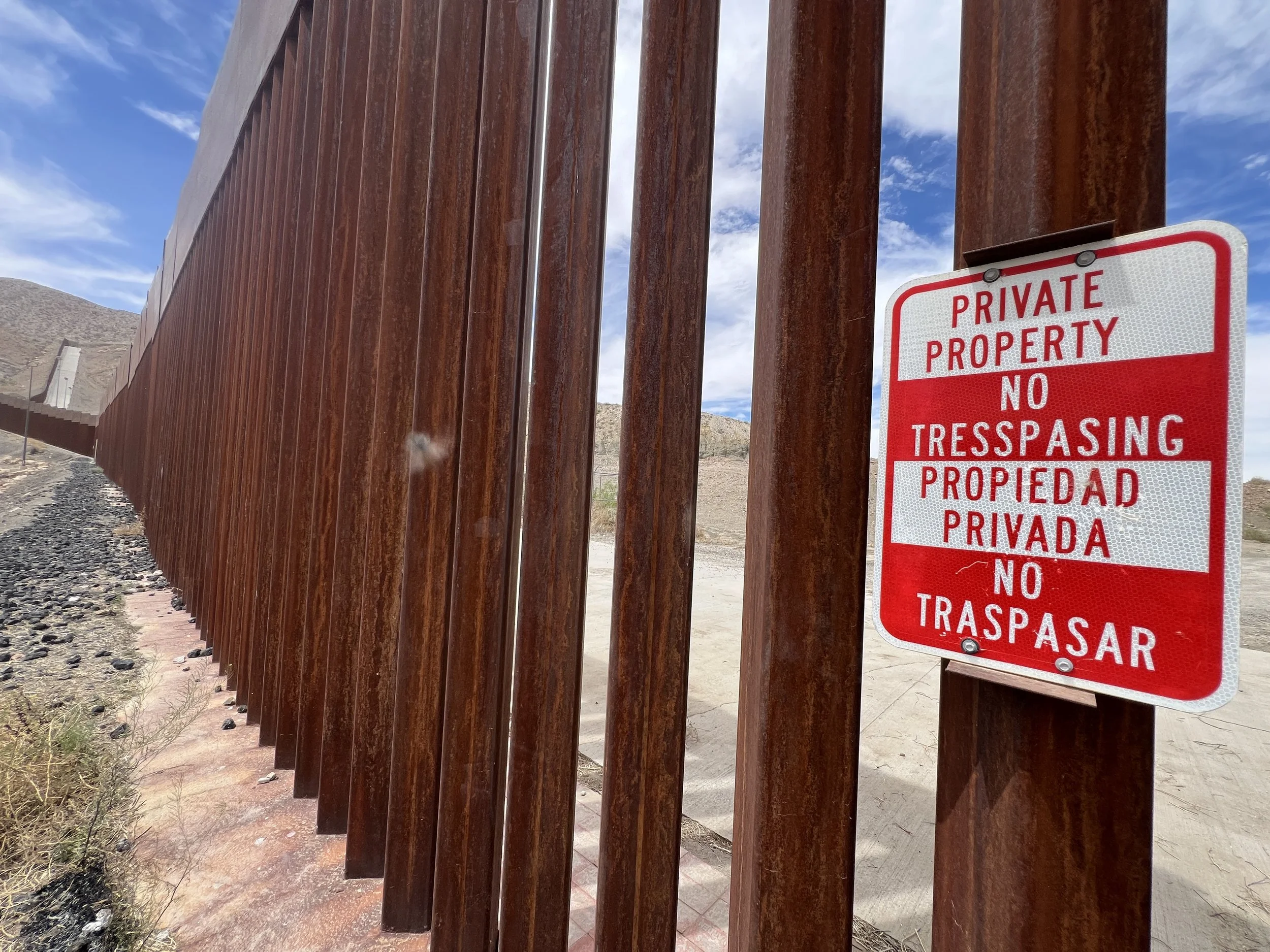
April 14, 2024 - A stretch of border wall extends through the desert and up mountainous terrain near Sunland Park, New Mexico.
The analysis by Quinto Elemento Lab, an independent nonprofit investigative journalism organization based in Mexico City, illustrates current trends in migration from Mexico to its northern neighbor, and highlights the conditions in Mexico driving those trends. The data show that around 90% of those deported were men.
SUBSCRIBE TO PALABRA’S NEWSLETTER
“The deportation policy that Trump has rolled out does not appear to be as severe as in previous years in numerical terms,” said Efraín Tzuc, data analyst with Quinto Elemento Lab.
But raw numbers do not tell the whole story about Mexican migration. The overall numbers are down, in part, because fewer Mexican migrants are entering the United States since President Trump beefed up border security. Fewer successful entries can mean fewer ejections.
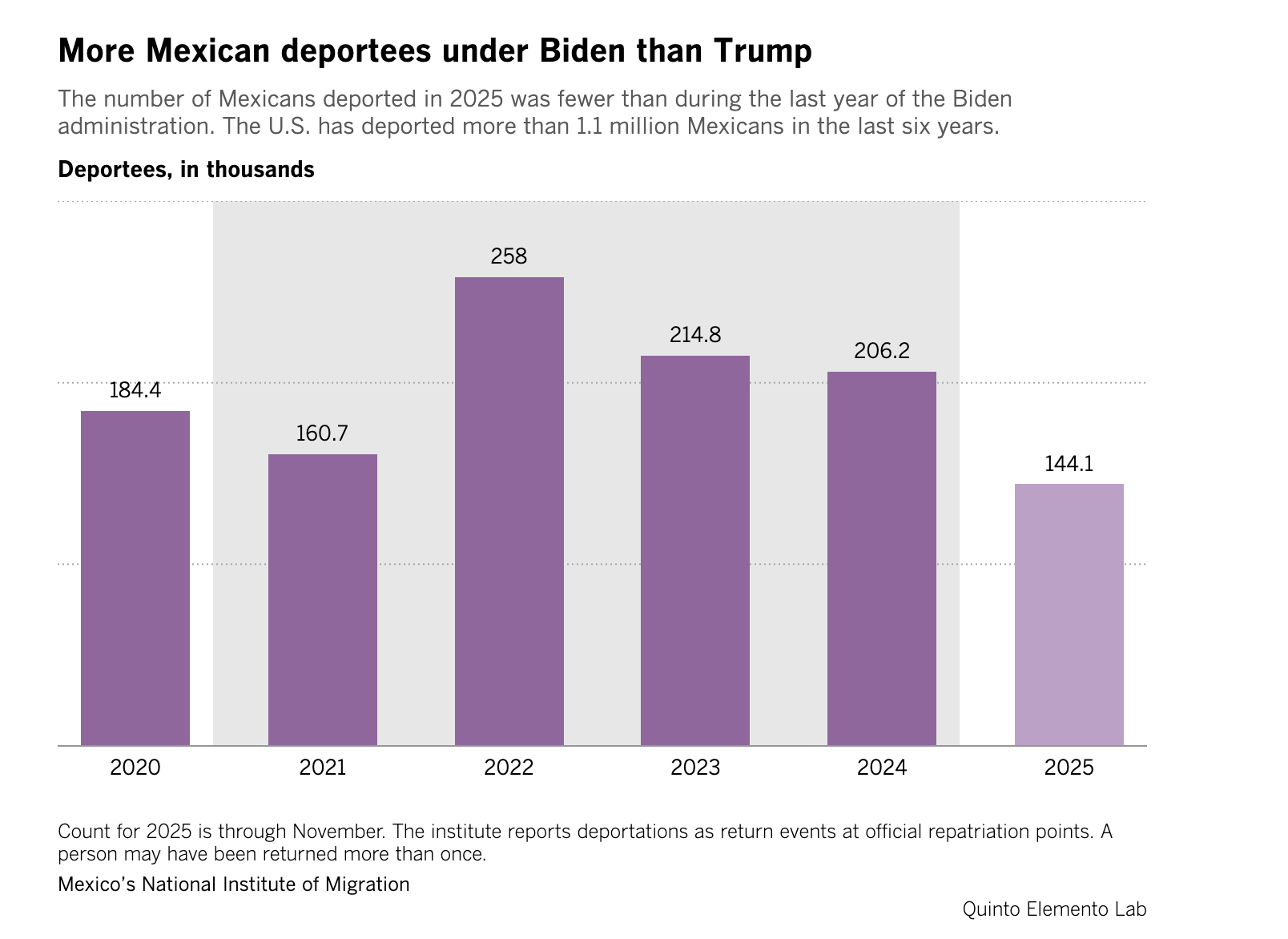
For generations, Mexican immigrants have crossed the border in search of economic opportunity. That motivation still holds, but Mexican government data analyzed by Quinto Elemento Lab reveal many of the migrants deported in 2025 came from states that are wracked by cartel violence.
The highest number of deported Mexicans, 12,786, came from Chiapas, which borders Guatemala and is Mexico’s southernmost state. Traveling from there to the U.S.-California border is a journey of about 2,000 miles.
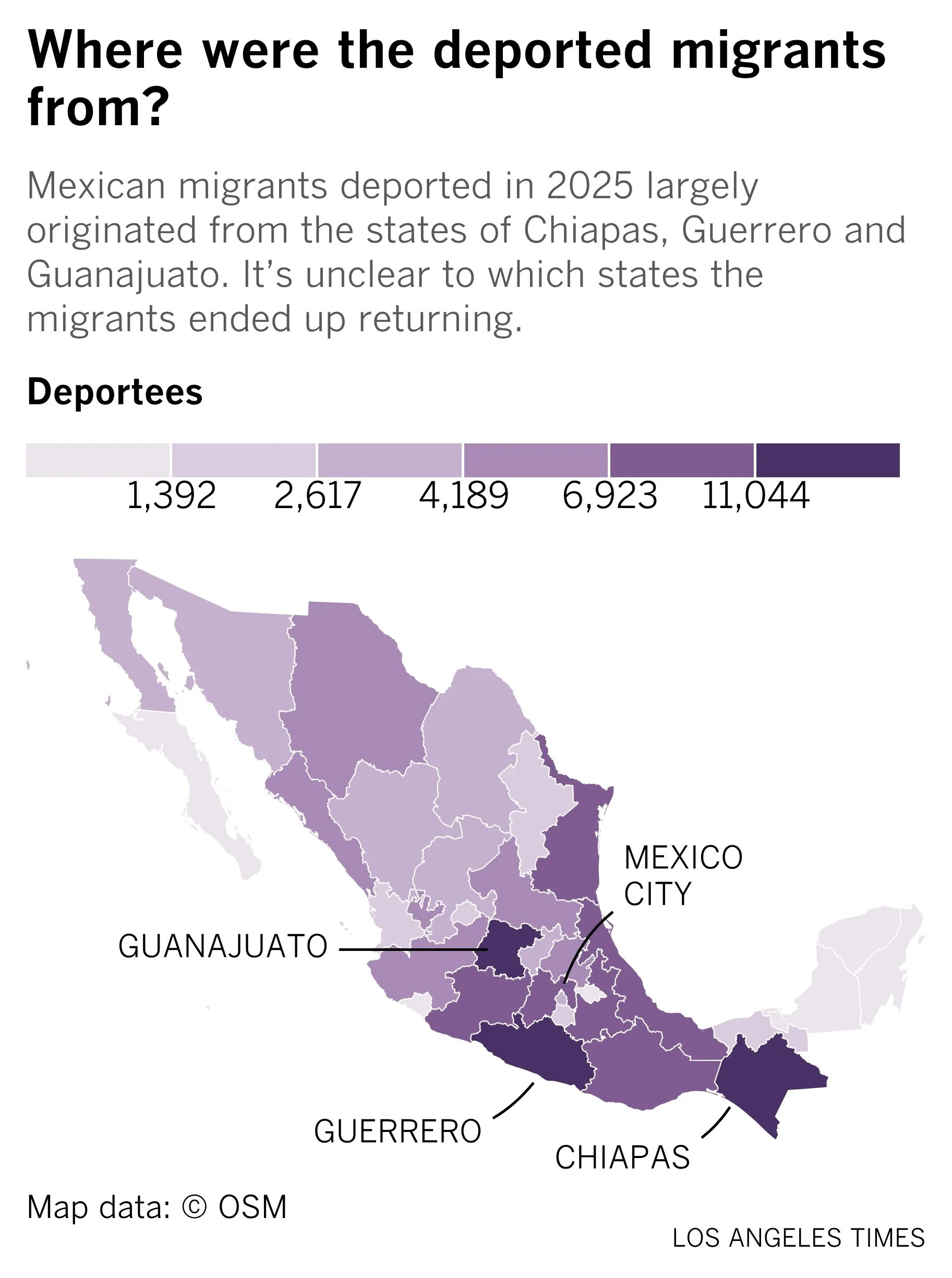
In decades past, a state in central Mexico would be the likely source of the most immigrants, but cartels have waged bloody battles in Chiapas over the last decade, as criminal groups fought to control lucrative drug trafficking and migrant smuggling routes from Guatemala into Mexico.
The hyper-violent Jalisco New Generation cartel, which started in the western state of Jalisco, is now a presence in far-off Chiapas. The criminal group was vying for control of migrant smuggling routes there, according to security analysts, and fought bloody battles for the territory. Extortion of citizens skyrocketed as the group implemented its model of extorting communities they control to pay the salaries of foot soldiers.
After Chiapas, the two other main states of origin for deported Mexicans were Guanajuato, at 11,552, and Guerrero, trailing just behind with 11,044.
As in Chiapas, the Jalisco New Generation cartel now dominates life in parts of Guerrero, driving entire populations from their villages to take over the territory for its drug trafficking operations and opium growing. Cartels there have escalated their use of violence, using drone bombs to target not only their enemies and military convoys, but have also used them to drive villagers from their homes.
Support the voices of independent journalists. Donate to palabra today!

February 23, 2025 - A thirty-foot wall divides a rugged stretch of border between the U.S. and Mexico near El Paso, Texas.
In one case in 2024, the Jalisco New Generation cartel dropped more than 100 bombs on one community in the mountains of Guerrero in 24 hours, according to a former cartel operative who witnessed the bombings.
The southern state of Oaxaca had the fifth-highest number of Mexican deportees – 9,133.
Oaxaca is one of the country’s poorest states, with 16% of the population living in extreme poverty, according to government data. The state has long been an exporter of migrants to the United States looking for work to support their families at home.
The trend found in the Quinto Elemento Lab analysis – that more Mexicans were deported annually under the Biden administration than the second Trump administration – is also reflected in statistics for deportees of all nationalities.
An analysis of federal U.S. data by the New York Times shows that in 2025, the Trump administration deported about 540,000 people last year. That is 50,000 fewer than in 2023 and 110,000 fewer than in 2024, the last year of the Biden administration.

Steve Fisher is a Puente News Collaborative correspondent and covers security in Mexico. He has written for The Los Angeles Times, The Wall Street Journal, The New York Times, and The Washington Post. @Stevelfisher

Angela Kocherga is an award-winning multimedia journalist who has dedicated her career to reporting about the Southwest border and Mexico. In 2019 she earned a Maria Moors Cabot Prize from Columbia University for courageous reporting in Latin America. She served as Mexico bureau chief and border correspondent for a group of U.S. television stations. Kocherga currently is news director for public radio station KTEP in El Paso, and multimedia editor for El Paso Matters. She lives on the southwest edge of Texas and calls the border home.

Steve Padilla is editor of the Los Angeles Times showcase feature Column One. In more than 30 years with The Times, he has edited a wide variety of topics, including presidential politics, higher education and religion.