
Despite Relief for Drought-Stricken Corpus Christi, Residents Change Water Habits for the Long-Term
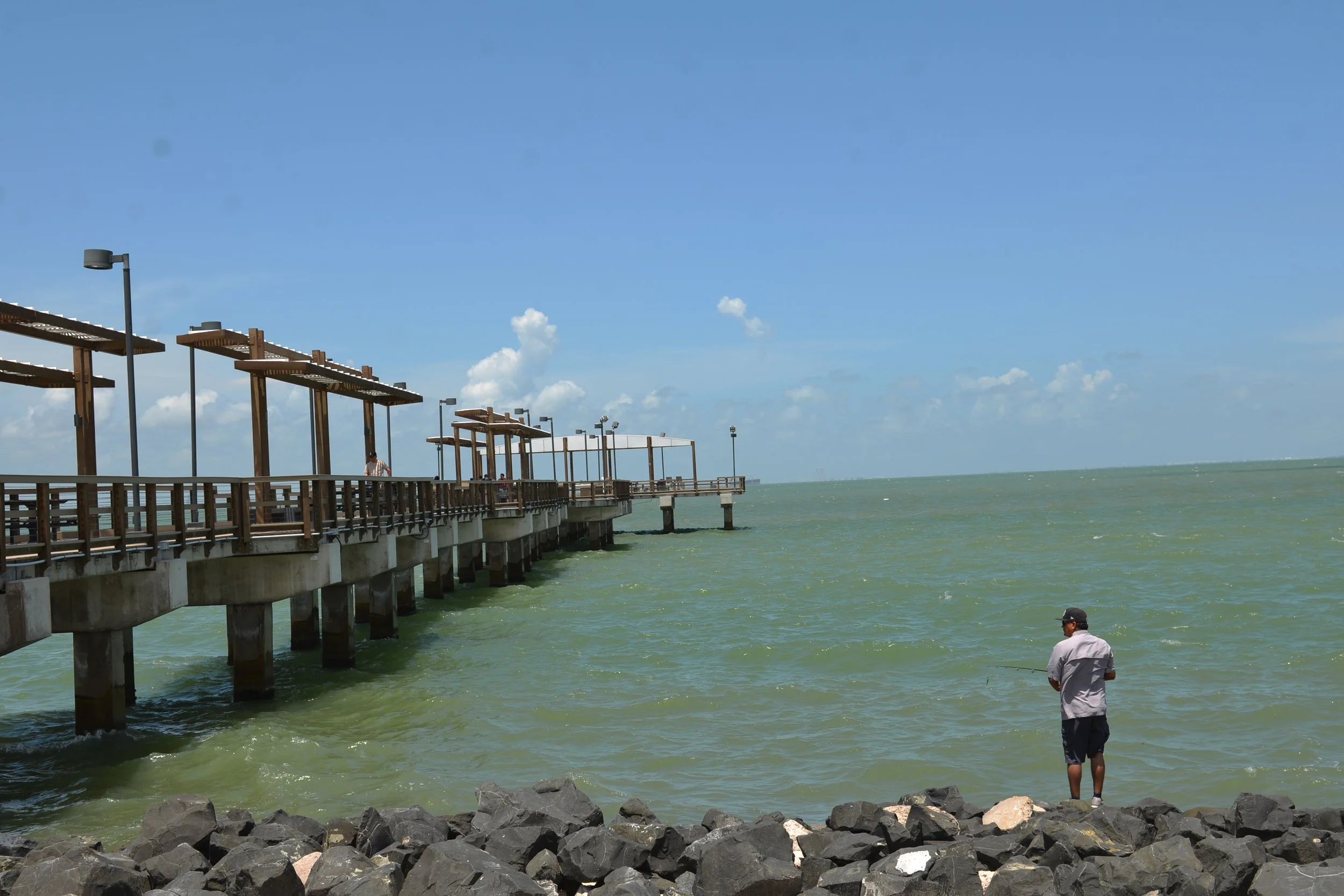
Corpus Christi is synonymous with water. As the risk of a water emergency subsides, many residents remain thoughtful about their relationship with water.
From home kitchens and showers to animal shelters: A walk through Corpus Christi reveals residents’ creativity to cut water use and adapt to scarcity.
Editor’s note: This article is published in partnership with The South Texas Project, an initiative at Texas A&M University’s Department of Communication and Journalism that reports stories from the region.
Clic aquí para leer en español.
Text and photos by Mariano Castillo, @mariano_tamu
CORPUS CHRISTI, Texas – On an otherwise empty residential street, Louis Alvarado pushed a lawnmower to trim the yard of an elderly church friend, keeping the front of the home looking tidy amid other homes where grass and weeds twist upward. Ordinarily a normal chore, lawn care hadn’t been the same here since the city entered Stage 3 water restrictions in December 2024. The water restrictions meant no more watering lawns, making yard upkeep trickier, if not impossible.
The outlook has been improving: In August, the city lowered its alert level to Stage 2 water restrictions, which allows for limited irrigation.
“We don’t talk to that many neighbors around here about this thing,” Alvarado said on a recent weekday morning, pointing out the varying shades of green and brown and plant health within eyeshot. “I don’t think it’s a sensitive topic, but it’s more like, what can we do? You got your hands tied.”
The water restrictions are the result of a drought and increased demand that has seen the reservoirs that feed Corpus Christi dwindle. Earlier this year, the concerns reached new urgency when officials predicted that the water shortage would turn into a full-on water emergency, the point where the water demand would be six months away from outpacing supply.
The fears drew national headlines. Could Corpus Christi run out of water? Were the water needs of industry taking precedence over the needs of residents? What solutions existed?
The city originally was on pace to hit the water emergency mark in September of this year. It was pushed back to December, and then even more relief came. Recent rains and floodwater delayed until September 2028 what just months ago seemed like an imminent crisis.
SUBSCRIBE TO PALABRA’S NEWSLETTER

There are no giant billboards about the water shortage or obvious signs of despair in Corpus Christi. One of the few indicators is this drought meter outside of a city office.
Alvarado was taking advantage of the rains that brought out more green and signs of life in the grass. Even if some neighbors were allowing weeds to take over their lawns, he wanted to help his friend keep hers neat. The news of the water emergency timeline being pushed back is welcome relief, but it’s temporary. Water restrictions remain, and Alvarado said people were facing it in different ways.
“Everyone could have a different opinion, but we’re all going through the same thing,” he said.
With the emergency risk delayed for the next two years, some residents might see the crisis as averted. For others, the experience has marked new water conservation habits for the foreseeable future.
New routines for families and kids
It’s on the minds of Alex Deanda and her family, whose habits have changed during the course of the water restrictions.
“We have five kids in the house, ranging in age from 20-years-old to a 3-year-old, so we kind of cut down on water usage for showers and meal prepping, not running the water so much,” she said.
Even though the most severe water emergency restrictions have not been reached, her family is already getting used to shorter showers, complete with door-knock reminders from the parents.
“I get it, it’s hard, kind of constant, constant, constant being on the kids,” Deanda said. “Or I’m always watching the water usage, like ‘hey, be careful, don’t leave it on.’”
“We have five kids in the house, ranging in age from 20-years-old to a 3-year-old, so we kind of cut down on water usage for showers and meal prepping, not running the water so much.”
— Alex Deanda, water-conscious resident
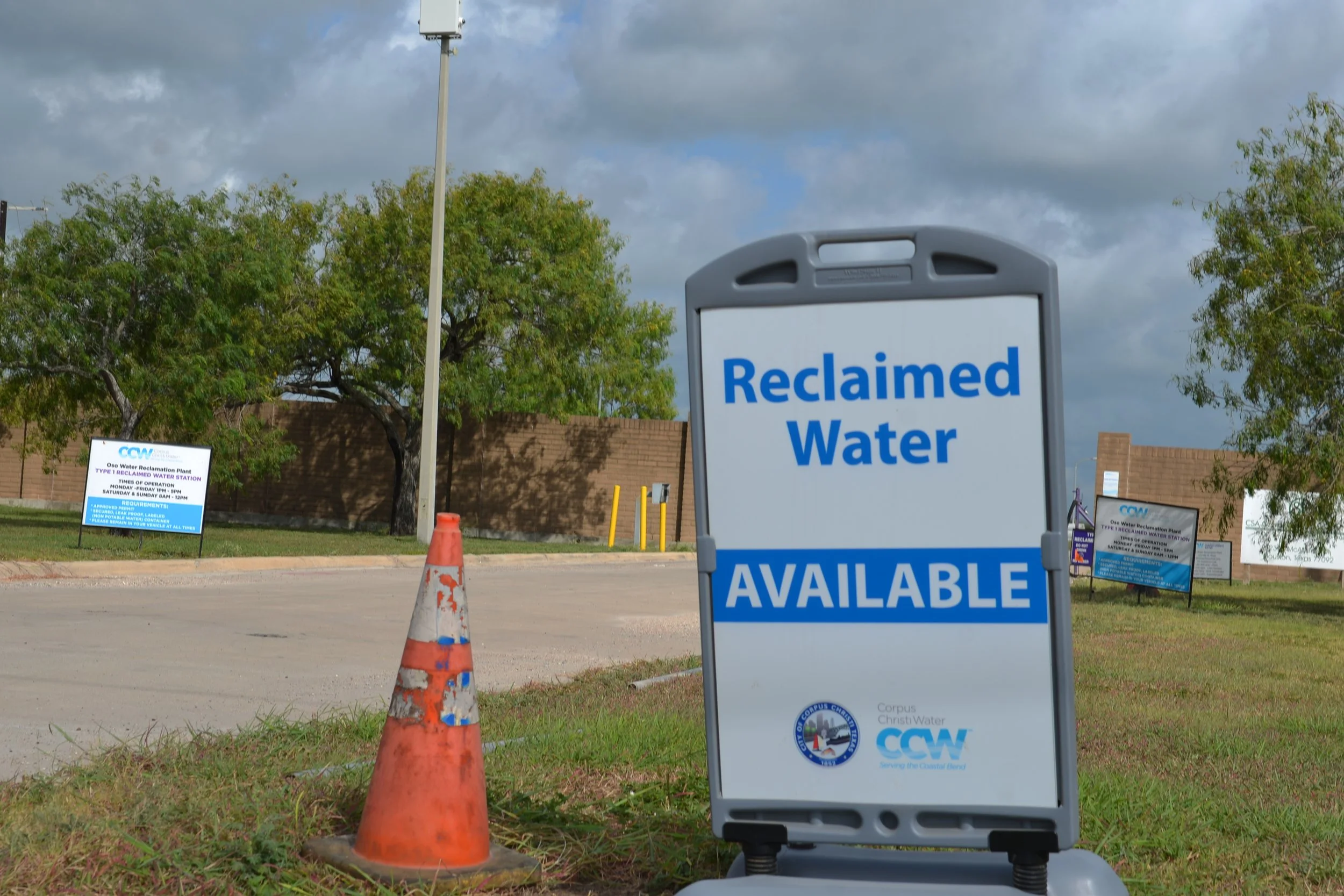
One of the ways in which Corpus Christi residents have adapted their habits is by using reclaimed water from the city for things like watering lawns and plants.
Across Corpus Christi, the low water levels remain on people’s minds, but if you’re looking for an obvious warning sign that the 8th-largest city in Texas was at risk of running out of water, you won’t see one. On the surface, the city runs like normal. There’s not giant billboards or feelings of despair. To an extent, it’s a hidden issue: the reservoirs are outside of the city, the pipes that bring in potable water are underground and the headlines have diminished following the recent rains.
And there’s the irony – pointed out by several residents – that Corpus Christi is synonymous with water. The Corpus Christi Bay welcomes visitors driving into the city, and several of the city’s premier parks and attractions are on the waterfront. The beach is a short drive away, crossing the Laguna Madre, where visitors kitesurf and fishermen cast their lines. It’s hot, humid, and the saltiness hangs in the air.
“We live by the ocean, man,” said Juan Collazo, pondering why there wasn’t some way to pull usable water from the humidity, or “steal water from the air.” Standing in front of his home on the city’s west side, Collazo thinks big. His enthusiasm stands in contrast to a neighbor a few doors down who, when asked about the water scarcity, simply said, “If it happens, it happens.”
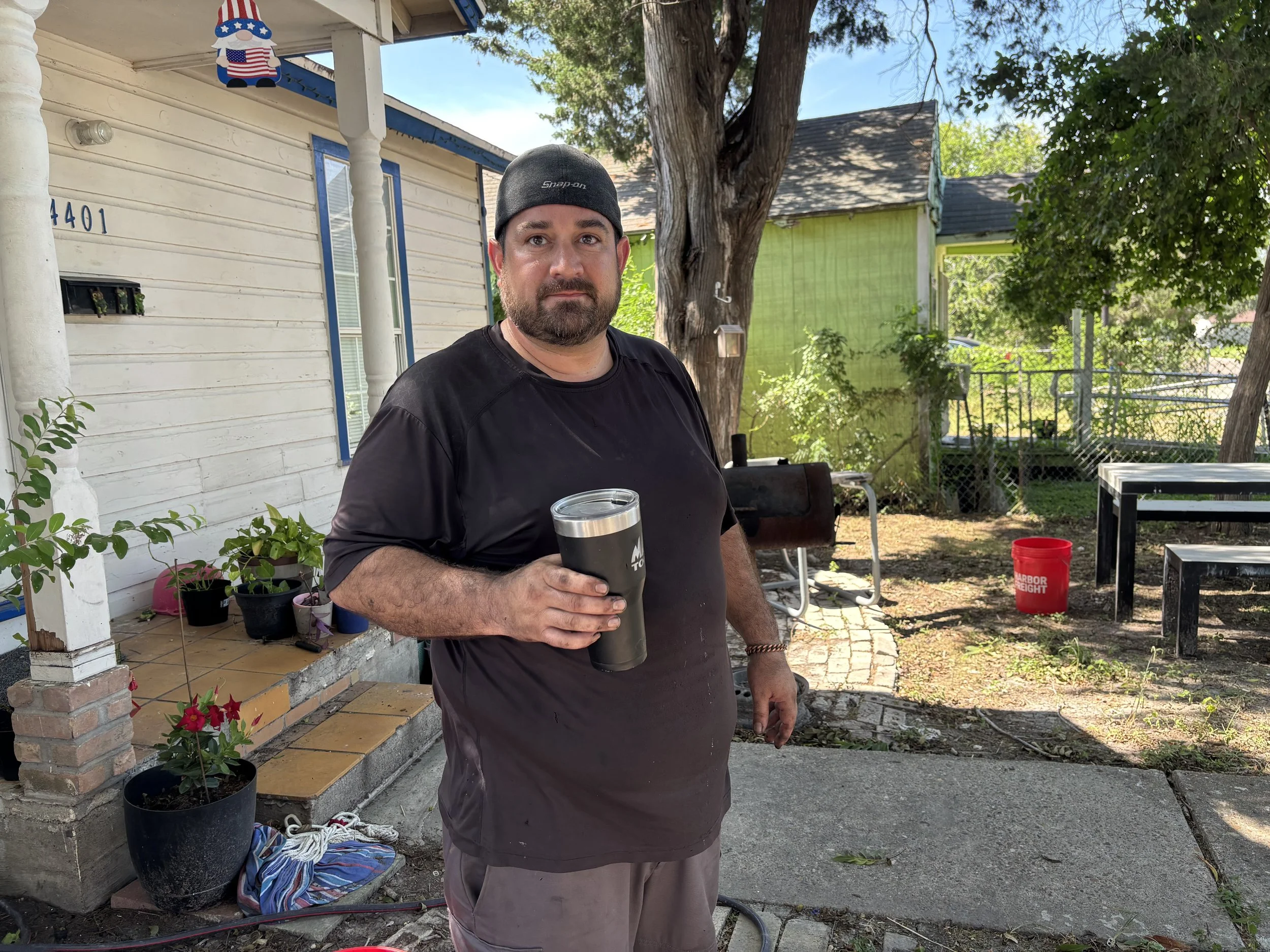
Juan Collazo is among the residents actively concerned about the water shortage. Not all of his neighbors feel the same.
Support the voices of independent journalists.
|
Collazo supports the idea of a desalination plant, a potential solution that has been touted as a long-term, drought-proof measure. In February, the city approved the construction of a brackish water desalination project at a city water treatment plant that, once fully online, will be able to provide 21 million gallons of drinking water a day.
A separate, nearly $1 billion desalination plant project continues to be debated. After being rejected last year, it was nearly revived in June before ultimately being tabled until September. Critics are concerned about the cost and potential environmental consequences.
The city is taking other steps, too. It makes reclaimed water available to individuals and businesses to meet certain needs without violating the water restrictions. Reclaimed water is recycled wastewater that is not drinkable, but authorized for use on lawns and for some industrial purposes. The city uses reclaimed water for public fields and parks.
Residents have also adapted by buying discounted rain barrels from the city that they can use to collect water. It’s a way to save water that can be used for washing cars or lawn care.
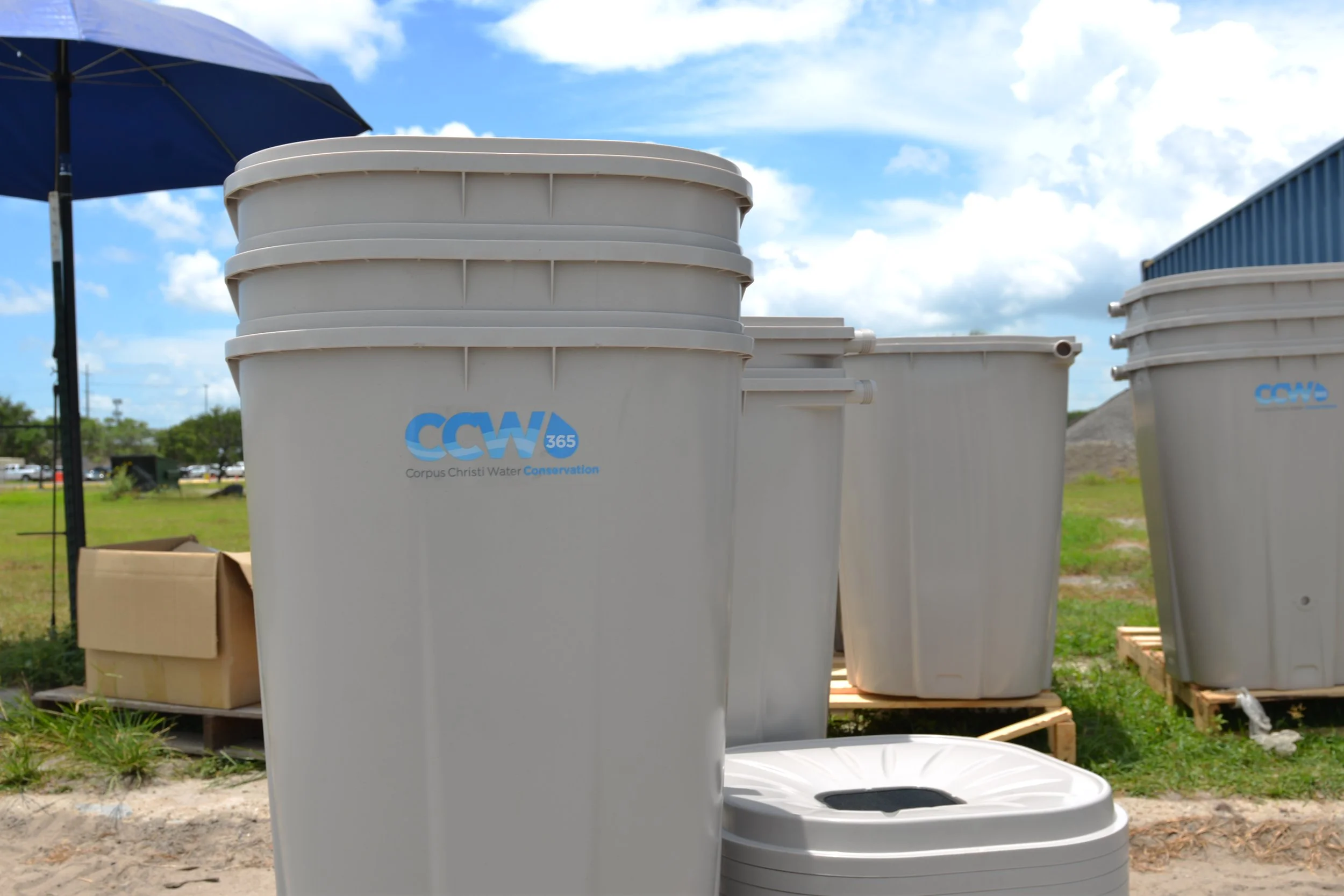
The city has made rain barrels available to residents at a discount. Even with the immediate risk of a water emergency delayed for years, such resources and habits may stick around.
Businesses make changes, too
It’s not just families that are taking measures to adapt. Even with the immediate emergency delayed until deep next year, water is an indispensable resource for businesses and organizations.
The Coastal Bend Humane Society houses 300 animals who need their water bowls filled and who need to be bathed. On a hot July day, dogs trotted back and forth inside their rectangular kennels, some with small kiddie pools. Without proper cleanliness, the risk rises of diseases spreading.
“We’re using water all day long, so it’s a concerning thing about the water, because we can’t really make sacrifices when it comes to taking care of our animals in the best possible way,” said Jackie McCollough, director of marketing and development.
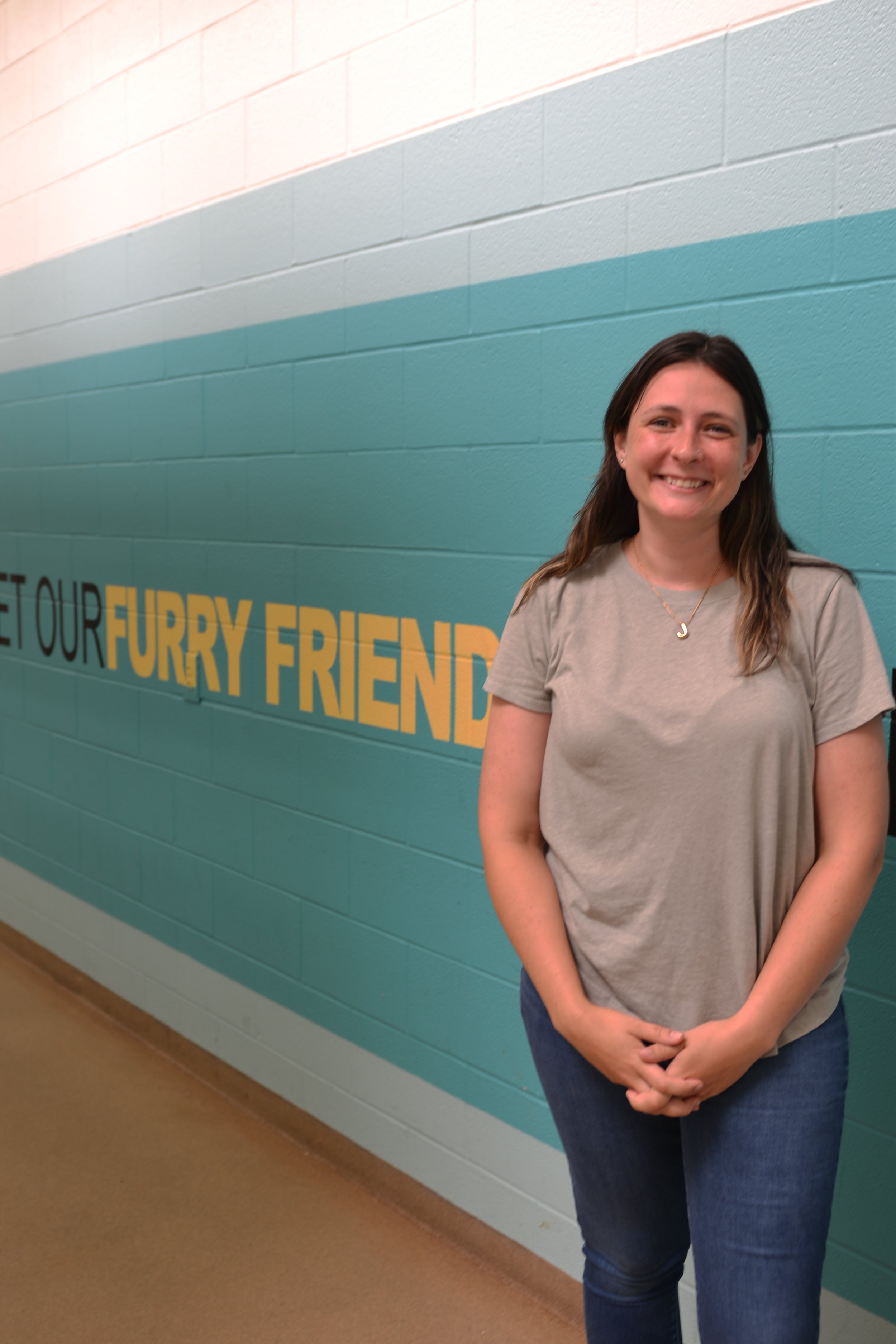
Jackie McCollough and her colleagues at the Coastal Bend Humane Society have made changes to conserve water while protecting the needs of the animals they care for.
The shelter has begun preserving and reusing water in small ways. Water buckets used for the animals aren’t just dumped out when they need to be refilled. Instead, the water is used to clean the kennels. A large tank that holds water for emergencies and is usually replaced each year was not drained this year, McCollough said. Instead of dumping it, they did a chemical shock treatment on it to extend its usefulness.
Other businesses, like the golf courses in the city, have been using reclaimed water long before the drought.
The water shortage will define Corpus Christi’s decision-making as a city and at the individual level for the foreseeable future. The most dire predictions have been moved back nearly two years, but even without the threat of an immediate water emergency, residents’ relationship with water has taken on a new light for the long haul.

Mariano Castillo is a Professor of Practice in journalism at Texas A&M. Previously, he held several roles at CNN, from writer to fact check editor to director of standards and practices. @mariano_tamu