
An Indigenous Cemetery Was Rescued, But the Growth of AI May Become a Threat
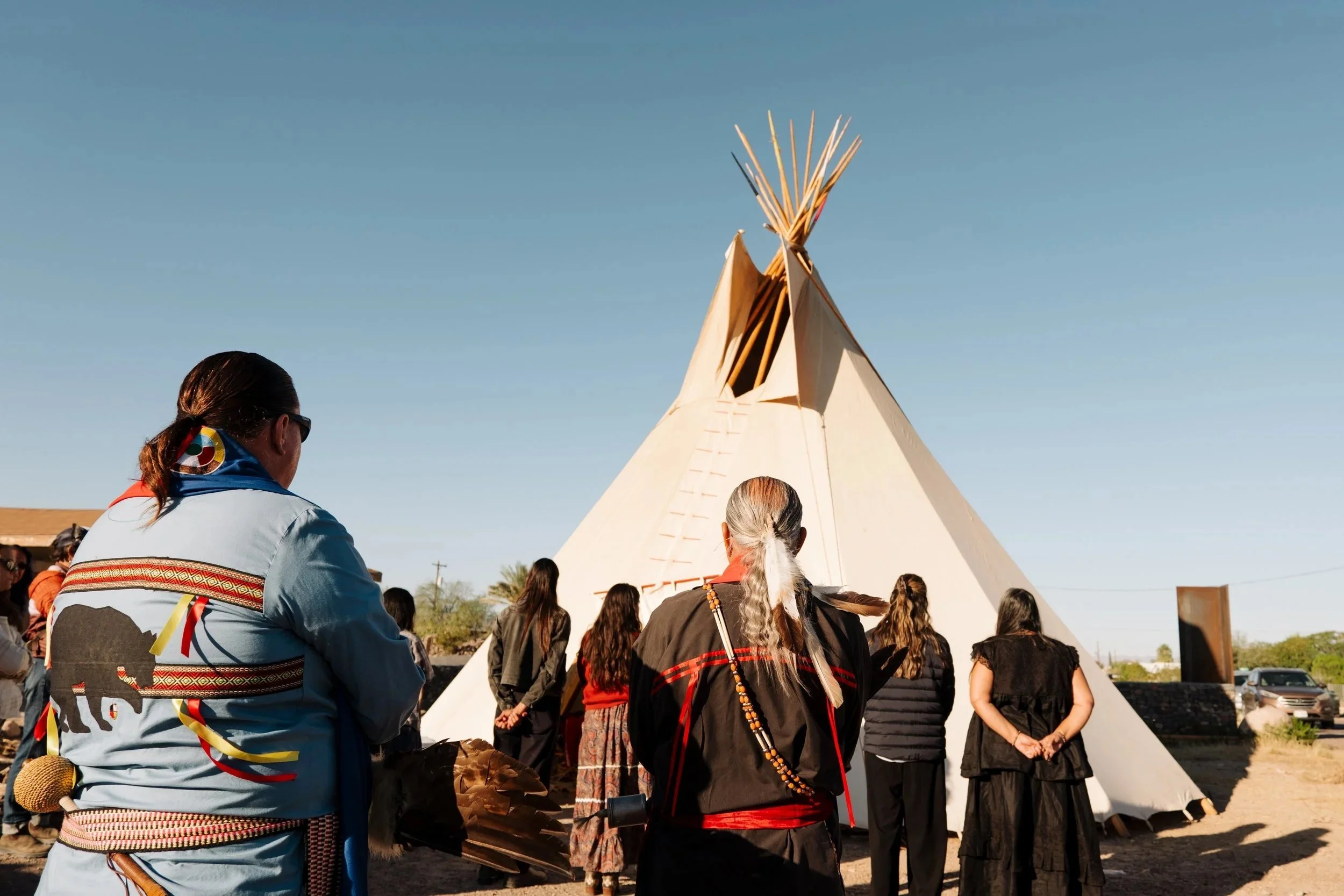
Members of La Junta and the surrounding communities gather in early November around a tipi before the reburial ceremony in Presidio, Texas.
NATIVE COMMUNITIES CELEBRATED THE REBURIAL OF THEIR ANCESTORS IN WEST TEXAS, BUT THE LAND MIGHT BE UNDER THE RADAR OF TECH COMPANIES.
Haga clic aquí para leer este reportaje en español.
Words by Koyana Flotte, @koyanankyflotte
Edited by Rodrigo Cervantes, @RODCERVANTES
Photos by Sarah M. Vasquez, @sarahmvasquez
PRESIDIO, Texas – The sun was high in the east, its light settling into the mesquite covered in colorful prayer bundles at the top of the burial mound in Presidio. This day, on November 1, the remains of many that had been taken away from this site were finally returned.
The night before, relatives and community members of the Indigenous Peoples of La Junta stayed with the remains of their deceased through a long ceremony in which they were “dressed”—carefully placed into boxes with cloth and prayers in preparation for reburial.
As the morning started, a calling shell sound signaled the beginning of the ceremony. More than fifty people began to gently lift “the Ancestors” from the tipi.
As a member of La Junta—which includes Concho, Chiso, Jumano, and Julime lineages—and a direct descendant of the Lipan Apache Tall Grass Band from El Barrio de los Lipanes, my relationship to this place is long-standing. I first encountered some of the Ancestors discussed here in 2006, during a high school visit with my environmental science teacher, Pat Simms. Today, as a community scholar who previously researched and helped write the signage for this burial mound, I have taken particular care to document the continuous return of families to this burial site, so that their voices remain as part of the conversations shaping the future stewardship of this place.
Subscribe to palabra’s newsletter
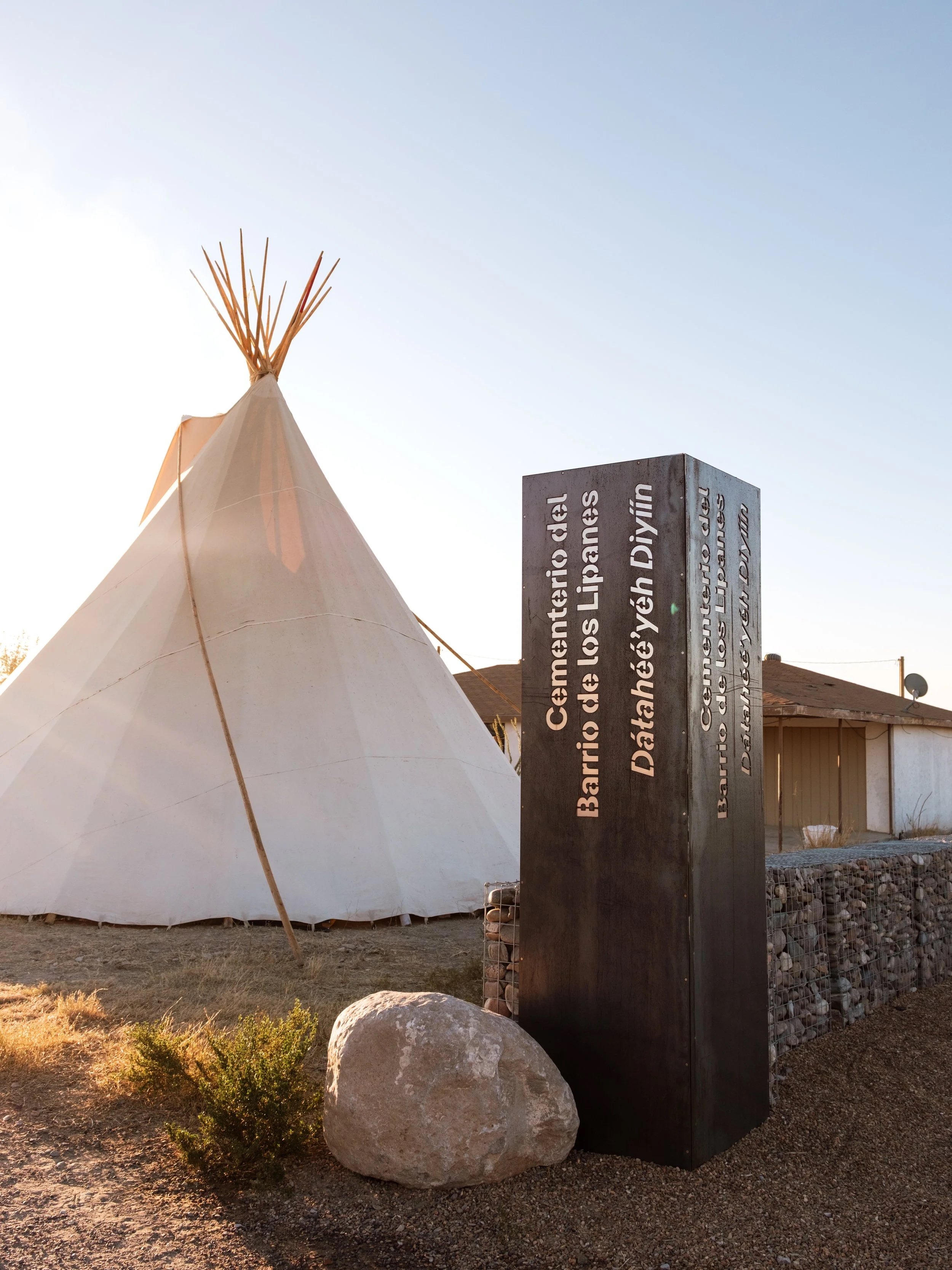
Cementerio del Barrio de los Lipanes.
A centuries-old sacred site
The burial site is known as Cementerio del Barrio de los Lipanes and is sometimes described as a “Lipan Apache cemetery.” But this place is a historic sacred burial mound tied to the Native Peoples of La Junta, who have lived in the area for thousands of years before the arrival of the Lipan Apache, who also buried their relatives here.
It is a millenary place where generations of stories have accumulated by families whose histories are rarely present in official accounts. The cemetery represents layered Indigenous continuity on a landscape that predates county lines and the institutions that later claimed authority over the dead.
On that Saturday morning in Presidio, seven sets of remains were returned to the ground.
Five of them had long been referred to as the “Millington Five,” a label that reduced people to an archaeological site name, and are now called the La Junta Five. Two additional sets of remains were also returned—one from Palo Blanco and one from Candelaria—both donated by landowners, with support from institutions such as the Center for Big Bend Studies.
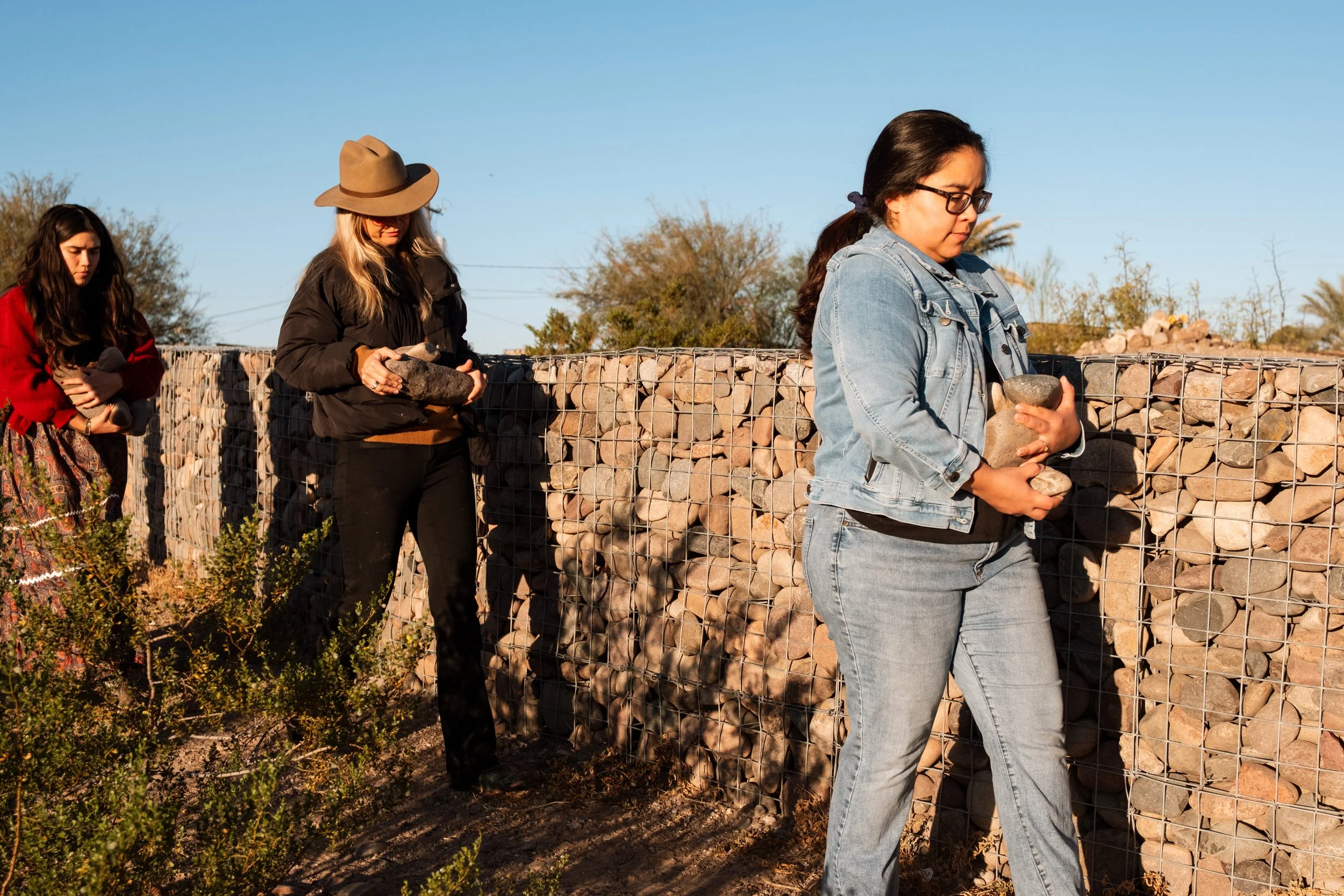
Abby Delgado, Amanda Holstien and M Anne Ornelas carry sentinel stones to the gravesites in the cemetery. Community members and visitors were invited to help with the ceremony.
Remembering a grieving grandmother
As I wrote and hand-drew the estimates of the seven burials in front of me—roughly two feet wide by four feet long—I noticed a man standing apart from the main crowd. He was at the northern center of the burial mound, staring down at a small grave close to the road—one that had nearly been destroyed while a protective barrier was being built in 2023.
He told me his name is Mike Pallanes Samaniego. He was there for his grandmother, Jacinta Samaniego.
Jacinta passed away in 1917. Mike said his family believes she died of tristeza—sadness— during a time when war and distance stretched families thin. Her son had been drafted into World War I and was away, causing her to become depressed and eventually die a few months later.
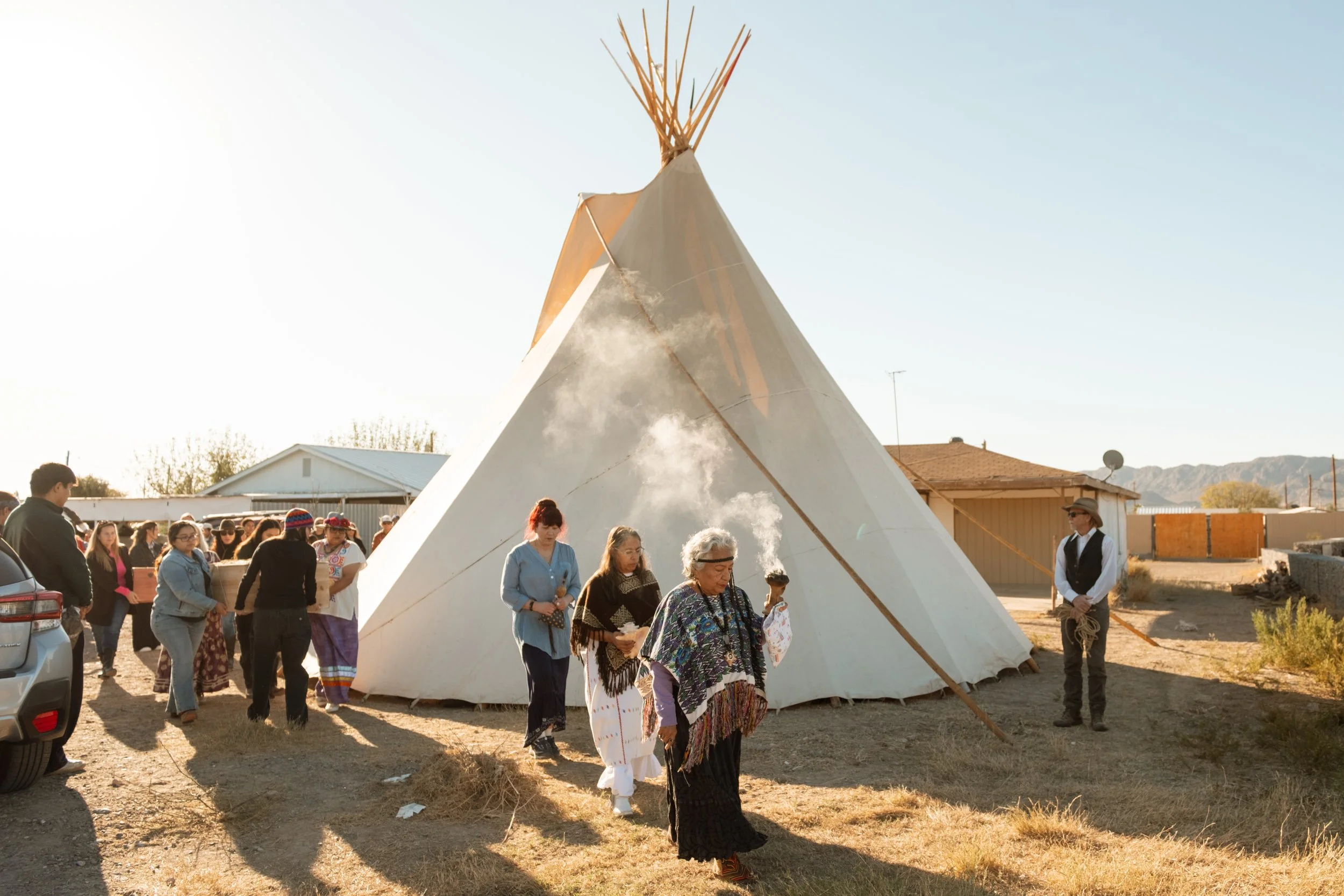
Beatriz Villegas (front), from El Paso, leads a line of women who carry the remains from the tipi to the cemetery. Descendants led the reburial and spent the night with the remains in ceremony.
“Our grandfather is buried in Alpine, Texas,” Mike told me. That is about an hour and a half from Presidio, where we stand. “He came up here, took the marker out, and put it up there in the burial site, alongside my grandmother’s grave marker.”
Mike, like dozens of others whose families are buried here, has never stopped coming back. Every year, especially for Día de Muertos, he brings flowers to his grandmother. He told me that his family used to live in Casa Piedra, located about 30 miles west of Presidio, before the land was taken away and given to incoming Anglo-American families, eventually becoming what is now Big Bend Ranch State Park.
“Yes, she was Native American,” Mike said, tears beginning to build. “She was only about five feet tall and married my grandfather, Miguel Pallanes, who was much taller. That’s why in my family we’ve got some giants and some not-so-giants.”
He described visiting the cemetery as a kid with his father and worrying, even then, whether it would survive development—whether the road, the traffic, and the urban sprawl around it would eventually erase it.
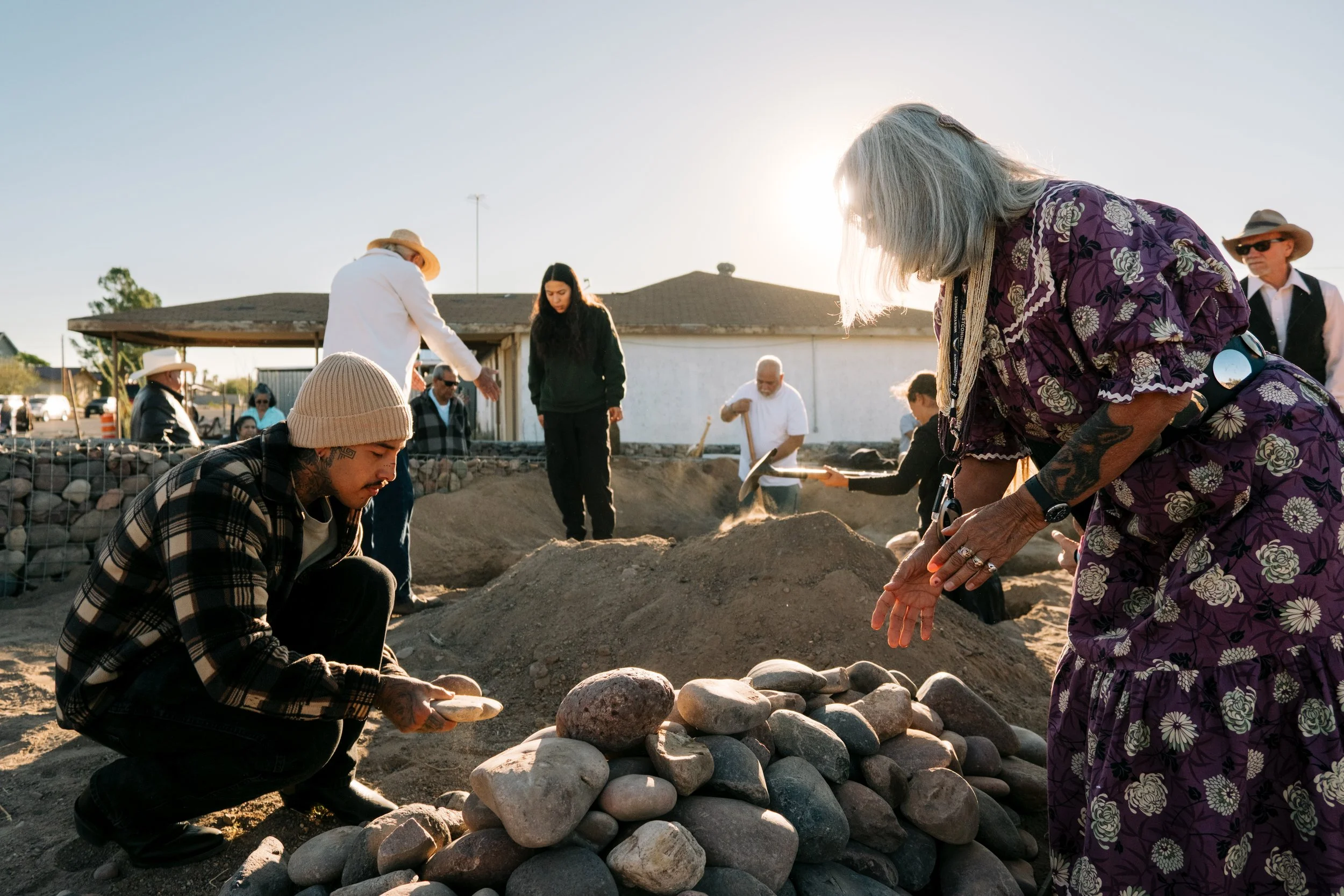
Ricardo Tlilli Garcia and Dr. Hermelinda Ryan Walking Woman gather sentinel stones near the graves before the ceremony. The stones were then placed on top of the graves to provide spiritual and physical protection.
Family matters
On the day of the reburial, community members dug the graves together. Later, they placed centinelas—sentinel stones—over the graves. The work was slow and deliberate, guided by the understanding that returning relatives to the ground is a responsibility.
In La Junta and Presidio, family is not a small, enclosed network. Family in this region is the structure of everyday life. People here know who they are related to because those relationships are lived daily and shape nearly every aspect of the town’s social fabric. Calling each other “prima” or “primo” (cousin, in Spanish) is common in the area, since most of us are likely related in some way. Cousin is not a distant category, but rather a structure of continuity that distinguishes this place as unique, with a long history.
La Junta is also widely recognized as the oldest continuously inhabited agricultural region in what is now West Texas. That continuity has been maintained in memory through oral histories, records, DNA data, and now federal law.
This matters for reburial.
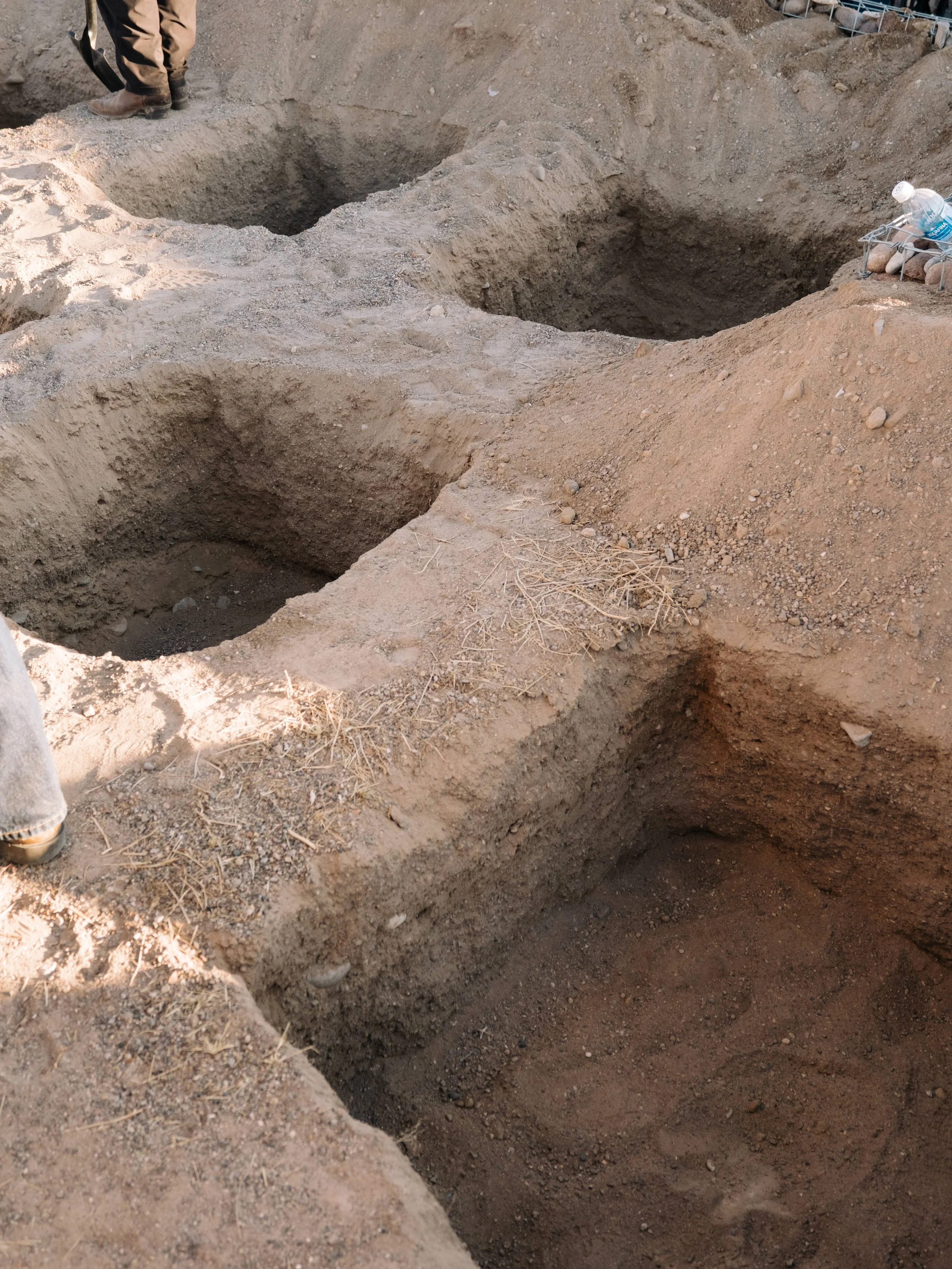
Four of the seven graves for the reburial ceremony.
Under the Native American Graves Protection and Repatriation Act (NAGPRA), lineal descent takes priority, even over claims made by federally recognized tribes. When a living person can demonstrate a direct ancestral relationship to an individual whose remains are held by an institution, that relationship carries the strongest legal standing for the return of those remains.
In this isolated region of West Texas, that legal designation rarely applies to only one person. Families here have remained in the same place for generations. When an Ancestor is legally recognized as related to one individual, they are often associated with many people in the community. This reflects how kinship functions here—and why family plays a central role in strengthening Indigenous rights, including the right to be reburied at home.
That recognition matters. It expands the space for collaboration, shared responsibility, and mutual accountability among Indigenous peoples—regardless of federal status. This recognition expands rights.
NAGPRA does more than permit reburial. It establishes Indigenous authority in law and creates a basis for consultation and negotiation with institutions and with federally recognized Tribal Nations. In West Texas, it has opened space for Indigenous communities—long excluded from federal recognition—to exercise legally grounded rights tied to land, burial, and stewardship.
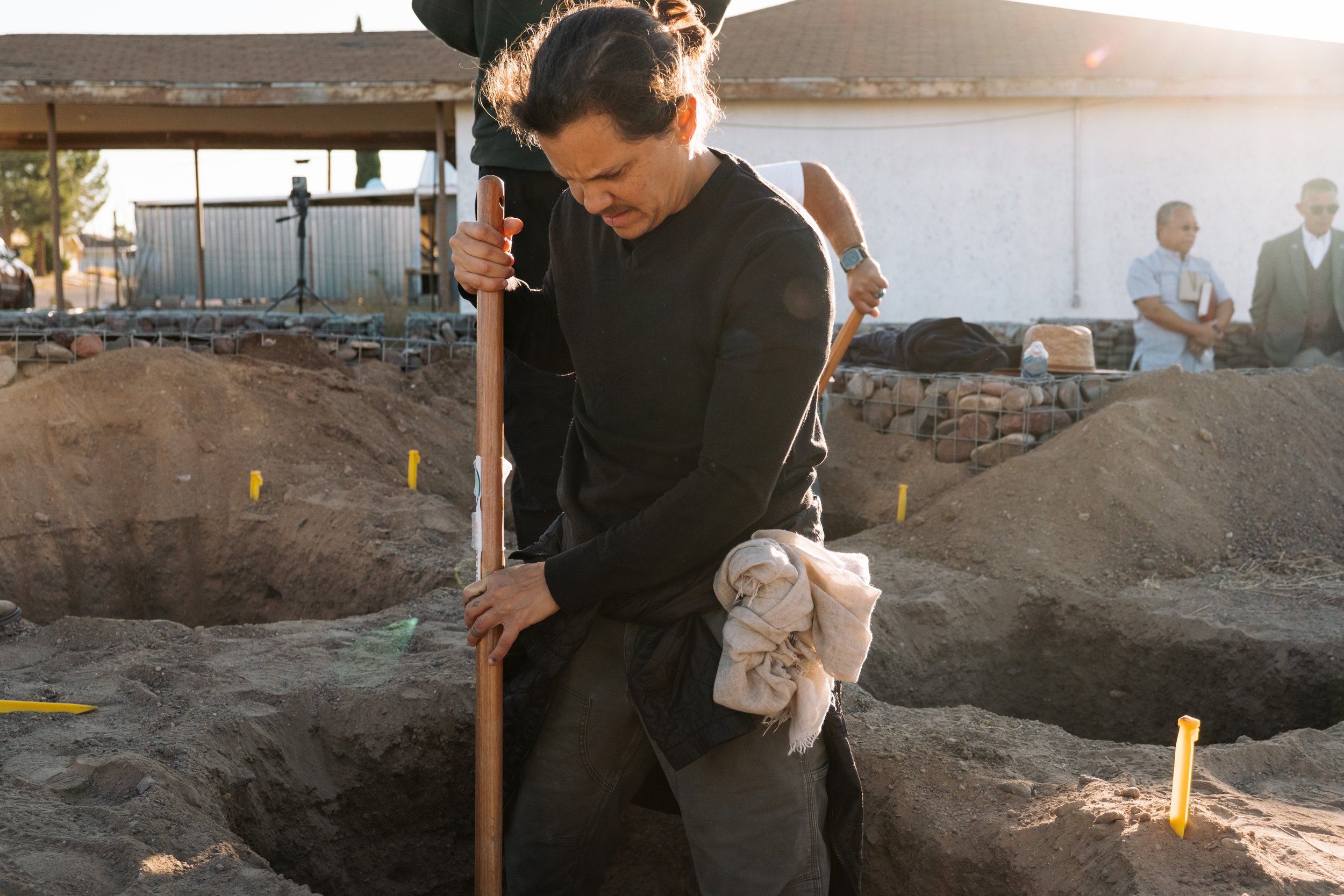
Miguel Mendías digs one of the seven graves at Cementerio del Barrio de los Lipanes.
Identity and new threats
Xoxi Nayapiltzin is an elder with the Council of La Junta and a sitting board member with the Big Bend Conservation Alliance (BBCA) who has worked for decades to bring Ancestors home..
“I do not recognize the federal government to legitimize my indigeneity,” he told me. “Our relatives [federally recognized tribes] will recognize us and treat us as us.”
He noted that several federally recognized tribes with long-standing relationships in the region already consider the People of La Junta to be Indigenous relatives, and that, for him, is essential to ensuring the rightful return of Ancestors.
But according to some community members, the land where the cemetery is now located faces a new threat: the opening of an Artificial Intelligence (AI) facility. But there are also those who differ and see an opportunity.
When I asked Nayapiltzin about his opinion on this and other development projects, like the geothermal plant coming to the area, he answered: “This AI thing, I’m not updated on it. Those who oppose it say it will deplete aquifers. And the people, our people, say that it will bring jobs and stuff.”
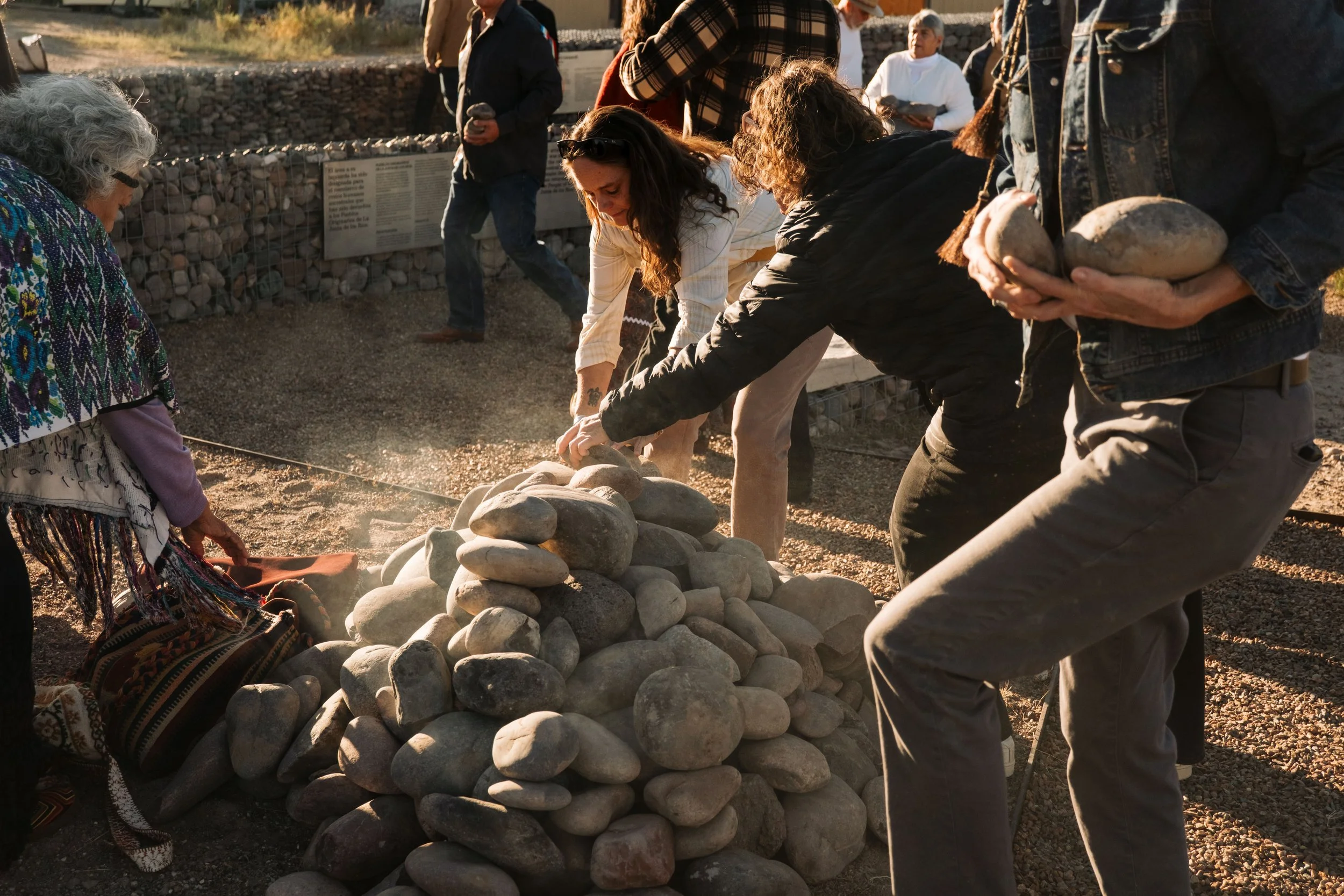
Community members stack piles of sentinel stones near the graves before the reburial ceremony.
The United Nations has consistently reported that Indigenous peoples live in and care for territories that contain approximately 80 percent of the world’s remaining biodiversity. This is not symbolic. It reflects long-term practices of land care, restraint, and accountability.
Those responsibilities are now being tested in Presidio.
As Indigenous communities in West Texas gain recognition through reburial and NAGPRA, the region is also facing growing pressure from large-scale development projects, particularly those tied to geothermal energy and artificial intelligence infrastructure. In small communities, accountability can become complicated when family networks overlap with leadership roles.
Leaders of conservation organizations may sometimes be related by blood, marriage, or long-standing social ties to projects and developments of this kind. These relationships do not automatically signal wrongdoing. But they can make it more difficult to ask hard questions, slow projects down, or insist on complete transparency—especially when projects carry potential environmental risks. That tension is already visible across the region.
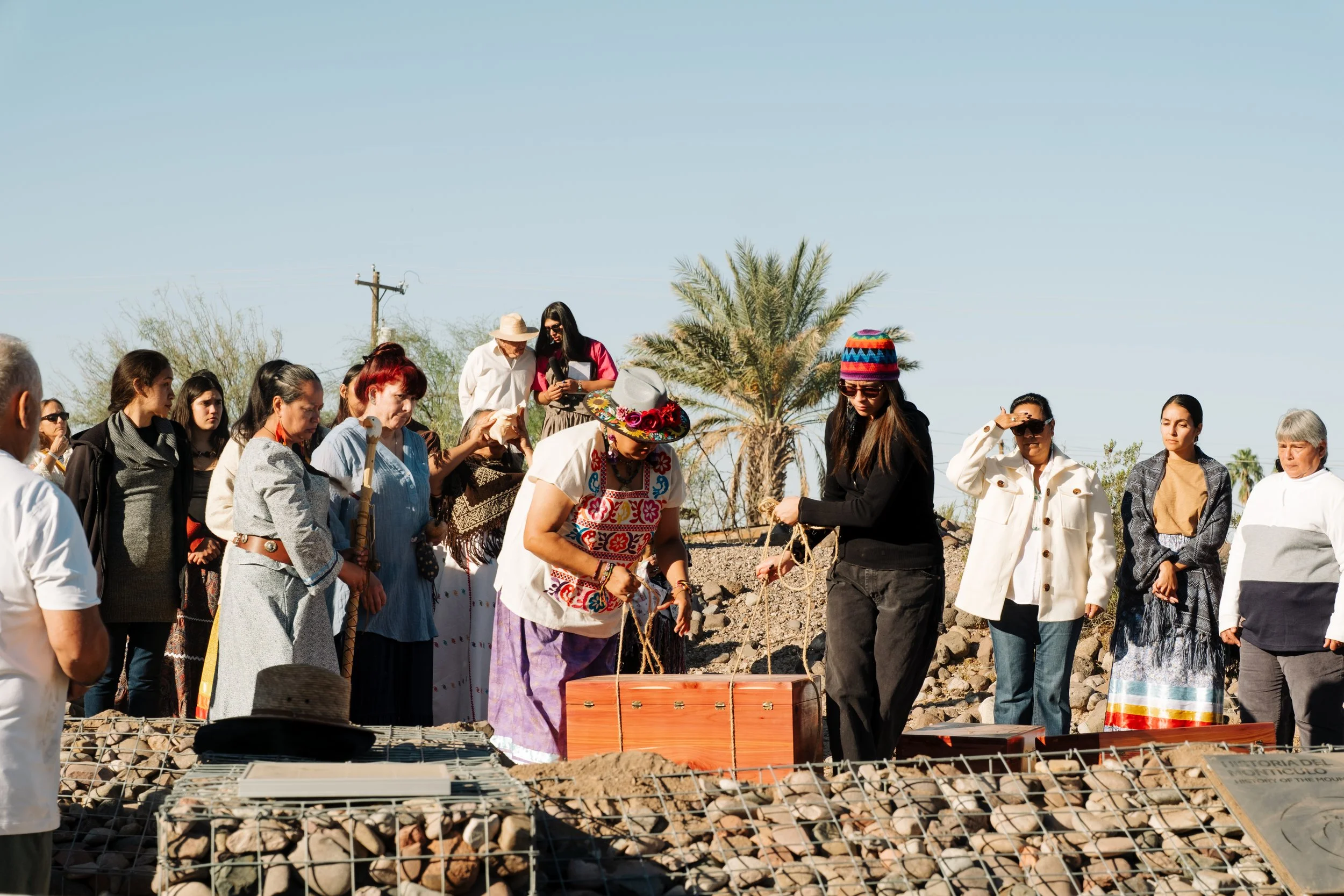
Arian Velázquez-Ornelas and her daughter, Izabella Ornelas, carry a box of remains that were carefully placed
inside the graves during the reburial ceremony.
“Feeding frenzy”
Bill Gerald Addington, a longtime organizer and environmental advocate based in Sierra Blanca, has spent decades opposing hazardous development projects in West Texas. He described the current moment as a “feeding frenzy,” driven by economic vulnerability and aggressive corporate interest.
“Our land and our people are being targeted because we’re economically distressed,” he said. “You’ve got willing politicians signing nondisclosure agreements, taking consulting money, and sometimes voting on the very projects they’re supposed to be scrutinizing.”
Addington has been closely tracking proposals for AI data centers and their energy demands. He noted that while geothermal projects are often presented as stand-alone clean energy initiatives, they are increasingly linked to AI infrastructure. “Geothermal can be used to power AI data centers,” he said. “That’s not uncommon now.” He expressed concern that energy projects framed as local or educational ventures could ultimately serve large-scale AI operations elsewhere, reshaping the region without meaningful local consent.
As previously reported by the Big Bend Sentinel, officials in Presidio County and the City of Marfa have continued discussions with developers of a proposed AI data center by energy firm Open Origin, planned for tens of thousands of acres southeast of Marfa. The proposed development would encompass approximately 80,000 acres along U.S. Highway 67, including the historic McGuire Ranch and Antelope Springs Ranch.
The land is currently owned by Texas Mountain Cattle Company, an entity controlled by billionaire Brad Kelley, and a sale has not yet been finalized; however, its development will have a direct impact on all communities in Far West Texas, including those in Presidio, Texas.
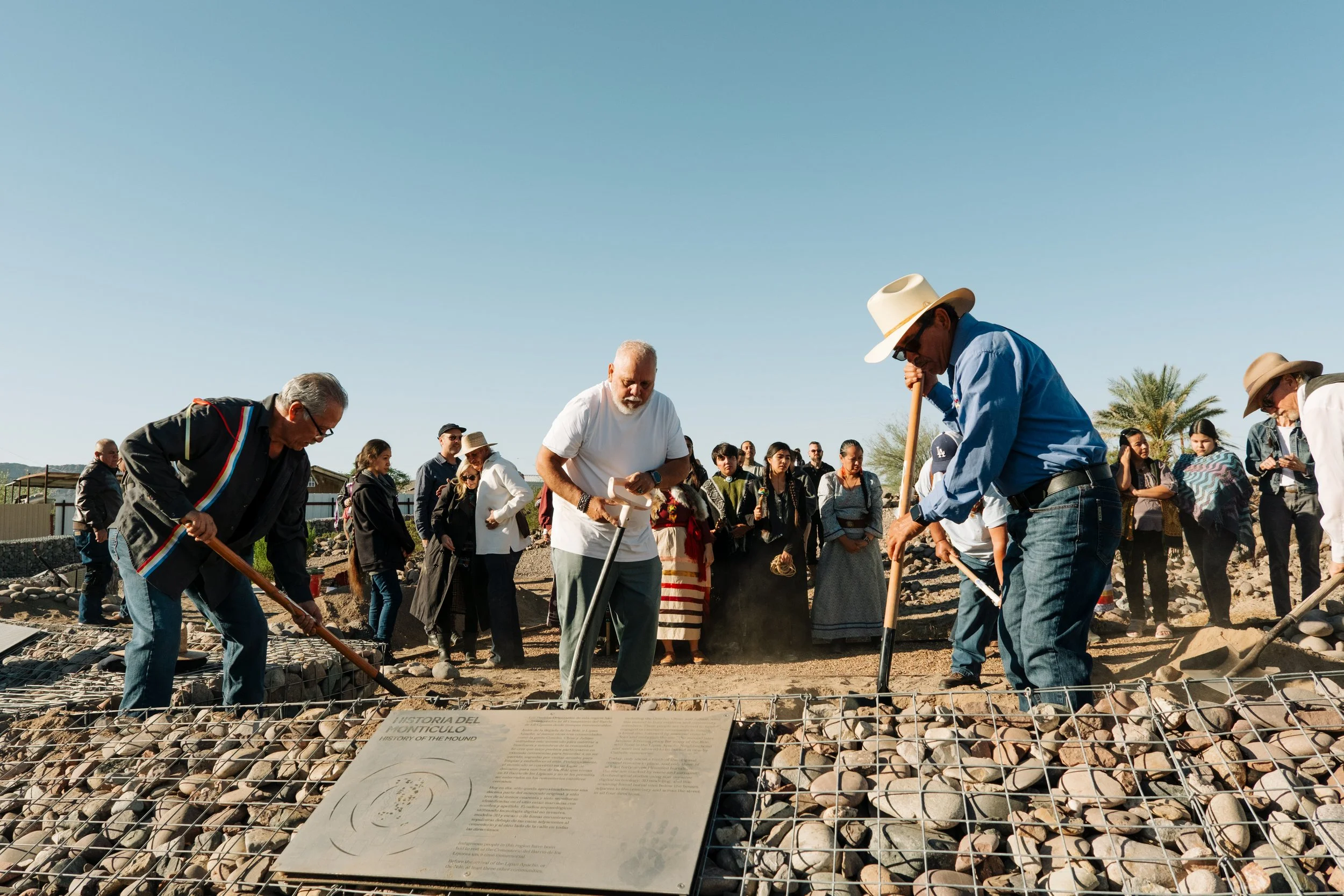
Juan Hernandez, Lorenzo Hernandez and Billy Hernandez cover the graves after they were placed inside.
According to the Big Bend Sentinel story, the project has been framed as requiring significant electricity and substantial water for cooling, with estimates that groundwater pumping could exceed the City of Marfa’s annual pumping. In an arid region where aquifers are already stressed, even the planning stage raises questions about scale, oversight, and long-term impacts on water security.
A 2024 geothermal assessment conducted by the University of Texas Bureau of Economic Geology found that Presidio County “clearly has substantial, undeveloped geothermal resources,” and that these resources could supply many times the county’s electrical needs while increasing resiliency and incentivizing businesses to settle and expand in the county.
The report also notes that the county’s southeast corner—including the Big Bend region—remains a “relative unknown” due to a severe lack of subsurface data, meaning risk and impacts are harder to evaluate without additional drilling and study.
The relationship between geothermal energy feeding AI infrastructure, as pointed out by Addigton, also intersects with current limits in local power systems. The same assessment notes that Presidio County currently has no electric generation facilities and only a single transmission line running from Marfa to Presidio.
If geothermal development moves forward as “baseload” power and AI development moves forward as an industrial-scale electricity customer, the core question becomes not just whether projects are possible, but what will it be the impact of their demand for water, land, and governance.
For Indigenous communities, this raises a fundamental question: which path will we choose as we gain recognition and rights as a community?
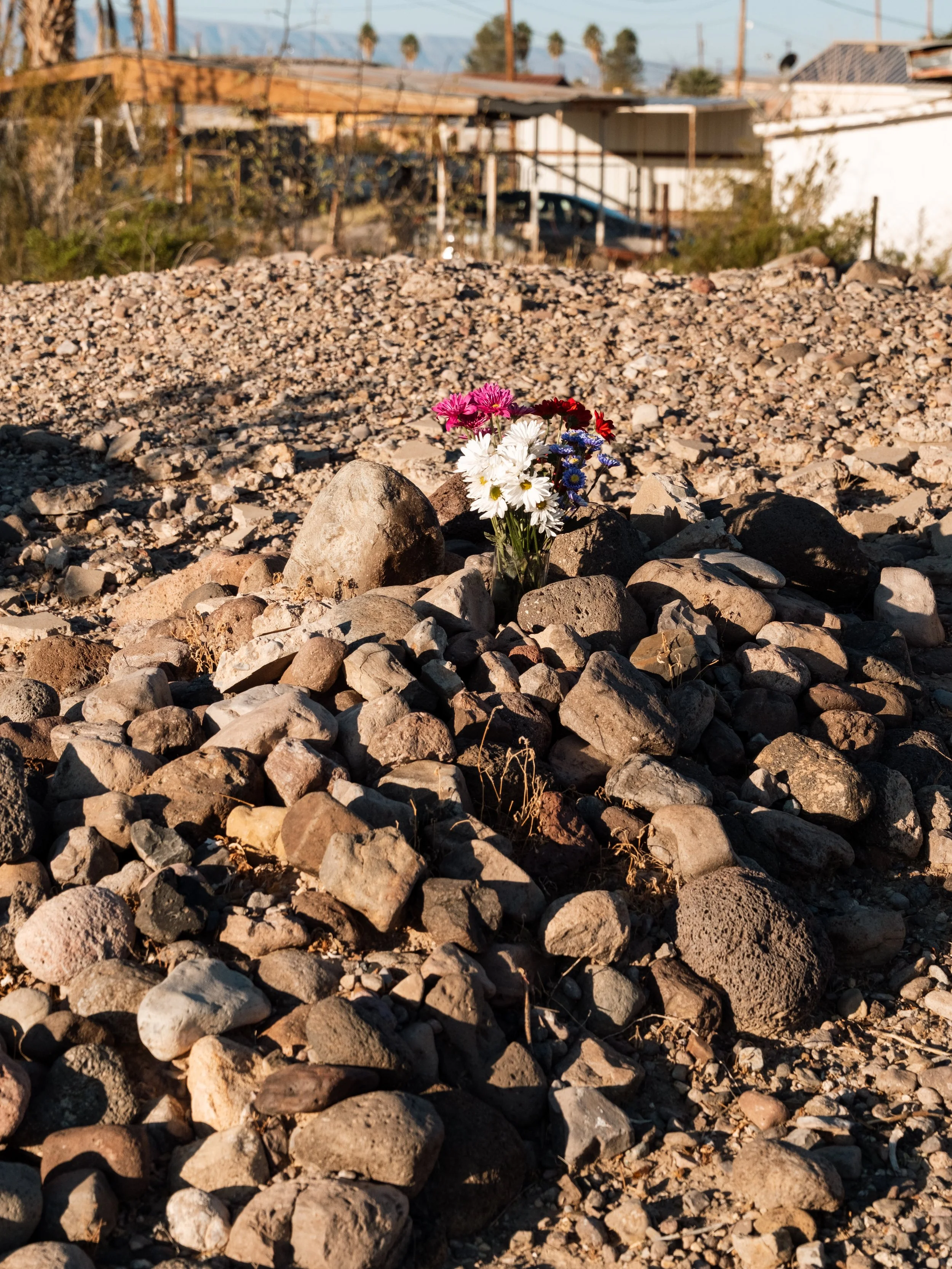
A grave covered in sentinel stones at Cementerio del Barrio de los Lipanes.
Home, authority, and responsibility
Reburial affirms the right to bring Ancestors home. Recognition affirms Indigenous presence and authority. But those gains also bring responsibility to protect the land, safeguard water, and ensure that development does not damage fragile ecosystems or strain already complex family relationships.
The cemetery makes that responsibility visible. It reminds us that the land is not empty, that decisions made today will shape relationships tomorrow, and that Indigenous rights are inseparable from care for the place itself.
As West Texas is asked to accept new forms of development in the name of progress, Indigenous communities must decide how to use the recognition we have fought to secure—and how to protect this place by keeping our families accountable so future generations are not left to repair what could have been prevented.
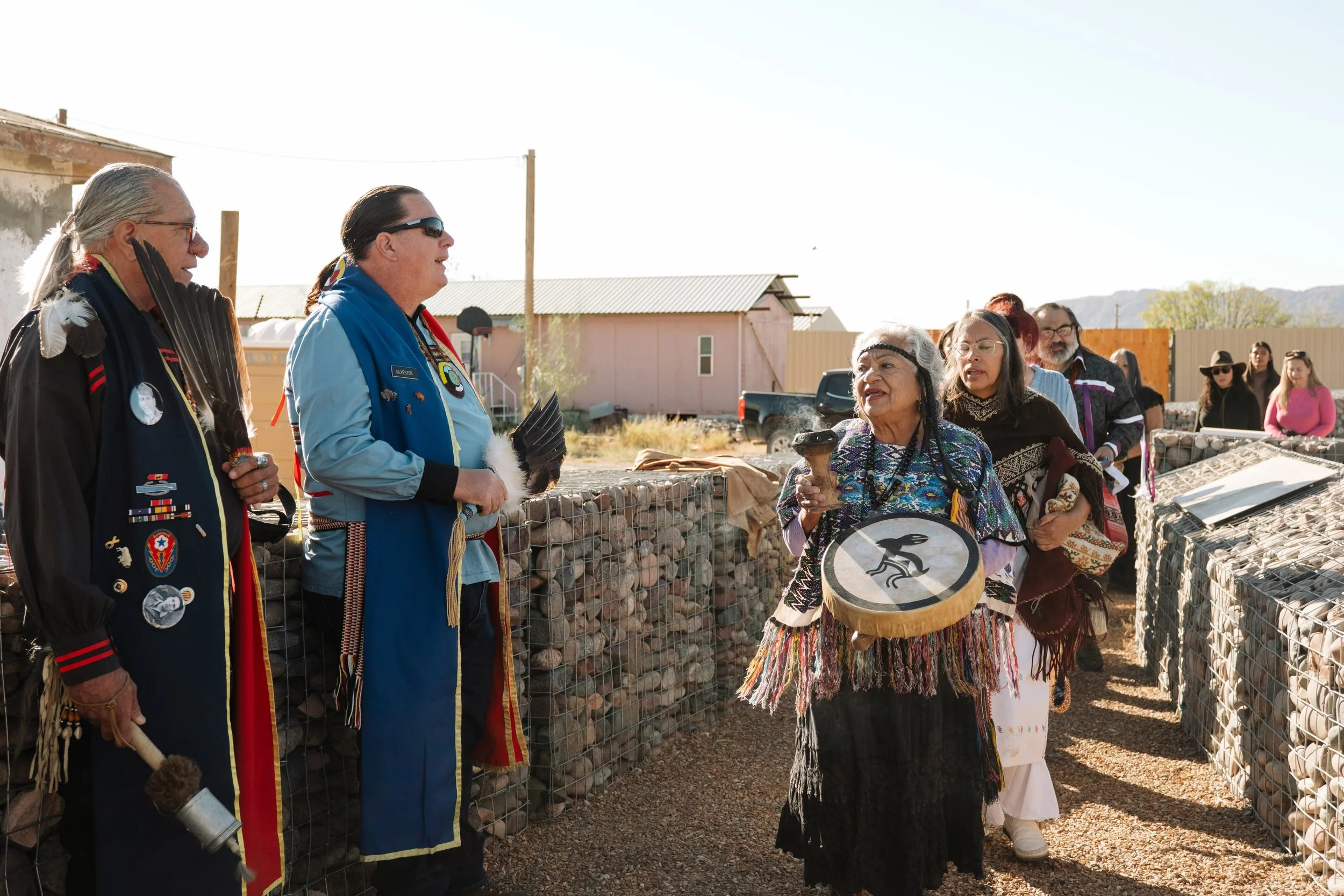
Marcus Pacheco and James Silvester look on as Beatriz Villegas leads the community out of Cementerio del Barrio de los Lipanes after the reburial ceremony.
Koyana Flotte/palabra
Koyana Flotte (Ph.D.) is a scholar and writer based in Central and West Texas from the border region of Ojinaga, Chihuahua, and Presidio, Texas. She is a direct descendant of the Jumano, Julime, Concho, Chiso, and Lipan Apache communities in the Barrio de los Lipanes, and an enrolled member of the Lipan Apache Tribe. Flotte serves as the NAGPRA Senior Coordinator and Visiting Professor in Anthropology/Sociology at the University of Texas at El Paso. Flotte's work focuses on repatriation, Indigenous rights, environmental stewardship, and community-based research along the U.S.–Mexico border. @koyanankyflotte
Sarah M. Vasquez/palabra
Sarah M. Vasquez is a writer and photographer based in Marfa, Texas. Her writing has appeared in Texas Highways, Glasstire, Texas Observer, Hyperallergic, LatinaMedia, and her photography has appeared in Wall Street Journal, Texas Monthly, NBC News, New York Times and Texas Tribune. She was previously a reporter covering the Far West Texas region for the Big Bend Sentinel newspaper and was an intern at Marfa Public Radio. @sarahmvasquez
Rodrigo Cervantes/palabra
Rodrigo Cervantes is an award-winning bilingual journalist and communications strategist with extensive experience in the U.S., Mexico, and internationally. He has contributed to outlets such as NPR, CNN, The Los Angeles Times, and the BBC. Cervantes led KJZZ’s Mexico City bureau, where he launched the first overseas bureau for a U.S. public radio station. He also served as Business Editor-in-Chief for El Norte, part of Grupo Reforma, Mexico’s leading newspaper company. In Georgia, he led the newsroom of MundoHispánico, then the state’s oldest and largest Latino publication, under The Atlanta Journal-Constitution. His work has been recognized with RTDNA Murrow Awards and José Martí Awards from the National Association of Hispanic Publications (NAHP). He is the former Secretary of the National Association of Hispanic Journalists (NAHJ) and currently serves as co-managing editor of palabra, and as a clinical assistant professor at Arizona State University’s W. Cronkite School of Journalism and Mass Communication. @RODCERVANTES