
Amid World Cup Buzz, Guadalajara confronts legacy of cartel violence
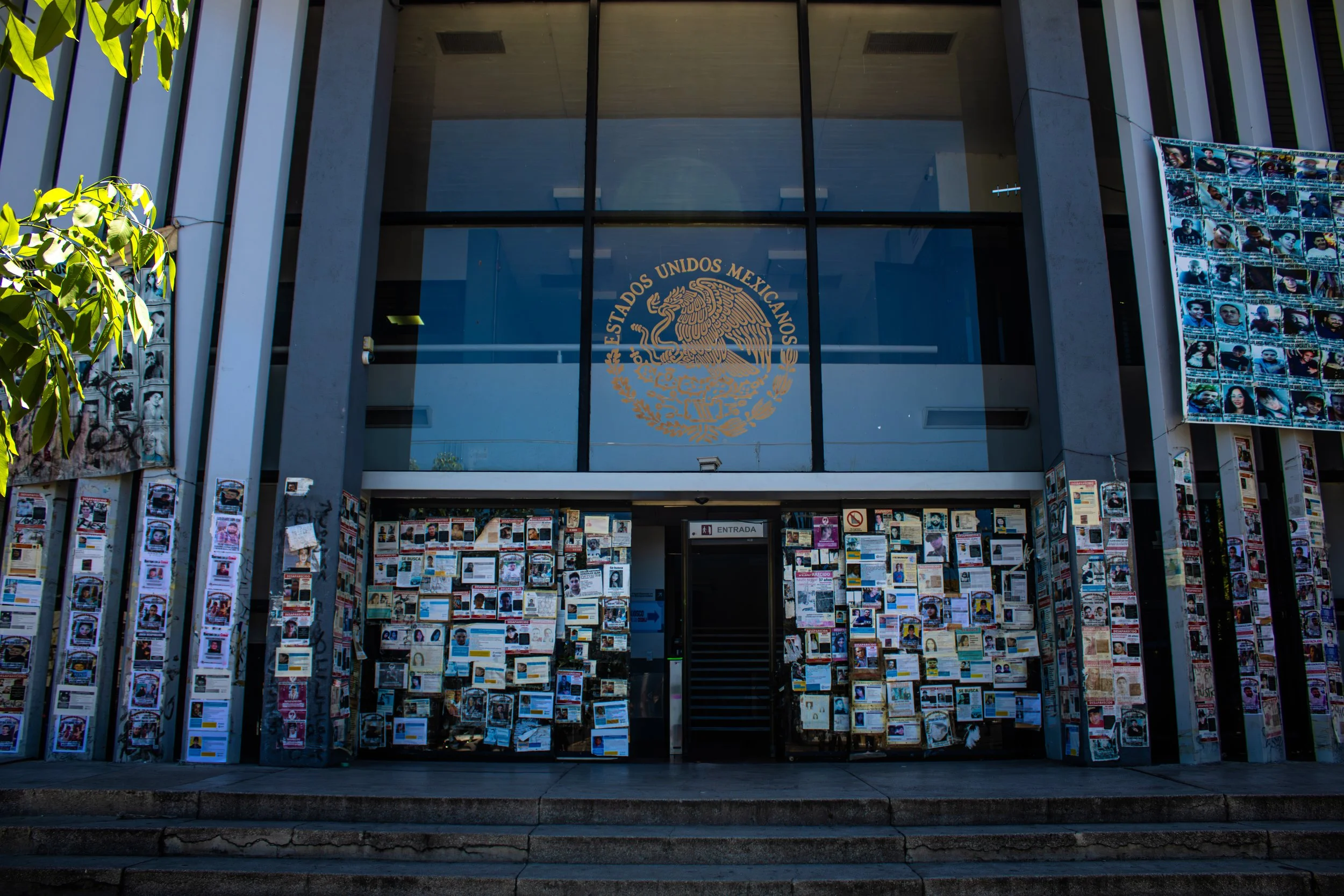
Missing persons search posters cover the facade of the Specialized Prosecutor’s Office for Missing Persons in Guadalajara, Jalisco. Photo by Aaron Flores for Puente News Collaborative
Nearly 1,900 people vanished in and around Mexico’s second-largest city. Some clandestine graves lie near the soccer stadium.

This article was co-published with Puente News Collaborative, a bilingual nonprofit newsroom that covers stories from Mexico and the U.S.-Mexico border, and the Los Angeles Times.
Clic aquí para leer en español.
Words by Steve Fisher, @Stevelfisher
MEXICO CITY – The highway from the Guadalajara city airport to downtown is newly paved, and the city’s famous roundabout has gotten a $4 million facelift. The city is abuzz with renovation projects as Guadalajara prepares to host four World Cup soccer matches in June.
But there's one thing the 3 million fans expected to flock to the city won't see – the sites where hundreds of bodies have been found in clandestine graves dug by Mexico’s notorious New Generation Jalisco Cartel. Scores were discovered on the main route leading to Akron Stadium, where the games will be played.
SUBSCRIBE TO PALABRA’S NEWSLETTER
One set of remains was that of a 17-year-old high school student who had gone out to sell his motorcycle to help his unemployed uncle. He disappeared. When his uncle began searching, he disappeared as well. At another site, the bones of a 34-year-old cellphone repairman were found. He was a father of two who’d simply ventured out to shop for used tennis shoes.
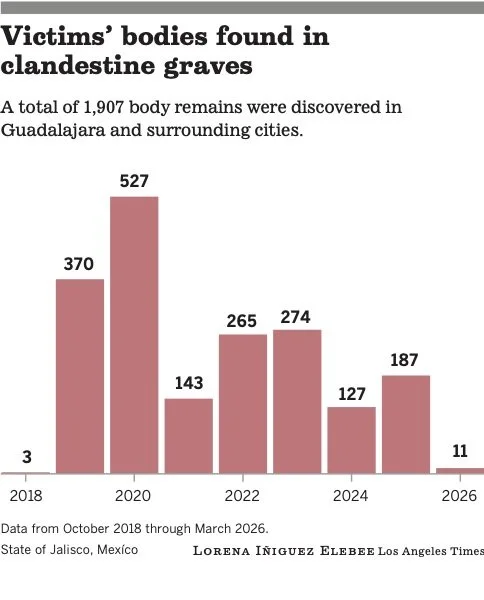
According to statistics compiled by the state of Jalisco, between 2018 and March 2026, 1,907 bodies were found in Guadalajara and surrounding cities.
The arrival of the World Cup is an opportunity for Mexico's second-largest city, also known as the soul of Mexico, to shine on the international stage, and the Jalisco state government launched an upbeat campaign highlighting the municipality where games will be played: “Zapopan, the heart of soccer,” the slogan goes.
Families searching for their loved ones sarcastically responded with, “Zapopan, the heart of clandestine graves.”
The Jalisco state government lists more than 16,000 reports of missing people – the most of any Mexican state. Nationwide, more than 130,000 people are reported missing.
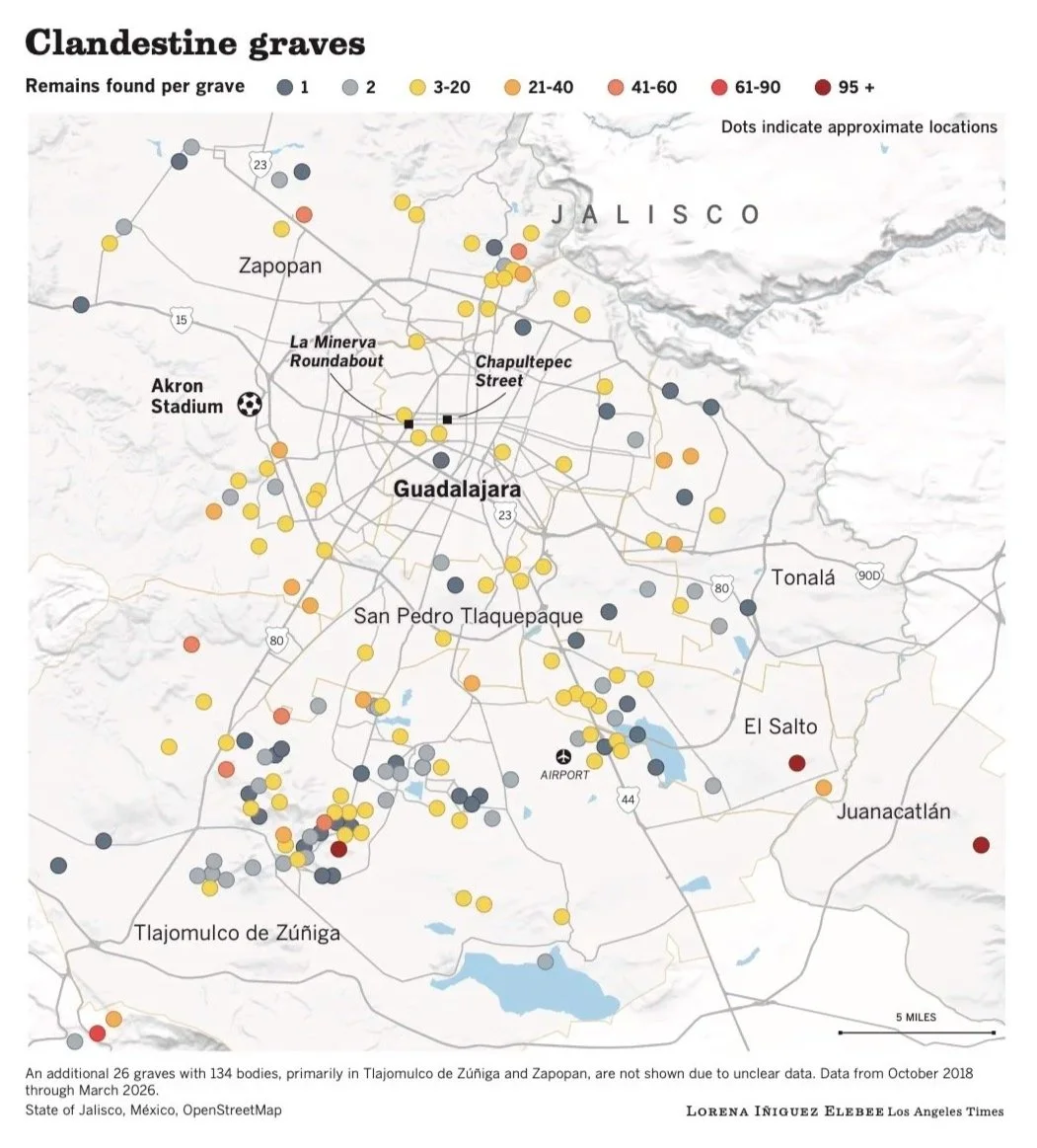
Since January of 2025 alone, search groups and authorities have discovered 58 graves with 226 sets of remains inside city limits. Five of the graves were located within 3 miles of Akron Stadium.
Three graves with 15 bodies were found within a mile of the city's iconic La Minerva roundabout, a huge traffic circle featuring fountains, greenery and a towering statue of the Roman goddess Minerva. Others were found not far from Chapultepec Street, a popular tourist destination.
Though tourists and tourist sites are rarely touched by cartel violence in Mexico, critics say the graves are an embarrassment for state and city administrators.
No Backhoes for the Missing
Amid all the clean-up, little official attention has gone to the growing number of clandestine graves that groups of persistent, family-funded search teams have found in recent months.
Large machinery and backhoes are working nonstop across the city ahead of the games, said Jaime Aguilar, a spokesperson for the group Warrior Searchers of Jalisco, whichfinds an average of two graves a month. “But when we ask for a backhoe to help in our searches, there is never one available,” he said.
Support the voices of independent journalists.
|
Over the years, secret graves have been discovered in rural or industrial areas, alongside roads, inside buildings, and even in the heart of Guadalajara. The Jalisco state government tracks grave discoveries, but an analysis by Los Angeles Times and Puente News Collaborative shows many have been concentrated in the Guadalajara area.
Earlier this year, authorities found a blood-soaked safe house a mile from Akron Stadium where cartel enemies were tortured. One person was found buried there. Within a 10-mile radius, nearly 100 sets of remains were found in 500 trash bags buried in shallow graves.
The graves, and the potential discovery of more, worried Mexican President Claudia Sheinbaum. She feared that FIFA, the international soccer association in charge of the games, might move the Mexico games to the United States or Canada, the other countries co-hosting the games, because of the violence, said one Mexican official familiar with planning for the tournament.
That fear burst into the open in February, when Mexican special forces killed Nemesio “El Mencho” Oseguera Cervantes, leader of the hyper-violent New Generation Jalisco Cartel. Law enforcement officials said Guadalajara is a stronghold for the criminal group.
Cartel members responded to El Mencho’s death by setting fire to cars and buses and blocking major exits from Guadalajara. The city was briefly paralyzed. Gunmen burned 80 convenience stores and a host of pharmacies, flexing their power in the city.
In the days following the violence, FIFA officials talked with the Mexican government to review security for the Guadalajara matches. Sheinbaum laid out a plan to send 100,000 security personnel, including Army soldiers and police officers, to stadiums in Guadalajara and the country’s two other host cities, Mexico City and Monterrey. FIFA determined it would not change the World Cup venues.
U.S. law enforcement has been advising Mexico on counter-terrorism methods, including training in repelling drone bombs, a weapon increasingly used by cartels to terrorize communities, attack adversaries, and target military convoys. Also, U.S. special forces have been training Mexican military teams to repel attacks at stadiums.
The Mexican government had already witnessed the Jalisco cartel’s proclivity for brazen killing. In December, some four miles from Akron Stadium, gunmen fired hundreds of bullets in broad daylight into the car of a director of a produce distribution center. The gun battle between his security guards and the cartel took place just a few blocks from a police station. It took officers nearly half an hour to arrive at the scene, according to a spokesperson for the Jalisco government.
In recent years, Jalisco state has become a cartel killing ground, security experts say. Some graves discovered in the Guadalajara area contained a single body, while others contained more than 40. A few had 95 or more.
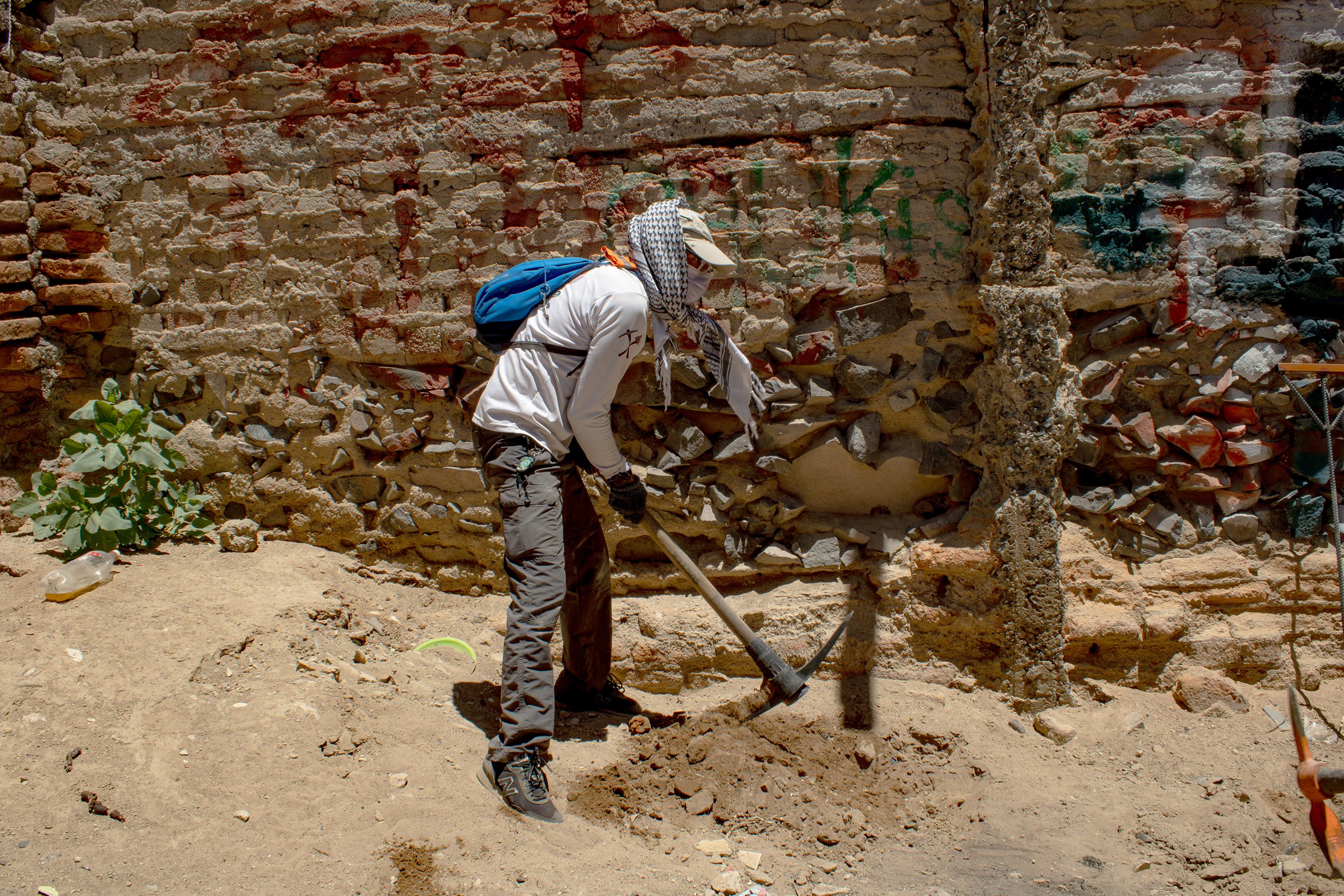
A member of the Guerreros Buscadores de Jalisco collective carries out search efforts in Guadalajara, Jalisco, during an operation organized by relatives of missing persons. Photo by Aaron Flores for Puente News Collaborative
Cartel Fronts and Trapped Youth
In 2023, the remains of eight Mexicans, chopped up and stuffed in trash bags, were found in a canyon in Zapopan. They had worked for a Jalisco cartel call center where telemarketers scammed Americans out of millions of dollars in a timeshare scheme. The individuals are believed to have upset their employer, people close to the investigation said.
Traffickers recruit young people, including minors, to serve as foot soldiers in their bloody quest to control drug-trafficking routes across Mexico. Some of those individuals were lured to the state by ads promising good-paying jobs, only to discover they were being funneled to a Jalisco cartel training camp an hour outside Guadalajara. There, as a test, recruits were forced to kill fellow recruits, Mexican security officials said.
The cartel has recruited more than 45,000 minors across Mexico in recent years, said Monica Magana, Jalisco state representative (Movimiento Ciudadano).
While some of Guadalajara’s upscale neighborhoods have escaped the violence, families across the metropolitan area have seen hundreds of children disappear, some to reappear, dead, on cartel battlefields across Jalisco and in the states of Sinaloa and Michoacán, searchers told Puente.
The Jalisco state government lists more than 16,000 reports of missing people – the most of any Mexican state. Nationwide, more than 130,000 people are reported missing.
Despite the preparations and the buzz among the nation’s vast population of soccer fans, World Cup fever has not caught on among families of the disappeared and search teams that, each week, fan out across Guadalajara, looking for new graves.
Natalia Leticia García’s son disappeared in 2017. She began her own search and launched a group to help find other victims. Eight years later, García’s group has located 26 graves. Some finds have been bags full of severed heads, others holding just arms, she said. It is a cartel tactic, she said, to make it harder to piece together remains.
“It is cruel,” García said in a telephone interview. Her son, César Ulises Quintero García, remains missing.
—
Steve Fisher is a Puente News Collaborative correspondent and covers security in Mexico. He has written for The Los Angeles Times, The Wall Street Journal, The New York Times, and The Washington Post. @Stevelfisher