
Nuyorican Neighborhoods Keeping Pasteles Holiday Traditions Alive
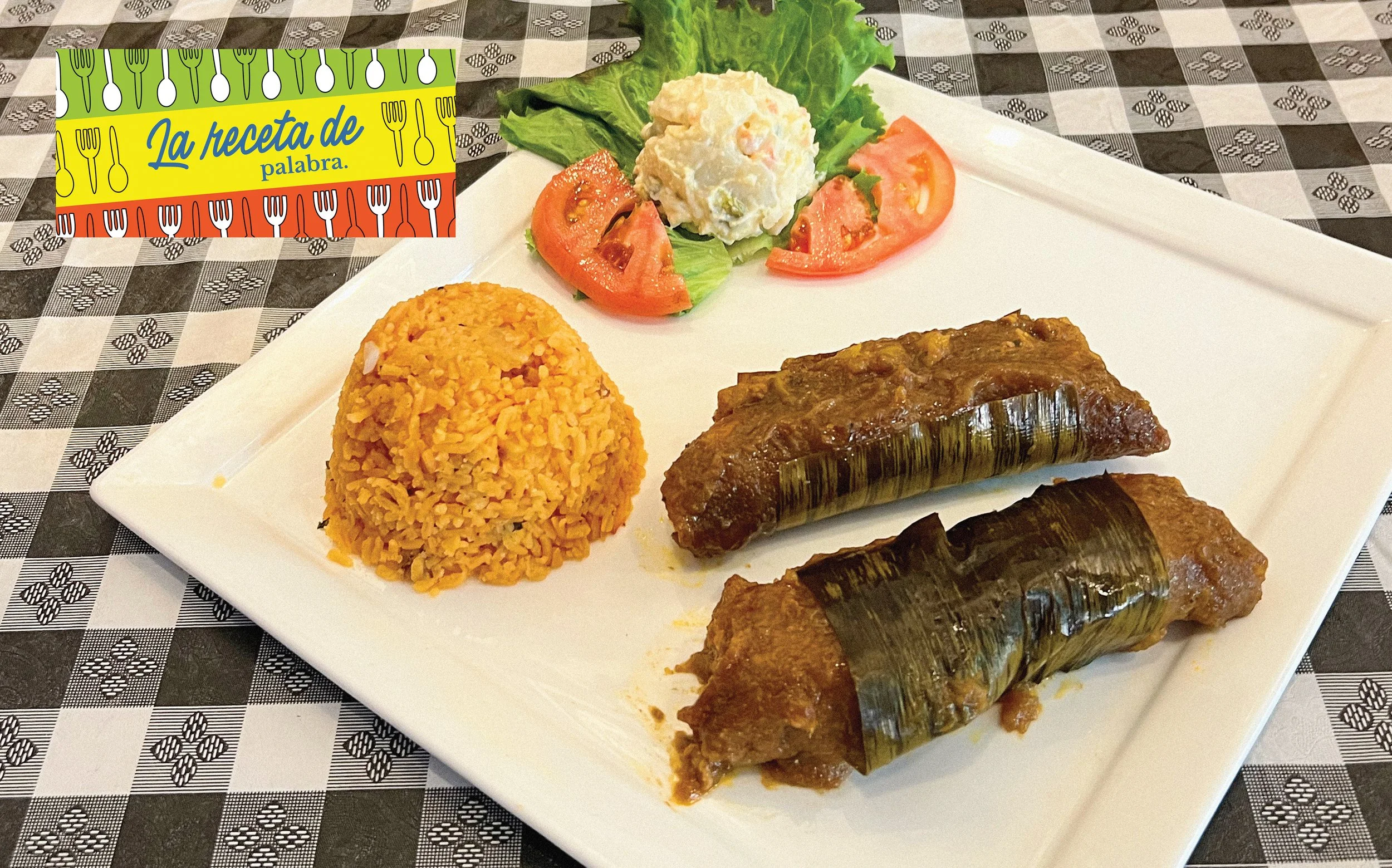
Inside New York’s historic Caribbean enclaves, family kitchens safeguard their heritage through seasonal scents, cherished flavors, and community solidarity, which is the heart of La Receta de palabra, our new section celebrating the dishes that define our culture.
Check out the recipe at the end of the article.
Clic aquí para leer en español.
Text and visuals by Yesica Balderrama, @yesica_bald!
Edited by Flora Charner
NEW YORK .- It's a chilly cloudy day in the city and the start of pasteles season. Casa Adela and La Fonda are known for making the savory treat during Thanksgiving and Christmas. They take orders earlier in the year, just in time for family gatherings. It is a meal that calls for patience and attention to detail. The pocket-sized packets of flavor often require multiple people to prepare them. The base of the masa or dough is mashed green bananas.
Puerto Ricans took influences from various groups to develop what is known as cocina criolla during colonial times. Indigenous Taíno people grew cassava, yautía, and cuantro; Spanish conquistadors introduced rice, pork, beef, and herbs; and Africans brought plantains and bananas. Popular dishes at the restaurants made from plantains and bananas include traditional meals such as mofongo and alcapurrias, which are cooked using techniques from the Middle East and Africa.
“It’s very important to know where the food came from, where it started, and how it's made by the great grandparents to bring it to new generations. That’s why our kids and grandkids are here,” said Maritza Lopez, a restaurant manager at Casa Adela. She has worked at the eatery since it opened fifty years ago.
subscribe to Palabra’s newsletter
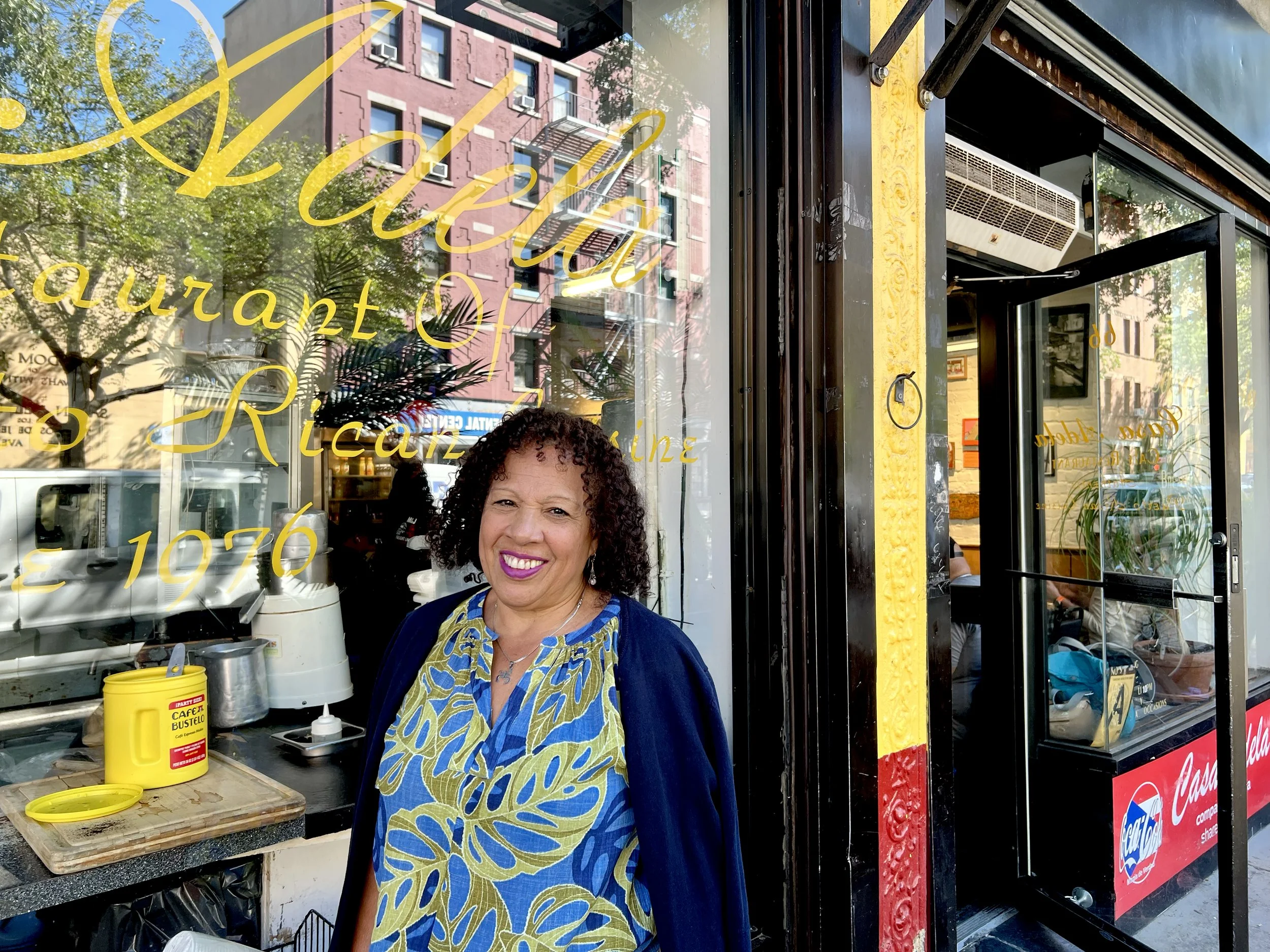
For Maritza Lopez, honoring the roots of traditional recipes is key to keeping family heritage alive for younger generations.
“It’s very important to know where the food came from, where it started, and how it's made by the great grandparents to bring it to new generations. That’s why our kids and grandkids are here.”
—Maritza Lopez, a restaurant manager at Casa Adela
At Casa Adela customers are greeted by the scent of rotisserie chicken cooking behind the counter when they enter the establishment. It has been in operation since 1976, a feat in a city with ever changing infrastructure. When rising rent costs in the Lower East Side threatened the longevity of the business, locals stepped in to keep it open.
Inside are portraits of Adela Fargas, a slim Black woman with a soft tuft of curls, who is often smiling or preparing food in the photographs that adorn the walls. She was the founder of the business and was a self-taught chef. To honor her memory, locals petitioned to get the street named after her after she passed away in 2018. The corner of E5th St and Avenue C is now known as “Adela Fargas Way.”
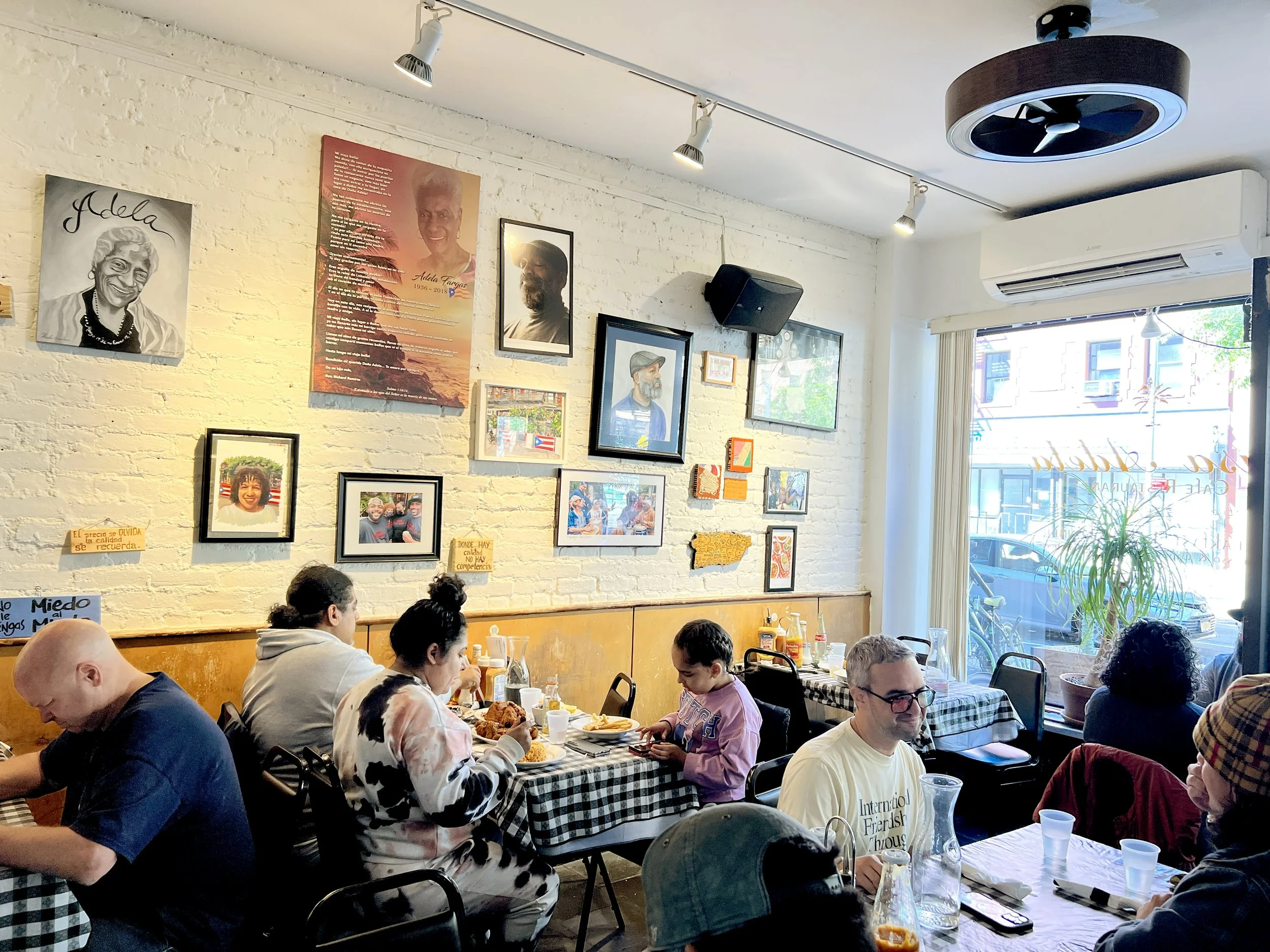
Portraits of Adela Fargas at Casa Adela.
“Adela was humble and loving. The passion that she had for food made it like you were coming to your grandma's house. We, as family members, try to continue her legacy,” Lopez said. It is a family owned business. She can be seen at the restaurant taking orders and serving plates, zig zagging between tables of chattering customers. Lopez is the wife of Adela’s son. Their children have worked at the restaurant as well.
Support the voices of independent journalists.
|
Fargas’ recipes have mostly remained the same, but some have been adjusted for vegetarian dietary preferences. Customer favorites include arroz con gandules, pernil, and pasteles. Lopez humbly suggests the seasonal pasteles made at Casa Adela aren’t better than the versions made at other businesses. She says their unique flavor profile comes from spices mixed in-house.
Lopez explained, “Puerto Rican businesses are not in competition, so we help each other. If we need something, we reach out to them. They're always available and welcoming. We also help each other to continue the restaurants in New York. There's not many of us left.”
Further uptown in Spanish Harlem the interior of La Fonda, a restaurant that opened in the 1990s, is brightly lit and colorful. An employee at the counter is squeezing fragrant limes with a hand juicer into a container, and Caribbean music plays in the background. Customers greet each other warmly and start conversations.
James González, the co-owner of La Fonda, is friends with Lopez and other restaurateurs in the city. He makes sure the business operates smoothly. Before becoming a co-owner he was a customer for many years. He was taught how to make pasteles as a child by his mother, who learned the recipe from her grandmother.
Lopez’s and González’s ancestors arrived in New York in the 20th century when thousands moved to the mainland for employment opportunities. “My great grandmother migrated when America took over and was trying to force everyone to speak English. They didn't have a lot of opportunities and they were sterilizing women. Since they were trying to Americanize them, they were like, we'll just go to America. They settled in the Bronx,” said González.
The neighborhoods that are known for their rich Puerto Rican history include El Barrio in Harlem and Loisaida in the Lower East Side. The merger of cultures led to fusions in cuisine. For example, the pastelon, a plantain-based lasagna, was birthed by Nuyoricans who were inspired by their Italian neighbors.
González’s mother, Jacqueline Ortiz, travels from Puerto to NYC to cook the pasteles that are sold at La Fonda during the holiday season. The recipe has been in the family for about a century. First, the green bananas and yautía have to be ground into a soft buttery texture. Next, the pernil filling and masa are combined into a banana leaf that is wrapped and cooked. Then the pernil is simmered with an assortment of fragrant vegetables and seasonings that when laid out, create a beautiful mosaic of colors and textures. He and his mother shared their recipe with palabra.
James González guides viewers through the process of making traditional Puerto Rican pasteles.
And yes, we have the recipe for you at the end of the story!
Ortiz shared, “Back in the day we grated the bananas for la masa by hand.” Her personal touches include adding raisins and chickpeas to the pernil filling. She says the secret for a good texture and flavor consistency is adding the right amount of meat broth to the masa. Perfect for the holidays, they look like presents found under a tree on Christmas morning.
Patrons have helped preserve Puerto Ricans’ heritage at the businesses by frequenting the locations. These restaurants also serve as communal spaces where people from the different neighborhoods can gather to meet and socialize. There is a sense of solidarity among the owners and locals.
They are continuing the work their ancestors started of establishing a Caribbean cultural presence. The city has historically played a major role in its history. The Puerto Rican flag was designed by exiled migrants who fought against Spanish colonial rule with Cubans, explained Carlos Vargas-Ramos, director of Public Policy, External and Media Relations and Development at the CENTRO. Nuyoricans also contributed to Latin jazz and salsa, hip hop, and visual arts.
“What I did learn was that the focus should always be the community. It means the people who understand and appreciate the diaspora. People who want to learn and grow from their culture. People who want to remember it,” said González.
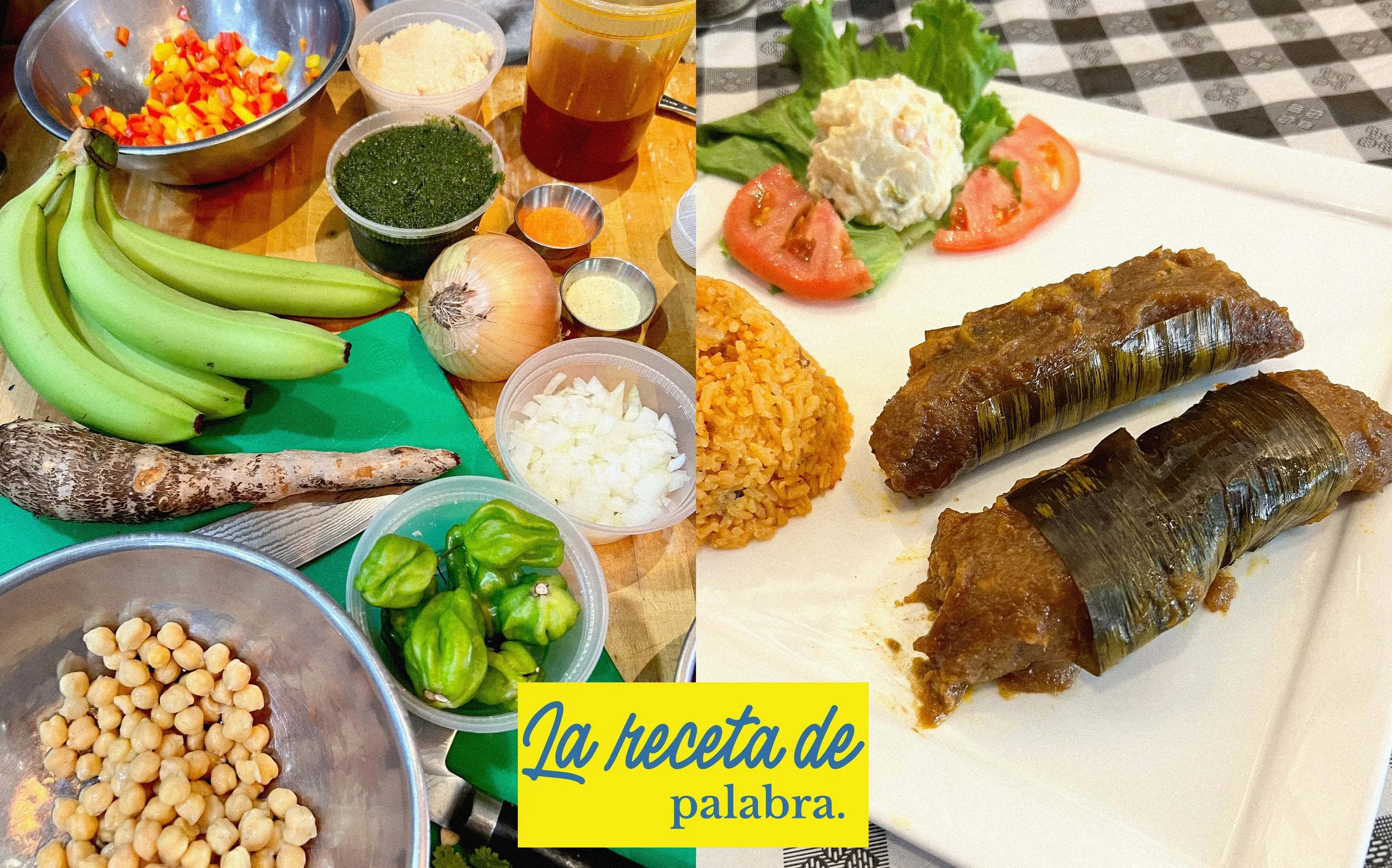
Puerto Rican Pasteles for the Holidays
Yields
30-40 Pasteles
Ingredients
For pernil:
7 pounds pork shoulder
1 batch of cilantro
1 batch of culantro
1 halved green bell pepper
1 halved medium onion
8-10 ají dulce peppers
4 smashed garlic cloves
10 tablespoons adobo seasoning
For meat filling:
The finely chopped pernil
2 cups finely chopped cilantro
2 cups finely chopped culantro
2 cups finely chopped green peppers
2 cups finely chopped onions
3 cups water
3 cups reserved broth
1 teaspoon garlic paste
2 tablespoons of tomato paste
1 can of chickpeas (optional)
3 boxes of raisins (optional)
2 sazón packets with achiote
8 tablespoons of adobo seasoning
For masa:
50 green bananas
10 yautías (taro root)
4 cups broth (reserved from pork filling)
1 ½ cups achiote oil (annatto oil)
5 tablespoons of adobo seasoning
For wrap:
Prepared filling
Clean dry banana leaves
Parchment paper
Achiote oil (for brushing the leaves)
Kitchen twine
Step One: Cook the pernil
Slice pork shoulder into manageable cubed chunks. Place it inside a pot with water that completely covers the meat. Including the bones.
Add the green bell pepper, onion, aji dulce peppers, garlic, culantro, cilantro, and adobo seasoning to the pot.
Bring the mixture to a boil and let it simmer for 45 minutes or until the meat is tender. Reserve 3 cups of broth for pasteles filling.
Strain the meat, let it cool, and cut it into small edible pieces.
Step Two: Make the filling
Transfer the pernil into a large, clean pot. Add the cilantro, culantro, peppers, onions, garlic paste, tomato paste, chickpeas (optional), and raisins (optional). Gently stir in the sazon and adobo. Mix well.
Pour the water and the reserved broth into the pot. Heat on medium high and bring to a boil. Let it simmer for 30 minutes.
Reserve 4 cups of broth for masa. This broth carries the flavors of the pork, herbs, and seasonings. It will create the rich traditional flavor of Puerto Rican pasteles.
Step Three: Prepare the Masa
Peel the bananas and yautía. In a large bowl, mash the bananas using a cheese grater or food processor. Add the achiote oil and adobo seasoning. Mix well.
Stir in reserved broth. Masa should have a creamy texture and should slide easily off fingers. Add pernil broth as needed to reach consistency.
Chill the masa until firm
Step Four: Assemble the Pasteles
Using the parchment paper as a work surface, place a banana leaf on top. Lightly brush the center of the leaf with achiote oil to prevent sticking
Spread ½ cup of masa in the center of the leaf. Then add a generous amount of pork filling on top.
Fold the parchment paper and leaf in half. Repeat. Masa should be securely sealed inside a rectangular shaped packet.
Cut kitchen twine into 16 inch lengths. Stack two pasteles and tie with kitchen string to ensure they remain closed during cooking.
Place pasteles into a large pot of lightly salted boiling water. Cook for 45 minutes.
Serve hot and enjoy.
—

Yesica Balderrama is a first-generation bilingual Mexican journalist based in New York City. Her work has appeared in WNYC, NPR, The Associated Press, The Los Angeles Times, PEN America, Guernica, and others. @yesica_bald!