
How Bad Bunny became a global voice of Puerto Rican resistance and why this terrifies some politicians
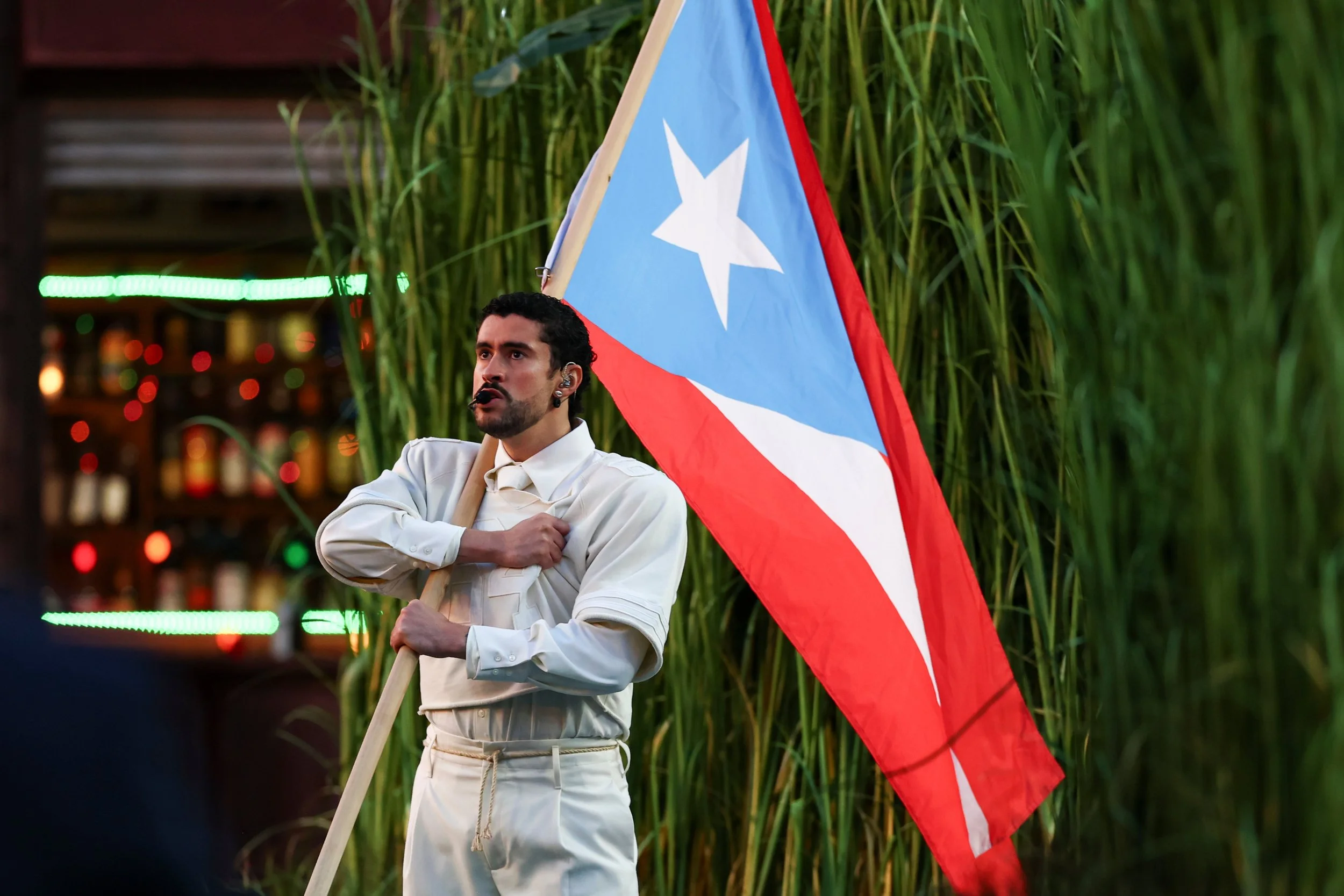
Bad Bunny performs in the Apple Music Halftime Show during the NFL Super Bowl 60 football game between the Seattle Seahawks and the New England Patriots, Sunday, Feb. 8, 2026, in Santa Clara, Calif. (Kevin Sabitus via AP)
palabra. spoke with the authors of a new book that examines the work of Benito Antonio Martínez Ocasio through the lens of activism
Haz clic para leer en español.
Words by Rich Tenorio, @rbtenorio
Edited by palabra., @palabranahj
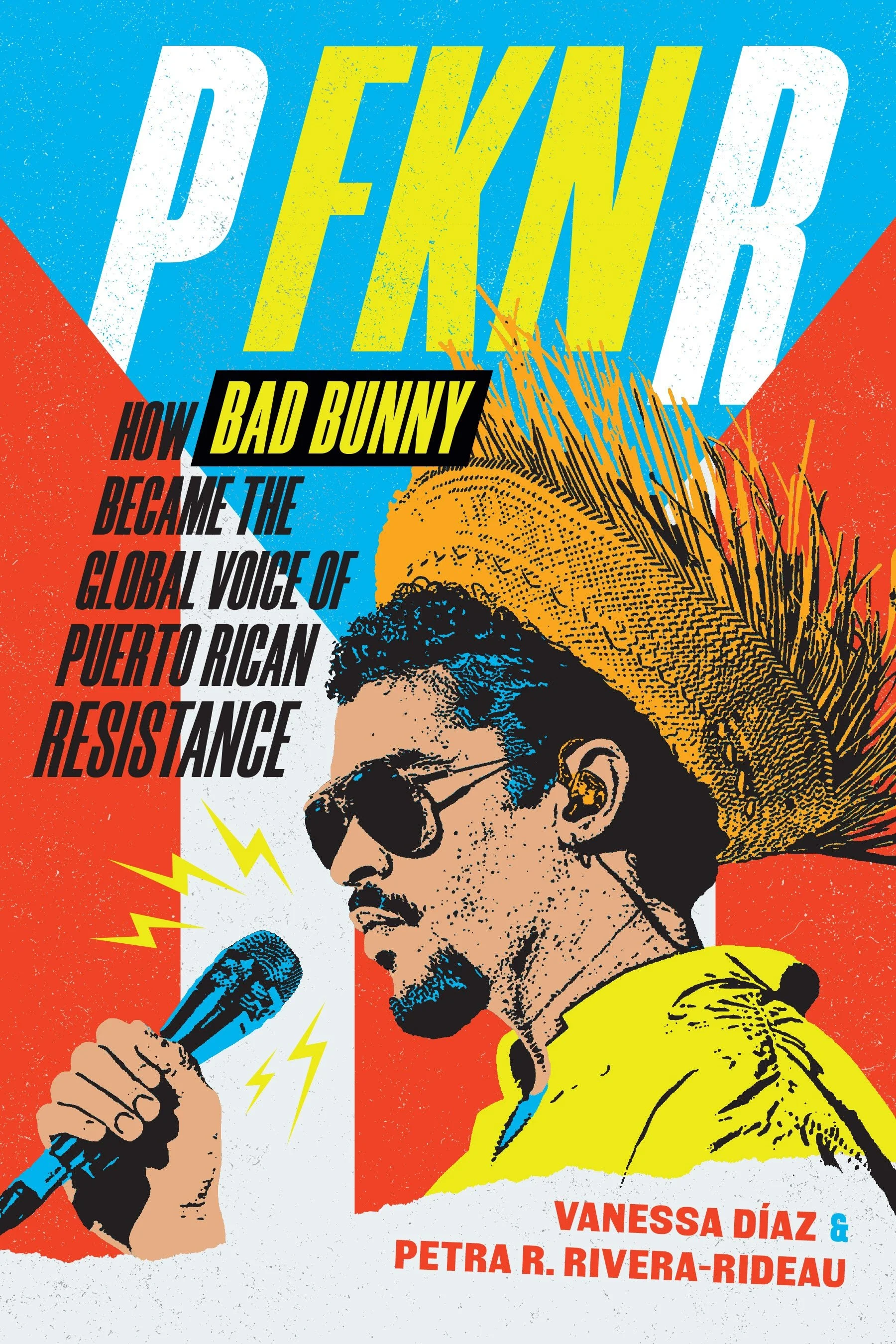
Book cover of Diaz and Rivera-Rideau
Bad Bunny’s 2025 song “La MuDANZA” contains a defiant reference to the flag of his homeland, Puerto Rico: “Aquí mataron gente por sacar la bandera / Por eso es que ahora yo la llevo donde quiera” (Here they killed people for taking out the flag / that’s why I bring it anywhere I want now.)
Even as his career has gone global, the star born Benito Antonio Martínez Ocasio places himself within a line of Puerto Rican music-powered resistance throughout the island’s past and present. A new book looks at Bad Bunny’s music through the key of activism: P FKN R: How Bad Bunny Became the Global Voice of Puerto Rican Resistance, by scholars Vanessa Díaz and Petra Rivera-Rideau.
Díaz and Rivera-Rideau previously teamed up to create a groundbreaking Bad Bunny syllabus for their courses – Díaz is on the Chicana/o and Latina/o studies faculty at Loyola Marymount University in Los Angeles, and Rivera-Rideau is an American studies professor at Wellesley College in Wellesley, Mass. Rivera-Rideau was also hired as a consultant when Bad Bunny performed at Coachella in 2023. An expert on reggaeton, she put together a series of videos about the history of Puerto Rican music for the popular California concert festival.
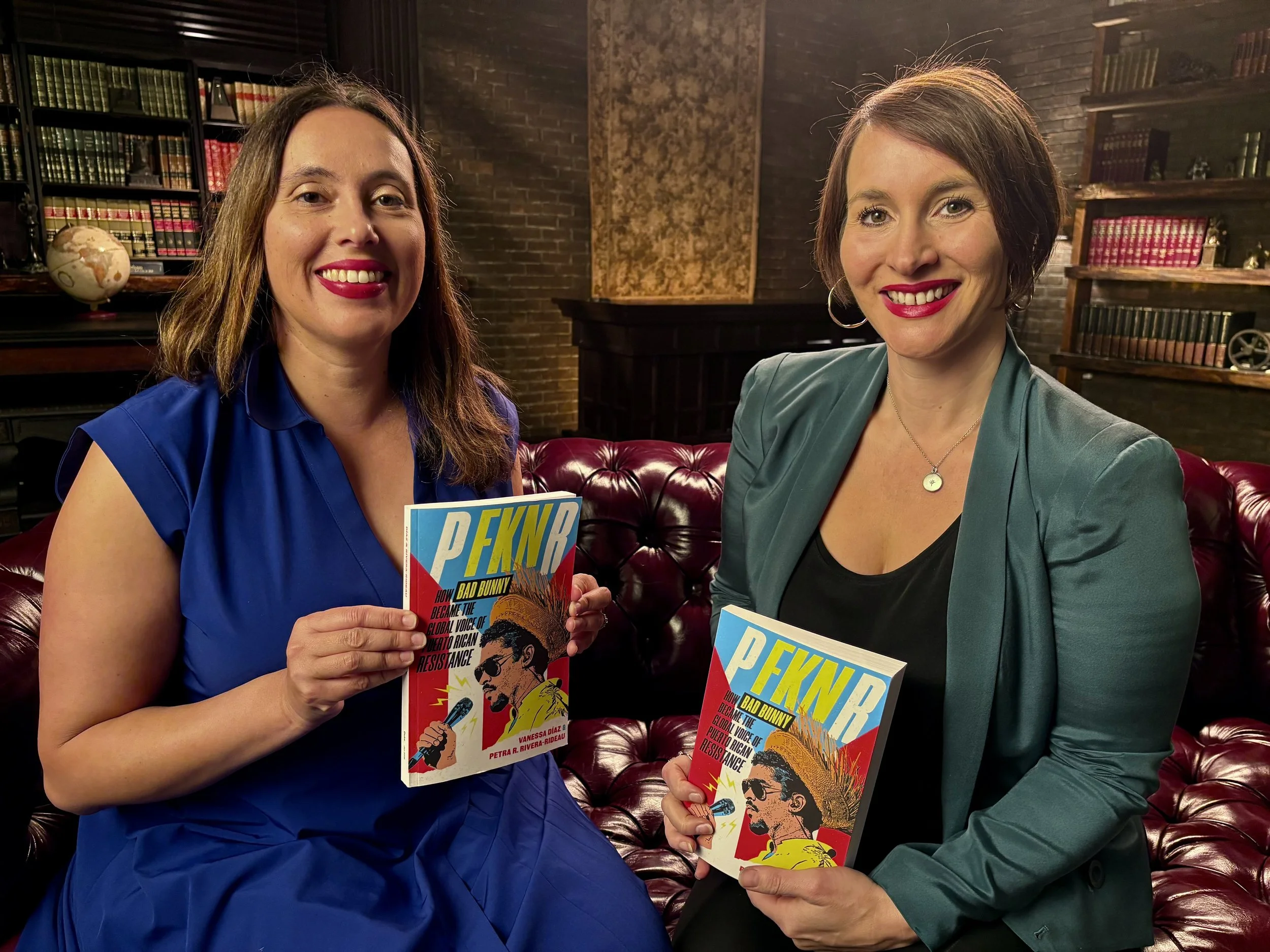
Petra Rivera-Rideau and Vanessa Díaz. (Courtesy of the authors).
In a phone conversation with palabra, Díaz says that throughout Bad Bunny’s life, “there have been so many moments that have been critical to shaping the realities, the massive hardships that Puerto Rico and Puerto Ricans have experienced,” which in turn have been reflected in “themes that came out in Bad Bunny’s music – even when it’s not obvious to everyone. Our job is to decode things with the political realities in mind.”
That’s what the book does over the course of nine chapters. Many of them pair a title or lyric from one of Bad Bunny’s hit songs and an underlying political component. Chapter six is titled “‘Puerto Rico Está Bien Cabrón’: The Party Is the Protest.” This chapter delves deeply into the political messages of “El Apagón,” a popular song from the 2022 album Un Verano Sin Ti.
The authors analyze the music video for “El Apagón,” set during a blackout in El Túnel de Guajataca on Puerto Rico’s west coast. Participants include members of the Puerto Rican queer advocacy group Laboratorio Boricua de Vogue (LaBoriVogue).
“The song references the frequent blackouts that have plagued Puerto Rico due to the archipelago’s failing electrical grid and infrastructure, and it makes the album’s most impactful political statement,” the authors write, noting that Bad Bunny used the song to close night one of a three-night stop in Puerto Rico before embarking on his World’s Hottest Tour promoting the album across the globe.
While the authors did not interview Bad Bunny for the book, they did speak with a constellation of sources, some of whom know the star quite well. These include his producers MAG and Tainy; Latin trap star and mentor De La Ghetto; and filmmaker Kacho López Mari, who has not only directed many of Bad Bunny’s videos – including “El Apagón” – but also has a family connection to the Puerto Rican independence struggle through his late grandfather, Juan Mari Bras.
In chapter six, López Mari discusses the “El Apagón” music video: “What I came up with from day one and I presented it to him early on was, ‘The power goes out, but we don’t end the party, we are such cabrones that we power the party ourselves.’”
MAG, meanwhile, says that “El Apagón” is “the most meaningful song of my career for so many reasons. I have a lot of pride in that song. And it’s still funny that we created this protest song that became a party song.”
“These different figures all led to Bad Bunny as the global voice of Puerto Rican resistance,” Díaz says. “He’s not the only voice, but he’s a global voice.”
Puerto Rican Music and Protest
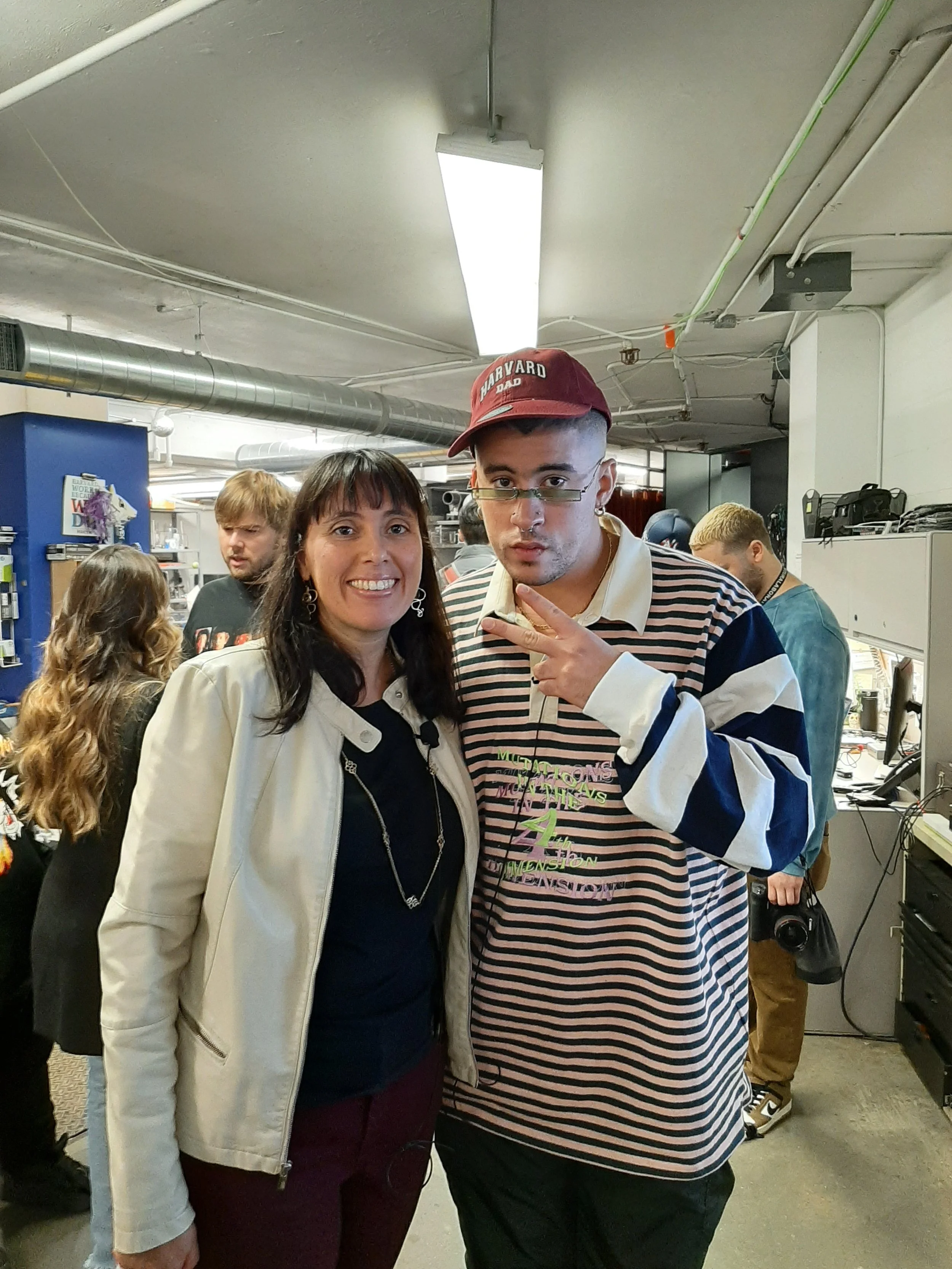
Petra Rivera-Rideau with Bad Bunny on the day of the 2019 event at Harvard. (Courtesy: Petra Rivera-Rideau).
“I think that Puerto Rican music has always been a space of protest,” Rivera-Rideau says in a separate phone interview. “A lot of genres in Puerto Rico – bomba, salsa, plena, reggaeton – often emerge from marginalized communities, often Black communities.” These genres, she says, “talk about conditions of everyday people on the ground,” and “also … require community,” as in the case of bomba, which is performed in a group of drummers and dancers, and which was curtailed when Spanish enslavers were concerned that enslaved people would organize revolts during these gatherings.
“I think Puerto Rico has a long tradition of using music in this vein,” Rivera-Rideau says. “[Bad Bunny] is sort of the latest example of it.”
Back in 2019, Rivera-Rideau moderated a discussion between the rising star, Benito Martinez, and a Harvard University student group.
“He struck me as very humble, very smart … very curious about the world,” Rivera-Rideau says, adding that the then-twentysomething Bad Bunny was “not that much older than my students.”
By that time, he had already gone on The Tonight Show with Jimmy Fallon, performing in his native Spanish and upbraiding President Donald Trump for the federal government response to Hurricane Maria. Since then, Bad Bunny has notched milestone after milestone: Becoming, on and off, Spotify’s most-streamed artist in the world since 2020.
Releasing a hotly anticipated 2024 album, DeBÍ TiRAR MáS FOToS – a tribute to Puerto Rican culture that was so well received that the authors delayed publication to mention it in the book. And, in 2025, performing at halftime of the Super Bowl, in a Spanish-language tribute to Puerto Rico, sparking backlash among some in white conservative America.
“I think he terrifies the political parties like the Penepe.”
— Vanessa Díaz, Author and Chicana/o and Latina/o studies faculty at Loyola Marymount University in Los Angeles,
The Bad Bunny in Politics
In recent years, Bad Bunny has connected himself directly with the Puerto Rican independence movement, as documented in the book. That includes the 2024 Puerto Rican elections: Bad Bunny advocated for the La Alianza pro-independence coalition, and came up with campaign lyrics attacking a candidate from the rival Partido Nuevo Progresista (PNP), Jenniffer González-Colón, as “Jenniffer Mentirosa (liar).”
At the same time, there was a battle of the billboards: Bad Bunny’s called the PNP corrupt and un-Puerto Rican, while the PNP’s alleged that he had forgotten his roots – living in Los Angeles and dating a white Anglo-American star in Kendall Jenner. In the general election, Gonzalez-Colon defeated La Alianza’s Juan Dalmau to become governor.
During his career, Bad Bunny has also been criticized for how his music depicts women – whether through incorporating a sensual dance called perreo or through sexually charged lyrics.
SUBSCRIBE TO PALABRA’S NEWSLETTER
“No one is beyond reproach,” Rivera-Rideau says. “I think some criticism around gender politics is true: Bad Bunny also has misogynistic lyrics.” Yet, she adds, “a lot of his sexually explicit music is very woman-centric, focusing on a woman’s pleasure and sexuality. It’s important to acknowledge those contradictions.”
The authors are less convinced of the sincerity of criticism when it comes from the Puerto Rican political establishment.
“I think he terrifies the political parties like the Penepe,” Díaz says, using the Puerto Rican nickname for the PNP. She cites the impact of “what it means to have an artist like Bad Bunny on the side of independence,” and marvels that he’s attracting young voters to La Alianza “in a place where it was once illegal to even talk about independence.”
“No one’s perfect,” Díaz reflects. “Bad Bunny is not perfect, he’s not going to save the world, he’s not going to save Puerto Rico. But maybe he will provide spaces for reflection and criticism in art.”
—
Rich Tenorio is a writer and editor whose work has appeared in a variety of media outlets. He is a graduate of Harvard College and the Columbia University Graduate School of Journalism. Tenorio is also a cartoonist. @rbtenorio