
Beyond the Inverted Pyramid: Turning Reporting into Narrative Journalism
Illustration by Susana Sanchez for palabra
Lessons from Zita Arocha on the Art of Storytelling
Words by Patricia Guadalupe, @PatriciagDC

When Zita Arocha covered her first newspaper story for the now-defunct Tampa Times newspaper, she didn't yet have a name for what she was doing. She just knew something magical was happening.
The assignment took her to a tent revival on Hillsborough Avenue, where an 11-year-old boy—the son of a self-proclaimed faith healer—placed his hands on the sick and suffering. As she watched the child move through the crowd, witnessing something she couldn't quite explain, Arocha felt herself falling in love with journalism.
“I think I fell in love with journalism then because of the ability to really experience life through other people's eyes and tell their story," she recalls. “And I think that's really what I've always tried to do—tell the story of real, live human beings and how policy and politics and our social constructs affect the individual and communities.”
That young reporter would go on to become a distinguished bilingual journalist, author, educator, and former executive director of the National Association of Hispanic Journalists (NAHJ). Today, Arocha teaches multimedia journalism at the University of Texas at El Paso, where she helps a new generation of writers discover what she learned decades ago on that Tampa street: that the most powerful journalism doesn't just report facts—it tells stories.
What Narrative Journalism Really Means
Narrative or long-form journalism, Arocha explains, “Uses the tools of fiction—through setting scenes, through capturing character, use of dialogue, tension, pacing—while remaining rigorously factual.”
That last part is the non-negotiable foundation. “If you start making stuff up, someone is going to catch it,” she mentioned during a Feb. 9 palabra por palabra webinar with NAHJ members, moderated by palabra co-managing editor Rodrigo Cervantes.
Within those factual boundaries of “not making stuff up,” narrative journalism offers something traditional hard news cannot: The answer not just to what happened in the courtroom, the detention center, or the protest, but "what it felt like and why it matters."
This human-centered approach creates connection. Readers who might skim past policy statistics will stop for a story about a family making impossible choices. “The readers will connect with what other people are going through, especially if they've gone through something similar that they can relate to,” Arocha says.
Beyond the Daily Grind
Arocha's own path to mastering narrative form took an unexpected turn. After 20 years teaching journalism at UTEP, she decided to pursue an MFA in bilingual creative writing—a decision that proved transformative.
“It was a really hard road to learning what memoir writing in my case was all about, and how to use the conventions and the structures of creative non-fiction to tell my story, as I had been telling other people's stories my whole life,” she says.
Her memoir, Guajira: The Cuba Girl, published by Inlandia Institute in 2024, took 10 years to complete. At first, Arocha felt embarrassed by the timeline. Then she discovered that the average memoir takes eight to ten years. “It just kind of reinforced that it hadn't taken me extraordinarily long, because I was learning the craft as I was writing.”
That craft—honed over decades of reporting and refined through creative writing study—is what she shares with journalists who want to move beyond the inverted pyramid.
The Anatomy of Narrative Journalism
What makes a piece of journalism narrative rather than merely reported? Arocha identifies several key elements:
Scene, not summary. A recent New York Times story by Orlando Mayorquín, for example, opens not with policy analysis but with a couple in Bloomington, California, stopping at a donut shop after church—their Friday routine. Only later do we learn that Enrique Castillejos and his wife, after 30 years in the United States, have decided to return to Mexico, unable to endure the uncertainty anymore. “Freedom," the story tells us, "Had become impossible in the land of the free.”
Character followed over time. Narrative journalism traces journeys. It shows how people arrived at their current moment, what shaped them, what they've lost and gained.
Dialogue that reveals. “Telling dialogue is really, really important and very succinct,” Arocha emphasizes. Quotes should carry character, revealing how people speak—whether in English, Spanish, or Spanglish—while remaining rigorously accurate.
Sensory detail. What do people look like? How are they dressed? Where are they sitting? What are their relationships with family members? These details bring stories to life.
Emotional and thematic arc. Unlike hard news, which front-loads the most important information, narrative journalism builds toward meaning. It gives readers time to invest in outcomes.
Breaking Free from the Inverted Pyramid
For journalists trained in traditional news writing, the inverted pyramid can feel like a straitjacket. “It's like a vice in a way,” Arocha mentioned. “You have to follow this funnel.”
Narrative form offers liberation. A 400-word hard news story becomes 3,000 words that give readers space to inhabit another person's experience. The nut graph—that essential paragraph explaining why a story matters—doesn't have to appear in the first three paragraphs. It can emerge organically as the story unfolds.
But this freedom comes with responsibility. Narrative journalism demands more of reporters, not less.
What Narrative Journalism Requires
Support the voices of independent journalists.
|
Arocha is emphatic about the rigor behind good storytelling. Narrative journalism demands:
In-depth, multiple-round interviews. One conversation is rarely enough. Reporters must return to subjects repeatedly to capture nuance and verify details.
Time spent observing. If you're writing about a community, you spend time there. You watch how neighbors interact. You notice the storefronts, the clinics, the gathering places. Arocha recalls Leon Dash of The Washington Post, who in the 1990s lived in a Southeast Washington, D.C., housing project for nearly a year to report on a welfare family.
Document research. Immigration stories, for example, benefit from the wealth of data produced by nonprofits and investigative newsrooms.
Rigorous fact-checking. Legitimate outlets verify every line. When Arocha worked with the Poynter Institute on immigration reporting, “They checked every line of my texts. They checked it and double-checked it.”
Ethical clarity about reconstruction. Memory is faulty. If you're reconstructing dialogue or events, you must be transparent about what you know and what remains uncertain.
The Lines You Don't Cross
For all its creative elements, narrative journalism has hard boundaries. Arocha is unequivocal about what practitioners must never do:
Do not invent, and don’t embellish. The cautionary tale of “Jimmy's World”—the Washington Post story about a child heroin addict that turned out to be fabricated by the Post reporter—remains a warning to every journalist.
Do not sacrifice accuracy for drama. “We are not allowed to rearrange timelines to increase tension,” Arocha says. “We’re not allowed to omit key facts that complicate the story.”
Do not decide on your lead before you report. Arocha recalls a colleague who would write his opening before leaving the newsroom. “He already knew where the story was going. We don’t do that.”
Do not turn real people into archetypes—the victim, the hero, the villain. “You really need to try to capture the totality of the human being.”
Finding Stories Within Stories
Arocha encourages journalists to think of their daily work as “gathering string”—collecting threads that might later weave into longer narratives. That routine assignment about a community health center losing funding? It could become a deeper exploration of how policy affects real lives. Who depends on that center? What happens to them now? How does the closure ripple through the community?
“When you’re writing about community,” Arocha notes, “you're going to find that most of us live not just in one community, but in multiple communities.” In El Paso, where she teaches, those communities include long-established Latinos who consider themselves more Spanish than Mexican, recent immigrants, Indigenous tribes, a growing African American population from Fort Bliss, Texas, Jewish communities descended from Holocaust survivors, and Syrian and Asian enclaves.
“Long-form journalism gives us the opportunity to write about identity, racial and ethnic identity, about history,” she says. “That’s one thing journalists in the day-to-day often forget.”
The First Draft of History
“Who was it that said the first draft of history is journalism?” Arocha asks. The quote, variously attributed, captures why narrative journalism matters beyond its immediate audience, when reporters capture not just what happened but what it felt like—when they preserve the sensory details, the dialogue, the complexity of human response—they create documents that will resonate for decades.
Rick Bragg's 1999 New York Times story remains a classroom staple, still taught as an example of masterful narrative journalism. “It’s still there,” Arocha notes, “and professors still use it.”
That staying power reflects something fundamental about why we tell stories. “A writer,” Arocha quotes, “is someone who pays attention to the world.”
For journalists, paying attention means more than covering events. It means seeing the 11-year-old faith healer in a Tampa tent revival, the Guatemalan oriundos building new lives in an American city, the California couple stopping for donuts before leaving the only home they've known for 30 years.
It means, Arocha says, experiencing “life through other people’s eyes”—and then helping readers do the same.
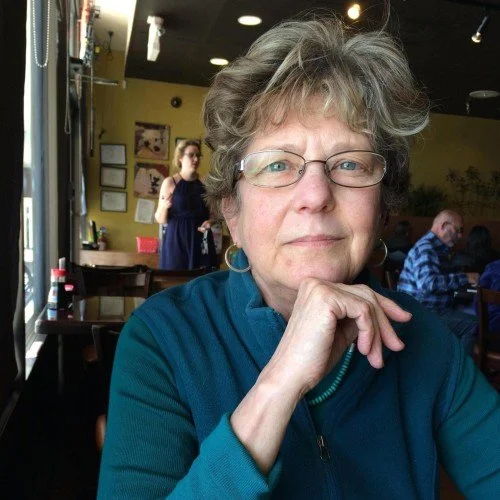
Zita Arocha is a bilingual journalist, author, and educator. She leads memoir writing workshops through the Center for Mexican American Studies at UT Austin. The university will release an anthology of mini-memoirs, "Caminos," this spring. Her award-winning memoir, Guajira, the Cuba Girl, was published by Inlandia Institute in 2024. She has reported for major media outlets and taught multimedia journalism at UT El Paso for two decades.

Patricia Guadalupe, raised in Puerto Rico, is a bilingual multimedia journalist based in Washington, D.C., and is the co-managing editor of palabra. She has been covering the capital for both English- and Spanish-language media outlets since the mid-1990s and previously worked as a reporter in New York City. She’s been an editor at Hispanic Link News Service, a reporter at WTOP Radio (CBS Washington affiliate), a contributing reporter for CBS Radio network, and has written for NBC News.com and Latino Magazine, among others. She is a graduate of Michigan State University and has a Master’s degree from the Graduate School of Political Management at George Washington University. She is the former president of the Washington, D.C., chapter of NAHJ and is an adjunct professor at American University in the nation’s capital and the Washington semester program of Florida International University. @PatriciagDC