
A Shipwreck, a Secret, and a Family Mystery
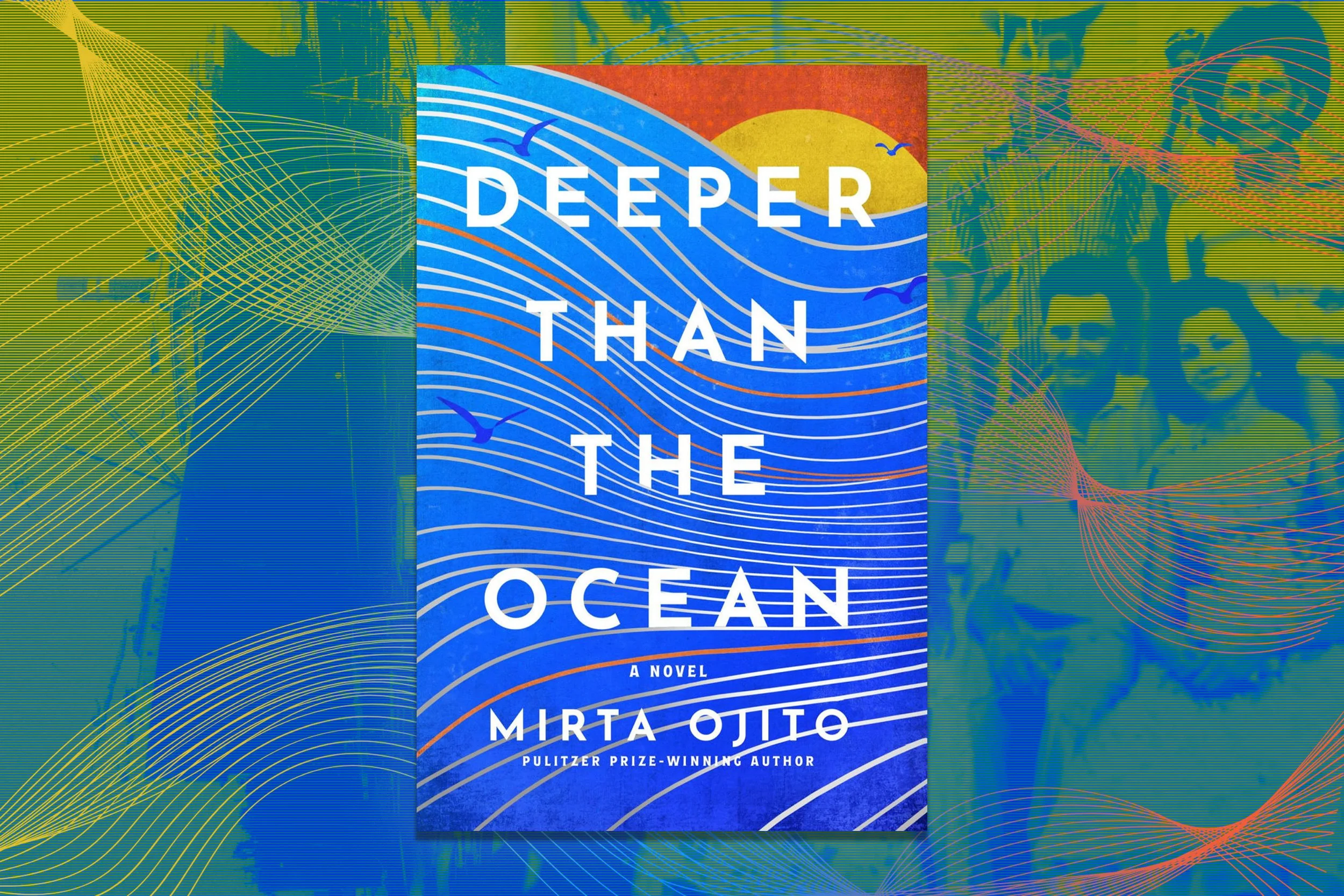
Photo illustration by Yunuen Bonaparte for palabra
In her new novel, author Mirta Ojito looks at a haunting question: How can an ancestor die in a shipwreck, yet be your grandmother?

Award-winning Cuban-American journalist Mirta Ojito still remembers encountering a chapter of forgotten history in a Key West, Florida, bookstore almost 20 years ago. It was there that she found a coffee-table book detailing the real-life account of the Valbanera, a Spanish-owned passenger ship that sank during a hurricane off Key West in 1919, claiming all 488 lives on board.
“Oh my God, this is the Titanic story no one has ever heard of,” Ojito recalled thinking. “I was surprised that I never learned about it in school.”
Ojito seeks to remedy this through her debut novel, Deeper Than the Ocean – a blend of past and present, with a plot that hinges on the Valbanera. While the characters are fictional, the historical backdrop is very much drawn from real life.
“That story deserves to be told,” she said of the Valbanera. “I did not want to write a nonfiction book. I thought I would try my hand at fiction.”

“Deeper Than the Ocean” by Mirta Ojito. Image courtesy of Mirta Ojito
Ojito is an acclaimed reporter who has covered subjects such as race in America, with a New York Times story on that topic winning her a shared Pulitzer Prize in 2000. She’s also received an Emmy for Cosecha de Miseria, a Telemundo documentary about the exploitation of child migrant labor in the coffee industry in Chiapas, Mexico. She currently works for NBC News as a senior director on the news standards team for NBC and Telemundo.
“I have a full-time job in journalism,” she tells palabra. “It was very difficult to write fiction. I had to do a lot of research.”
It helped that two nonfiction books had been written about the Valbanera – including El misterio del Valbanera (Desaparición y Naufragio), a Spanish-language coffee-table volume by Fernando José García Echegoyen. This was the title that had captured Ojito’s attention in that Key West bookstore back in 2006.
“It was lost on its way to Havana,” she explained. “Decades later, off the coast of Key West, they were not able to recover any bodies. Divers were surprised to find nobody.”
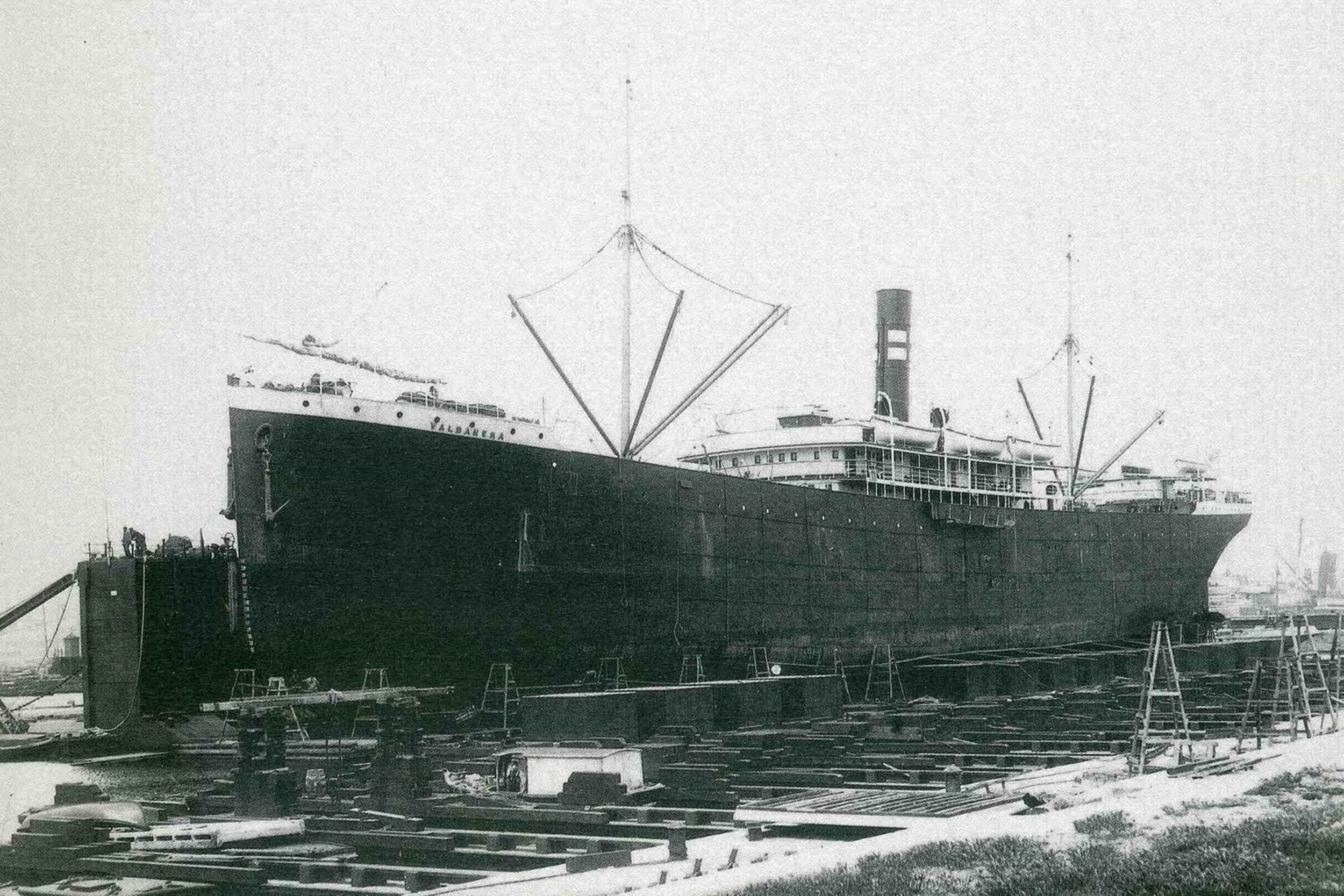
The Valbanera in the floating dock in Barcelona. Photo from Port Authority of Barcelona, via Wikimedia Commons
Around this historical event, Ojito wove a complex plot – in her words, “a dual narrative that links a family of silkworm farmers in the Canary Islands with the present time.”
The chapters alternate between these narratives – the story of Catalina Quintana, the daughter of a silkworm farmer in the early 20th century, and the story of Mara Denis, a 21st-century Cuban-American freelance journalist who attempts to unearth some family history.
Based in the Canary Islands, Mara is reporting on African immigrants to the islands when she gets one of her daily phone calls from her mother.
This particular call, Ojito said, contains a request: “When you go to the Canaries, can you please get the birth certificate of my grandmother?” As Ojito explained, Mara’s mother “wants to become a Spanish citizen. She needs her Spanish grandmother’s birth certificate.”
That ancestor’s name? Catalina Quintana. And Mara confronts a vexing development. She learns that Catalina was listed among the dead on the Valbanera, which would have made it impossible for her to continue the family line. Mara must draw upon all of her journalistic resilience to pursue this story to the finish.
“There are elements of my life with [Mara],” Ojito said. “I gave her my profession – journalism … It seemed to me this would be the best profession to investigate, to find the story of the history of her ancestors.”
She added, “I think it was better I made her a journalist than a detective. I don’t know anything about being a detective. I do know about being a journalist.”
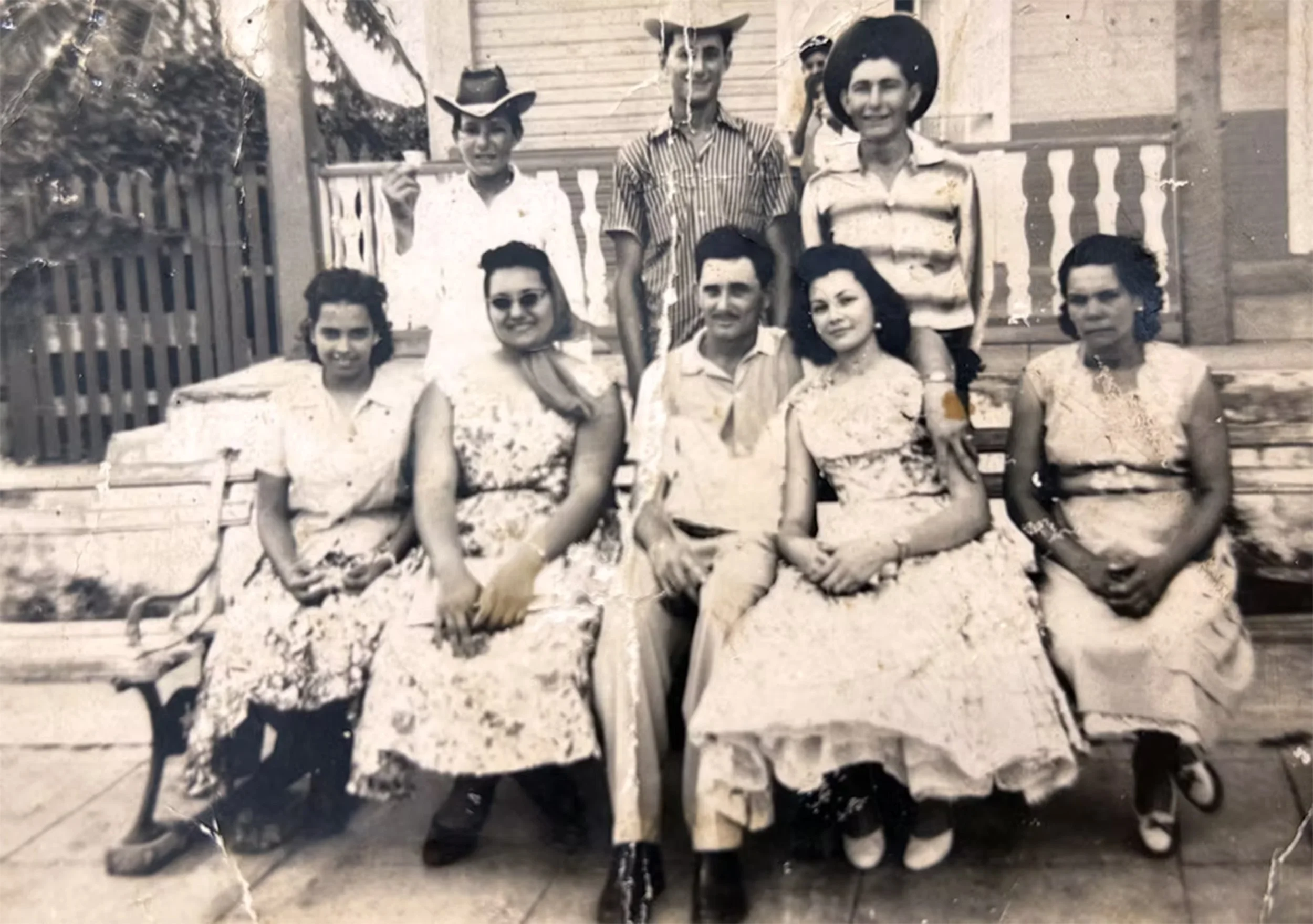
Mirta Ojito’s mother (second from right) with family friends. Photos of her mother in her youth inspired Ojito’s characters. Photo courtesy Mirta Ojito
As the twin narratives of Catalina and Mara each shift from the Canary Islands to Cuba, the author includes plenty of detail, from the class-restricted interiors of the Valbanera to the poverty of rural Cuba, then and now.
“I did not make this up,” she said of the social restrictions on board the Valbanera. “It was like everything [else] – being first class in an airplane, business class, economy class. There are always people who have the means to pay more for their dreams. The Valbanera was not an exception.”
Support the voices of independent journalists.
|
Alluding to the far more famous shipwreck that became a blockbuster Oscar-winning film, Ojito said that the Valbanera was a “tragedy of titanic proportions.” And, she said, “the real tragedy is that we do not know about it. I think we do not know because many of the people who died were poor immigrants who did not know how to read and write, [who were] in search of a better life.”
At the time, she said, the Valbanera was front-page news in major U.S. newspapers, from the New York Times to the Miami Herald, with coverage in the Associated Press as well, before gradually disappearing from the headlines.
“We are not aware of it,” Ojito said. “It’s not part of our collective memory. I think that is tragic.”
—
Rich Tenorio is a writer and editor whose work has appeared in a variety of media outlets. He is a graduate of Harvard College and the Columbia University Graduate School of Journalism. Tenorio is also a cartoonist. @rbtenorio

Patricia Guadalupe, raised in Puerto Rico, is a bilingual multimedia journalist based in Washington, D.C., and is the co-managing editor of palabra. She has been covering the capital for both English- and Spanish-language media outlets since the mid-1990s and previously worked as a reporter in New York City. She’s been an editor at Hispanic Link News Service, a reporter at WTOP Radio (CBS Washington affiliate), a contributing reporter for CBS Radio network, and has written for NBC News.com and Latino Magazine, among others. She is a graduate of Michigan State University and has a Master’s degree from the Graduate School of Political Management at George Washington University. She is the former president of the Washington, D.C., chapter of NAHJ and is an adjunct professor at American University in the nation’s capital and the Washington semester program of Florida International University. @PatriciagDC