
INTERVIEW | Juan Villoro: “It’s a pity there is not a World Cup of crowds, we would have a really good chance to make it to the final game”

Illustration by Susana Sanchez-Young
In an exclusive interview with palabra, the acclaimed Mexican author discusses his new book, “The Game at the End of the World,” and analyzes the evolution of the rivalry with the U.S., the weight of migration on the pitch, and the consolation of a fanbase that, while knowing its team rarely wins, never stops cheering.
Clic aquí para leer en español.
Words by Rich Tenorio, @rbtenorio
When acclaimed Mexican author Juan Villoro writes about soccer, he takes the long view. So it’s no surprise that his new collection of essays on the subject – “The Game at the End of the World” (Restless Books, 2026) – not only addresses the beautiful game but connects soccer to art and science, philosophy and music. There’s even a discussion of how goal-scoring celebrations reflect either centrifugal or centripetal energy.
In the book’s final essay, “Intimate Enemies,” the Mexico-US rivalry comes in for scrutiny. Here, Villoro gives readers a history lesson. He explores how things have played out on the contemporary soccer field – and on the 19th-century battlefields of the Mexican-American War.
SUBSCRIBE TO PALABRA’S NEWSLETTER
“In civics class, my generation learned that heroism meant showing dignity in the face of defeat: when our heroes fall, they make famous pronouncements,” Villoro writes, citing a defiant retort by defeated Mexican general Pedro Anaya after the Battle of Churubusco in 1847. “This situation also applies to football,” Villoro adds, “where, according to our popular saying, ‘we play like never before but we lose like always.’”
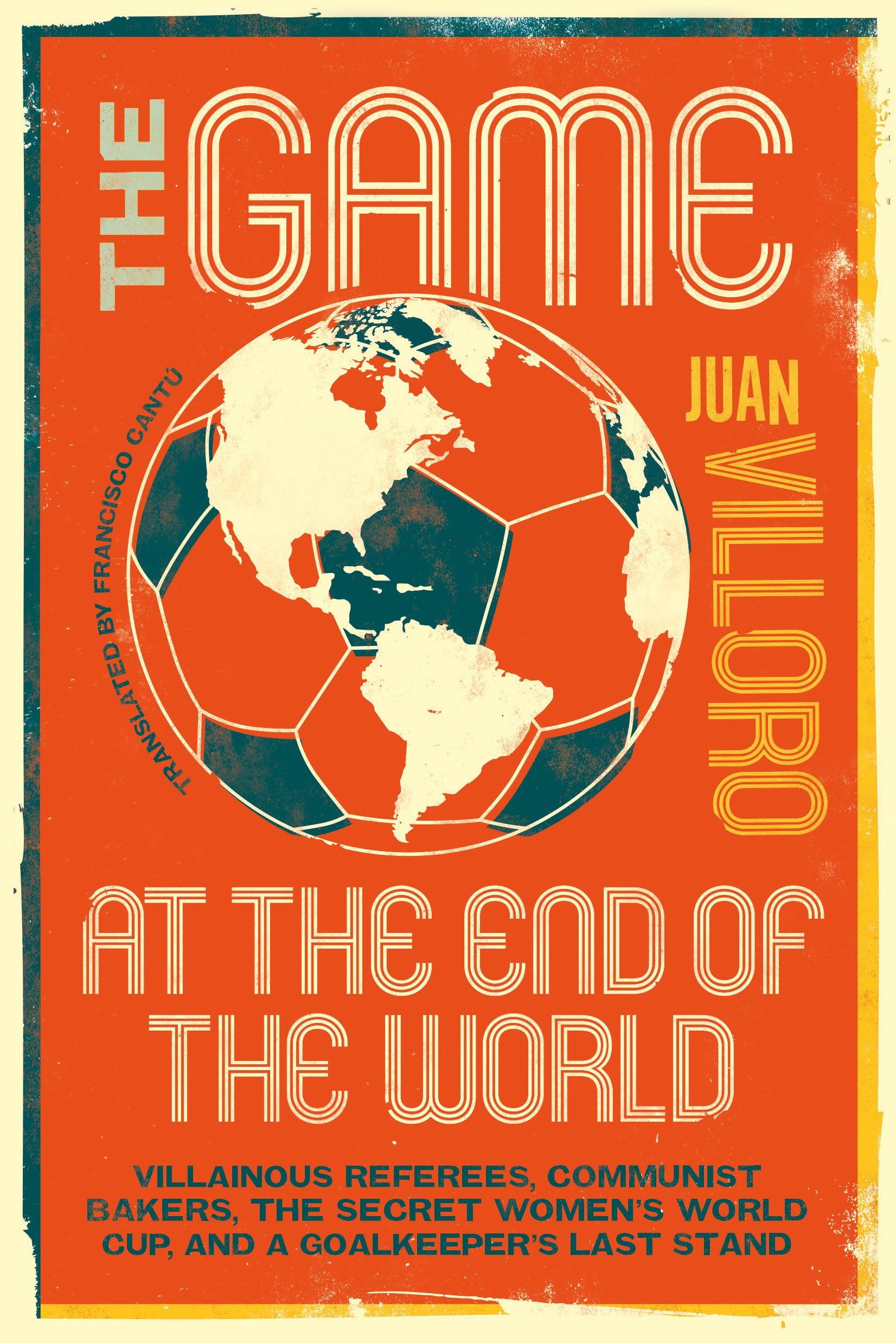
Published in 2026. Credit: Restless Books.
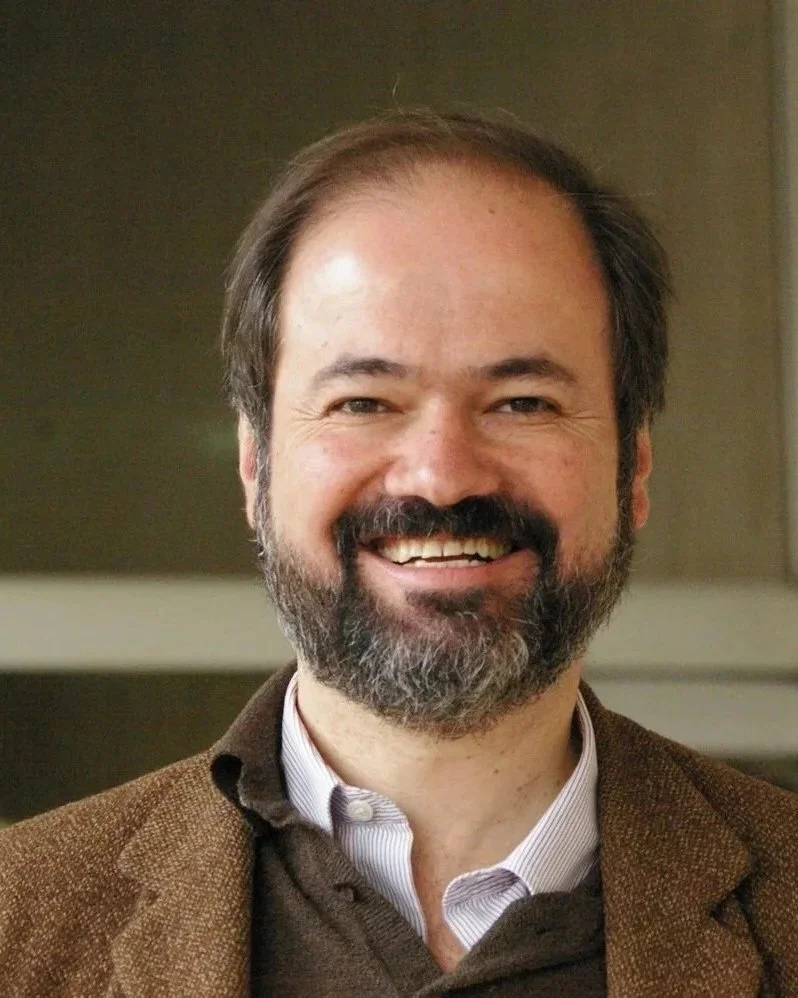
Juan Villloro. Via: Restless Books
A native and resident of Mexico City, Villoro has watched El Tri lose gallantly time and time again, including in the two World Cups Mexico has previously hosted: 1970 and 1986. With Mexico returning once again to the Mundial, this time as a co-host with North American neighbors the US and Canada, Villoro acknowledges a newer dimension to defeat. Once, El Tri could expect that while it might lose to world powers like Argentina or Brazil, it would at least triumph over its geographical rival, the US. Now, there is more parity to that relationship.
“It was a pleasure to defeat the US,” Villoro reminisces in an interview with palabra. “I don’t mind saying that … We were beaten in all other sports by the US, but not in soccer – that was our strength. Now, it’s quite different. The US has a very strong team.”
“Intimate Enemies” explores other dimensions of the US-Mexico rivalry – with Villoro elaborating on some of them to palabra.
Fourteen million Mexicans live in the US, he points out, with some being migrants and others born into families of Mexican descent on American soil. As a result, when the Mexican national team travels to the US for a game, it’s often akin to a home match.
“In many of the [US] cities [where the national team plays], the majority of the public belongs to the Mexican community,” Villoro says. “We have a very strong relationship, albeit a very troublesome one. The World Cup is part of that troublesome relationship. It’s going to be a Cup for the US, with some supporting actors like Mexico and Canada, who are [each] going to get 13 games out of 104.”
“The Game at the End of the World” is a must-read for this year’s Cup. It was translated by author Francisco Cantú. The book’s subtitle reflects the breadth and depth of its essays about soccer’s past and present: “Villainous Referees, Communist Bakers, The Secret Women’s World Cup, and a Goalkeeper’s Last Stand”. Many essays incorporate not only the play on the field but also insights from luminaries in other fields.
“It was a pleasure to defeat the US.”
“I don’t mind saying that …
We were beaten in all other sports
by the US, but not in soccer – that was
our strength. Now, it’s quite different.
The US has a very strong team.”
“The Women’s Game” addresses the groundbreaking-if-unofficial women’s World Cup in 1971, hosted by Mexico. Villoro references Italian novelist and essayist Umberto Eco to explain the misogyny that kept women’s soccer unofficial at the time – and Mexican philosopher Jorge Portilla to discuss the joyfulness of celebrations south of the Rio Grande, including in that women’s Cup.
Support the voices of independent journalists.
|
“FIFA refused to recognize women’s football,” Villoro says of professional soccer’s governing body. “Nonetheless, a lot of people were interested in the game – more than 100,000 spectators at the Azteca stadium for the end game between Denmark and Mexico. It demonstrated, so early on, that women’s football could raise a lot of attention.”
Of his 15-year-old self, he writes in the chapter, “I remember the difficulty of getting tickets and my joy at being able to sit in the highest part of the stadium, behind the goal. Everyone wanted to see the women shine in a way our men had not.”
With palabra., Villoro shared memories of the last two times Mexico hosted the men’s Cup.
Nineteen-seventy, he said, “established Pelé as one of the major players of all time. The Brazil team was unforgettable, the audience exceptional … It was a very special treat for a teenager like myself. I could not sleep the night before the opening game. I could not sleep for the next 15 nights. It was really a matter of passion for me.”
As for 1986, “I saw the World Cup in which [Diego] Maradona became the most important player in the world,” Villoro said of the Argentine star who led his team to victory. “It was also one of the best championships ever held.”
This year, Villoro consoles himself that even though Mexico’s chances are slim as always, its fans’ signature enthusiasm will not disappoint.
“We know from the start that we have few chances of winning the World Cup or being among the four or five major teams of the tournament,” Villoro says. “Nonetheless, we attend the stadiums. We have a great passion for the game.
“It’s a pity there is not a World Cup of crowds,” he reflects. “We would have a really good chance to make it to the final game.”
—

Rich Tenorio is a writer and editor whose work has appeared in a variety of media outlets. He is a graduate of Harvard College and the Columbia University Graduate School of Journalism.Tenorio is also a cartoonist.